Tu carrito está vacío


Finding the Best Electrolyte Powder for Athletes
Trying to find the right electrolyte powder can feel like you're lost in a jungle of flashy labels and wild claims. But the best choice isn't about the coolest flavor or the brightest packaging. It’s about science—a formula built for your specific sport, how much you sweat, and what you’re trying to achieve.
For any serious athlete, that usually means a high-sodium blend that puts performance first, skipping the sugary stuff to focus on what actually works: rapid rehydration and keeping your muscles firing on all cylinders.
Your Guide to Choosing the Right Electrolyte Powder
This guide is designed to cut straight through the marketing hype. We’re giving you a clear, no-nonsense framework to help any athlete—whether you're a marathoner, a lifter, or somewhere in between—find your perfect hydration match. We'll break down why not all powders are the same and how your individual needs are the only thing that matters when choosing the "best" one.
You’ll learn how to read a label like a pro, looking at the things that count, like sodium content, carb ratios, and why purity is non-negotiable. Along the way, we'll use REVSCI's Reviver Electrolytes as a real-world example of a clean, effective formula that gets it right.
The Rise of Performance Hydration
It's no secret that the demand for high-quality hydration has exploded. The global electrolyte powder market recently topped a massive USD 8.74 billion and is only getting bigger. This isn't a fad; it’s driven by athletes who finally get it—that proper hydration is the bedrock of peak performance. In fact, the sports application segment alone made up 64.11% of global revenue last year. You can dig into more of these stats over at Grandview Research.
What to Expect in This Guide
Forget generic top-ten lists. This guide is a deep dive into the real science of how athletes hydrate. We’re going to take complex topics and turn them into simple, actionable advice so you can feel confident building your own personal hydration strategy. Our goal is to arm you with the knowledge to pick a supplement that genuinely pushes you closer to your goals.
Choosing the right electrolyte powder is like picking the right fuel for a high-performance engine. A generic option might get you from A to B, but a specialized formula is what unlocks your true potential. It's the difference between cramping up and hitting a new PR.
We'll cover everything from the basic roles of key players like sodium and potassium to more advanced strategies like timing your intake and dosing based on your personal sweat rate. By the time you're done, you'll see exactly what separates a premium, athlete-focused powder from the cheap, sugary drinks that are all over the shelves.
Why Electrolytes Are Your Body's Performance Engine
Think of your body as a high-performance engine. Carbs and fats are the fuel, sure, but without spark plugs, that engine is just a lump of metal. Electrolytes are your body's spark plugs—the tiny, electrically charged minerals that fire off the impulses needed to power almost every critical function you have.
They are the master conductors of your internal orchestra, making sure every system plays in perfect harmony. These minerals aren't just about staving off dehydration; they are the absolute foundation for muscle contractions, nerve signals, and the precise fluid balance that keeps you running at your peak.
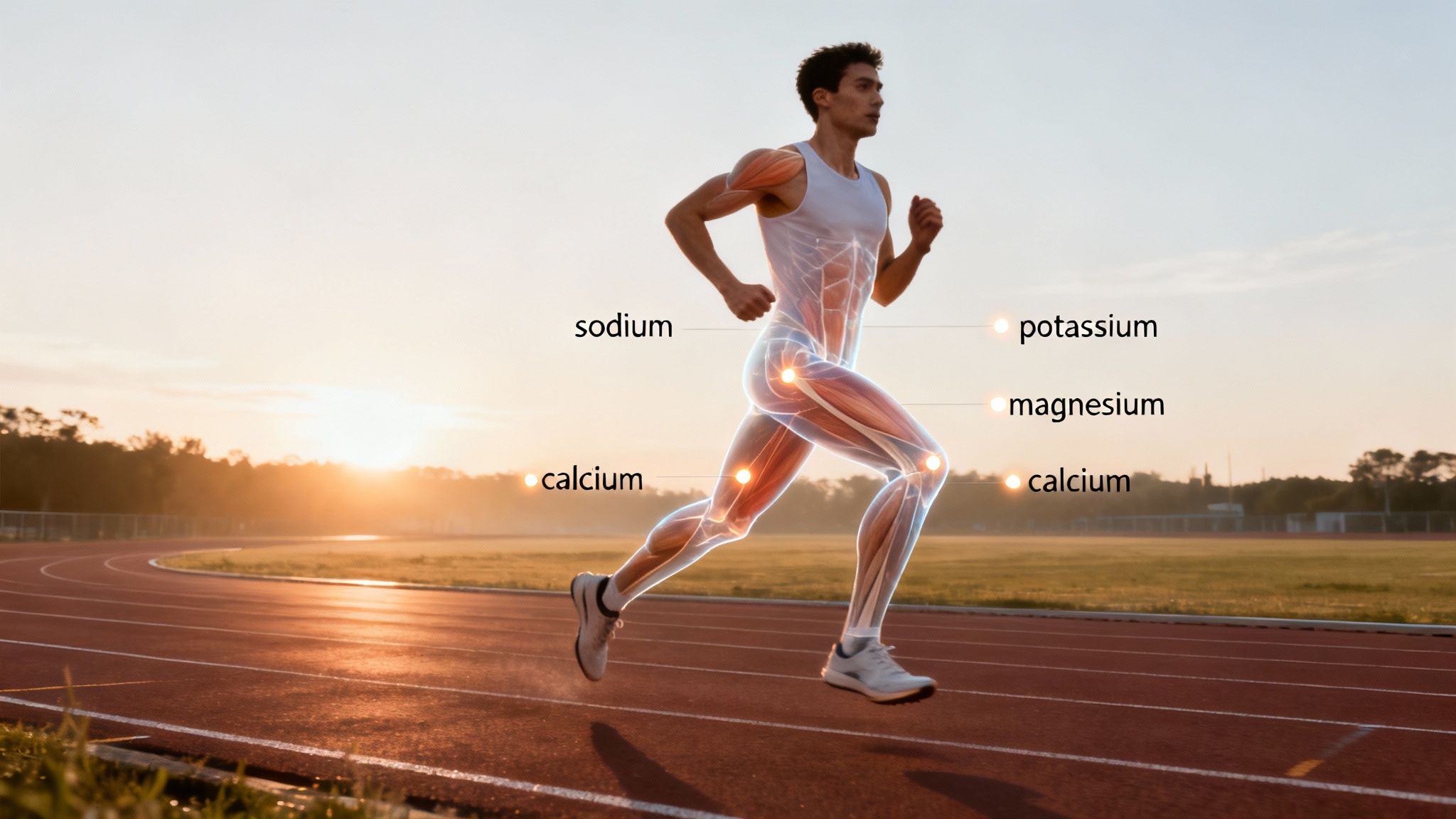
Ever wonder why an athlete "hits the wall?" It’s often not just tired muscles or an empty tank. It’s an electrical crisis—a system-wide brownout caused by a critical drop in electrolytes, especially sodium. This is exactly why finding the best electrolyte powder for athletes is less about flavor and all about pure, unadulterated function.
The Core Four Electrolytes
While there are a handful of important electrolytes, four of them really run the show when it comes to athletic performance. Getting to know their roles is the first step toward building a smarter hydration plan.
- Sodium: This is the undisputed king of hydration. Sodium is the main electrolyte you lose in sweat, and it’s absolutely vital for maintaining blood volume and helping your body actually hold onto the water you drink. Not enough sodium is a direct line to dehydration, cramping, and a performance nosedive.
- Potassium: Working right alongside sodium, potassium helps manage fluid balance inside your cells and is a huge player in preventing muscle cramps. Think of it as sodium's essential partner in crime for regulating nerve signals and muscle contractions.
- Magnesium: This mineral is a powerhouse for cellular energy. It helps convert the fuel you eat into usable energy (ATP) and also assists in muscle relaxation. That's key for preventing the tightness and spasms that can completely derail a workout.
- Calcium: Famous for bone health, but its day job in athletics is triggering muscle contractions. Every single time you flex a muscle, calcium ions are what make it happen, making it a non-negotiable for any kind of physical effort.
Here’s the thing: these minerals don’t work alone. It's their balance, their ratio, that dictates your body's ability to perform under stress. If one is out of whack, it can set off a domino effect that impacts everything from your endurance to your mental focus. A well-designed electrolyte powder gives you a strategic blend of these key players, not just a random sprinkle.
Beyond Thirst: The Real Impact on Performance
If you're waiting until you feel thirsty to drink, you're already behind. Thirst is a notoriously late signal of dehydration. In fact, losing as little as 2% of your body weight through sweat can put a serious dent in both your physical and cognitive performance.
For an athlete, proper electrolyte balance isn't just a suggestion; it's the fundamental infrastructure that supports every single sprint, lift, and stride you take.
When you lose that much fluid and electrolytes, it does more than just make your muscles feel weak. Your blood actually thickens, which forces your heart to pump harder just to get it to your working muscles. This drives up your heart rate and makes everything feel way harder than it should.
Simply put, a lack of electrolytes forces your body to redline just to achieve the same output. This is why intra-workout hydration is so mission-critical. To go deeper on this, check out our guide on the benefits of intra-workout drinks for keeping your performance dialed in.
On top of that, electrolytes are crucial for kickstarting the repair process after you're done. They are a core component of effective strategies to speed up muscle recovery, helping you bounce back faster and stronger for your next session.
How to Read an Electrolyte Powder Label Like a Pro
Walking down the supplement aisle can feel like a pop quiz you didn't study for. Every label screams promises of peak performance, but the real story is always hidden in the fine print. To separate the high-performers from the hype, you have to learn how to see past the marketing and read the label like an expert.
This isn't about memorizing chemical names. It's about understanding the why behind each ingredient. A well-formulated powder is a strategic tool, and the label is your instruction manual, telling you exactly what you’re putting into your body and how it’s designed to work under pressure.
Sodium Is the Star of the Show
When you flip over that tub, the first number to lock onto is sodium. For serious athletes, sodium isn't the enemy; it's the undisputed king of hydration. It's the main electrolyte you pour out in your sweat and the primary driver for keeping fluid where it belongs: in your bloodstream.
A low-sodium formula simply won't get the job done during hard, long efforts. When you're sweating buckets, you're not just losing water—you're hemorrhaging sodium. This is exactly why so many athletes who think they’re hydrating properly still end up cramping and hitting the wall.
For endurance athletes or anyone grinding it out in the heat, a dose of 800-1000mg of sodium per serving isn’t just a good idea; it’s essential for maintaining performance and staving off the nasty effects of dehydration.
Don't get tricked by products that brag about being "low sodium." That might sound good to the general public, but for an athlete, it's a massive red flag. The best electrolyte powders aren't afraid to be salty because they're built for the physiological demands of hard work.
The Great Carbohydrate Debate
Next up: should your electrolyte drink have carbs? The answer is simple: it depends entirely on the goal of that specific training session.
Think of it this way: electrolytes are the oil, and carbs are the fuel. You always need oil to keep the engine running smoothly, but you only need to top off the fuel tank during a long trip.
- When you need carbs: For long-haul endurance events (anything over 90 minutes), carbs are critical for refilling your glycogen stores and keeping your energy from tanking. A formula with carbs can be a convenient all-in-one solution.
- When you don't: For shorter workouts, lifting sessions, or if you're on a low-carb or keto diet, you just want the electrolytes without the extra sugar. This lets you hydrate effectively without adding calories or knocking you out of your metabolic state.
A top-tier formula like REVSCI's Reviver Electrolytes is often carb-free by design. This gives you total flexibility. You can add your own carbs—like a gel or a separate sports drink—only when you actually need them. This puts you in the driver's seat of your nutrition strategy. To go deeper on this, our electrolyte powder comparison guide breaks down different formulas and when to use them.
Cracking the Code on Osmolality
This one sounds like it’s straight out of a chemistry textbook, but osmolality is a game-changer for fast hydration. Simply put, it's the concentration of particles (like sodium and other minerals) dissolved in the water. This concentration dictates how quickly your body can actually absorb the fluid.
You'll find three main types of solutions:
- Isotonic: Has a similar concentration to your blood. It gets absorbed at a decent, steady pace.
- Hypertonic: Has a higher concentration than your blood (think sugary sodas). This is bad news for hydration because it actually pulls water from your body into your gut to dilute the drink first, slowing everything down.
- Hypotonic: Has a lower concentration than your blood. This is the sweet spot. A hypotonic solution gets absorbed into your bloodstream lightning-fast.
The best electrolyte powders are engineered to create a hypotonic solution when you mix them as directed. That means the fluid rushes from your gut into your bloodstream, delivering water and electrolytes to your muscles with maximum speed. Those mixing instructions on the label are there for a reason—they ensure you hit that optimal concentration.
Purity and Third-Party Testing
Finally, what’s not on the label is just as important as what is. A clean label—free from junk fillers, artificial colors, and weird sweeteners—is the mark of a quality product. Your body is a high-performance machine; don't gunk it up with ingredients that do nothing for you. To pick the right product, you need to know how to decipher nutrition labels like a seasoned pro.
For competitive athletes, this goes a step further. Third-party testing for banned substances (look for certifications like NSF Certified for Sport® or Informed-Sport) is non-negotiable. It’s your guarantee that the product is clean, safe, and contains exactly what it says on the tin.
This kind of transparency is a core principle for us at REVSCI. Every batch is tested for purity and potency, giving you the peace of mind to focus on your performance, not on what’s in your bottle.
Building Your Personal Hydration Strategy
Knowing the science behind electrolytes is one thing, but actually turning that knowledge into a winning game plan is a whole different ballgame. The old "drink when you're thirsty" advice just doesn't fly for serious athletes. Your hydration strategy needs to be as dialed-in as your training plan, tailored to your sport, the intensity of your workouts, and your own unique body.
This isn't about guesswork. It’s about building a precise, repeatable protocol that gives your body the fluid and electrical support it needs to perform, endure, and bounce back stronger. The best electrolyte powder for athletes is simply the one that slots perfectly into a well-designed strategy.
When you’re looking at a product, zeroing in on the key components is what separates success from failure. This flow chart breaks down exactly what to look for on any label to make sure you’re getting a high-performance formula.
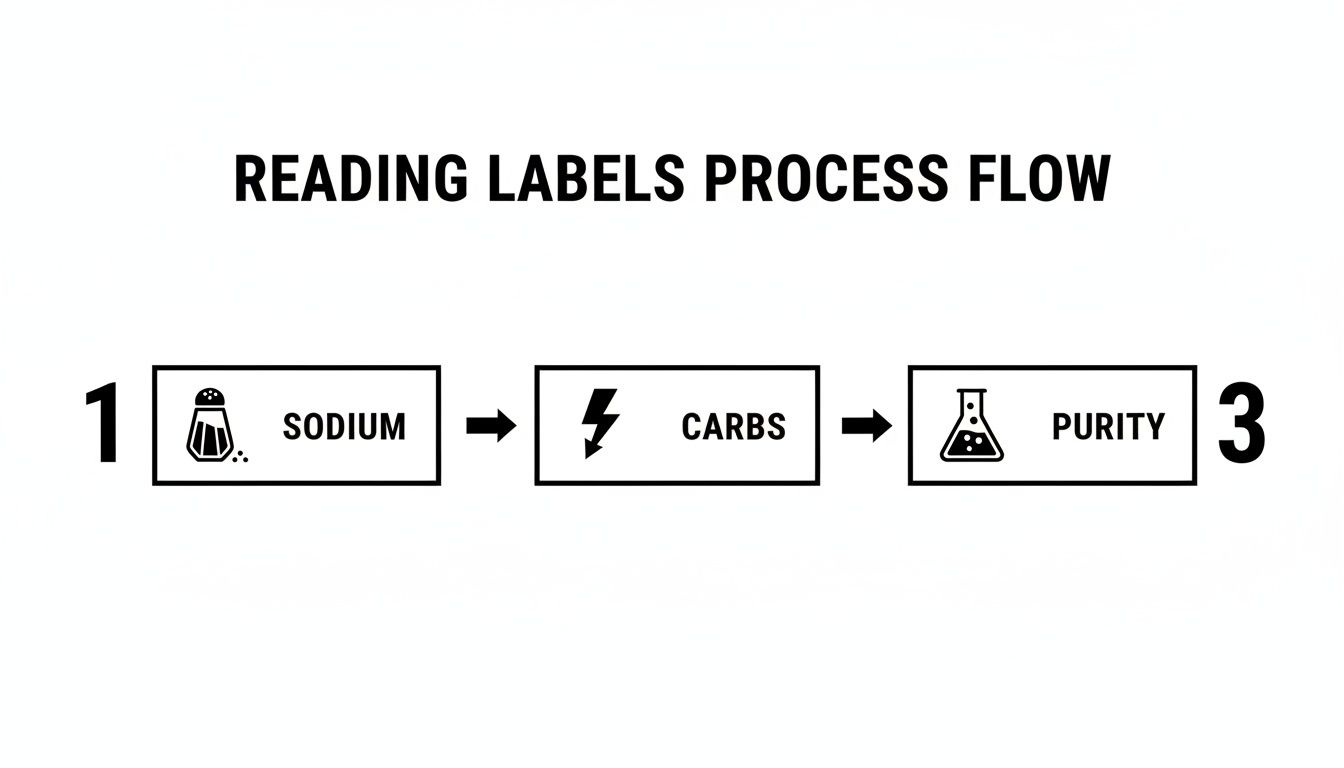
As the guide shows, it starts with prioritizing sodium for fluid balance, then weighing whether you need carbs based on workout duration, and finally, confirming the product's purity through third-party testing.
Dosing for Endurance Athletes
For marathoners, triathletes, and cyclists, hydration is a relentless battle against depletion. Your performance lives or dies by your ability to stay ahead of fluid and sodium losses over long, grueling hours. A bulletproof strategy breaks down into three key phases.
- Pre-Loading: In the 1-2 hours before a big race or a long training day, down one serving of a high-sodium electrolyte powder. This effectively "hyper-hydrates" your system, topping off your fluid and mineral stores so you start with a full tank.
- In-Race Fueling: The name of the game here is consistent replenishment. A common and highly effective protocol is to take in one serving (mixed in 16-24 oz of water) for every hour of activity. This steady drip-feed of electrolytes helps maintain your blood volume and keeps those performance-crushing cramps at bay.
- Post-Race Recovery: The second you cross that finish line, your body is running on empty. Getting another serving in within that first hour kickstarts the rehydration process, helping shuttle water back into your cells and supporting muscle repair.
Hydration for Strength and Power Athletes
For bodybuilders, powerlifters, and other strength athletes, the goal is different. You aren't fighting off hours of continuous sweat loss, but you are demanding explosive, all-out contractions from your muscles, rep after brutal rep. Even a little dehydration can tank your strength and kill your power output almost instantly.
The key here is intra-workout hydration. Sipping on an electrolyte drink between sets is crucial for maintaining sharp nerve signaling and muscle function, which stops the kind of fatigue that can cut a great session short. Don't be fooled by the air-conditioned gym—intense lifting still makes you sweat, a lot.
During a tough 3-hour cycling session, for example, an athlete can lose 3,000mg of sodium and 300mg of potassium. Without replacement, that puts them at a 60% risk of cramping. This is where electrolyte powders, which own a massive 36.2% share of the hydration supplement market, shine. They offer rapid rehydration with up to 20% faster uptake than some pre-mixed drinks, making them a no-brainer for athletes, especially in high-heat conditions.
Protocols for High-Intensity Functional Fitness
Athletes in sports like CrossFit face a totally unique challenge: absolutely punishing, high-intensity efforts with barely any rest. Sweat rates go through the roof, and the need for fast replenishment is off the charts. Your strategy has to be aggressive and ruthlessly efficient.
Because the workouts are often shorter but far more intense, pre-loading is critical. Having a serving 30-60 minutes before a WOD ensures your muscles are primed and ready to fire. For longer sessions or all-day competitions, sipping an electrolyte solution between events is non-negotiable for maintaining performance and preventing a nasty crash.
Your personal sweat rate is the most critical piece of data for customizing your hydration plan. What works for your training partner might leave you dehydrated or over-hydrated. Know your numbers.
Calculate Your Personal Sweat Rate
To truly fine-tune your strategy, you need to know your personal sweat rate. This simple test cuts through all the guesswork and gives you the power to hydrate with precision.
- Weigh In: Before a one-hour training session, get on the scale with minimal clothing right after you've used the restroom.
- Train: Go through your workout as usual for exactly one hour. Keep careful track of how much fluid you drink (in ounces).
- Weigh Out: After the session, towel off completely and weigh yourself again, wearing the same minimal clothing.
-
Calculate:
- Subtract your post-workout weight from your pre-workout weight. Convert that number to ounces (1 lb = 16 oz).
- Add the number of ounces of fluid you drank during the workout.
- That final number is your hourly sweat rate in ounces.
For instance, if you lost 1 lb (16 oz) and also drank 20 oz of water, your sweat rate is 36 oz per hour. That number is your personal hydration target. For more personalized tips, check out our guide on finding the best electrolyte supplement for your specific needs.
The REVSCI Reviver Formula in Action
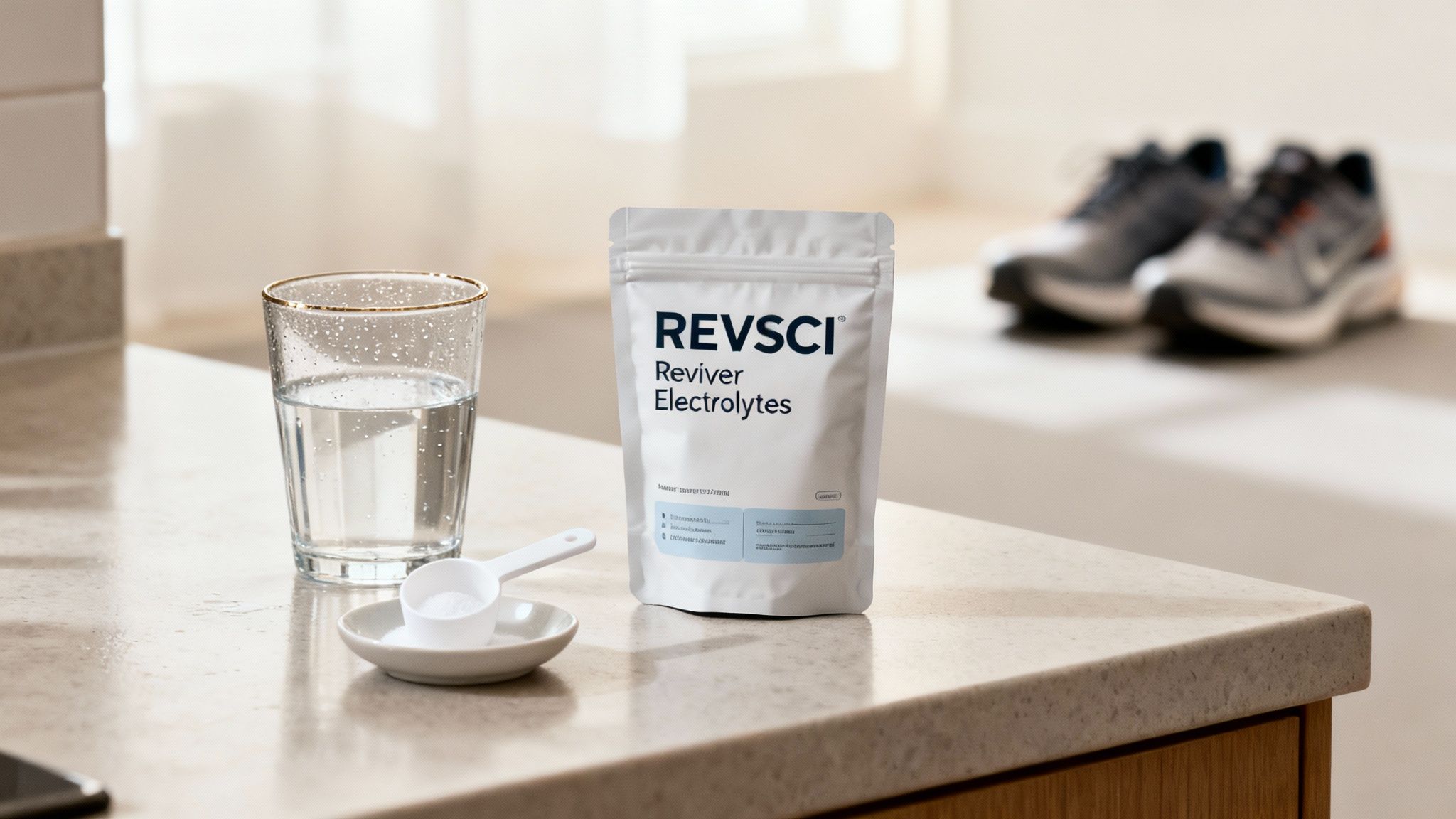
Theory is one thing, but seeing it applied in a real-world formula is where it all clicks. Let's use REVSCI's Reviver Electrolytes as a case study—not a sales pitch—to see how these scientific principles come together. It's a tangible example that connects everything we've just covered, from sodium ratios to product purity.
When you break down how a product is actually built, you start to see what separates an elite formula from just another tub on the shelf. This is how a product can embody the principles of the best electrolyte powder for athletes: by putting your physiology and performance first.
A High-Sodium Profile for Serious Work
The first thing you’ll notice about Reviver is its unapologetically high sodium content. At 1000mg of sodium per serving, it’s not messing around. This formula was specifically engineered for athletes who are pushing their limits and sweating hard.
This isn’t a casual hydration drink meant for sipping at your desk. It's a performance tool, built to aggressively replace the main electrolyte you lose in sweat. It directly answers the call for endurance athletes, heavy sweaters, and anyone training in the heat. That commitment to a high-sodium base is a direct nod to the science of what actually works to maintain blood volume and fight off a performance-killing drop in hydration.
A formula with a robust sodium profile is your first line of defense against cramping and fatigue. It acknowledges that for athletes, salt isn't just a seasoning—it's an essential performance mineral.
The Power of a Clean Unflavored Formula
Reviver is intentionally unflavored and unsweetened, and that’s a strategic choice for two critical reasons. First, it gets rid of all the unnecessary junk. You won’t find artificial colors, flavors, or fillers that can trigger gut issues or just add things your body doesn't need.
Second, and maybe more importantly, this clean slate gives you ultimate control. Because it has zero carbohydrates, you are the pilot of your fueling strategy.
- For strength sessions or keto athletes: You get pure, effective electrolyte replacement without any unwanted sugars or calories.
- For endurance athletes: You can mix in your own preferred carb source—like a separate energy powder, juice, or your favorite gel—to build a custom fuel that’s perfect for that day’s session.
This approach honors a key principle: electrolytes are the oil, carbs are the fuel. It lets you add the fuel only when the journey is long enough to demand it, making it an incredibly versatile tool in your arsenal. For a deeper dive into formulas without extra additives, check out our guide on electrolytes without artificial sweeteners.
A Commitment to Purity and Transparency
Finally, a top-tier formula has to be backed by a commitment to quality you can trust. In an industry that’s notoriously under-regulated, this is non-negotiable. It's not enough for a brand to just say their product is clean; they have to prove it.
REVSCI ensures every single batch of Reviver is third-party tested for purity and potency. This process guarantees two things: what’s on the label is exactly what’s in the tub, and the product is free from any contaminants.
This level of transparency is what gives you the confidence to just focus on your performance. You know your hydration supplement is safe, effective, and held to the highest standard possible. It’s the final piece of the puzzle, completing the picture of what a truly athlete-focused electrolyte powder looks like.
Answering Your Top Questions About Electrolyte Powders
Diving into the world of electrolyte supplements can feel a bit overwhelming. Let's cut through the noise and clear up some of the most common questions so you can build a hydration strategy that’s sharp, effective, and actually works for you.
This is about more than just drinking more; it's about drinking smarter. Nailing these details is what separates a good hydration plan from a great one—and it has a direct impact on how you perform and recover.
Is Plain Water Enough for Athletes?
For a quick, low-key workout, sure, plain water is probably fine. But the minute you’re training for longer than an hour or working up a serious sweat, water alone just doesn't cut it. In some situations, it can even be counterproductive.
When you sweat, you're not just losing water. You're losing critical minerals, especially sodium. If you only drink plain water, you replace the fluid but you’re actually diluting the sodium concentration left in your bloodstream. This can push you toward a dangerous condition called hyponatremia, where your cells swell up with too much water. The result? Nausea, headaches, confusion, and muscle weakness.
Relying just on water during hard training is like trying to run an engine without oil. You're addressing one part of the problem (fluid loss) while completely ignoring another (electrolyte loss), setting yourself up for a total system breakdown.
The best electrolyte powder for athletes gives you the sodium your body needs to actually absorb and hold onto the water you're drinking. It's the key to maintaining proper fluid balance and protecting yourself from hyponatremia.
When Is the Best Time to Take Electrolytes?
Timing is everything. When you should take your electrolytes really boils down to the length and intensity of your training.
- Pre-Loading (30-60 minutes before): Downing a serving before a long or brutal session is a great way to top off your mineral stores, giving you a head start. This is especially smart if you're a heavy sweater or training in the heat.
- Intra-Workout (During activity >60 mins): For any sustained effort, sipping an electrolyte drink during your workout helps you stay ahead of depletion. This is what keeps your performance stable and fends off cramps. A good rule of thumb is to aim for one serving per hour of hard work.
- Post-Workout (Within 1 hour after): After you've emptied the tank, replenishing electrolytes is your first step toward recovery. It helps your cells rehydrate properly and gets your mineral balance back on track, fast.
Can I Use Electrolyte Powder Every Day?
Whether you need to supplement daily depends entirely on your lifestyle and training demands. Someone working a desk job with a few light workouts a week probably gets enough from a balanced diet.
But for dedicated athletes training consistently—especially in hot climates or during a tough training block—daily use can be a game-changer. It ensures you’re always in a state of hydration readiness, so you never start a workout already in a hole. Just listen to your body and adjust your intake based on what your training schedule looks like.
How Do I Know My Hydration Is Working?
The signs of a solid hydration plan are pretty clear once you know what to look for. Here are the big ones:
- Consistent Performance: You can hold your intensity without feeling a sudden energy crash or loss of power.
- Reduced Cramping: Those annoying muscle cramps and spasms become a thing of the past, even during your toughest sessions.
- Clear Urine: Your urine is a pale, straw-like color. If it's dark, you're dehydrated. If it's completely clear, you might be overdoing it.
- Stable Body Weight: Weigh yourself before and after training. If you've lost less than 2% of your body weight, you're in a good spot.
When you get your hydration dialed in, you can stop fighting off fatigue and cramps and just focus on your performance.
At REVSCI, we formulated our Reviver Electrolytes to be a high-sodium, clean, and effective solution built for the real needs of hardworking athletes. Explore Reviver Electrolytes and build a smarter hydration strategy today.