
Tu carrito está vacío


Best Supplements for Runners A Performance Guide
Let's be honest, walking into a supplement store can feel overwhelming. You're hit with a wall of brightly colored tubs and bottles, all promising to make you a faster, stronger, and more resilient runner. It's easy to get lost in the noise.
But here's the secret: you don't need a complicated, cabinet-filling routine. The key is building a smart, strategic plan that actually supports your training, rather than just adding another thing to your to-do list. We’re going to cut through the confusion and focus on what truly moves the needle.
Think of your body as a high-performance engine. For it to fire on all cylinders, every single system needs the right kind of support. A solid supplement strategy isn't about finding one magic bullet; it's about making sure no single component—be it energy, hydration, or recovery—becomes a weak link that holds you back from hitting your goals.
The Four Pillars of a Runner's Supplement Strategy
A truly effective approach is built on four distinct pillars that work together. Once you understand these categories, you can stop guessing and start making intentional choices about what your body needs and when. This is your blueprint for peak performance.
- Fueling: This is your high-octane gasoline. Carbohydrates are the non-negotiable energy source that powers your muscles during a run. Run out of fuel, and your engine is going to sputter and stall. It’s that simple.
- Hydration: Think of this as your engine’s cooling system. Electrolytes like sodium and potassium are critical for regulating fluid balance, nerve signals, and muscle contractions. They're what keep you from overheating and cramping up.
- Recovery: This is your expert, overnight pit crew. After you’ve pushed your body hard, your muscles are broken down and need to be rebuilt. Protein and other recovery aids provide the raw materials to repair those micro-tears, which is how you get stronger over time.
- Foundational Health: Consider this your premium-grade engine oil. Micronutrients like iron, Vitamin D, and magnesium are the unsung heroes working behind the scenes. They keep everything running smoothly, from carrying oxygen in your blood to ensuring your bones stay strong.
By looking at your nutrition through this framework, you can shift from randomly trying products to building a cohesive system that works for you. Each pillar reinforces the others, creating a powerful synergy that will absolutely elevate your running.
This blueprint gives you a logical map for the journey ahead. In the next sections, we'll dive deep into specific supplements within each of these pillars, giving you the knowledge to build a personalized plan that fits your training and your goals.
Before we get into the nitty-gritty of individual products, let's zoom out. The table below gives you a quick-glance guide to how these categories line up with your running goals.
Runner's Supplement Cheat Sheet by Goal
| Supplement Category | Primary Goal | When to Use |
|---|---|---|
| Fueling (Carbohydrates) | Sustained energy during runs | Before and during long or intense runs |
| Hydration (Electrolytes) | Maintain fluid balance, prevent cramps | Before, during, and after runs, especially in heat |
| Recovery (Protein, etc.) | Muscle repair and reduced soreness | Within 30-60 minutes post-run |
| Foundational (Vitamins) | Support overall health and wellness | Daily, as part of a consistent routine |
Think of this chart as your starting line. It's a simple, effective way to match the right tool to the right job, ensuring every supplement you take has a clear purpose.
Fueling Your Engine and Cooling System
Think of your body as a high-performance race car. For that car to win, two systems have to work in perfect concert: the engine, which creates the power, and the cooling system, which keeps that power from leading to a catastrophic meltdown.
As a runner, your engine is your energy stores, and your cooling system is your hydration. Get them both right, and you'll fly. Get one wrong, and you’re heading for a breakdown.
Carbohydrates are the high-octane fuel for your muscles. When you run, your body is primarily burning through its stored carbs (glycogen) to generate energy. When those stores get dangerously low, you hit the wall. It’s that infamous feeling of total energy depletion, where your legs suddenly feel like they’re made of lead.
This is exactly why proper fueling is non-negotiable, especially for any run that goes past the 60-75 minute mark. Simple, fast-acting carbohydrates are a runner's best friend mid-activity.
Priming the Engine with High-Octane Fuel
During a long run or race, your body is under serious stress. Blood flow is diverted away from your digestive system and sent straight to your working muscles. This means any fuel you take in has to be incredibly easy to digest and absorb.
- Energy Gels and Chews: These are purpose-built to deliver a rapid dose of simple carbs, like maltodextrin and fructose, that your body can put to work almost instantly.
- Timing is Everything: A good rule of thumb is to take in 30-60 grams of carbohydrates per hour, starting after the first hour of running. For many, that looks like a gel every 45 minutes to stay ahead of the curve.
If you wait until you feel tired, you're already behind. Proactive, consistent fueling is the key to keeping your energy levels stable, which helps you hold your pace and maintain mental focus right to the finish line.
This whole process—fueling, recovering, and building health—is a connected cycle.
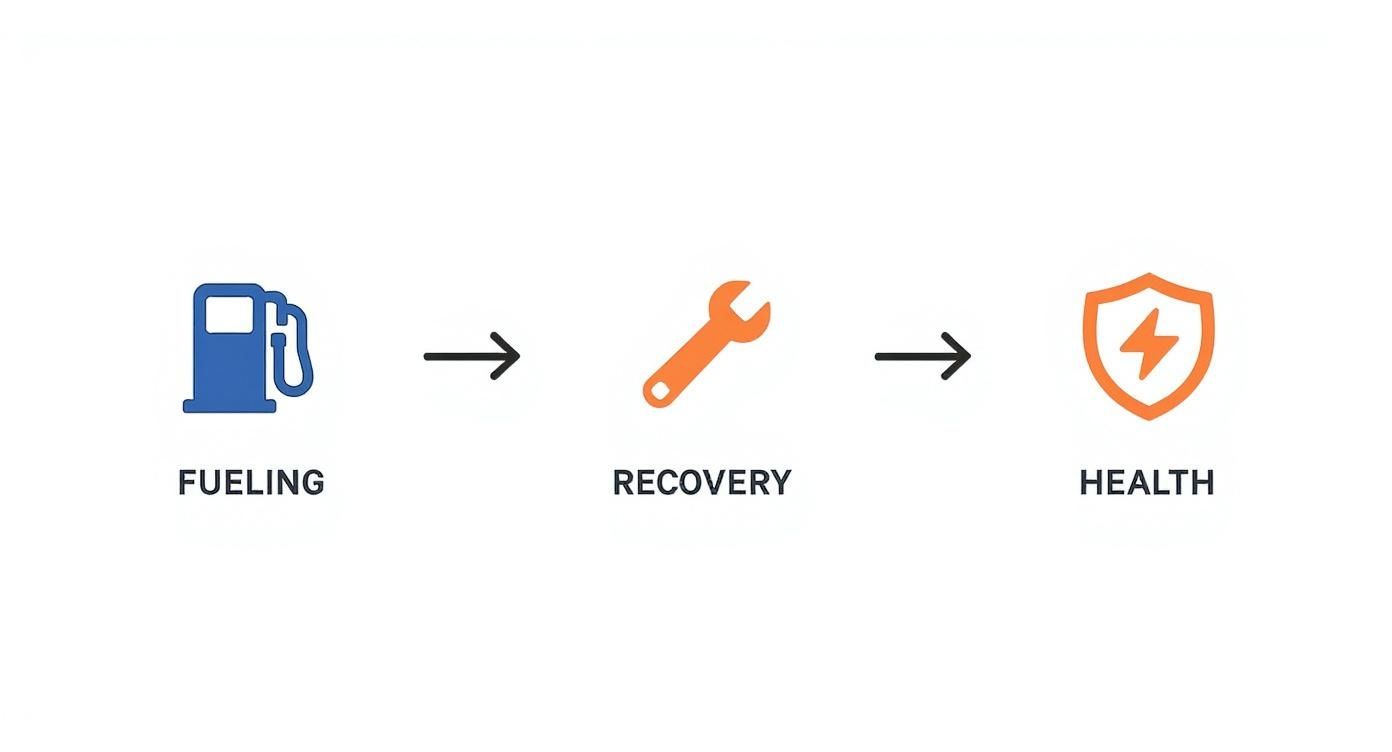
It all starts with getting the fundamentals of energy and fluid balance right before you even think about more advanced performance aids.
Keeping the System Cool with Electrolytes
Now, let's talk about that cooling system. When you run, you sweat. A lot. And that sweat isn't just water; it's loaded with critical minerals called electrolytes, primarily sodium and potassium for runners.
Think of electrolytes as the coolant running through your engine. They have a massive job to do:
- They maintain the proper fluid balance inside and outside your cells.
- They regulate the nerve signals that tell your muscles when to contract.
- They are absolutely vital for preventing debilitating muscle cramps.
On hot days or long runs, plain water just doesn't cut it. In fact, it can be dangerous. Without replacing lost electrolytes, you risk diluting the sodium in your bloodstream, a serious condition known as hyponatremia. This is why a top-notch electrolyte supplement is a must-have. And we're not alone in thinking this—the global hydration supplement market was valued at USD 36.0 billion and is expected to more than double by 2035.
Just like a car's engine would seize without coolant, your performance will tank without adequate electrolytes. Cramping, dizziness, and fatigue are all red flags that your internal cooling system is starting to fail.
Dialing in Your Personal Hydration Needs
Every runner sweats differently. Your personal sweat rate—how much fluid you lose per hour—is influenced by your genetics, your effort level, and the environment (hello, heat and humidity).
Figuring out your sweat rate is surprisingly simple. Weigh yourself nude before and after a one-hour run where you don't drink anything. The difference in your weight (in ounces) is your hourly sweat rate. That number becomes your personalized target for how much fluid you need to take back in.
For instance, if you lose 20 ounces in an hour, that’s your rehydration benchmark. By making sure those 20 ounces come from an electrolyte drink, you’re replacing both the fluid and the critical minerals you sweated out. To learn more about this, check out our guide on finding the best electrolytes for runners.
At the end of the day, fueling and hydration are the twin pillars of running performance. Master your intake of both carbs and electrolytes, and you'll ensure your engine has the power to perform and the cooling system needed to go the distance. Neglect either one, and you’re leaving speed, endurance, and a better race day on the table.
Boosting Endurance and Performance Aids
Once you've nailed down your fueling and hydration, you've built the solid foundation every runner needs for consistent training. Now, we can get into the fun stuff: specific performance aids. These are supplements designed to give you a real, measurable edge when it counts.
These aren't magic pills, but think of them as tactical upgrades for your running engine. You've already filled the tank with high-quality fuel (carbs) and set up an efficient cooling system (electrolytes). Performance aids are all about fine-tuning that engine to help you push harder, last longer, and find another gear on race day.
Caffeine: Your Mental and Physical Edge
Caffeine is easily one of the most studied and effective tools a runner can have. Its biggest advantage isn't just the jolt of energy—it's the incredible ability to lower your rate of perceived exertion (RPE). In plain English, it makes hard efforts feel easier.
This is an absolute game-changer during the brutal late miles of a marathon or a tough tempo session. By essentially tricking your brain into feeling less tired, caffeine helps you hold a higher intensity for longer. You can stay mentally sharp and focused right when your body is begging you to back off.
Caffeine acts like a muffler for your brain's fatigue signals. It doesn’t erase the physical work, but it changes how you perceive it, letting you tap into a level of performance you might otherwise leave on the table.
For the best results, the science points to consuming 3-6 mg of caffeine per kilogram of body weight about 60 minutes before you head out. For a 150-pound (68 kg) runner, that’s somewhere in the ballpark of 200-400 mg. Many gels now include caffeine, which makes it simple to top off your tank mid-race for that final push.
Beta-Alanine: The Fatigue Buffer
You know that feeling? You’re hitting the final kick of a race or grinding up a hill, and that intense, deep muscle burn forces you to slow down. That sensation comes from a buildup of hydrogen ions, which makes your muscles more acidic and stops them from contracting with full power. Beta-alanine is the direct counter to this problem.
It works by boosting your muscle's supply of carnosine, a compound that acts as a powerful buffer against that acid buildup.
- Delays Fatigue: By soaking up those performance-killing hydrogen ions, carnosine lets you sustain high-intensity efforts for longer.
- Improves Your Finishing Kick: This makes it incredibly valuable for any hard push lasting one to four minutes, whether it's a sprint to the finish line or powering over the last big hill.
Here's the catch: unlike caffeine, beta-alanine isn't something you take right before a run for an instant effect. You need to take it daily (3-6 grams, often in smaller doses throughout the day) for a few weeks to "saturate" your muscles. It's a long-term investment in your ability to handle the burn.
Nitrates: The Oxygen Delivery Supercharger
Nitrates, which you’ll find in things like beetroot juice, offer a totally different pathway to better performance. When you consume nitrates, your body converts them into nitric oxide, a potent vasodilator. This simply means it helps relax and widen your blood vessels.
Why does that matter for a runner? This widening effect is huge. It improves blood flow, which means more oxygen-rich blood can get to your working muscles with less effort from your heart. Your body literally gets better at using oxygen—the very definition of improving your running economy.
- Reduced Oxygen Cost: Studies have shown that supplementing with nitrates can lower how much oxygen you need to run at a certain pace. You're using less energy to do the same amount of work.
- Enhanced Endurance: This improved efficiency translates directly into better endurance and faster times, especially over longer distances.
To get the performance benefit, aim for a nitrate source (like a concentrated beetroot shot) that provides about 300-600 mg of nitrates around 2-3 hours before your run or race. That timing is key to give your body enough time for the conversion to nitric oxide to happen. To see how these pieces fit into the bigger picture, our guide on sports nutrition for endurance athletes offers a broader perspective.
Accelerating Recovery with Your Post-Run Repair Crew
The real gains from training don't happen when you’re pounding the pavement; they happen in the hours and days that follow. Every single run creates microscopic tears in your muscles. Recovery is simply the process of repairing this damage, which allows your body to adapt and come back stronger.
Think of post-run supplements as your dedicated repair crew, showing up right on time with the tools and materials needed to rebuild.
Skipping this phase is one of the biggest mistakes a runner can make. Without the right building blocks, that repair process is slow and inefficient. This leads directly to prolonged soreness, fatigue, and a much higher risk of injury. Prioritizing recovery isn't a luxury—it's the engine that drives your progress.
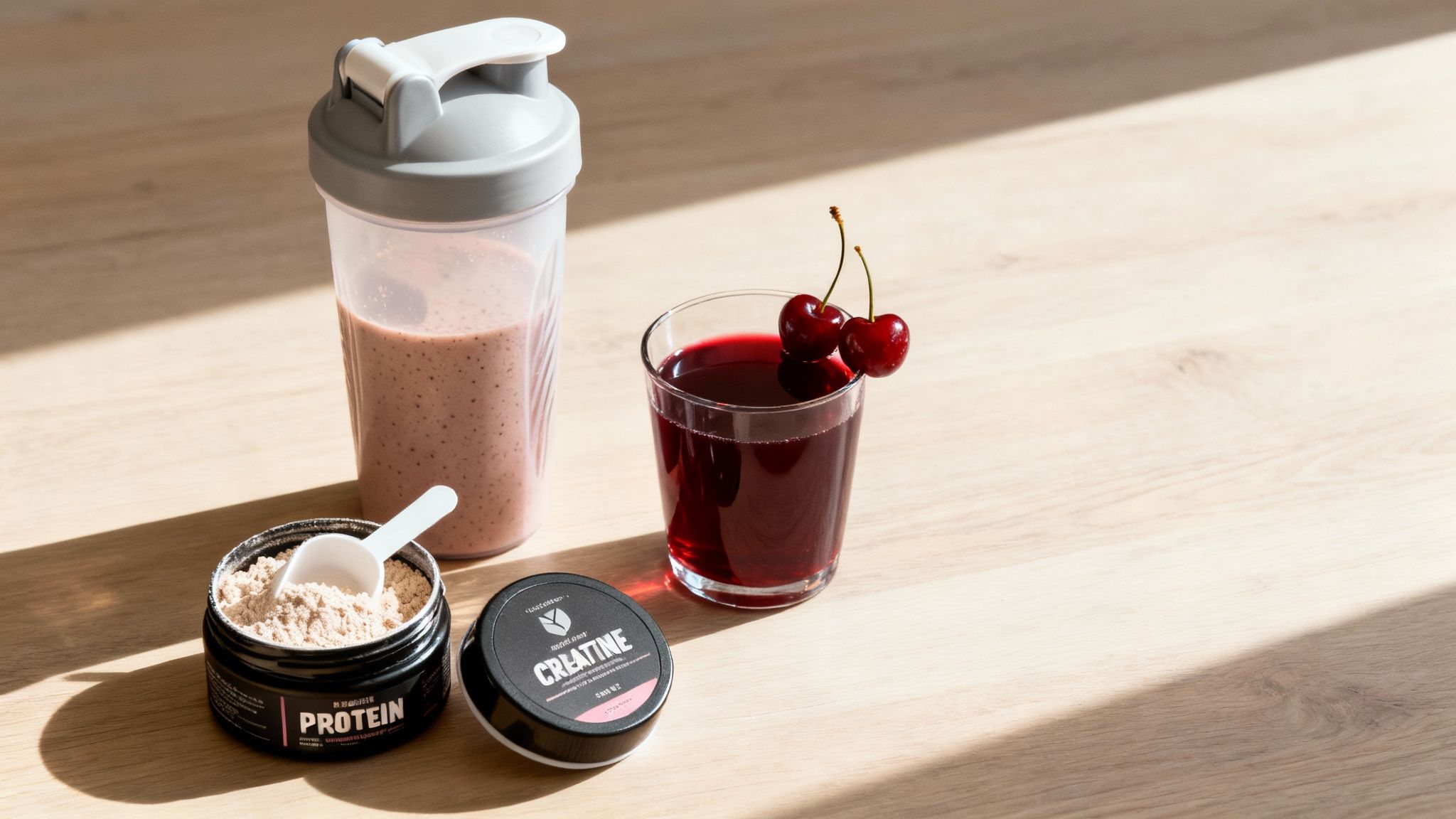
Protein: The Master Builder
Protein is, without a doubt, the single most important nutrient for muscle repair. It provides the essential amino acids your body needs to patch up those micro-tears and construct stronger, more resilient muscle fibers. Getting some protein in shortly after a run kicks this entire process into high gear.
You've probably heard of the "anabolic window"—that golden hour after a workout. While the timing isn't as rigid as we once thought, consuming 20-30 grams of high-quality protein within an hour or two post-run is a proven way to maximize muscle protein synthesis. That's just the scientific term for the rebuilding process. It's why a simple protein shake is one of the best tools in a runner's arsenal.
- Whey Protein: This is a fantastic choice because it's fast-digesting and rich in leucine, an amino acid that acts like a primary trigger for muscle repair.
- Plant-Based Blends: If you're going plant-based, look for powders that combine sources like pea, rice, or hemp. This ensures you get a complete amino acid profile, similar to what whey offers.
The sports supplement market reflects just how critical protein is. Valued at roughly USD 23.5 billion, it's projected to hit USD 38.9 billion by 2035. Protein supplements alone make up a massive 45% market share of that.
Tart Cherry Juice: The Natural Anti-Inflammatory
We all know that deep muscle ache that sets in 24-48 hours after a tough workout. That's Delayed Onset Muscle Soreness (DOMS), and it's caused by inflammation from that muscle damage. While a little inflammation is a necessary signal for repair, too much can seriously hinder your recovery and make the next few runs absolutely miserable.
This is where tart cherry juice comes in. This natural powerhouse is packed with anthocyanins, potent antioxidants that have been shown to significantly dial down inflammation and oxidative stress.
Think of tart cherry juice as a targeted cooling system for your sore muscles. It helps manage the inflammatory response, allowing your body's repair crew to work more efficiently without being overwhelmed.
Studies show that runners who supplement with tart cherry juice experience less muscle pain and a faster return of strength after hard runs. It's a simple, food-based way to fight soreness and get you back on your feet faster. Our detailed guide offers even more great supplements for muscle recovery to explore.
Creatine: The Rapid Energy Recharger
Creatine isn't just for weightlifters. It's an incredibly valuable tool for runners, especially when it comes to recovery. During a run, your muscles burn through a high-energy molecule called adenosine triphosphate (ATP). Creatine's primary job is to help rapidly regenerate your ATP stores.
After a hard workout, those immediate energy reserves are tapped out. Supplementing with creatine helps you replenish those stores more quickly. That means your muscles are "recharged" and ready for your next training session sooner.
How Creatine Supports Runner Recovery:
- Replenishes Energy: It quickly restores the ATP your muscles burned through on your run.
- Aids Glycogen Storage: Creatine can help your muscles store more carbohydrates (glycogen), further speeding up energy replenishment.
- Reduces Muscle Damage: Some evidence suggests creatine may also reduce markers of muscle damage and inflammation after you exercise.
By assembling your post-run repair crew—protein for building, tart cherry for inflammation control, and creatine for energy replenishment—you create a powerful system that accelerates recovery. This allows you to stack quality training days closer together, adapt faster, and ultimately, become a more resilient and powerful runner.
Foundational Health: The Unsung Heroes of Running
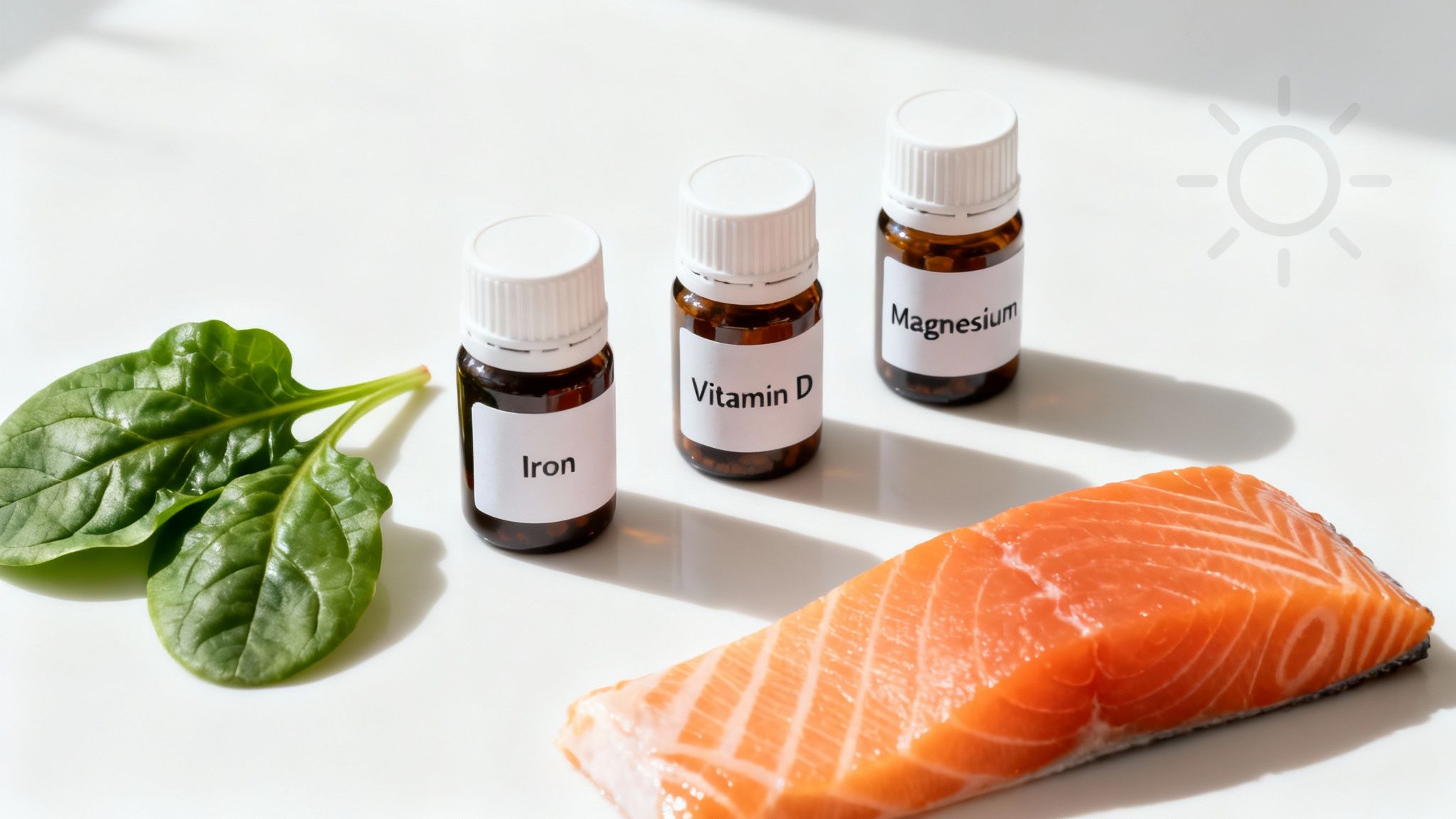
We all love to talk about gels, electrolytes, and protein powders. They get all the glory. But they’re only one piece of the performance puzzle. The real bedrock of your running ability is your foundational health, supported by a crew of unsung heroes: essential vitamins and minerals working tirelessly behind the scenes.
Think of it like this. Performance aids are the software updates for your body. Micronutrients? They’re the hardware. If your hardware is failing, no software tune-up is going to make the system run faster. That’s why dialing in your core nutritional needs isn't just a suggestion—it's non-negotiable.
Because of the sheer demand of training, many runners are at a higher risk for certain micronutrient deficiencies. Ignoring them can lead to stubborn fatigue, slow recovery, and a performance ceiling that no amount of caffeine can break through. Let's shine a light on a few of the most critical players for any runner.
Iron: The Oxygen Transporter
Iron is the mineral that, quite literally, helps you breathe at a cellular level. It’s a key part of hemoglobin, the protein in your red blood cells that snags oxygen from your lungs and ships it out to your hard-working muscles.
When your iron levels drop, that whole oxygen delivery system grinds to a halt. Your heart has to pump harder just to supply the same amount of oxygen, which means a higher heart rate at your usual pace, shortness of breath, and a deep, persistent fatigue you can't shake. Female runners, especially, need to keep an eye on iron due to menstrual losses.
A dip in iron is like trying to run a race with a fuel line that's half-clogged. The engine is fine, but it’s being starved of the oxygen it needs to make power, causing your performance to sputter.
Vitamin D: The Bone and Immune Guardian
Every single time your foot hits the pavement, your bones are absorbing a tremendous amount of impact. Vitamin D is absolutely critical for bone health because it’s the gatekeeper for calcium absorption—the primary mineral that gives your skeleton its strength and density.
Without enough Vitamin D, you become far more susceptible to stress fractures and other bone injuries that can put you on the sidelines for months. But it doesn't stop there. Vitamin D also plays a massive role in keeping your immune system in check. Hard, consistent training can temporarily suppress immune function, and having adequate Vitamin D levels helps keep you healthy and on the road.
Magnesium: The Muscle Function Manager
Magnesium is a true powerhouse. This one mineral is involved in over 300 enzymatic reactions in the body, and many of them are directly tied to your running performance. It’s a key player in creating energy, firing nerves, and most importantly, managing muscle contraction and relaxation.
When magnesium is low, your muscles can’t quite figure out how to relax properly, which can lead to cramping, twitching, and nagging tightness. It’s also crucial for post-run recovery, helping to regulate inflammation and support the quality sleep your body needs to do its most important repair work.
These foundational nutrients are so vital that some runners explore highly bioavailable sources to fill any gaps. Our guide to the benefits of organ supplements dives deeper into nutrient density. Ultimately, ensuring your body has these core building blocks is the smartest first step in any supplement strategy, creating a resilient foundation upon which all other performance gains are built.
How to Choose Safe and Effective Supplements
Walking down the supplement aisle can feel like navigating the Wild West. Brands are shouting bold claims from every direction, and it’s nearly impossible to know who to trust. Because the industry isn't tightly regulated by the FDA, the responsibility for finding a quality product falls squarely on your shoulders.
This is where third-party testing becomes your single most important tool. It’s the one thing that separates a legitimate, effective supplement from a bottle of expensive dust.
Think of it this way: a brand’s own claims are like a student grading their own homework. Of course, they're going to give themselves an A+. A third-party certification, on the other hand, is like having a strict, impartial teacher check every single answer. It’s an unbiased seal of approval that what’s on the label is actually what’s in the bottle.
The Gold Standard of Safety and Purity
When you’re looking at a product, the very first thing you should do is scan the label for a reputable certification logo. These aren’t just fancy graphics; they’re guarantees that protect both your health and your performance.
Two of the most respected names in the game are:
- NSF Certified for Sport: This is one of the most rigorous programs out there. It doesn’t just verify that a product contains what the label claims; it also tests for over 270 substances banned by major athletic organizations.
- Informed-Sport: This global program takes things a step further by testing every single batch of a product before it ever hits the market. This ensures it's completely free from a huge range of prohibited substances.
When you choose products with these stamps of approval, you can train with confidence, knowing you aren't accidentally taking contaminants or banned ingredients that could tank your health or lead to a failed drug test.
In an industry experiencing explosive growth, third-party testing is the critical dividing line between a trustworthy brand and a risky gamble. It separates transparent, science-backed formulas from those that hide behind proprietary blends and unsubstantiated claims.
And this market is absolutely booming. Valued at USD 517.23 billion, the global nutritional supplements market is projected to hit nearly USD 911.65 billion by 2034, with sports nutrition driving a massive part of that growth. You can discover more insights about this trend and what it means for athletes.
Your Practical Checklist for Choosing a Brand
Certifications are non-negotiable, but a truly high-quality brand demonstrates its commitment to you in other ways, too. Use this simple checklist to vet any supplement you’re considering.
- Look for Clean Ingredients: Flip the bottle over and read the "other ingredients" list. You want to see a short, clean list, not a novel full of artificial sweeteners, colors, and unnecessary fillers. The best formulas, like REVSCI solutions, focus on active ingredients without the junk.
- Verify Clinical Dosages: Does the brand use ingredient amounts that are actually backed by research? A common trick in the industry is to "fairy dust" a product—sprinkling in a well-known ingredient at a dose far too small to have any real effect.
- Demand Transparency: Good companies have nothing to hide. They are open and proud of their ingredient sourcing, manufacturing processes, and testing protocols, and they make it easy for you to find that information.
By adopting this critical mindset, you can cut through the marketing noise and put your hard-earned money toward safe, effective supplements that will genuinely support your running goals.
Common Questions About Supplements for Runners
Let’s be honest, the world of supplements can feel like a maze. Even when you think you have a handle on it, new questions always pop up. It's totally normal to wonder about the little details of your strategy.
My goal here is to give you some clear, no-nonsense answers to the questions I hear most often from runners. Let's clear the air so you can feel 100% confident in your plan.
Do I Need Supplements as a Casual Runner?
For most people running for fitness and fun, a solid, whole-foods diet is king. You should always build your nutritional foundation on real food first—that’s non-negotiable for health and performance.
That said, even casual runners can get a real boost from the right supplements. Electrolytes can be a lifesaver on a hot day or any run over an hour. A simple protein shake is also an incredibly convenient way to kickstart recovery. It’s not about needing them, but about matching your support tools to your training.
How Do I Know Which Supplements Are Safe?
This is the big one. Your safety has to be priority number one, and a slick label doesn't mean much. The single most reliable way to know if a product is clean and safe is to look for third-party certifications like NSF Certified for Sport or Informed-Sport.
Think of these seals as your guarantee. They’re independent proof that a product is free from banned substances and that what's printed on the label is actually what's inside the container. It cuts right through the marketing hype.
Beyond that, do your homework. Look for brands that are transparent about their sourcing and manufacturing, and see what other real athletes are saying about them.
Can't I Just Get All My Nutrients from Food?
In a perfect world, yes. Real, whole food is the bedrock of any smart nutrition plan. But for runners, supplements play a crucial role in a few key areas where food alone just can't keep up:
- Convenience: Let's face it, trying to peel and eat a banana mid-marathon is a mess. Squeezing down a carb gel in a few seconds is just way more practical.
- Targeted Dosing: Supplements deliver a precise, measured dose of a specific nutrient. Getting a consistent, effective amount of something like caffeine or beet-root nitrates from food alone is nearly impossible.
- Filling Gaps: The stress of intense training ramps up your body's demand for certain nutrients. It can be incredibly tough to get enough iron or Vitamin D from your diet consistently when you're logging serious miles.
Supplements are meant to do just that—supplement a great diet, not replace it. They're tools to sharpen the edge when you already have a strong nutritional base.
At Revolution Science, our entire mission is to create clean, third-party tested supplements that you can trust on your running journey. Take a look at our research-backed formulas and build the perfect stack to support your performance and recovery at https://rvsci.com.