
Your Cart is Empty


Beef Organ Nutrition Guide For Athletes
Beef Organ Nutrition taps into the rich profiles of liver, heart, kidney, and spleen to give athletes a real performance boost. Picture these organs as precision parts in your biological engine—each one refining energy output, speeding up recovery, and extending stamina. The Primus Beef Organ Complex by RVSCI, which includes desiccated grass-fed beef liver and other organ extracts, brings you these nutrients in a convenient formula.
Engine Tuning With Beef Organ Power
Most training plans today skip over the very nutrients that kept our ancestors strong and resilient. Yet these organ meats deliver targeted vitamins and minerals that endurance, strength, and aging athletes all benefit from.
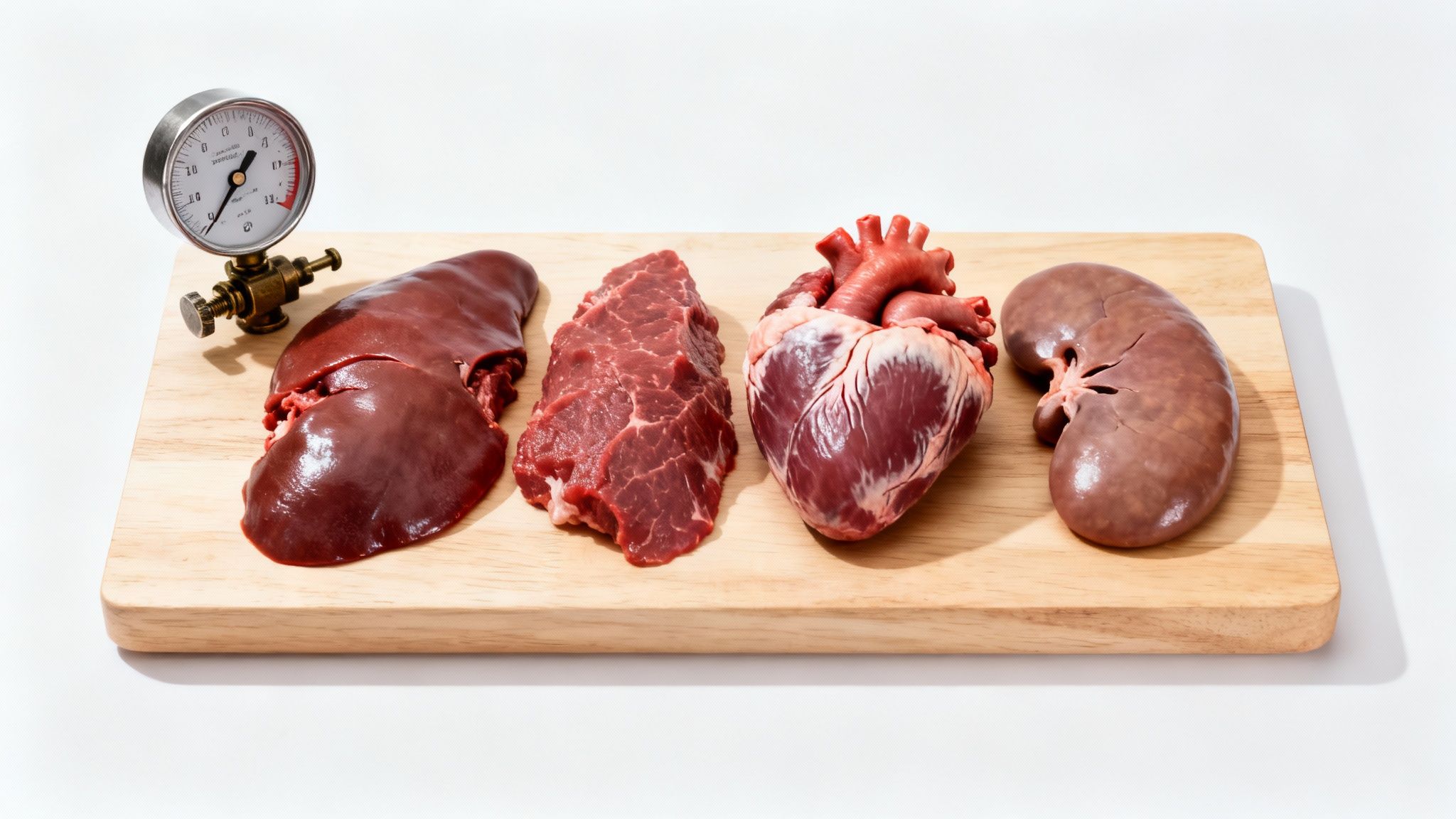
Key Organ Highlights
- Liver: Packed with Vitamin A for immune support and clear vision
- Heart: Rich in CoQ10 and B vitamins to fuel cellular energy
- Kidney: Offers an array of B vitamins and essential minerals for metabolic health
- Spleen: A focused source of iron that improves oxygen transport
Nutrient-Packed Organs at a Glance
| Organ | Key Benefit |
|---|---|
| Liver | Vision and immunity |
| Heart | Cellular energy |
| Kidney | Metabolic support |
| Spleen | Iron delivery |
“Organ nutrients act like high-octane fuel for your biological engine.”
You don’t have to take my word for it—this demand shows up in the global market for beef-derived organ supplements, projected at US$128 million in 2025 with production of 3.52 million units. Learn more about this market growth
For detailed product breakdowns and dosing tips, check out our guide on organ supplements
Grass-fed quality.
Understanding Beef Organ Types
Imagine your body as a finely tuned engine—each beef organ plays a unique role in keeping you at peak performance.
The liver is your fuel filter, packed with Vitamin A to sharpen vision and bolster immune defenses.
Think of the heart as a spark plug loaded with CoQ10, ready to ignite cellular energy whenever you ramp up the intensity.
Your kidneys work like a precision gearbox, delivering B vitamins to optimize metabolic shifts under load. Meanwhile, the spleen acts as a high-pressure injector, supplying iron for smooth oxygen transport.
Comparing Organs To Engine Parts
- Liver: Refines your “fuel” with antioxidants
- Heart: Sparks energy production at the cellular level
- Kidney: Gears up metabolism when you push harder
- Spleen: Injects iron for steady oxygen flow
Map these analogies to your weekly meal plan for a balanced, high-performance diet.
Rotate fresh organ meats with concentrated extracts to cover every nutrient angle. Always aim for grass-fed, nose-to-tail sourcing to guarantee traceability and safety.
We also recommend REVSCI’s Primus Beef Organ Complex, which includes beef liver extract and synergistic organ cofactors in one convenient formula.
Check out our guide on beef liver supplements to learn dosing and timing.
Beef Organ Nutrient Breakdown
Think of tracking beef organ micronutrients as watching a fuel gauge–it tells you exactly how much power you have left. That insight can make a huge difference for athletes dialing in their performance.
Nutrient Levels Across Common Beef Organs
Here’s a side-by-side look at key vitamins and minerals in 100 g of liver, heart, and kidney. Use this snapshot to balance your plate and hit your daily targets.
| Organ | Vitamin A (IU) | Vitamin B12 (µg) | Heme Iron (mg) | Protein (g) |
|---|---|---|---|---|
| Liver | 20,000 | 83 | 6.5 | 26 |
| Heart | 7,000 | 8 | 3.0 | 17 |
| Kidney | 2,500 | 4 | 5.1 | 15 |
This table makes it clear: liver sits at the top for Vitamin A and Iron, while heart and kidney shine with solid B12 and protein content.
Each organ brings something different to the table. By mixing them, you cover a broader spectrum of nutrients without relying on supplements alone.
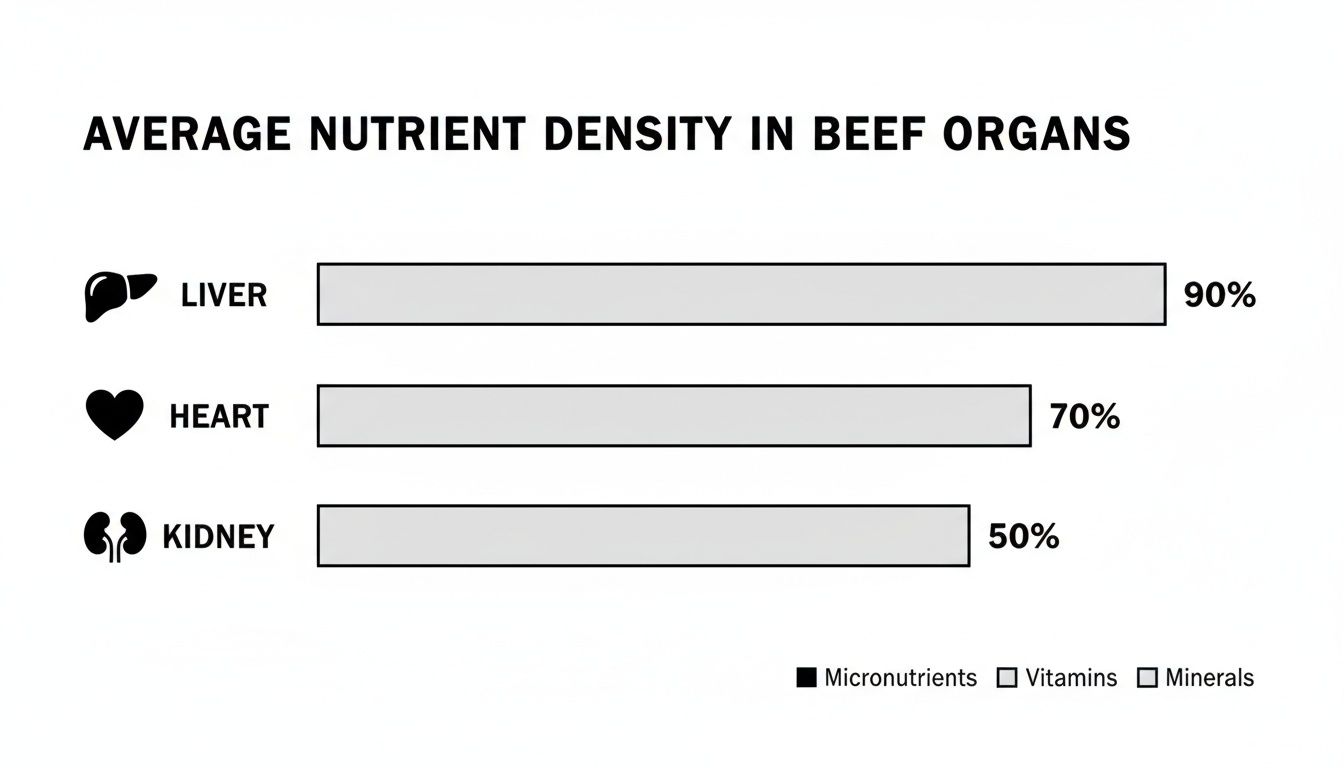
In practice, liver acts like a quick-charge source for Vitamin A, supporting vision, recovery, and immune health. Heart and kidney then step in to boost B12, which fuels energy production and red-blood-cell formation.
Consider these tips when planning your meals:
- Rotate organs weekly to prevent excess intake of any single nutrient.
- Blend chopped liver into pâtés or stews for smoother delivery.
- Slice heart thin and grill it as skewers for quick protein hits.
For detailed advice on timing your doses and choosing between whole-food organs or capsules, check out our guide on beef organ supplements.
With a clear view of these nutrient profiles, you can confidently tailor your organ intake to match your endurance, strength, and recovery goals.
Athletic Benefits And Safety Considerations
Think of beef organs as a precision tune-up for both endurance athletes and strength trainers. They ramp up your body’s oxygen delivery almost like upgrading your vehicle’s fuel pump.
Inside the liver and spleen, iron steps in to preserve red blood cell volume when you’re pushing hard. At the same time, heart tissue delivers CoQ10, acting as a cellular spark plug that kickstarts recovery pathways.
- Enhanced Oxygen Transport for longer, steadier workouts
- Accelerated Muscle Repair after high-intensity sessions
- Balanced Hormone Production in aging athletes
Managing Purine Intake
Organ meats are nutrient powerhouses, but they also carry higher purine content, which can elevate uric acid in sensitive individuals. A simple rotation plan and mindful portions help you reap the benefits without stomach upset or flare-ups.
“A small weekly dose of beef organ acts like maintenance for mitochondrial health.”
Seasoned competitors often alternate organ servings with leafy greens to bolster mitochondrial resilience. For example, endurance athletes might cap liver at 50 g twice weekly to manage oxidative stress.
Looking for more supplement insights? Check out our guide on supplements for athletic performance.
For consistent dosing and zero prep time, consider adding Primus Beef Organ Complex, which includes beef liver, to your nutrition lineup. Track your response, tweak as needed, and let your body show the results.
Sourcing And Quality Assurance
Building real confidence in beef organ supplements begins with transparent traceability. When you choose grass-fed sources, you can literally follow the animal’s path from pasture to package.
That clarity matters because global standards for residue testing can differ widely. Some regions mandate frequent hormone screens, others only spot-check. Learn more about residue monitoring and market trends
To see how sourcing choices stack up, here’s a snapshot:
Comparison of Grass-Fed Versus Conventional Organs
| Aspect | Grass-Fed | Conventional |
|---|---|---|
| Traceability | Farm-to-capsule tracking | Limited detail on feed and supplier |
| Hormone Residue Testing | Routine multi-residue screening | Variable frequency |
| Contaminant Levels | Regular heavy-metal and mycotoxin checks | Inconsistent monitoring |
| Animal Welfare | Pasture access and ethical practices | Confined systems |
From traceability to welfare measures, grass-fed organs consistently rate higher in safety checks and ethical treatment.
Testing Protocols
- Verify the certificate of analysis for heavy metals and pesticide residues
- Check purine content disclosures to manage uric acid levels
- Confirm hormone and antibiotic limits through third-party labs
- Note batch-specific lot numbers on supplier labels
Primus Beef Organ Complex goes through multi-point testing to guarantee purity and consistency. For the cleanest profile, always look for grass-fed certification and transparent lab data.
“Whole-animal transparency is the cornerstone of quality assurance.”
Preparation Strategies and Supplement Choices
There’s something satisfying about folding beef organ into your cooking—it boosts nutrition and layers in rich, savory flavor. These athlete-friendly dishes slot easily into a busy morning or a relaxed evening prep session.
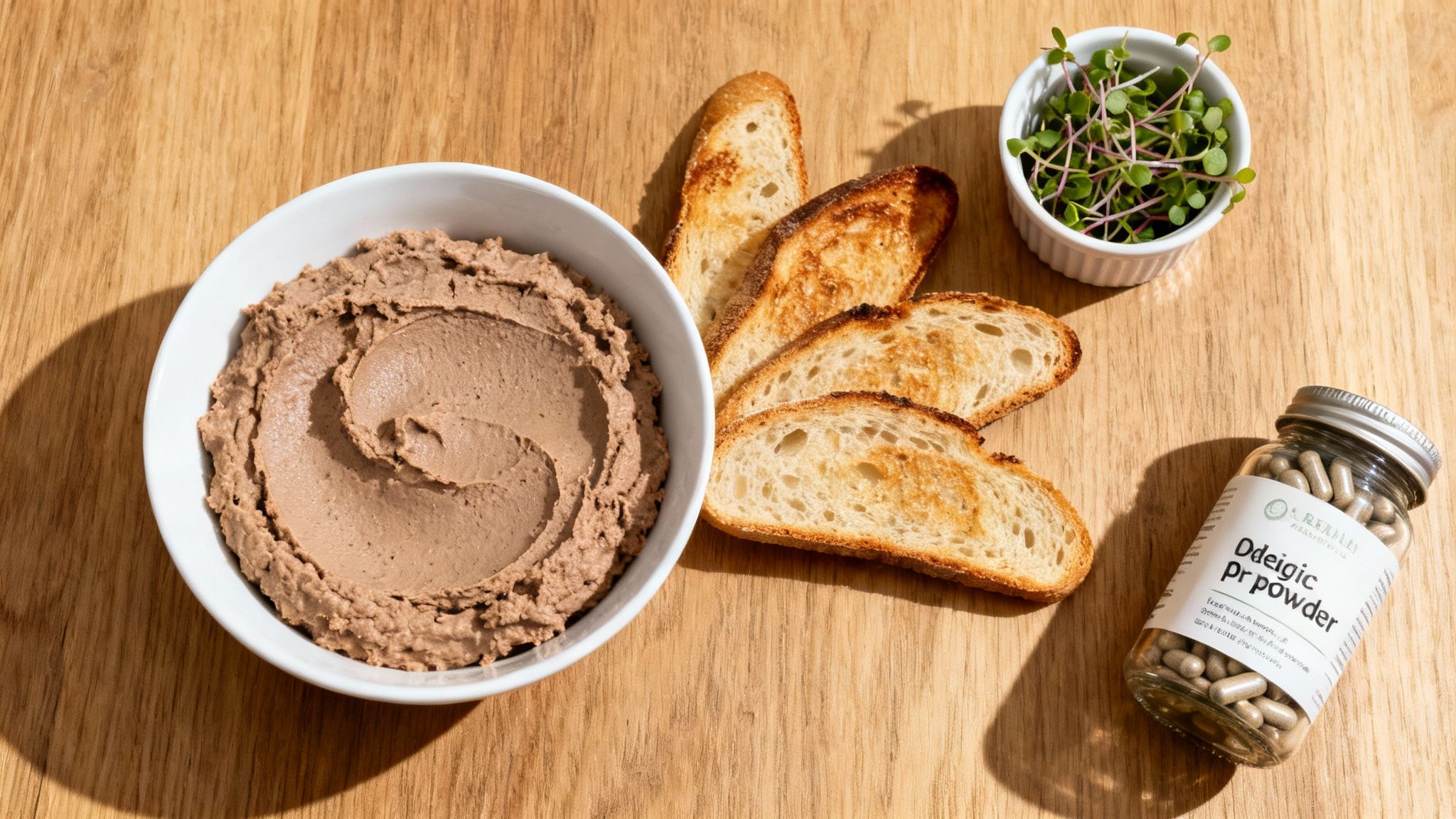
- Creamy liver pâté marries beef liver with fresh herbs for a silky, protein-rich spread.
- A quick heart stir-fry tosses sliced heart, garlic, and leafy greens in under ten minutes.
- Homemade organ chips dehydrate thin liver slices into a crunchy, on-the-go snack.
Timing Tips For Workouts
Treat 20 g of organ protein as your pre-workout spark—aim to enjoy it about 60 minutes before training to top off energy reserves.
Right after your session, pair an organ dish with complex carbs and healthy fats to speed recovery.
- When training is intense, lean on whole-food organ meals.
- On jam-packed days, reach for Primus Beef Organ Complex capsules for convenience.
Cook liver ahead of time and pack into 50 g portions to streamline your prep.
These straightforward steps help you dial in both your meals and supplements. Keep experimenting until you find the combo that feels effortless in your routine.
Frequently Asked Questions
Many endurance and strength athletes ask, “How much beef organ meat should I eat each week?” In most training plans, 50 grams of mixed organ meats hits the sweet spot. It delivers a steady stream of vitamins and minerals without overloading on purines.
Rotating between liver, heart, and kidney is key to keeping uric acid levels balanced. For instance, you might have liver twice a week and swap in heart or kidney on other days. This simple shuffle helps curb gout risk and keeps digestion running smoothly.
Fresh organs pack a nutritional punch because your body absorbs vitamins and minerals directly. On the other hand, desiccated organ supplements shine when you need a precise dose or longer shelf life. Base your choice on convenience, taste, and how easy it is to stay consistent.
How Fresh Organs Compare
When you’re stacking organ meat with your favorite supplements, a few smart pairings go a long way:
- Combine organ extracts with creatine to fuel rapid ATP turnover and boost muscle energy.
- Stir a tablespoon of ground liver into your post-workout protein shake for an instant micronutrient upgrade.
- Space servings evenly across the week to avoid spikes in one nutrient and dips in another.
Avoid eating too much liver in a single week to prevent vitamin A overload and keep your system happy.
Grab Primus Beef Organ Complex, which includes beef liver, from Revolution Science and make it part of your routine—whether you’re chasing PRs or just aiming for balanced, nutrient-rich meals.