Your Cart is Empty


Best electrolyte powder for runners: Ultimate guide to hydration and performance
The best electrolyte powder for runners is one that does its job without any extra baggage. That means a high-sodium formula, zero sugar, and clean ingredients that won't revolt against your stomach mid-run.
For any serious runner, a product like REVSCI Reviver isn't just a luxury; it's engineered to replace exactly what you're losing in sweat. This approach helps you dodge the performance-killing sugar crashes that are all too common with traditional sports drinks.
Why Your Sports Drink Is Holding You Back
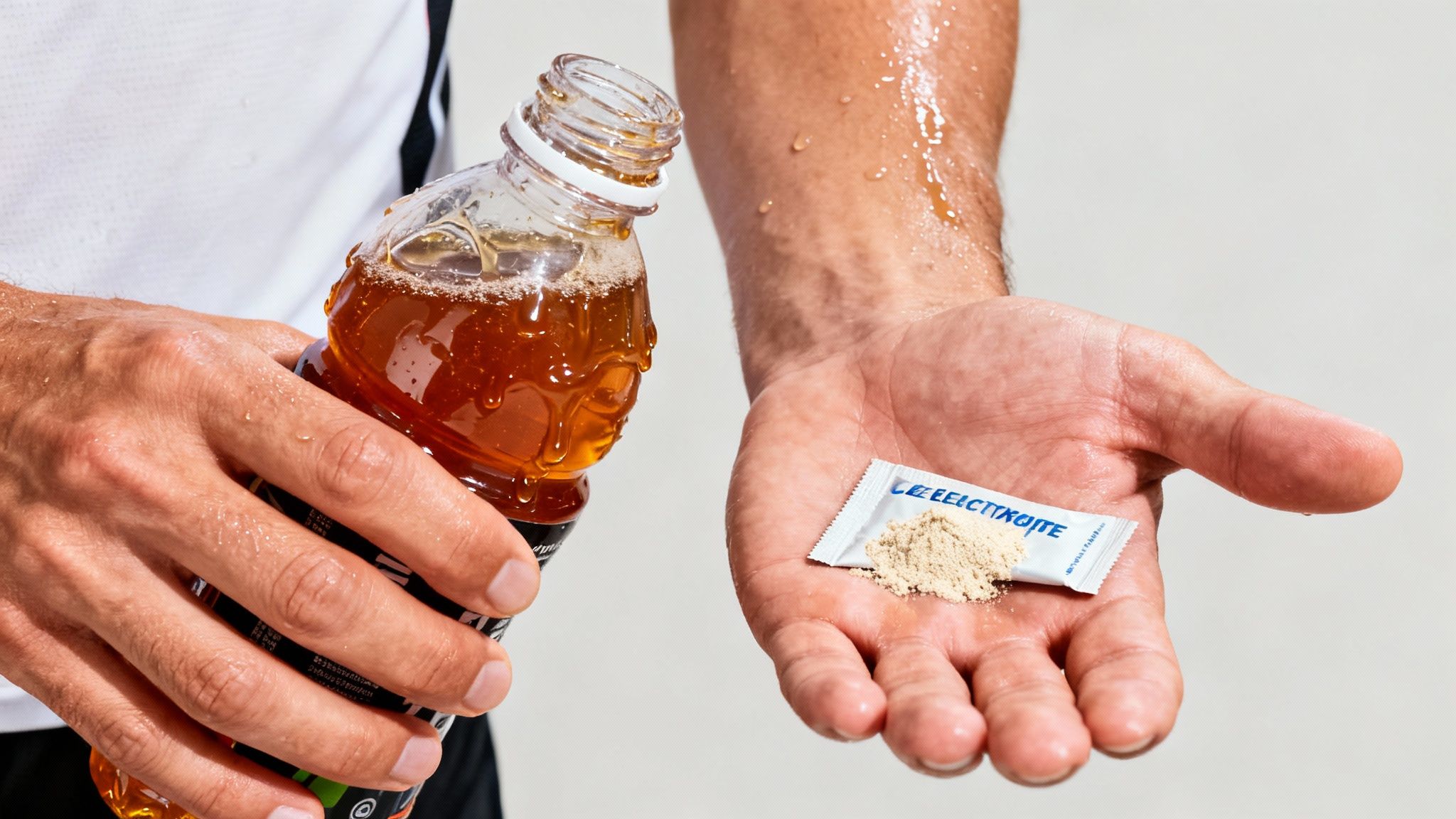
Ever hit the wall during a long run, ambushed by a sudden energy crash or a crippling cramp? You’re definitely not alone. So many runners diligently sip on those neon-colored sports drinks, thinking they're doing the right thing for their performance.
But here’s the hard truth: that sugary drink is often the hidden culprit behind your biggest frustrations on the road or trail.
The one-size-fits-all formula of generic sports drinks just doesn’t cut it for the intense demands of running. They're typically loaded with sugar and critically low in the single most important electrolyte you sweat out: sodium. This mismatch creates a perfect storm for performance disaster.
The Problem with High-Sugar Formulas
Think of your body’s energy system like a campfire. You want a slow, steady burn from a solid log, not the quick flare-up from a piece of paper that turns to ash in seconds. Sugar is that piece of paper.
- Energy Spikes and Crashes: All that sugar sends your blood glucose on a rocket ride, but the crash that follows is inevitable. It leaves you feeling sluggish and weak—what runners grimly call "bonking."
- Gastrointestinal (GI) Distress: While you’re pushing the pace, your gut has to work overtime to process that concentrated sugar. This often leads to bloating, nausea, and cramping—the absolute last things you want to deal with at mile 18.
- Inefficient Hydration: Ironically, high-sugar drinks can actually slow down how fast your body absorbs water and electrolytes, getting in the way of the very hydration they promise.
Imbalanced Electrolytes Mean Inevitable Failure
Runners lose a shocking amount of electrolytes through sweat. Sodium losses can average 1,000 to 3,000 milligrams per hour, making targeted replacement non-negotiable for maintaining performance.
Consider the 2012 Boston Marathon, where temperatures soared to 89°F. A staggering 30% of participants suffered from severe cramping directly linked to not replacing enough sodium. You can find more data on how crucial electrolyte balance is for athletes on grandviewresearch.com.
A specialized formula isn't just nice to have; it's essential for peak performance. When your hydration strategy doesn't match what you're sweating out, you're just setting yourself up for muscle cramps, a drop in power, and mental fog.
This is exactly where a well-formulated electrolyte powder changes the game. Below is a quick comparison to see the difference.
Electrolyte Powder vs Traditional Sports Drinks
| Feature | REVSCI Reviver (Best Electrolyte Powder) | Typical Sports Drink |
|---|---|---|
| Primary Goal | Precise electrolyte replenishment for performance. | Quick energy from sugar, basic hydration. |
| Sodium Content | High (1,000mg per serving) to match sweat loss. | Low, often insufficient for endurance athletes. |
| Sugar Content | Zero sugar to prevent energy crashes and GI issues. | High, often 20-40g of sugar per serving. |
| Ingredient Focus | Clean, functional ingredients for optimal absorption. | Often contains artificial colors, flavors, and preservatives. |
| Best For | Serious runners, endurance athletes, and heavy sweaters. | Short bursts of activity, casual use. |
By ditching the sugar and focusing on a sodium-forward profile, a product like REVSCI Reviver gives you clean, sustainable support. It’s designed to work with your body, not against it, providing the precise tools you need to push through barriers and perform at your best. When you understand the importance of a clean formula, you can choose the best clean electrolyte powder for your specific needs.
What's Really Happening When Runners Get Dehydrated?
To get a grip on why the right electrolyte mix is a game-changer for runners, we have to look past the simple idea of "hydration." It's more complex than just drinking water. Picture your body as a high-performance electrical grid. Water is the wiring, but electrolytes are the actual current—the electrical signals that fire up everything from muscle contractions to nerve impulses.
When you run, you sweat. That sweat isn't just water; it's loaded with these critical minerals. If you don't replace them, it’s like trying to run a city during a blackout. Systems start failing. This is precisely why chugging plain water isn't enough. You have to put back the specific minerals you lost to keep the power on.
Meet Your Body's Electrical Team
Not all electrolytes carry the same weight when it comes to running performance. While several play a role, there's a core trio doing the real heavy lifting to keep you moving down the road or trail. Let's break down who they are and what they do.
Sodium: The Fluid Director
Sodium is, without a doubt, the single most important electrolyte for any runner. It’s the master regulator of your body's fluid balance. Think of it as the traffic controller for all the water in your system, telling it exactly where to go to ensure your cells stay perfectly hydrated and your blood volume remains stable.
When you sweat out too much sodium, your body loses its ability to hold onto water. This is a fast track to dehydration, a drop in blood volume, and that soul-crushing feeling of hitting the wall. For any serious runner, a high-sodium formula isn't just a good idea—it's non-negotiable.
Potassium: The Muscle Mechanic
If sodium is managing the fluid, potassium is the expert mechanic for your muscles. It works hand-in-hand with sodium, creating the electrochemical gradient that allows for smooth, powerful muscle contractions and, just as importantly, relaxation.
Every time you push off the ground, potassium is helping make that movement happen. When your levels get low, the signals get crossed. This breakdown in communication leads to weakness, fatigue, and the dreaded muscle cramps that can stop you dead in your tracks.
Magnesium: The Energy Plant Manager
Magnesium is the unsung hero of your cellular energy production. It works behind the scenes in your mitochondria—your body’s tiny power plants—to help convert carbs and fats into usable energy (ATP).
Without enough magnesium, your body simply can't generate the power you need for a long, hard effort. This shows up as premature fatigue and a feeling that your legs just have no "pop," even when you think you’ve fueled properly.
It's not just about having these electrolytes; it's about having them in the right ratios. The blend of sodium, potassium, and magnesium in a well-designed electrolyte powder should mirror what you actually lose in your sweat. This ensures your body can absorb and use them instantly without creating new imbalances.
Why the Right Formula is Everything
A generic, low-sodium sports drink is like throwing a random handful of parts at a complex engine problem. It might help a little, but it's not a real solution.
A specialized formula like REVSCI Reviver, on the other hand, is engineered with a sodium-forward profile for one simple reason: runners lose far more sodium than any other electrolyte. Its clean, zero-sugar composition delivers exactly what you need without the risk of digestive issues or energy crashes that come with sugary drinks.
This precision means you're not just rehydrating; you're restoring the specific electrical balance your body needs to perform at its peak. Of course, hydration is just one piece of the puzzle. A complete approach to runner's health also means understanding recovery techniques, including things like comprehensive sports massage therapy, to keep your body in top condition. By combining smart fueling with proper recovery, you create a complete system for success. The right electrolyte powder is a foundational piece of that system.
How to Personalize Your Electrolyte Strategy
Following a generic hydration plan is like using a map for the wrong city—sure, it might get you somewhere, but it's probably not where you intended to go. The best electrolyte powder for runners isn’t a magic bullet; it's a precision tool that has to be adapted to your unique body and the demands of your run.
The real key to unlocking your performance is to stop guessing and start calculating.
This all comes down to understanding how much you sweat and what's in that sweat. While a professional lab test will give you the most precise data, you can get a surprisingly solid estimate right at home. This simple process puts you in control, turning your hydration from a potential weakness into a predictable advantage.
The At-Home Sweat Test
Think of this as your own personal science experiment, one with a massive performance payoff. The goal is simple: estimate your sweat rate, which is just the amount of fluid you lose per hour of running. You don't need any fancy equipment, and it provides an invaluable baseline for dialing in your hydration.
Here’s how you do it:
- Weigh Yourself: Before you head out, weigh yourself with minimal clothing (or nude) right after using the restroom. Jot down that number.
- Go for a Run: Do a typical one-hour run. Critically, don’t drink any fluids during this test, as it will throw off the results.
- Weigh Yourself Again: As soon as you get back, towel off any sweat and weigh yourself again in the same state as before.
- Do the Math: Subtract your post-run weight from your pre-run weight. That difference, converted to ounces, is your hourly sweat rate. (A good rule of thumb: 1 pound lost is roughly 16 ounces of fluid).
So, if a 150-pound runner loses 1.5 pounds during their hour-long test, their sweat rate is about 24 ounces per hour. That number is now your starting point for fluid replacement.
Once you know how much fluid to put back in, the infographic below shows how the key electrolytes—Sodium, Potassium, and Magnesium—get to work as a team to support your performance.
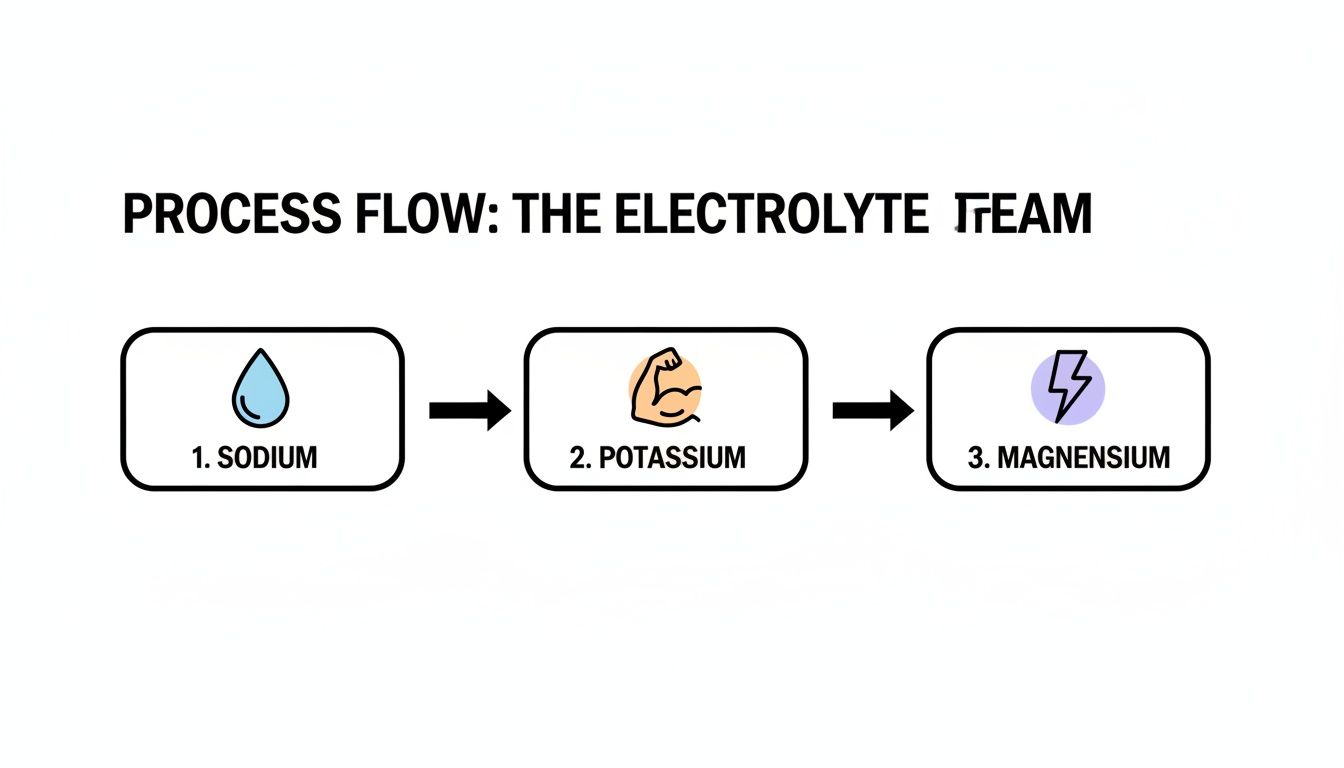
This shows the critical flow: it starts with sodium to restore fluid balance, potassium to keep muscles firing correctly, and magnesium to drive energy production.
Adjusting for Key Variables
Here’s the thing: your sweat rate isn't set in stone. It shifts based on a handful of factors, and your electrolyte plan needs to be just as dynamic. Knowing your baseline is great, but learning to adjust on the fly is what makes a real difference.
Your hydration plan should be a living document, not a rigid set of rules. The ability to adapt your intake based on conditions is what separates good runners from great ones.
Think about these critical variables and how you'd adjust your intake of a product like REVSCI Reviver:
- Intensity: A tough interval session will have you sweating way more than a slow, easy recovery jog. On those hard days, you’ll likely need to up your electrolyte concentration or sip more often.
- Duration: For runs under an hour, water might be all you need. But once you push past that 60-90 minute mark, electrolytes become absolutely essential to prevent your performance from tanking.
- Weather: This is a huge one. Running on an 80°F day with high humidity can easily double your sweat rate compared to a cool, crisp morning. You have to be ready to significantly increase both fluid and electrolyte intake when the heat is on.
For those who want to get even more granular, services that offer custom hydration testing can give you incredibly precise data about your body's specific needs.
Putting It All Together
Let’s go back to our 150-pound runner with that 24 oz/hour sweat rate. On a cool day for a 60-minute run, a single serving of REVSCI Reviver in their bottle is probably the perfect amount.
But now, let's put that same runner on a 90-minute long run in 80°F heat. Their sweat rate could easily jump to 32-40 oz/hour. To stay on top of it, they'll need to drink more fluid and should probably consider bumping up to 1.5 scoops of Reviver to match the much higher sodium loss.
This is what an adaptable strategy looks like—one that ensures you stay ahead of dehydration and electrolyte depletion. For many runners, it's also important that what they're putting in their body is clean. You can dive deeper into the benefits of electrolytes without artificial sweeteners in our detailed guide.
When you start personalizing your approach, hydration stops being a liability and becomes one of your most powerful tools.
A Runner's Guide to Timing Your Hydration
For any runner, knowing what to drink is only half the battle. The real secret weapon is knowing when to drink it. Nailing your timing transforms a simple electrolyte powder into a strategic tool that can make or break your performance. It's the difference between just getting through a run and actually crushing it.
Think of your hydration strategy as a three-act play. You have the prep work before the curtain goes up, the sustained performance during the main event, and the all-important recovery after the final bow. Each phase has its own rules to keep your body balanced, energized, and ready for whatever comes next.
Phase 1: Pre-Loading Before Your Run
You'd never start a long drive with an empty gas tank, right? The same logic applies to your body. Pre-loading, which is just a term for topping off your fluid and electrolyte levels before you start moving, is your first and best defense against dehydration.
This is as simple as sipping an electrolyte drink about 30-60 minutes before your run. Doing this ensures your cells are fully hydrated and your sodium levels are primed, which critically helps your body hold onto water once you start sweating. For most training runs, one serving of REVSCI Reviver is the perfect way to get started on the right foot.
"I used to think chugging water right before a race was enough. After switching to pre-loading with a high-sodium electrolyte mix, the difference in my first few miles was night and day. I felt stronger and more controlled from the start." - Ironman Finisher
Phase 2: Fueling During Your Run
Once you’re out on the road or trail, the game shifts from preparation to maintenance. The goal now is to replace what you’re losing in real-time. This prevents a performance-killing deficit from sneaking up on you. For any effort lasting longer than 60-90 minutes, sipping electrolytes isn't just a good idea—it's essential.
Your mid-run strategy should be all about consistency. A good starting point is to take a few sips from your bottle every 15-20 minutes. This steady intake is far more effective than chugging a bunch of fluid at once, a classic mistake that often leads to that awful sloshing feeling and GI issues.
Here’s how this looks in the real world with REVSCI Reviver:
- Half Marathon: A runner gunning for a sub-2-hour finish can carry one bottle with a single serving of Reviver. Sipping at every other aid station provides a constant stream of electrolytes to fend off late-race cramps.
- Tough Trail Run: On a hot, hilly 3-hour trail run, your sweat loss is going to be way higher. Here, you might need 1.5 servings of Reviver split between two soft flasks just to keep up with your body's demands.
- Full Marathon: This is the ultimate test. Many marathoners succeed by carrying a concentrated bottle of Reviver and taking a swig right before each water station, using the plain water to wash it down. This keeps electrolyte levels stable over the entire 26.2-mile journey.
With fitness participation jumping 25% since 2020, more runners are realizing how critical precise fueling is. This has caused a massive boom in the electrolyte market, which is projected to hit USD 7,140.75 million by 2035 in the U.S. alone. The single-serve pouches that took the largest revenue share in 2024 are ideal for marathoners who need a quick, no-mess electrolyte boost on the move. You can see more about these market trends on sphericalinsights.com.
Phase 3: Recovering After Your Run
The final act of your hydration plan kicks in the moment you cross the finish line. That 30-60 minute window right after you stop is prime time for recovery. Your body is like a dry sponge, ready to soak up everything it needs to start repairing itself.
Getting an electrolyte drink in you as soon as you finish helps rapidly restore fluid balance, replenish the sodium and potassium you sweated out, and shuttle nutrients back into your tired muscles. This speeds up recovery, cuts down on soreness, and gets you ready for your next training session much faster. One serving of REVSCI Reviver, either on its own or mixed into a protein shake, is the perfect way to wrap up your hydration protocol.
By mastering this three-phase approach, you take all the guesswork out of hydration. For a deeper dive, check out our complete guide on hydration for marathon runners. When you time your intake correctly, you ensure you’re getting the most out of your electrolytes, keeping you strong from the first step to the last.
Choosing a Winning Electrolyte Powder Formula
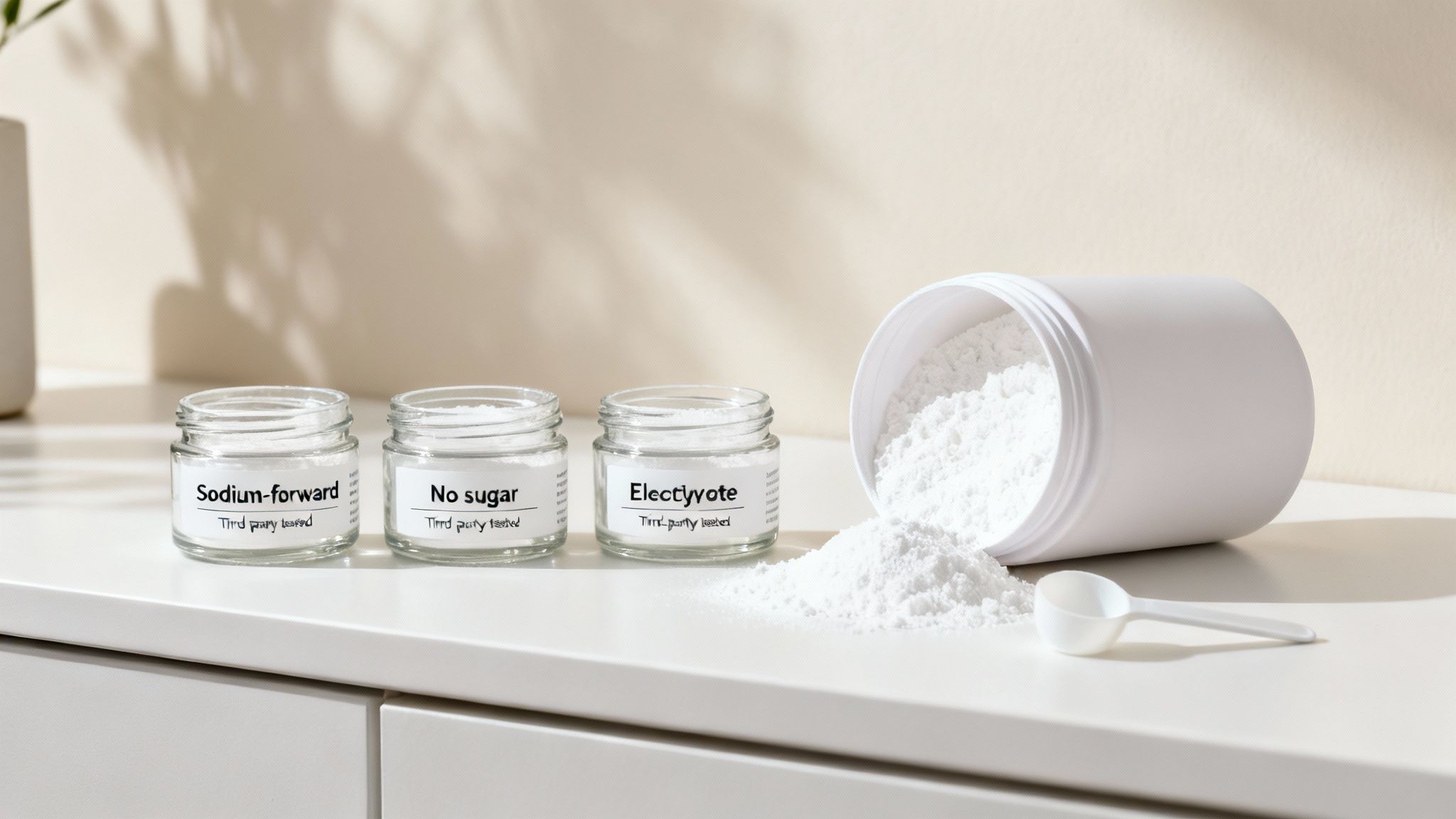
Stepping into the supplement aisle can feel like a pop quiz you didn't study for. There are dozens of electrolyte powders, all screaming from the shelf that they're the best for runners. To find a formula that actually works, you have to learn to ignore the flashy labels and think like a sports scientist.
The right formula isn't about exotic flavors or trendy ingredients; it's about precision. It needs to give you back exactly what you lose in your sweat, without adding anything that could trip you up or wreck your gut. It really comes down to a few non-negotiables that separate high-performance fuel from glorified sugar water.
Once you know what to look for, picking the best electrolyte powder becomes a simple, evidence-based decision.
Prioritize a Sodium-Forward Ratio
If you only remember one thing from this guide, make it this: sodium is king. When you sweat, you lose far more sodium than any other electrolyte, making it the most critical mineral to replace. Any formula that’s shy on sodium is completely missing the point and failing to address the root cause of cramping and dehydration.
You should be looking for a powder that delivers a serious dose, ideally somewhere in the 800-1,000mg of sodium range per serving. This sodium-forward ratio is specifically designed to counteract what you’re losing, helping your body maintain fluid balance and keep your muscles firing properly during those long, grueling runs. A low-sodium product just isn't going to cut it when the miles really start to stack up.
And we're not alone in this thinking. The fitness segment of the electrolyte market is growing at an 8.69% CAGR, as gym memberships just hit a record 65 million in the U.S. and more people are hitting the pavement. To put it in perspective, elite runners at events like the London Marathon, which saw 40,000 finishers in 2024, often replace 800-1,200mg of sodium every hour. This isn't a guess; it's a proven strategy to slash cramp risk.
Insist on Zero Sugar and Clean Ingredients
For an endurance athlete, sugar is the enemy. That quick hit of glucose might feel good for a minute, but the energy crash that follows can be absolutely devastating mid-run. On top of that, high concentrations of sugar are notorious for causing GI distress because they pull water into your gut and can actually slow down fluid absorption.
A top-tier electrolyte powder for runners has to be 100% sugar-free. This is non-negotiable. It ensures you get stable, sustained energy without bonking or running for the nearest porta-potty. Beyond sugar, you have to scrutinize the ingredient list for useless fillers, artificial sweeteners, and weird colors.
Your hydration source should solve problems, not create new ones. Clean, simple, and effective—that should be your mantra. Anything that doesn't directly contribute to your performance is just noise.
REVSCI Reviver was built on this very principle. We created a clean formula with zero sugar and no junk fillers, so your gut stays calm and your energy stays steady, right where you need it.
Demand Third-Party Testing and Transparency
How do you really know that what’s on the label is what's in the tub? The only way is through independent, third-party testing. This process verifies that a supplement is pure, potent, and free from any contaminants.
For any serious athlete, this should be a dealbreaker. It’s the only way to get peace of mind that you're fueling your body with something that’s not only effective but also safe. When a brand invests in this level of quality control, it shows a real commitment to your performance and well-being.
REVSCI Reviver, for example, is rigorously tested to ensure every single batch meets the highest standards for purity and potency. We believe that kind of transparency is key to building trust and delivering results you can count on. When you're weighing your options, always look for proof of third-party testing. To make it a little easier, we put together a detailed electrolyte powder comparison guide that breaks down exactly what to look for.
The Final Verdict on the Best Powder for Runners
After digging into the science of hydration, how to personalize your strategy, and when to fuel, one thing becomes crystal clear: not just any electrolyte powder will get the job done. Running demands a formula that's precise, potent, and clean. Your performance literally depends on a product that works with your body, not against it, by replacing exactly what you lose in sweat without adding a bunch of performance-killing junk.
This is where REVSCI Reviver truly separates itself from the pack. It’s not just another supplement; it’s a strategic tool, engineered from the ground up to solve the exact problems that hold runners back. The formula is a direct answer to the needs of endurance athletes who demand the best from their bodies.
Why Reviver Is the Clear Winner
What makes Reviver different is its relentless focus on what actually matters for performance. We've stripped away everything that doesn't serve you—the sugar, the artificial junk, the fillers, and the marketing hype—to deliver something that is pure, effective, and completely transparent.
- Research-Backed Ratios: With a robust 1,000mg of sodium, Reviver is built on a sodium-forward profile that directly matches what runners lose when they're sweating buckets. This is the absolute key to fighting off cramps and keeping your fluid balance in check.
- Zero Sugar, Zero Crash: By getting rid of sugar entirely, Reviver protects you from the energy spikes and brutal crashes that can completely derail a long run or race. You get clean, stable energy without the GI distress that often comes with sugary drinks.
- Unmatched Purity: Every single batch is third-party tested, guaranteeing what’s on the label is exactly what’s in the tub. This commitment to purity means you can fuel with total confidence, knowing you're not putting anything questionable into your body.
Choosing the right electrolyte powder isn’t just about staying hydrated. It’s about investing in a partner for your athletic journey—one that ensures every ounce of your hard work pays off when it counts.
Your Next Step to Peak Performance
You now have the playbook to turn your hydration from a potential weakness into a powerful advantage. The difference between a good run and a great one often comes down to the small details, and your electrolyte strategy is one of the most critical details there is. REVSCI Reviver provides the perfect foundation for that strategy with its intelligently designed, no-nonsense formula.
Stop letting generic, sugary drinks dictate the limits of what you can achieve. It’s time to dial in your hydration for good with a product built specifically for runners.
Explore REVSCI Reviver, read the real-world success stories from athletes just like you, and take the first step toward unlocking what you're truly capable of.
Common Questions from the Trail: Your Electrolyte FAQ
Even the best-laid plans can hit a snag out on the road. Let's tackle some of the most common questions runners have about using electrolyte powders, so you can dial in your strategy and run with total confidence.
Do I Really Need Electrolytes for Short Runs?
For most runs that clock in under an hour, plain old water is going to do the trick. Your body is pretty smart and has enough electrolytes stockpiled to handle shorter, less intense efforts without needing an immediate top-up. You just don't sweat enough in that timeframe to get into a deficit.
But, there are always exceptions. If you're heading out for a 45-minute run in the middle of a sweltering, humid heatwave, that changes things. Same goes if you're a notoriously heavy or salty sweater (you know who you are—the one with the white, chalky lines on your gear). In those cases, you might feel a world of difference by sipping some electrolytes beforehand. The idea is to start the run in the black, not to try and play catch-up from behind.
The Bottom Line: Electrolytes really become non-negotiable for runs lasting over 60-90 minutes. Before that, stick with water unless the conditions are brutal or you know your personal sweat rate is off the charts.
Powder vs. Salt Tabs: What’s the Difference?
This is a fantastic question, because while both deliver sodium, they go about it in completely different ways—and one is much safer for most runners.
-
Electrolyte Powders: Think of a well-made powder as a complete hydration cocktail. It’s not just a blast of sodium; it gives you a balanced spectrum of the minerals you're actually losing, like potassium and magnesium. You mix it with water, which forces you to take in fluids with the electrolytes. This two-in-one approach is what makes it such a comprehensive solution.
-
Salt Tablets: These are basically a super-concentrated punch of sodium, sometimes with a little potassium thrown in. They're potent, but they come with a major catch: you have to chase them with a ton of water. If you don't, that little pill can wreak havoc on your gut. It will literally pull water from your system into your stomach to dilute the salt, making you more dehydrated and setting you up for a race-ending GI disaster.
For the vast majority of runners, an electrolyte powder is simply the smarter, more balanced choice. It encourages you to drink, and it delivers a wider range of minerals your muscles and nerves are screaming for deep into a run.
Ready to stop guessing and start performing? REVSCI Reviver provides the clean, zero-sugar, high-sodium formula your running demands.