
Your Cart is Empty


Performance Supplements for Athletes: Boost Results and Recovery
When people talk about performance supplements for athletes, they're not talking about magic pills. They’re talking about strategic tools—research-backed compounds like creatine, electrolytes, and protein that work with a solid training and nutrition plan to fill nutritional gaps, speed up recovery, and give you that extra edge in energy, power, or endurance.
Used correctly, they can provide a measurable advantage.
Building Your Foundational Supplement Strategy

Think of your body as a high-performance engine. Your daily diet is the primary fuel, but supplements are the specialized additives that clean the fuel lines, boost the octane, and protect critical parts from wear and tear. They’re designed to target specific systems that get hammered during intense physical activity.
This guide is all about cutting through the hype to show you how top athletes actually use supplements. It’s about understanding what to take, when to take it, and why it works. The goal is never to replace whole foods, but to step in when your body’s demands go beyond what you can reasonably get from your diet alone.
Why a Strategy Matters
Walking into a supplement store without a plan is like going to a hardware store for a home renovation with no blueprint. Sure, you might walk out with some impressive-looking stuff, but you won't actually know how to build anything. A smart strategy ensures you're putting your money where it matters for your goals.
"A well-structured supplement plan is built on a foundation of 'need,' not 'want.' It addresses specific performance limiters—like cramping, early fatigue, or slow recovery—with targeted, evidence-based solutions."
The sports supplement market is exploding for a reason. It's projected to jump from USD 23.5 billion to nearly USD 38.9 billion by 2035, and that growth is fueled by athletes looking for a reliable edge. The right plan can make a real difference, with some studies showing proper supplementation can cut recovery time by 20-30% in demanding sports. A focused approach helps you navigate this massive market and find what's truly effective.
To give you a bird's-eye view, here's a quick rundown of the major players in the supplement world and what they do.
Quick Guide To Key Performance Supplements
| Supplement Category | Primary Function | Best For |
|---|---|---|
| Electrolytes | Hydration, nerve function, muscle contraction | Endurance athletes, training in heat |
| Creatine | ATP production for explosive power, strength | Strength/power athletes, sprinters |
| Beta-Alanine | Buffers lactic acid, delays fatigue | High-intensity efforts (1-4 minutes) |
| Caffeine | Reduces perceived exertion, enhances focus | Nearly all sports (pre-workout) |
| Protein Powders | Muscle repair and synthesis | Post-workout recovery, all athletes |
| BCAAs | Reduces muscle soreness, supports repair | During long workouts, post-exercise |
| Nitrates | Improves blood flow and oxygen efficiency | Endurance and high-intensity sports |
| Adaptogens | Manages stress, supports recovery | Athletes with high training loads |
This table is just a starting point, but it helps organize the "tools" available so you can start building a plan that makes sense for you.
The Foundational Tiers of Supplementation
A truly effective supplement protocol is built in layers. You start with the non-negotiables that support overall health and performance before adding anything more specialized.
-
Tier 1 - Health & Hydration: This is your bedrock. It includes essentials like a multivitamin to cover any dietary gaps and, most importantly, electrolytes to maintain fluid balance. If you're dehydrated, nothing else matters. For a deep dive, check out our electrolyte powder comparison.
-
Tier 2 - Performance & Power: Once your foundation is solid, you can add proven ergogenic aids. This is where a powerhouse like creatine monohydrate comes in. If you want to build a strong performance base, start with this Ultimate Guide to Creatine Monohydrate for Athletes.
-
Tier 3 - Recovery & Repair: This tier is all about bouncing back stronger. Protein powders and amino acids fall into this category, giving your body the raw materials it needs to rebuild muscle tissue after you've broken it down.
Starting with this tiered approach lets you systematically build a plan that's tailored to your sport, training load, and your body's unique needs. It ensures every single product serves a distinct purpose, leading to better results and a much higher return on your investment.
The Three Pillars Of Athletic Performance
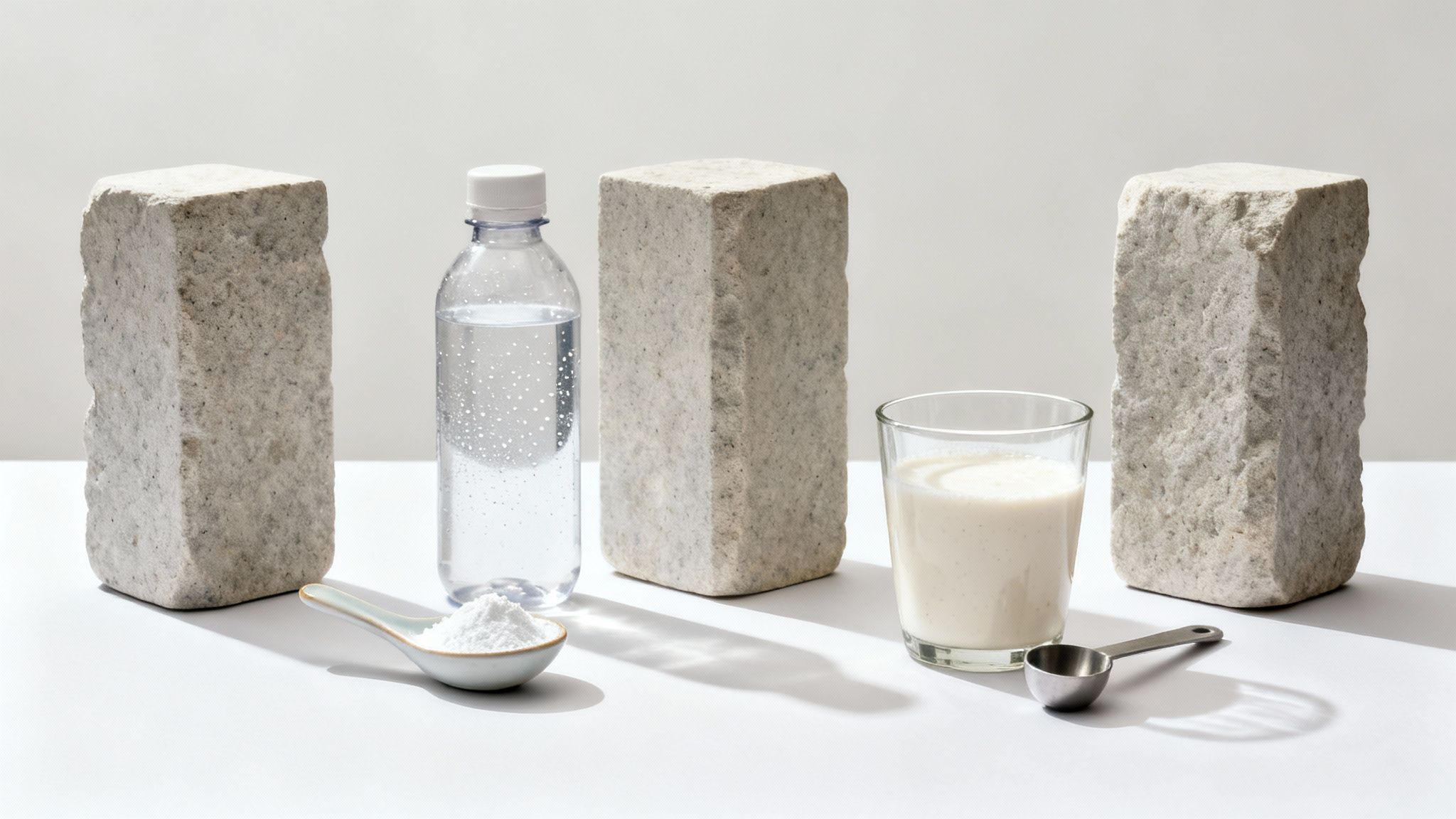
When you're trying to build a smart supplement strategy, it's easy to get lost in a sea of brand names and flashy labels. A much better way to think about it is by function. We can group the most proven performance supplements for athletes into three core pillars, each one addressing a fundamental part of your athletic output.
These pillars are: Fuel & Hydration, Power & Endurance, and Repair & Growth.
By focusing your attention here, you can choose supplements that target specific needs in your training, making sure every choice you make has a clear and powerful purpose. Let’s break down the science behind the key players in each pillar.
Pillar 1: Fuel And Hydration
Before you can even think about strength or speed, your body has to be properly fueled and hydrated. This is the absolute foundation of athletic performance. Get this wrong, and nothing else matters.
The primary players here are electrolytes. Think of these essential minerals—like sodium, potassium, and magnesium—as your body’s electrical wiring. They conduct the nerve impulses that fire your muscles and are absolutely critical for maintaining the right fluid balance inside and outside your cells.
When you're training hard, especially in the heat, you lose these minerals through sweat. This loss is what leads to dehydration, muscle cramps, and a serious drop in performance.
A huge mistake athletes make is hydrating with water alone during long or intense sessions. This can dilute the electrolytes you have left, making cramps and fatigue even worse. You have to replace what you lose.
Here's a quick look at the main electrolytes:
- Sodium: This is the most important one to replace during exercise because it's what you lose most in sweat. It also drives thirst and helps your body actually hold onto the fluids you drink.
- Potassium: Works in tandem with sodium to manage fluid balance and is crucial for muscle contractions.
- Magnesium: Plays a part in hundreds of bodily reactions, including energy production and muscle function.
If your workout is pushing past the 60-90 minute mark, adding an electrolyte blend becomes non-negotiable for keeping your performance up. Your dosing will need to be adjusted based on how much you sweat and the conditions you're training in.
Pillar 2: Power And Endurance
With your fuel tank topped off, the next step is to maximize your engine's output. This pillar is all about generating more force, pushing harder for longer, and holding off fatigue when it matters most. Two of the most heavily researched supplements in history fall squarely in this category.
First up is Creatine Monohydrate. Imagine your muscles have a small, built-in battery for explosive movements like a heavy lift or a sprint. That battery is called ATP. Creatine works like a rapid-recharge system for that battery, letting you crank out more reps or sustain those high-intensity bursts for longer.
It’s one of the safest and most effective supplements on the planet for boosting strength, power, and lean muscle mass.
- How it works: Creatine tops off your body's stores of phosphocreatine, which is used to regenerate ATP at lightning speed.
- Standard Dose: A daily maintenance dose of 3-5 grams is all you need. A "loading phase" of 20 grams per day for 5-7 days can saturate your muscles faster, but it isn't required.
Next is Beta-Alanine. If creatine is your rapid-recharge battery, think of beta-alanine as a "muscle burn shield." During intense exercise, your muscles produce acidic hydrogen ions, which cause that familiar burning feeling that forces you to slow down.
Beta-alanine helps your body produce carnosine, which acts as a buffer to soak up those acidic ions. This process effectively delays muscle fatigue, letting you sustain high-intensity work for longer, especially in that critical 1-4 minute range.
Pillar 3: Repair And Growth
The final pillar is all about what happens after the workout is done. Training breaks down muscle tissue—it's the recovery process that rebuilds you stronger than before. To make that happen, you have to give your body the right building blocks.
The undisputed champion here is Protein. Protein delivers the amino acids your body needs to repair damaged muscle fibers and synthesize new tissue. Timing can be a factor here, with some research showing that consuming protein within about 30 minutes of training can kickstart muscle protein synthesis by up to 25%.
Protein supplements dominate the sports nutrition market, which was valued at USD 52.32 billion in 2025 and is projected to hit USD 107.95 billion by 2035. That growth reflects just how many athletes understand its critical role in recovery.
A key part of this pillar includes Branched-Chain Amino Acids (BCAAs): leucine, isoleucine, and valine. While getting enough total protein is most important, some athletes use BCAAs during long sessions to help reduce muscle breakdown and fight off fatigue. Leucine, in particular, is a powerful trigger for muscle growth.
Understanding these three pillars demystifies the world of supplements. By figuring out what you need most—whether it's staying hydrated, pushing harder, or recovering faster—you can select the right tools for the job. To see how these components fit into a complete system, check out our guide on the best supplements for athletes. This approach ensures you build a smart, effective, and purpose-driven plan.
Exploring Advanced And Emerging Supplements
Once you've dialed in your core supplement strategy—taking care of hydration, power, and basic recovery—it's time to explore the more specialized compounds. This next tier of supplements is all about fine-tuning your body's response to stress and kicking the healing process into high gear. These aren't your day-one essentials, but for athletes pushing their limits, they can provide a real edge.
We're moving beyond the immediate needs of energy and muscle repair into the realm of systemic support. Think of these as the specialized pit crew for your high-performance engine. While protein and creatine are the mechanics rebuilding the block, these compounds are the engineers managing heat, reducing internal friction, and making sure the whole system runs smoothly under extreme pressure.
We'll dive into two key categories that are getting a lot of attention: adaptogens to help you handle stress, and recovery agents that go after inflammation and soreness.
Taming The Stress Of Training With Adaptogens
Let's be real: intense training is a massive physical stressor. That stress is exactly what forces your body to adapt and get stronger, but too much of it leads straight to overtraining, burnout, and a compromised immune system. Adaptogens are natural substances, often from herbs and roots, that help your body get better at coping with both physical and mental stress.
Imagine your body has a stress thermostat. A brutal workout can crank that dial way into the red, leaving you feeling completely fried. Adaptogens help regulate that thermostat, keeping it from swinging to dangerous extremes and allowing you to stay in a more balanced, productive state.
One of the most heavily researched adaptogens out there is Ashwagandha.
- How it works: It’s thought to help moderate cortisol, your body's main stress hormone. When overtraining keeps cortisol levels chronically high, it can seriously mess with your recovery, sleep, and muscle growth.
- Potential Benefits: Studies suggest it can improve your resistance to stress, cut down on fatigue, and even support strength gains by creating a better hormonal environment for recovery.
Another interesting adaptogen making waves is Shilajit, a unique substance packed with fulvic acid and minerals. It has been used for centuries in traditional medicine to boost energy and resilience. For anyone curious about new ways to take it, you can learn more about innovative options like Shilajit gummies.
Accelerating Recovery And Reducing Soreness
While protein is busy with the structural repair of your muscles, other compounds can help manage the inflammation and oxidative stress that are an unavoidable part of hard workouts. This is absolutely critical for minimizing Delayed Onset Muscle Soreness (DOMS)—that crippling soreness that shows up a day or two after you’ve pushed your limits.
Reducing severe DOMS isn't just about feeling better; it's about getting back to training effectively, sooner. If you're too sore to perform, your consistency takes a nosedive.
A major player in this space is Tart Cherry.
- What it is: It's a concentrated source of anthocyanins, which are seriously powerful antioxidant and anti-inflammatory compounds.
- The evidence: Research has consistently shown that supplementing with tart cherry can significantly cut down on muscle soreness and the loss of strength that follows intense exercise. It seems to work by toning down the muscle damage and inflammation that cause DOMS in the first place.
Think of a hard workout as a small, controlled fire in your muscles. The inflammation is part of the cleanup crew, but if that fire gets out of control, it does more harm than good. Tart cherry acts like a precision fire extinguisher, calming the blaze just enough without stopping the necessary rebuilding process.
These advanced supplements aren't magic pills. Their success depends entirely on a solid foundation of smart training, good nutrition, and your core supplements. But for the dedicated athlete looking to handle a high training load and bounce back faster, exploring adaptogens like Ashwagandha and recovery aids like Tart Cherry is a smart, strategic move to chase down that extra one percent.
How To Personalize Your Supplement Protocol
Knowing the science behind each supplement is one thing. Applying it is where the real magic happens.
The key to unlocking your true potential lies in customizing that knowledge to your specific sport, your goals, and even the environment you train in. A one-size-fits-all plan delivers average results, but real optimization comes from a truly personal approach.
Think about it: A Formula 1 car and a Baja truck are both peak performance machines, but you wouldn't dare use the same fuel, tires, or engine setup for both. Your body is the same. The physiological demands on a marathoner are a world away from a powerlifter’s, and your supplement strategy has to reflect that reality.
This is where we move from theory to application. Let's build some actionable blueprints for different types of athletes, outlining how to structure your timing and choices to match what you actually do.
The Endurance Athlete Protocol
For marathon runners, triathletes, and cyclists, the entire game revolves around sustained energy and avoiding catastrophic failure. Hitting "the wall" isn't just in your head; it's a very real physiological event where your body runs out of gas (glycogen) and your electrolyte balance goes haywire. The goal here is simple: prevention.
-
Pre-Workout Focus (30-60 mins prior): The mission is to top off your energy stores and start perfectly hydrated. A small, easy-to-digest carbohydrate source is non-negotiable. Some athletes also find caffeine helps lower the feeling of effort, but you absolutely have to test this in training to sidestep any stomach issues.
-
Intra-Workout Fueling (During): If you're going for more than 90 minutes, fueling during your workout is mandatory. The focus shifts to a steady drip of simple carbs and, crucially, electrolytes. Sodium is the undisputed MVP here, as it’s the mineral you lose most through sweat.
-
Post-Workout Recovery (Within 30-60 mins): The second you stop moving, the recovery clock starts ticking. Your priority is to slam the door on muscle breakdown, replenish spent glycogen, and kickstart repair. A mix of carbs and protein, typically in a 3:1 or 4:1 ratio, is the gold standard.
Marathon participation has exploded, with over 500,000 finishers in the U.S. annually. This has fueled huge innovation in hydration science. Modern electrolyte solutions can slash the risk of cramping by up to 40% in the heat, pushing brands toward clean, unflavored formulas that athletes can dial into their specific sweat rates.
The Strength Athlete Protocol
For powerlifters, Olympic lifters, and bodybuilders, performance is all about explosive, maximal-effort bursts. The demands couldn't be more different from endurance sports. Here, we're focused on raw power output during the session and cranking up muscle protein synthesis for growth and repair afterward.
-
Pre-Workout Focus (30-60 mins prior): This is primetime for ingredients that boost power, blood flow, and mental focus. A well-built pre-workout can be a game-changer. For a deeper dive, our guide on the best preworkout supplements breaks down exactly what to look for.
-
Intra-Workout Needs: For most strength sessions under 90 minutes, you don't need much beyond water. That said, some lifters find that sipping on essential amino acids (EAAs) helps reduce muscle breakdown during particularly grueling workouts.
-
Post-Workout Anabolic Window (Within 1-2 hours): This window is critical for maximizing muscle repair and growth. A high-quality, fast-digesting protein like whey isolate is your best friend here, delivering the building blocks your muscles are screaming for.
For any strength athlete, creatine monohydrate is foundational. A daily dose of 3-5 grams ensures your muscle stores stay saturated, giving you a direct boost in ATP regeneration for those heavy, money-making reps. Timing isn't as critical as just taking it consistently every single day.
The Hybrid Athlete Protocol
Hybrid athletes—think CrossFitters, MMA fighters, or soccer players—face a unique puzzle. They have to balance the intense demands of strength, power, and endurance, often all in the same session.
Their supplement strategy needs to be just as flexible, addressing multiple energy systems at once. They need the explosive force of a lifter and the staying power of a runner.
This usually means borrowing from both playbooks. A hybrid athlete might use a pre-workout with caffeine for focus and beta-alanine to buffer lactic acid during high-intensity intervals. Afterward, their recovery shake will likely need a balanced blend of protein and carbs to tackle both muscle repair and glycogen replenishment head-on. To dial this in perfectly, exploring personal nutrition coaching strategies can provide that next-level customization.
A simple way to think about your next steps is to figure out what's holding you back the most. This decision tree provides a quick framework for looking beyond the basics once your core needs are met.
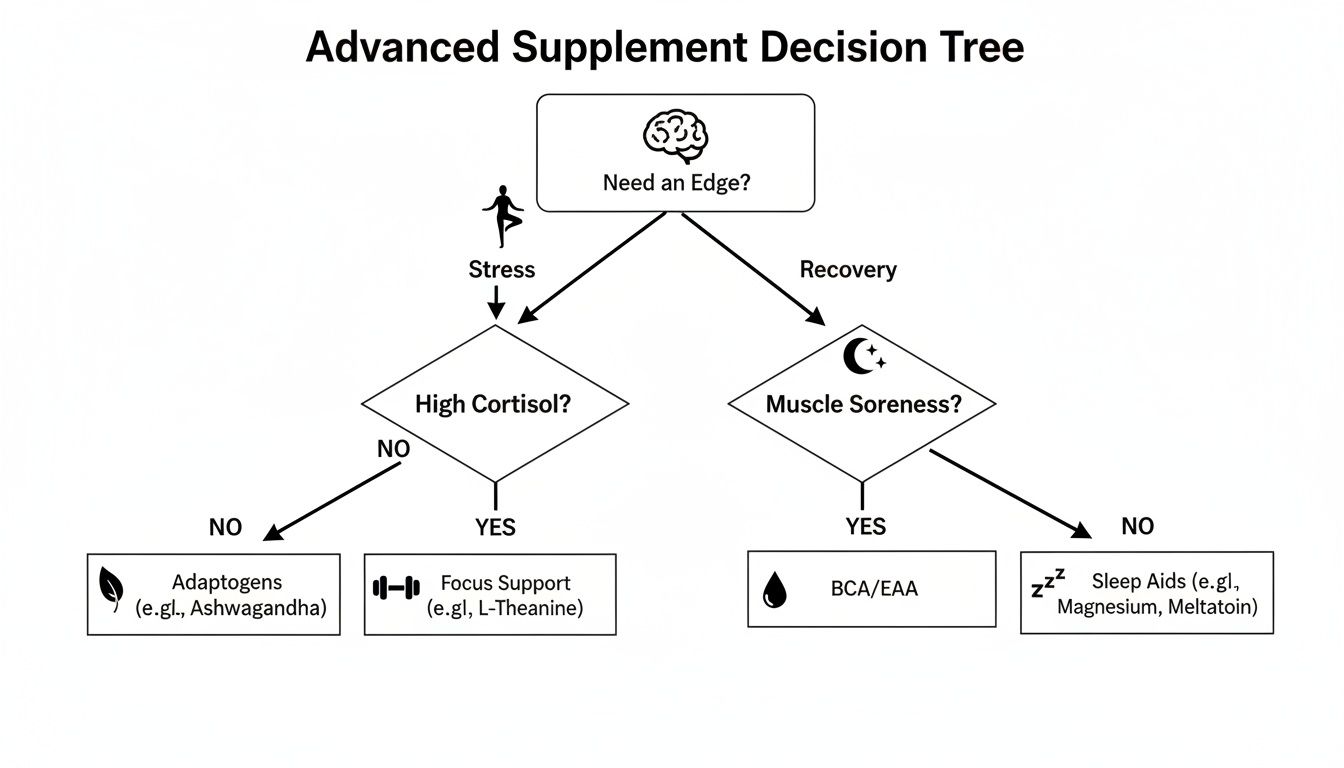
Use this to pinpoint whether your biggest performance bottleneck is managing training stress or accelerating your recovery cycle. It’s a great way to start exploring more specialized solutions tailored to your unique physiology.
Athlete Type Supplement Timing Cheat Sheet
To put it all together, here’s a quick-glance table breaking down the timing strategies for each type of athlete. Think of this as your starting blueprint before you begin fine-tuning based on your own experience.
| Athlete Type | Pre-Workout | Intra-Workout | Post-Workout |
|---|---|---|---|
| Endurance | Hydration, easily-digested carbs, optional caffeine. | Electrolytes & simple carbs (>90 mins). | 3:1 or 4:1 Carb-to-Protein ratio. |
| Strength/Power | Power/focus enhancers (e.g., Creatine, Beta-Alanine). | Water, optional EAAs for long sessions. | High-quality, fast-digesting protein. |
| Hybrid | Moderate caffeine, Beta-Alanine, Nitrates. | Carbs/Electrolytes as needed for endurance portions. | Balanced protein and carb blend. |
Remember, this cheat sheet is a powerful starting point. The ultimate goal is to listen to your body, track your performance, and adjust these guidelines to build a protocol that is 100% yours.
Choosing Safe And Effective Supplements
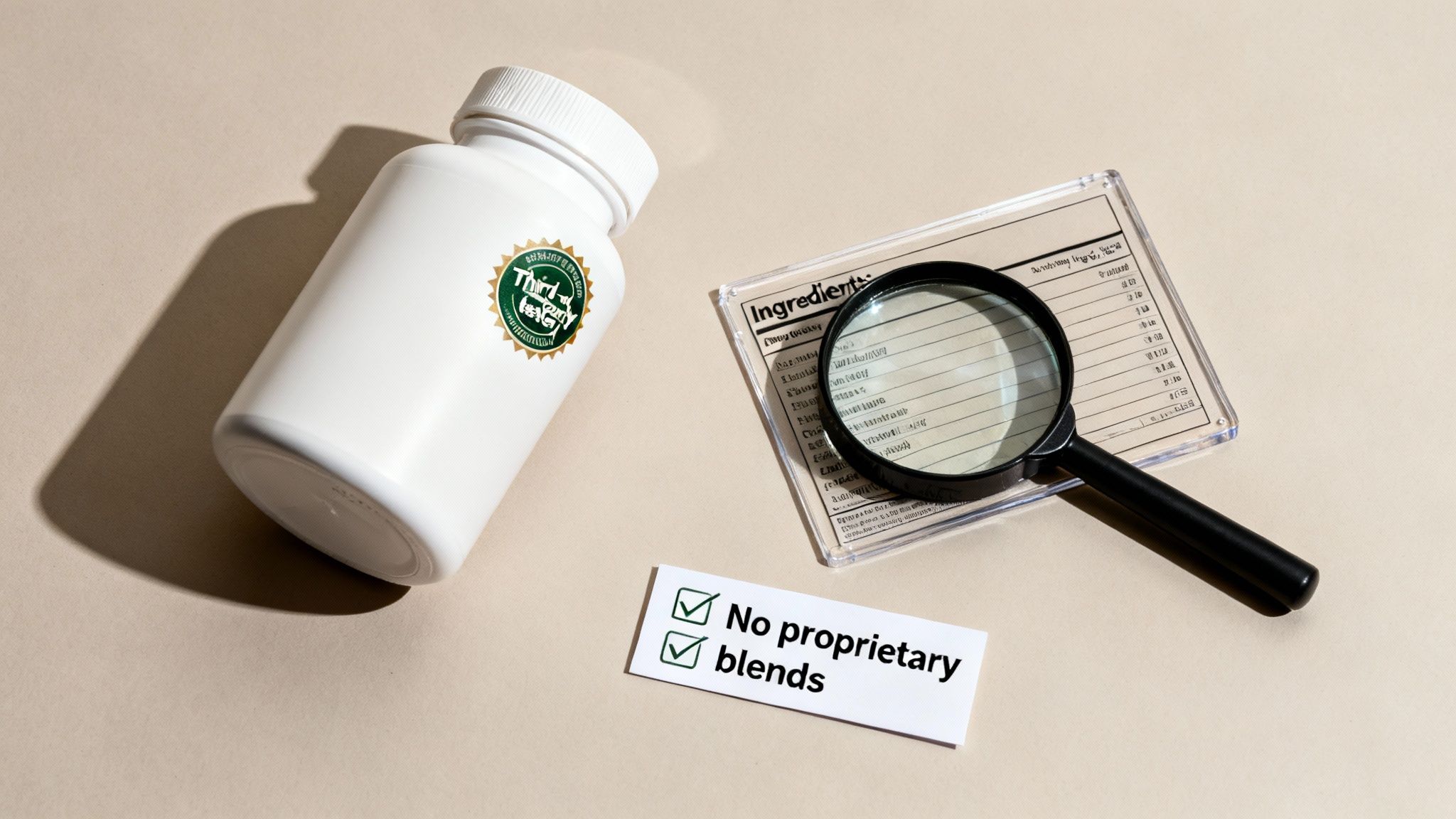
Walking down the supplement aisle can feel like stepping into the wild west. With so many brands shouting bold claims, knowing how to spot a genuinely high-quality product versus a bottle of snake oil is a critical skill for any serious athlete. This is your field guide to becoming a smarter, safer consumer.
Your first and most important job is to prioritize safety and purity. The supplement industry isn't regulated with the same iron fist as pharmaceuticals, which means the burden of proof often falls on you. This is where third-party certifications become your best friend.
The Non-Negotiable Role Of Third-Party Testing
Think of third-party testers as independent, unbiased auditors for the supplement world. Their entire job is to verify a product's purity, potency, and safety. For competitive athletes, this isn't just a nice-to-have; it's an absolute must to avoid accidentally taking a banned substance.
Keep an eye out for these logos on the label:
- NSF Certified for Sport: This is the gold standard. It confirms the product contains what the label says, has been checked for contaminants, and is screened for over 270 substances banned by major athletic organizations.
- Informed-Sport: This certification provides another fantastic layer of assurance by testing every single batch of a product for banned substances before it ever hits the shelves.
- USP Verified: The U.S. Pharmacopeia verification ensures a product meets strict standards for quality, purity, and potency.
Picking a certified product is the simplest way to guarantee that what’s on the label is what’s actually in the bottle. It protects your health and, just as importantly, your eligibility to compete.
How To Read A Supplement Label Like A Pro
Once you've confirmed a product is third-party tested, it's time to play detective with the label itself. A transparent label is a huge sign of a trustworthy brand.
The single biggest red flag to look for is the "proprietary blend." This is a sneaky tactic where manufacturers list a bunch of ingredients under a cool-sounding name but only disclose the total weight of the blend—not the amount of each individual ingredient.
A proprietary blend is a manufacturer's way of hiding ineffective, "fairy dust" dosages of the ingredients that matter most. If a company isn't confident enough to tell you exactly how much creatine or beta-alanine is in their product, you shouldn't be confident enough to buy it.
Beyond dodging shady blends, look for a "clean" formula. That means it’s free from useless additives that do nothing for your performance. Steer clear of formulas packed with artificial dyes, heaps of sweeteners, and cheap fillers. A great performance supplement should contain only effective ingredients at their proper doses, and nothing else.
Spending an extra two minutes to really scrutinize that label is the best way to ensure your hard-earned money is spent on supplements that are both safe and will actually work.
A Few Final Questions
Even with a plan in hand, you're bound to have questions. The world of athletic supplements can feel complex, and it’s smart to be curious about the details of timing, safety, and whether you really need this stuff in the first place.
Let's clear the air on some of the most common uncertainties we hear from athletes.
Do I Really Need To Take Performance Supplements?
Think of supplements as tools to sharpen your edge, not as a replacement for the real work. Your foundation—always—is a solid diet, smart training, and good sleep. Get those pillars locked in first.
Supplements come into play when you’re pushing your limits and need to solve a specific problem. They’re for breaking through a bottleneck, whether that’s electrolytes to shut down cramping on a long run or whey protein to kickstart muscle repair after a heavy day in the gym. The right way to think about it is: identify the problem first, then find the right tool for the job.
Is It Safe To Mix Different Supplements Together?
Absolutely. Combining, or "stacking," supplements is a common and often very effective strategy. A classic example is pairing pre-workout caffeine for an immediate energy kick with creatine for long-term power output. That’s a duo with a ton of research backing it up.
That said, the smartest approach is to introduce new supplements one at a time. Give your body a week or so with something new to see how you feel and perform. This way, you can gauge your personal tolerance before you add another variable into the mix. Just be extra cautious about stacking multiple stimulants. When in doubt, a quick chat with a sports nutritionist can help you build a stack that’s both safe and perfectly aligned with your goals.
How Long Does It Take For Supplements To Work?
This really depends on how the ingredient works in your body. They generally fall into two camps:
- Immediate Effect: Some, like caffeine, get to work fast. You’ll feel that boost in alertness and energy within 30 to 60 minutes. You'll know it's working pretty quickly.
- Saturation-Based Effect: Others need time to build up in your system. Creatine, for example, has to fully saturate your muscles, which takes about 5-7 days with a loading phase or 3-4 weeks of a standard daily dose. Beta-alanine is similar—you'll need 2-4 weeks of daily use before it builds up enough to start buffering that muscle burn.
For supplements that work by saturation, consistency is everything. Don’t sweat the exact timing of your dose each day. Just make sure you take it every day to keep those muscle stores topped off and ready for action.
Are Performance Supplements Safe For Long-Term Use?
Long-term safety comes down to the specific ingredient.
Foundational supplements with decades of research behind them, like creatine monohydrate and high-quality whey protein, are widely considered safe for continuous, long-term use in healthy people. As long as you stick to the recommended doses, they have a proven track record for both safety and results.
On the flip side, it’s a good idea to cycle ingredients like stimulants. Taking a break from caffeine now and then can help prevent you from building up a tolerance, making sure it still hits hard when you really need it. To be confident in what you're taking, always stick with reputable brands that use third-party testing to prove what's on the label is actually what's in the bottle.
Ready to build a supplement strategy with clean, effective, and transparently formulated products? The team at Revolution Science is committed to helping you achieve your performance goals with research-backed solutions. Explore our range of supplements and find the right tools for your training. https://rvsci.com