
Tu carrito está vacío


Best Supplements for Endurance Athletes: Boost Your Run and Ride
When you’re pushing your body for hours on end, what you put into it isn't just a detail—it’s the entire engine of your performance. The supplement world is a noisy place, absolutely packed with wild claims and "magic" powders.
But for those of us in the endurance game, cutting through that noise means focusing on what actually works, what's been proven time and again in the lab and on the race course. The best supplements are the ones that address the fundamental needs of a body under prolonged stress: carbohydrates for fuel, electrolytes for hydration, and caffeine for a mental and physical edge.
The High-Performance Engine Analogy
Think of your body like a high-performance race car. To keep it running strong for lap after lap, you need to manage three critical systems.
First, you need high-octane fuel. For an athlete, that’s carbohydrates. Carbs are the most efficient and readily available energy source for your working muscles during sustained effort. Run low, and you "bonk"—the engine just sputters and dies.
Next, you need a reliable cooling system. That's where electrolytes come in. When you sweat, you’re not just losing water; you're losing critical minerals like sodium and potassium that manage fluid balance, nerve signals, and muscle contractions. Losing them is like draining the radiator. Things overheat, you start to cramp, and performance plummets.
Finally, every great driver needs an extra gear. Caffeine is your ignition boost. It works on your central nervous system to make hard work feel just a little bit easier. It's that mental spark that lets you dig deeper and push longer when things get really tough.
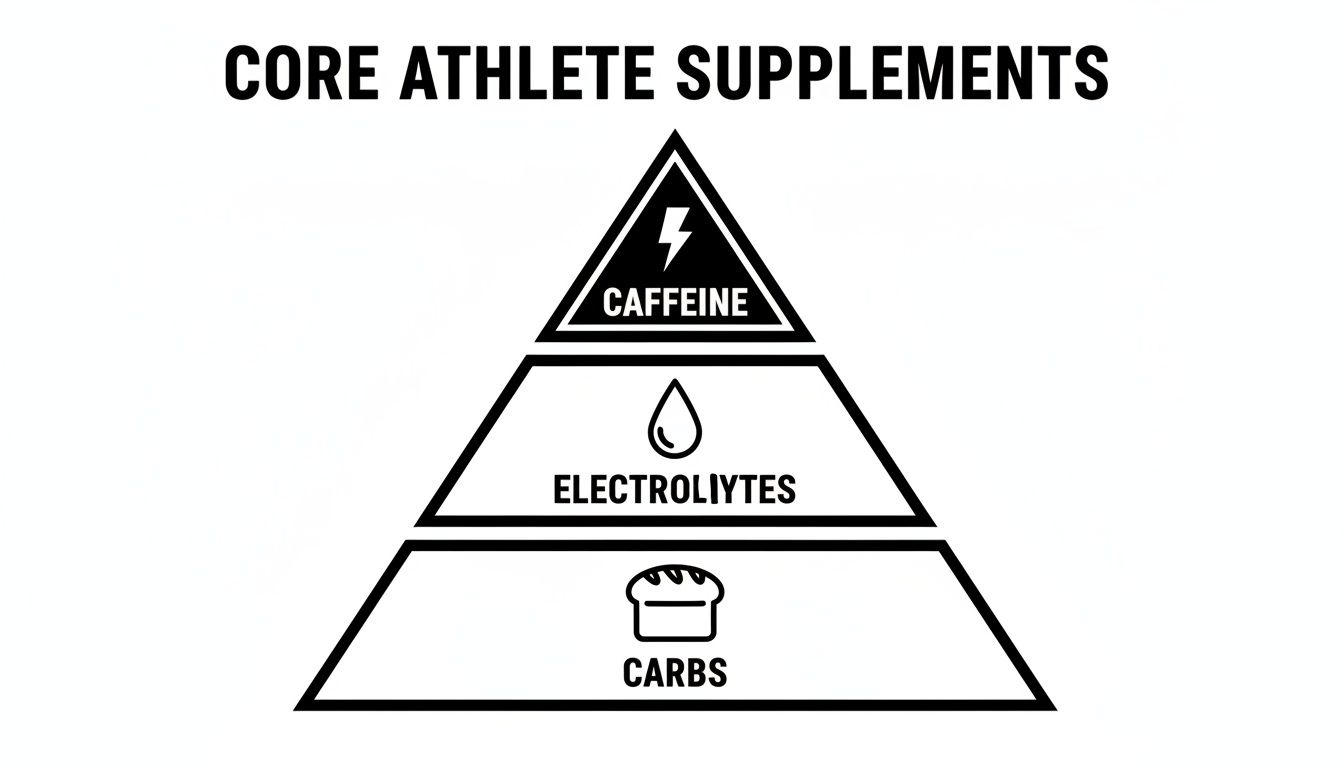
This pyramid really drives the point home. Carbs and electrolytes are the non-negotiable base. Caffeine is the performance-enhancing peak, but it can't do its job if the foundation isn't solid.
Focusing On What The Evidence Says
Once you have that core trio dialed in, you can start looking at other supplements that might offer an edge. But the key is to always build your strategy around what is proven to work, not what’s trendy.
To help you sort through the options, we’ve put together a quick reference table that breaks down common endurance supplements by the strength of the scientific evidence supporting them.
Evidence-Based Supplement Pyramid for Endurance Athletes
This table tiers supplements based on how solid the science is for endurance performance. Start with the "Strong Support" category before even considering the others.
| Evidence Tier | Supplement | Primary Benefit |
|---|---|---|
| Strong Support | Carbohydrates, Electrolytes, Caffeine | Energy, Hydration, Reduced Perceived Effort |
| Moderate Support | Nitrate, Beta-Alanine | Improved Oxygen Efficiency, Acid Buffering |
| Limited/Situational | Iron, Vitamin D, Creatine, BCAAs | Correcting Deficiencies, Training Support |
Remember, the goal is to build a solid foundation first. Don't waste money on situational supplements if you haven't nailed your in-race fueling and hydration.
Speaking of hydration, electrolytes are absolutely critical, especially for anyone training or competing for longer than 90 minutes. The performance drop-off from even minor dehydration and electrolyte loss can be dramatic, which is why this category sees so much innovation.
While this guide is for all endurance athletes, our running-specific crowd can find more tailored advice in our article on the best supplements for runners. And don't forget that none of this matters if you're constantly sick. Consistent training requires a strong immune system, a complex topic where nutrition plays a key role, including things like probiotics for immunity.
Supplements with Strong Scientific Backing
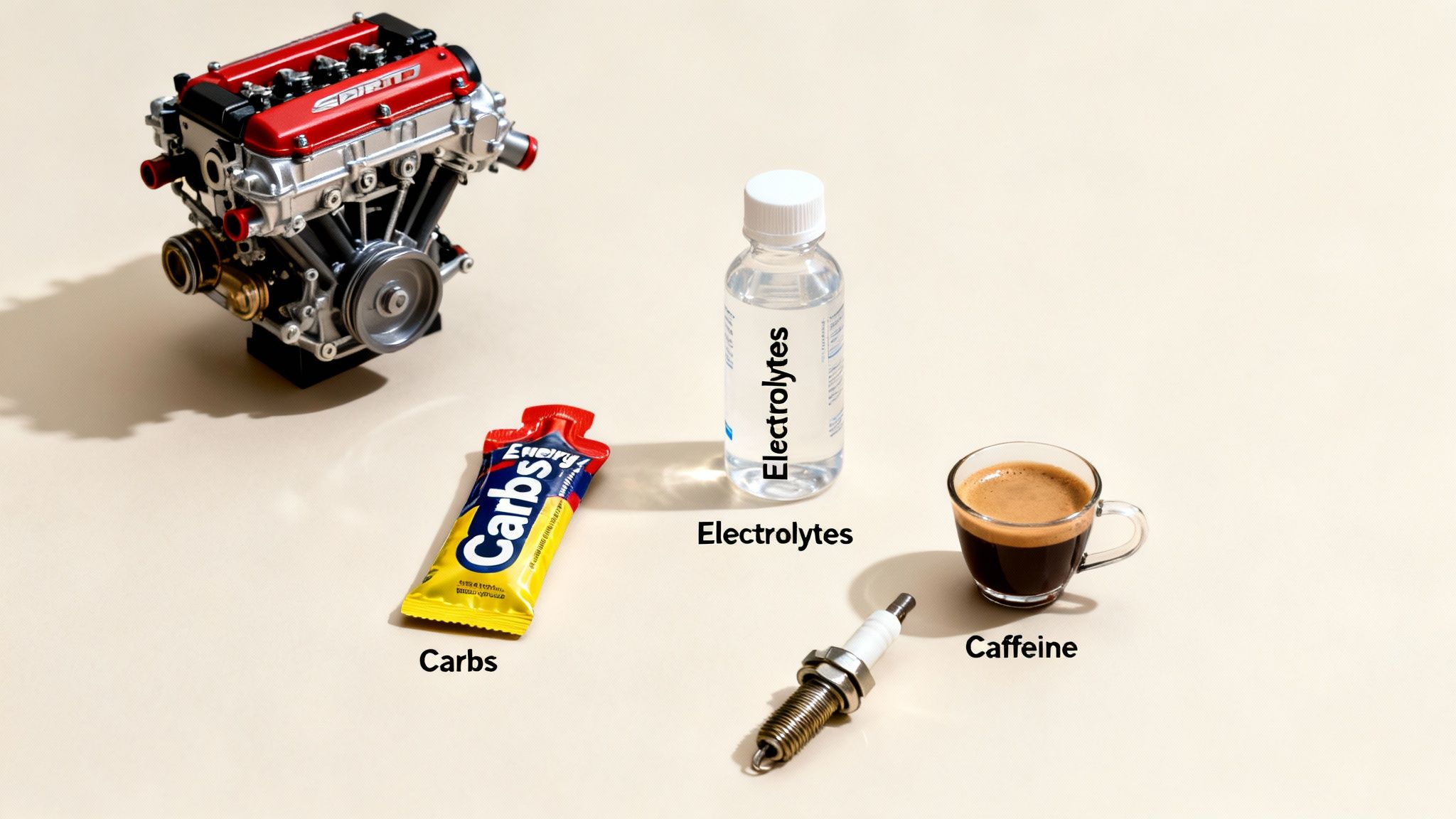
When you're looking for supplements that actually work, it’s best to start with the ones that have a mountain of evidence behind them. These are the tried-and-true tools that consistently deliver results, forming the very foundation of any smart fueling strategy. This group isn't about hype or flashy marketing; it's about proven physiology.
The "big three" supplements with rock-solid scientific support are carbohydrate solutions, electrolytes, and caffeine. Each one tackles a distinct physiological challenge that every endurance athlete faces: energy depletion, hydration imbalance, and mental fatigue. Mastering their use is a non-negotiable step toward unlocking your peak performance.
Carbohydrate Solutions: The High-Octane Fuel
Carbohydrates are the body's go-to, most efficient energy source for high-intensity exercise. Think of your stored carbs (glycogen) as a small, high-performance fuel tank in your muscles and liver. During a long run or ride, you burn through this tank surprisingly fast.
Once that tank runs dry, you hit the dreaded "wall" or "bonk." Performance doesn't just dip; it falls off a cliff. This is where carbohydrate supplements like gels, chews, and drink mixes become indispensable. They are your in-race pit crew, rapidly refilling your fuel tank to keep the engine running strong.
But not all carbs are created equal. Your body actually has different "doorways" for absorbing different types of sugar.
- Glucose (Dextrose): This is the fastest-acting sugar, absorbed through a specific transporter in your gut called SGLT1.
- Fructose: This sugar uses a different transporter, GLUT5. By combining glucose and fructose, you can use both doorways at once, which dramatically increases the total amount of carbs you can absorb and use per hour.
This dual-transporter mechanism is a total game-changer. Research shows that a 2:1 glucose-to-fructose ratio can increase carbohydrate oxidation rates by as much as 50% compared to using glucose alone. This allows athletes to absorb up to 90 grams of carbs per hour with less gut distress.
For events lasting over 90 minutes, a steady intake of 30-60 grams of carbohydrates per hour is a solid starting point. For ultra-endurance events lasting several hours, experienced athletes might push this to 90 grams per hour or even more, using products specifically formulated with these multiple carb sources.
Electrolytes: Your Body's Electrical System
When you sweat, you lose more than just water. You also lose electrolytes—minerals that carry an electrical charge and are vital for everything from nerve function to muscle contraction. For endurance athletes, the most important of these is sodium.
Sodium is the main electrolyte lost in sweat and plays a critical role in maintaining fluid balance, blood pressure, and muscle function. If you lose a significant amount of sodium without replacing it, you’re on the fast track to dehydration, muscle cramps, and a dangerous condition called hyponatremia (low blood sodium).
The amount of sodium you lose can vary wildly between individuals, from 300 mg to over 1000 mg per hour. This is exactly why generic sports drinks often fall short for serious athletes; they simply don't contain enough sodium to replace heavy losses.
A targeted electrolyte supplement is essential, especially when training or racing in the heat.
REVSCI Dosing Example for Reviver Electrolytes
- Moderate Conditions: For a 1-2 hour workout in mild weather, one serving of Reviver Electrolytes, which provides 456 mg of sodium, mixed in a 24 oz bottle may be all you need.
- Hot & Humid Conditions: For a long race or training session in the heat, you might need one serving per hour to keep up with sweat losses, especially if you are a heavy or "salty" sweater.
Potassium and magnesium are important too, but sodium is the star player you absolutely need to focus on replacing during exercise.
Caffeine: The Perceived Effort Reducer
Caffeine is one of the most well-researched and effective performance enhancers on the planet. Its biggest benefit for endurance athletes isn't just a jolt of energy, but its uncanny ability to alter your perception of effort. It simply makes hard work feel easier.
This effect comes from how caffeine interacts with adenosine receptors in your brain. Adenosine is a neurotransmitter that makes you feel relaxed and sleepy. By blocking it, caffeine boosts alertness and reduces the sensation of pain and fatigue, which lets you push harder for longer.
Getting the dose right is key and it's highly individual. The general evidence-based recommendation is 3-6 mg of caffeine per kilogram of body weight, taken about 30-60 minutes before your event.
- For a 150 lb (68 kg) athlete, this translates to roughly 200-400 mg of caffeine—about what you'd get from two strong cups of coffee.
It’s crucial to test your personal tolerance during training, as too much caffeine can lead to anxiety, jitters, and gut issues. Never, ever try a new caffeine strategy on race day. For a broader look at how different compounds can impact your training, check out this handy guide on supplements for athletic performance.
Performance Enhancers with Moderate Support
Once you’ve got your fundamental fueling and hydration strategies locked down, you can start looking at supplements that offer a more tactical advantage. These aren’t foundational necessities like carbs or electrolytes, but a solid body of research shows they can deliver a real competitive edge when used correctly.
The two major players in this category are nitrate (you’ve probably heard of it from beetroot) and beta-alanine. They work through completely different pathways, but they both aim for the same goal: helping you go harder, for longer, especially when the intensity really kicks up.
Think of them as specialized upgrades to your engine, each one fine-tuned for a specific type of performance.
Nitrate for Improved Oxygen Efficiency
Dietary nitrate is a fascinating compound found in leafy greens and, most famously, beetroot. When you consume it, your body gets to work converting it into nitric oxide—a potent molecule that relaxes and widens your blood vessels.
Picture your circulatory system as a network of highways delivering oxygen to your hard-working muscles. Nitric oxide basically opens up more lanes, allowing for better traffic flow. This vasodilation means your muscles get more oxygen and nutrients, and metabolic waste gets cleared out faster.
But that’s not all. Nitric oxide also makes your mitochondria—the tiny power plants inside your cells—more efficient. Your muscles can actually produce the same amount of power while using less oxygen. It’s like getting a tune-up that gives your car better gas mileage, letting you hold a faster pace for the same perceived effort.
This boost in oxygen economy is a massive advantage for any endurance athlete. Studies have shown nitrate supplementation can improve time-to-exhaustion by as much as 20% and sharpen performance in time trials lasting anywhere from 5 to 30 minutes.
This makes nitrate a phenomenal tool for events where efficiency is king, like a hilly 10k race or a grueling cycling time trial.
Beta-Alanine for High-Intensity Buffering
While nitrate helps with your aerobic efficiency, beta-alanine comes alive when you push into the red—those searing, high-intensity efforts like a final sprint, a brutal climb, or a surge to break away from the pack.
During these intense bouts, your muscles produce byproducts that make the cellular environment more acidic. This is a primary driver of that all-too-familiar burning sensation and muscular fatigue that forces you to back off the pace.
Beta-alanine is an amino acid that helps your body produce more carnosine, a compound stored in your muscles that acts as a powerful buffer against this acid buildup. Think of it like adding baking soda to an acidic solution; carnosine helps neutralize the burn, allowing your muscles to keep contracting forcefully for longer.
It’s not going to help you cruise for hours at a steady pace, but for those critical moments that can make or break your race, it’s invaluable. This buffering capacity is especially useful for all-out efforts lasting between one and ten minutes, but it also supports the repeated surges you see in criterium racing or tough interval workouts.
If you're already thinking about stacking performance enhancers, it's helpful to see how beta-alanine compares to other ingredients. You can learn more in our guide on finding a potent preworkout with caffeine.
How to Use Nitrate and Beta-Alanine Effectively
Unlike caffeine, you can’t just pop a dose of these on race day and expect magic. Both nitrate and beta-alanine require specific loading protocols to really deliver results.
Nitrate Dosing Protocol
- Loading Phase: While the benefits are acute, they’re enhanced with consistency. Start taking 5-9 mmol (300-600 mg) of nitrate daily for the 3-7 days leading up to your big event.
- Race Day: Take a final dose about 2-3 hours before the gun goes off. Concentrated beetroot juice shots or powders are the easiest way to do this.
- Important Note: Lay off any antibacterial mouthwash! It can kill the friendly oral bacteria you need to convert nitrate into its active form.
Beta-Alanine Dosing Protocol
- Loading Phase: This one requires patience. You need to build up your muscle carnosine stores over time. The standard protocol is 4-6 grams per day for at least 4 weeks. It's best to split this into smaller doses (e.g., 2 grams, twice a day).
- Maintenance Phase: After that initial loading period, you can typically drop to a maintenance dose of around 3 grams per day to keep your levels topped off.
- Tingling Sensation: A common and harmless side effect of beta-alanine is a tingling feeling called paresthesia. Splitting your daily intake into smaller, more frequent doses usually minimizes this.
Supplements with Situational or Limited Evidence
Not every supplement that flies off the shelves lives up to its marketing hype, especially when we're talking about the unique demands of endurance sports. This next group of supplements isn't necessarily useless, but their benefits are either highly specific to a certain situation or the evidence for a direct boost to endurance is pretty thin.
Think of these as specialized tools in your garage. You wouldn't use a torque wrench to hammer a nail. Investing in these supplements without a clear reason is a bit like a cyclist buying a full set of aero bars for a technical mountain bike race—great piece of gear, but totally wrong for the job at hand.
Let's cut through the noise and figure out when things like iron, vitamin D, creatine, and BCAAs might actually be a smart play, and when you’re better off saving your money for a new pair of running shoes.
Iron and Vitamin D: The Deficiency Fixers
Iron and Vitamin D are non-negotiable for your health and, by extension, your performance. Iron is the mineral that helps your red blood cells shuttle oxygen to your hardworking muscles. Vitamin D is the unsung hero for bone health, immune function, and even muscle regulation. Being low in either one can absolutely wreck your training.
But here’s the crucial distinction: supplementing with iron or Vitamin D will only move the needle on your performance if you are clinically deficient. Taking more when your levels are already topped off gives you zero extra endurance benefit. In the case of iron, it can even be dangerous.
It's like filling a tire with air. If it's low, adding more air (supplementing) makes a huge difference in performance and safety. But if the tire is already at the perfect PSI, forcing more air in won't make the car faster—it just puts dangerous strain on the tire.
Endurance athletes are often walking a fine line. We're at a higher risk for iron deficiency due to sweat losses and dietary choices, with female athletes being particularly vulnerable. Likewise, anyone training indoors or living in less sunny climates can easily end up with low Vitamin D.
- Actionable Step: Don't guess—get tested. If you're dealing with stubborn fatigue, feel like you're never recovering, or keep getting sick, ask your doctor for a blood test. Specifically, you want to see your ferritin (for iron stores) and 25-hydroxyvitamin D levels. Only supplement if your results show a deficiency, and always do it under a doctor's guidance. If you're looking to boost your intake through food first, check out our guide on the benefits of beef liver supplements, as liver is a powerhouse of naturally occurring iron and B-vitamins.
Creatine: The Training Enhancer, Not The Race Fuel
Creatine is one of the most studied, legit supplements out there. Its benefits for strength, power, and building muscle are undeniable. It works by stocking your muscles with phosphocreatine, which provides a lightning-fast source of energy for short, explosive efforts.
That’s precisely why its direct benefit for steady-state endurance—like holding a consistent marathon pace for hours—is pretty minimal. A marathon is an aerobic game, not the kind of explosive, high-intensity effort that creatine is built for.
So, why should an endurance athlete even care? The real magic of creatine for us lies in its ability to improve the quality of our training and speed up recovery between hard sessions.
After all, a smart endurance plan isn’t just about logging long, slow miles. It's built on a foundation of key workouts like:
- High-intensity interval training (HIIT)
- Hill repeats and sprint work
- Strength training sessions in the gym
This is where creatine shines. It can help you grind out one more rep in the gym or hold a faster pace on that final hill repeat. Over time, stacking these higher-quality training sessions leads to superior endurance adaptations. It doesn't fuel the race itself; it supports the hard work that makes you faster on race day.
BCAAs and the Rise of EAAs
For years, branched-chain amino acids (BCAAs)—leucine, isoleucine, and valine—have been the go-to for fending off muscle soreness and mental fatigue during those epic-length workouts and races. And while there's some evidence they can help, our understanding of muscle protein synthesis has evolved.
Here's the deal: BCAAs are just three of the nine essential amino acids (EAAs) your body needs to actually build and repair muscle tissue. Think of it like trying to build a brick wall. BCAAs give you three specific types of bricks. But to do the job right, you need all nine types, which is what a full EAA profile gives you. Focusing only on BCAAs can become a limiting factor for recovery.
Because of this, many now argue that a complete EAA supplement or a high-quality whole protein (like whey) is a much more effective tool for kickstarting muscle repair.
That being said, both BCAAs and EAAs have firmly planted themselves in the endurance world. Industry analysis confirms that BCAAs, which include three of the nine essential amino acids (leucine, isoleucine, and valine), help protect and build muscle during exercise while reducing exercise-induced fatigue, benefits that directly translate to improved endurance performance and faster recovery between training sessions. You can discover more insights about their market adoption here.
The bottom line is that BCAAs aren't useless, but providing your body with the full spectrum of amino acids often sends a more powerful signal for recovery and adaptation.
Building Your Personal Supplement Plan
Knowing what works is only half the battle. The real magic happens when you figure out how to apply that knowledge to your specific race. A great supplement plan is more than just a list of products; it's a personalized script for your body, turning all that science into a real-world, race-day advantage.
The goal is to build a strategy so dialed-in that it becomes second nature. You want your fueling and supplementation to be completely automatic, freeing up your mental energy to focus on what really matters: your pace, your form, and the competition.
Let's walk through how to translate theory into a practical timeline for three classic endurance challenges.
Sample Marathon Supplement & Fueling Timeline
A marathon is a war of attrition. You're constantly fighting against dwindling glycogen stores and rising dehydration. The winning strategy is to start fueling and hydrating early and consistently, always staying ahead of the curve. You can't catch up once you've fallen behind.
Here’s a sample timeline to show how all the pieces fit together on race day.
| Time Relative to Race | Action/Supplement | Dosage Example | Purpose |
|---|---|---|---|
| 3 Hours Pre-Race | High-Carb Breakfast | 75-100g of simple carbs | Top off liver glycogen stores. |
| 45 Mins Pre-Race | Caffeine | 200-300 mg (3-5 mg/kg) | Reduce perceived effort. |
| 15 Mins Pre-Race | Carbohydrate Gel | 20-25g of carbs | Provide last-minute energy. |
| Every 45 Minutes | Carb Gel + Water | 25-30g of carbs | Maintain blood glucose levels. |
| Every Hour | Electrolyte Drink | 1 serving of Reviver Electrolytes | Replace sodium lost in sweat. |
| Within 30 Mins Post-Race | Recovery Shake | 20-30g protein, 60-90g carbs | Replenish glycogen, start repair. |
This table provides a solid framework, but remember to adjust the timing and amounts based on what you’ve practiced in your long runs.
Sample Half-Ironman Triathlon Plan
The 70.3 distance adds a layer of complexity with three different sports. Your approach has to be multi-faceted, with a heavy emphasis on nailing your bike nutrition—it’s what sets you up for a strong run instead of a death march.
- Pre-Race (60 mins out): Time for a final boost. Take 150-200 mg of caffeine and a last-minute, easy-to-digest carb source like a single gel.
- Bike (First 90 mins): This is your prime fueling window. Focus on steady hydration and energy by aiming for 60 grams of carbs per hour through a carb/electrolyte mix in your bottles.
- Bike (Second Half): Stick with liquid nutrition as your base, but you can start introducing a gel or a few chews every 45-60 minutes if you need a different texture. The goal is simple: get off the bike feeling fueled, not hollowed out.
- Run: Your gut is going to be more sensitive now. The key is to switch to smaller, more frequent fuel sources. Plan on taking one gel every 30-40 minutes, and always grab water from an aid station to wash it down and help absorption.
Pro Tip: The cardinal rule of racing is: nothing new on race day. Your gut is just as trainable as your muscles. Use your long training sessions to practice with the exact products, flavors, and timing you plan to use. This builds both physiological tolerance and mental confidence.
Sample Century Bike Ride Strategy
A 100-mile ride is a long, grinding day, but it’s often less intense than a race. This gives you a bit more flexibility with your fueling, allowing for a wider variety of real foods alongside your supplements. The key, as always, is consistency right from the start.
REVSCI Fueling Example for a 5-6 Hour Ride:
- Hour 1: Begin sipping a bottle of water mixed with one serving of Reviver Electrolytes right away. This gets ahead of sodium loss before it becomes a problem.
- Hour 2: It's time for your first solid food. A bar or a banana works great here. Keep sipping your electrolyte drink. Your goal is about 40-60 grams of carbs this hour.
- Hours 3-5: Now you're in the rhythm. Plan to eat something small every 45-60 minutes. Alternate between gels, chews, and small bites of real food to avoid flavor fatigue. Mix up a second bottle of Reviver Electrolytes to stay on top of your hydration.
- Final Hour: If the pace picks up or you're starting to fade, switch to fast-acting gels. This will give you that final kick you need to finish the ride strong.
Think of these templates as starting points, not rigid rules. The best supplement plan is the one you’ve tested, tweaked, and perfected through countless hours of training. Use these guides, listen to your body, and build the strategy that works for you.
How to Choose Safe and Effective Supplements
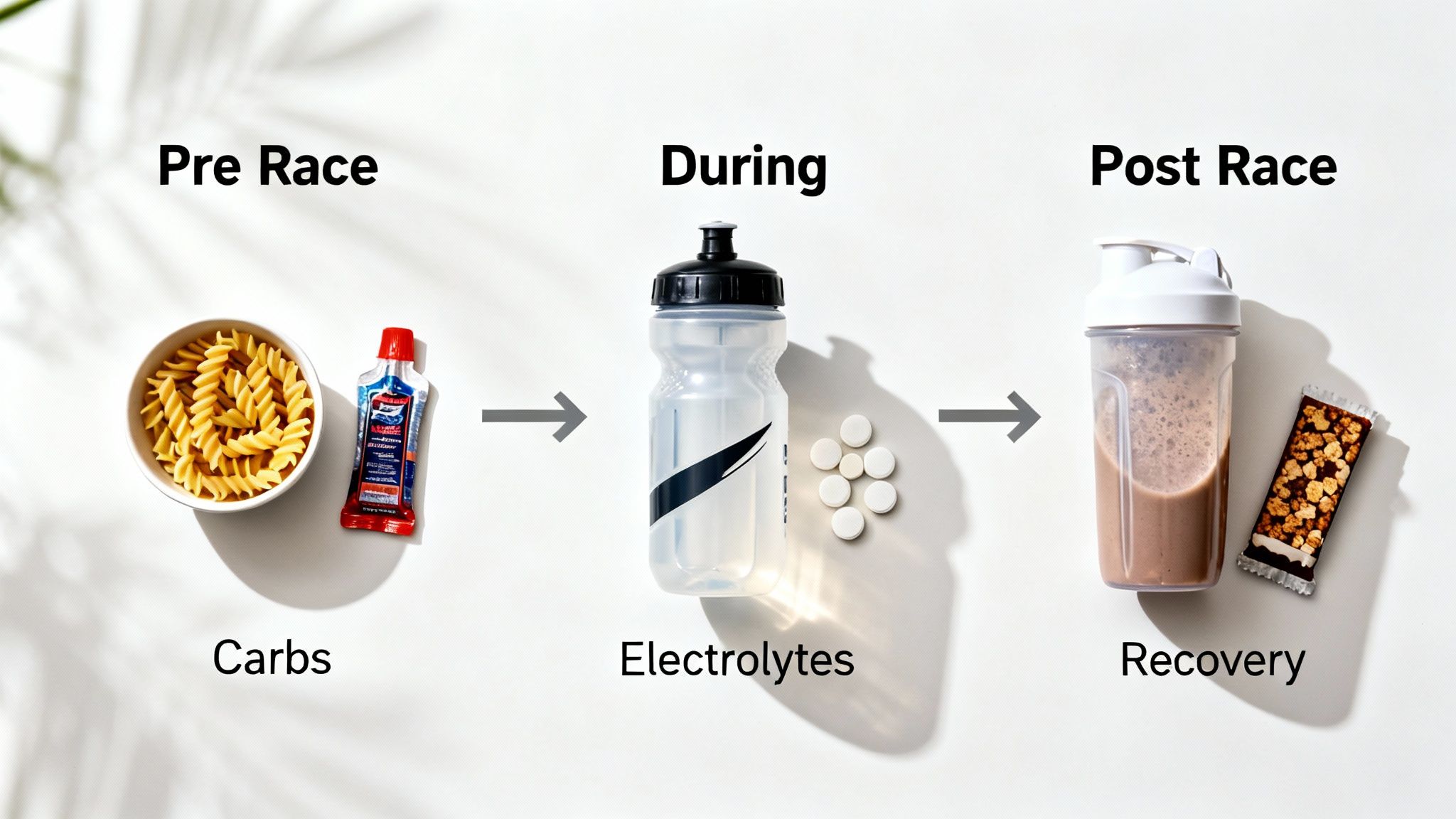
Let's be honest, walking into the supplement aisle can feel like stepping into a minefield. Every bottle promises to make you faster, stronger, and more resilient. Separating the science from the hype is a skill every serious athlete needs to master.
Making the wrong choice isn't just a waste of money—it could tank your performance or, even worse, put your health at risk. The absolute priority has to be finding products that are both effective and completely transparent about what’s inside.
The supplement industry is famously murky when it comes to regulation. This means the burden of quality control often falls squarely on your shoulders. Thankfully, you don't have to go it alone. Independent organizations provide third-party certifications that are your best line of defense against dodgy products.
Look for Third-Party Testing Seals
When you pick up a supplement, flip it over and look for a certification seal. This is your non-negotiable first step. These seals are a guarantee from an unbiased group that what's on the label is actually in the product and that it's been screened for contaminants and banned substances.
Here are the big ones to look for:
- NSF Certified for Sport®: This is the gold standard for athletes. It confirms product purity and potency while screening for more than 270 substances banned by major sports leagues.
- Informed-Sport: This global program takes it a step further by testing every single batch of a product for banned substances before it ever hits the shelf. This provides an incredible level of assurance for competitive athletes.
Think of these certifications as your personal quality control team. They give you the confidence that what you’re taking is clean, safe, and accurately dosed, protecting both your performance and your long-term health.
Demand Transparency and Avoid Proprietary Blends
Beyond the seals, look for brands that practice radical transparency. That means you want to see a crystal-clear ingredient list with the exact dose of every single component spelled out.
Be extremely skeptical of anything labeled a "proprietary blend." This is often a marketing trick where manufacturers hide the specific amounts of each ingredient under one total weight. It makes it impossible to know if you're getting a clinically effective dose of anything, or just a sprinkle of the good stuff.
A brand with an effective formula has nothing to hide. Performance-minded athletes like you are the engine of the sports nutrition market—a market valued at $49.60 billion in 2024 and still climbing. You can read more about sports nutrition market trends on Grand View Research to see just how much influence consumers have.
Your entire supplement strategy should be built on trust and evidence. By making third-party testing and transparent labels your non-negotiables, you can fuel your body with confidence, knowing your supplements are as safe as they are effective.
Frequently Asked Questions
Diving into the world of endurance supplements can definitely bring up a lot of questions. Getting clear, straightforward answers is the key to building a smarter, more effective strategy for your training and racing. Let's tackle a couple of the most common ones.
Daily Use Versus Race Day Timing
A question I get all the time is whether you should take certain supplements every single day. The honest answer? It completely depends on what you're taking.
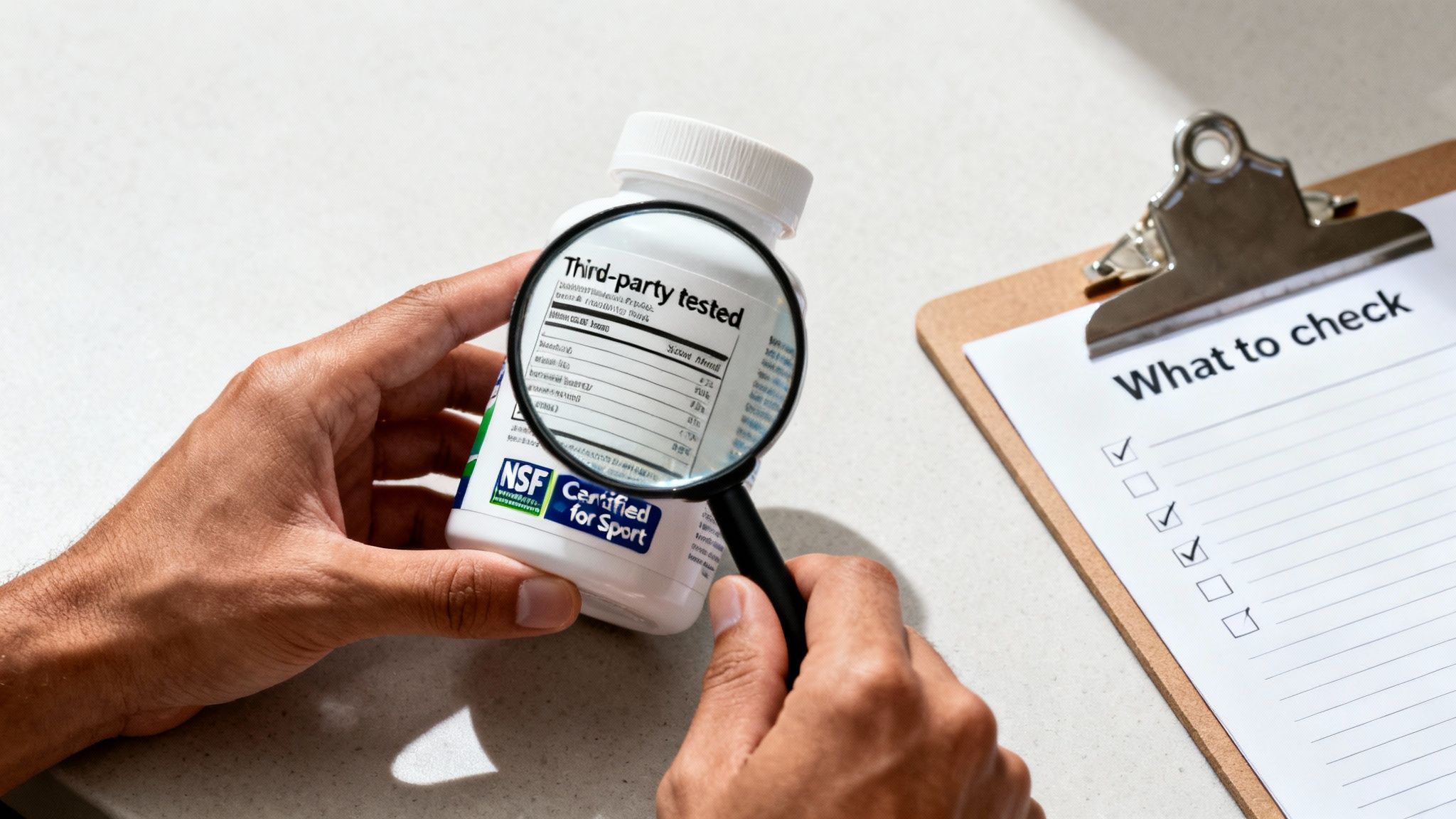
Things like carbohydrate gels and electrolyte drinks are your "in-the-moment" tools. They're specifically designed to be used right around your training sessions to fuel performance and aid hydration. You don't need them on a rest day.
On the flip side, some supplements just won't work unless you take them consistently. Beta-alanine, for instance, requires a daily “loading” phase over several weeks to actually build up in your muscles to a level where it can buffer that lactic acid burn. The bottom line is to always follow the evidence-based protocol for each specific product you're using.
Whole Foods Versus Supplements
Let's be clear: a food-first philosophy is always the best place to start. Nothing beats a solid nutritional foundation built on whole foods.
But when you're deep into a long run or a tough bike session, trying to chew and digest a banana or a sandwich just isn't practical. This is where supplements shine. Gels, chews, and specialized drink mixes give you a convenient and, more importantly, an easily digestible source of fuel and hydration that's tailor-made for high-intensity activity.
To make sure you're getting high-quality, safe products, it’s absolutely critical to understand how to find third-party tested supplements. This independent verification is your guarantee that what’s on the label is actually what’s in the bottle—without any sketchy contaminants or banned substances.
At Revolution Science, we're obsessed with creating clean, transparent, and research-backed supplements that help you perform at your absolute best. Our formulas are third-party tested and completely free from junk fillers, ensuring you get exactly what you need to crush your goals. Start building your perfect fueling strategy at https://rvsci.com.