
Tu carrito está vacío


Best Time to Take Electrolytes: Maximize Performance with Smart Timing
When is the best time to take electrolytes? The answer really depends on what you're trying to accomplish. Are you prepping for a big event, trying to sustain your energy, or focused on recovery?
For a proactive boost, take them about 90 minutes before you start. To keep your engine running smoothly, sip them during any activity lasting more than an hour. And to bounce back faster, get them in within two hours after you finish.
Your Guide to Strategic Electrolyte Timing
Thinking about electrolytes isn't just about dodging muscle cramps. It’s a strategic tool for managing your body's energy, focus, and physical output, and timing your intake is everything. Think of it like a race car driver planning a pit stop—you have to replenish before you run empty to stay ahead of depletion.
This is definitely not a one-size-fits-all situation. The perfect moment to drink electrolytes is tied directly to your goal. Are you hoping to start a marathon with a full tank? Push through that last brutal set? Or make sure your body repairs itself efficiently overnight? Each of those goals demands a different timing strategy.
This visual guide is designed to help you figure out when to take electrolytes based on what you need to achieve.
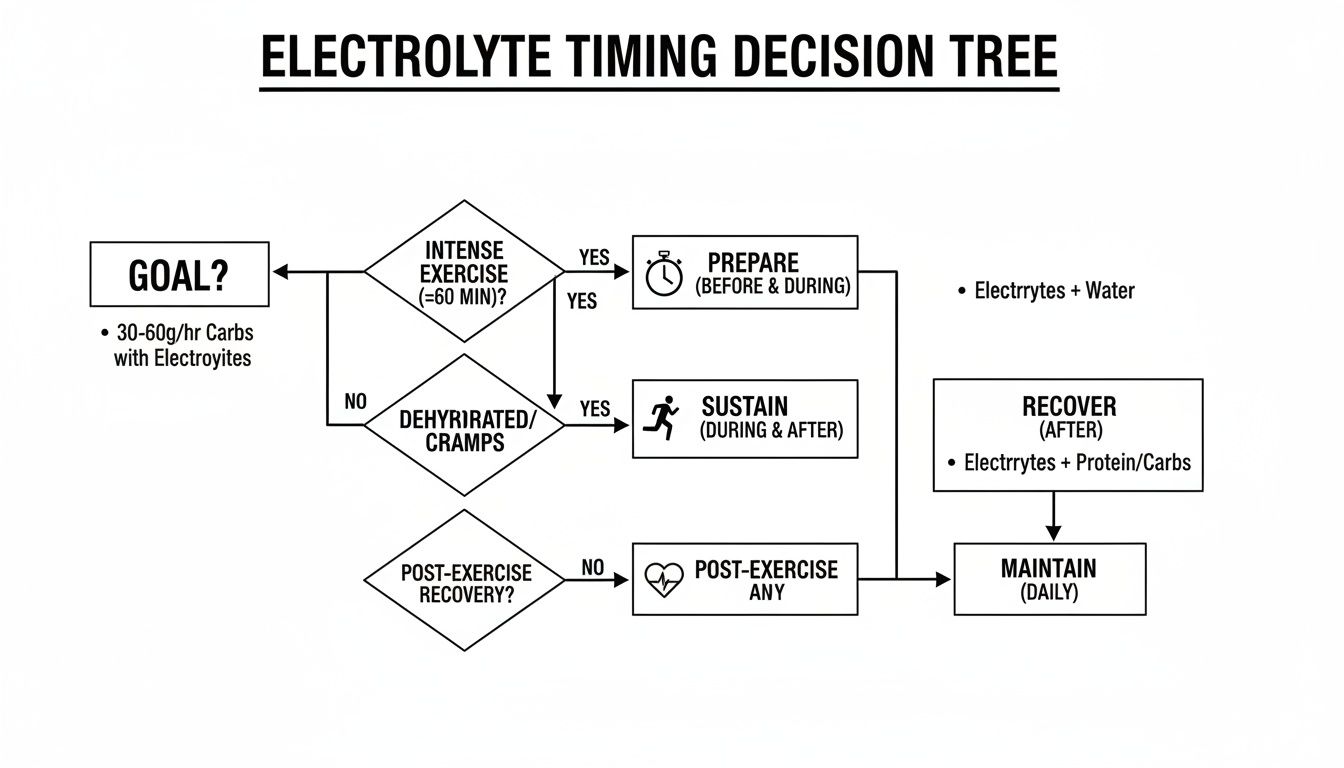
The flowchart breaks down the decision-making process into three clear paths: preparing for, sustaining, or recovering from your workout. To make it even easier to apply, here’s a quick-reference table.
Quick Reference for Electrolyte Timing by Goal
Use this table to quickly identify the best time to take electrolytes based on your specific performance objective, whether it's preparation, sustainment, or recovery.
| Timing Window | Primary Objective | Key Electrolytes to Focus On | Example Scenario |
|---|---|---|---|
| Pre-Workout | Prime the body, enhance fluid retention, and prevent early fatigue. | Sodium, Potassium | Taking an electrolyte drink 90 minutes before a half-marathon in warm weather. |
| During Activity | Replace minerals lost through sweat and maintain muscle function and energy levels. | Sodium, Potassium, Magnesium | Sipping an electrolyte solution every 15-20 minutes during a 2-hour bike ride. |
| Post-Workout | Accelerate rehydration, support muscle repair, and restore overall mineral balance. | Potassium, Magnesium, Sodium | Drinking an electrolyte mix within an hour of completing a HIIT session. |
Electrolyte timing isn't random. It’s a calculated decision that needs to line up with what you want to achieve. Pre-loading, mid-session replenishment, and post-activity recovery each play a unique role in optimizing how your body performs under stress.
By understanding these distinct windows, you can shift from simply reacting to thirst or cramps to a proactive strategy that keeps you performing at your absolute best. The rest of this guide will dive into the science and practical application behind each protocol, giving you the tools to build a personalized plan that works for you.
Why Electrolyte Timing Is Your Performance Multiplier
Let's move beyond just “staying hydrated.” If you really want to unlock your athletic potential, strategic electrolyte timing is the key.
Think of your body like a high-performance engine. Water is the coolant, sure, but electrolytes are the specialized oil making sure every single mechanical and electrical part fires flawlessly under pressure. It’s not just about having enough electrolytes; it’s about having the right balance at the exact right moment.
The best time to take electrolytes is before your body signals a problem. Waiting until you’re thirsty or, even worse, starting to cramp, means you're already playing catch-up. At that point, your body is already in a deficit, and that deficit is actively sabotaging your performance.
The Electrical Language of Your Body
So, what are electrolytes? They're essential minerals—like sodium, potassium, and magnesium—that carry an electrical charge when dissolved in your body's fluids. This isn't just some neat science fact; it's the fundamental language your body uses to communicate and function.
Every single time you decide to move, your brain zaps an electrical signal down your nerves to your muscles. Electrolytes are what make this lightning-fast communication possible.
- Sodium: This is the big one, the master regulator of fluid balance. It helps your body hold onto water, maintain stable blood pressure, and is absolutely critical for nerve impulses and muscle contractions.
- Potassium: Working as a team with sodium, potassium is vital for regulating your heartbeat and ensuring your muscles contract smoothly.
- Magnesium: This one is a workhorse. It’s involved in over 300 biochemical reactions in your body, playing a huge role in energy production, muscle function, and preventing those dreaded cramps.
If any one of these is out of whack, the whole system can get disrupted. You can dive deeper into how these minerals power your body in our complete guide to hydration for athletes.
From Minor Imbalance to Major Performance Dip
Even a tiny electrolyte imbalance can have a massive impact. When you sweat, you lose both water and these crucial minerals, with sodium being the primary loss. This directly kneecaps your body’s ability to perform.
An electrolyte deficit is like trying to run a complex computer program with low voltage. The signals become weak and distorted, leading to system-wide errors like muscle cramps, mental fog, and a sudden drop in power.
This means a bad timing strategy isn't just a small mistake—it leads to real, tangible problems that hold you back. You might feel your muscles get heavy way too soon, or notice your coordination and focus start to slip.
While we're focused on the physical side here, remember the mental game is just as important. Just as proactive electrolyte timing optimizes your physical output, things like sports psychology consulting for ultimate performance are vital for a holistic approach to success.
By actively managing your electrolyte levels, you’re not just putting out fires—you're unlocking a higher, more consistent level of performance.
Priming Your Body with Pre-Workout Electrolytes
Most athletes think about electrolytes as something you chug mid-run, but one of the most powerful strategies is to load up before you even start moving. We call this "pre-loading," and it's like filling up your gas tank before a long road trip. It ensures your body starts the session fully prepared instead of playing catch-up from the very first minute.
When you take electrolytes ahead of time, you give your body a massive head start. This helps you achieve a state of hyperhydration—where your cells are perfectly saturated with fluid—which stabilizes your cardiovascular system and improves your body's ability to keep itself cool under pressure.
The 90-Minute Advantage
So, when's the sweet spot? Aim for roughly 90 minutes before your activity begins. This isn't just a random number; it's the ideal window to give your body enough time to fully absorb the minerals and shuttle them to where they're needed most. Chug them right before you head out the door, and they simply won't be available when you need them.
This pre-workout protocol is especially critical for anyone training in the heat or tackling long endurance events. It helps your body hang onto water much more effectively, slashing the risk of early dehydration and the performance decline that comes with it.
Pre-loading with sodium essentially tells your body to hold onto more fluid, creating a bigger reservoir to draw from once you start sweating. This simple step can reduce heart rate strain and make a demanding workout feel far more manageable.
A Practical Protocol for Pre-Loading
Alright, what does this actually look like? The goal is to prime your system with a strong focus on sodium, since that's the primary electrolyte you lose through sweat.
- What to Take: An electrolyte mix that is rich in sodium is your best bet. For a deep-dive into different options on the market, check out our comprehensive electrolyte powder comparison.
- How Much: A solid target is around 500 milligrams of sodium.
- When to Take It: Mix it with 16-20 ounces of water and drink it about 90 minutes before you start.
This isn't just theory—the research backs it up with significant performance benefits. For instance, studies have shown that drinking a carbohydrate-electrolyte beverage before intense exercise led to improved sprint times for 75% of athletes compared to those who just drank enhanced water. This pre-loading window allows for optimal absorption, and further data shows it can reduce exercise-induced systolic blood pressure and pulse rate, supporting cardiovascular stability when you're working hard. To see more on this, you can learn more about the findings from the American College of Sports Medicine.
Sustaining Peak Effort During Your Workout
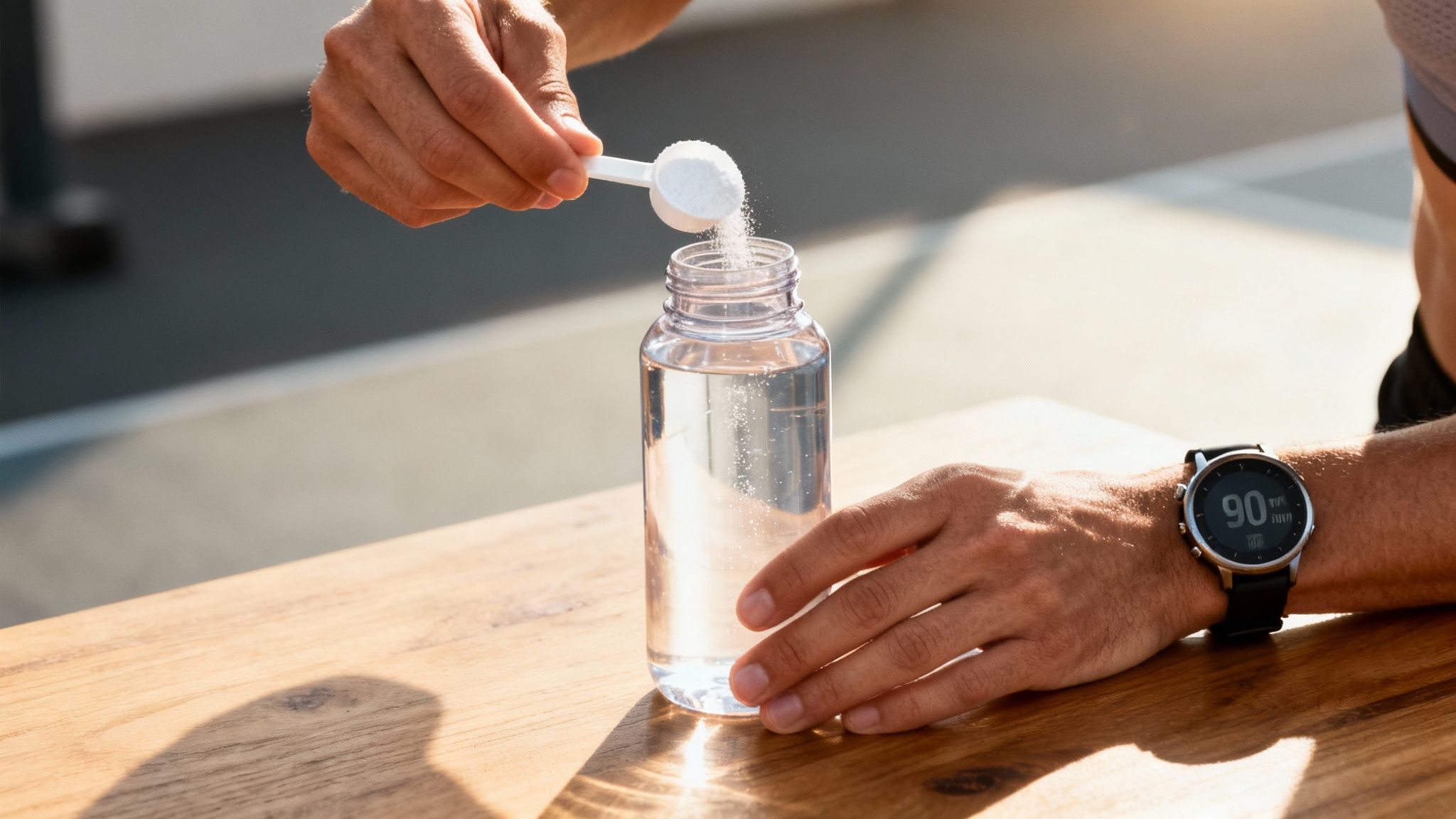
When you’re deep into a demanding session, maintaining momentum is everything. Pre-loading electrolytes sets the stage, but the real battle for peak performance is won or lost during the workout itself. Taking electrolytes mid-activity is the best way to refuel your body in real time, directly combating the minerals you lose through sweat.
Think of it like a pit stop for your body’s engine. As you push harder and sweat more, you're continuously draining vital resources like sodium and potassium. Without replenishment, your performance inevitably starts to decline, leading to fatigue, cramping, and a noticeable drop in power.
This isn’t just about feeling tired; it's about a gradual system failure. As your sodium levels dip, your body struggles to manage fluid balance, which impacts everything from muscle contractions to nerve signaling. This is exactly why sipping electrolytes throughout a long or intense session is a non-negotiable strategy for any serious athlete.
Tailoring Your Intra-Workout Strategy
The need for mid-workout electrolytes really hinges on two main factors: duration and intensity. A casual 45-minute gym session probably doesn't require it, but an activity lasting over an hour—or any workout in the heat—absolutely does. The longer and harder you go, the more critical this pit stop becomes.
For example, a marathon runner's needs are vastly different from a CrossFitter's.
- Marathoners & Cyclists: For endurance athletes, consistent, small sips every 15-20 minutes are key. This drip-feed approach prevents sudden deficits and maintains steady energy levels over several hours.
- CrossFitters & Combat Athletes: During high-intensity interval work, you’ll want to take in electrolytes during those brief rest periods. This ensures you’re ready to attack the next round with full power.
- Team Sports Players: Athletes in sports like soccer or basketball can use breaks in play or halftime to replenish, helping to prevent that dreaded second-half fatigue and cramping.
You can learn more about crafting the perfect mid-session fuel in our guide to intra-workout drinks.
The goal is proactive replacement, not reactive recovery. Sipping electrolytes during your workout is how you stay ahead of depletion, ensuring your muscles have the fuel they need to keep firing efficiently from start to finish.
This timing is also crucial for delaying the onset of exercise-associated muscle cramps (EAMC). One study found that athletes consuming carbohydrate-electrolyte beverages during exercise more than doubled their time to cramping compared to when they were dehydrated. This represented a massive 152% increase in exercise tolerance.
It's important to note, however, that 69% of participants still cramped, showing that electrolytes are a key piece of a larger puzzle. You can read the full research on exercise and cramping to see the complete findings.
Kicking Off Recovery and Rehydration After Your Workout

The moment your workout ends, the clock on your recovery starts ticking. While most people immediately think about a protein shake, replenishing your fluid and electrolyte balance is just as vital.
To really kickstart the process, the best time to take electrolytes is within the first two hours after you've finished. This isn't just about quenching your thirst; it's about giving your body the tools it needs to truly recover.
Think of it this way: sodium and potassium are like the keys that unlock your cells. You can chug all the plain water you want after a hard session, but without those electrolyte "keys," your body can't effectively open the cellular doors to let the fluid in and keep it there.
This leads to a frustrating cycle where you drink and drink but still feel dehydrated and depleted. Electrolytes break that cycle by helping your body actually hold onto the water, ensuring it gets to your muscles and tissues to start the repair process. Getting this right can make a huge difference in how quickly you bounce back.
Better Comfort, Better Fluid Retention
Beyond just getting the fluids in, electrolytes make the whole rehydration process feel a lot better. Ever felt bloated and water-logged after trying to rehydrate with plain water? Electrolytes are the fix.
The science backs this up. Carbohydrate-electrolyte drinks are simply far better at restoring fluid balance than water alone. One study showed these drinks created a positive net fluid balance within 120 minutes post-exercise, whereas plain water just couldn't keep up.
Participants also reported way less stomach bloating with the electrolyte drinks, making the whole process more comfortable and effective. For those who want to nerd out on the data, you can read the full research on beverage hydration efficacy.
Think of post-workout electrolytes as your body's rehydration manager. They make sure every sip you take is put to work repairing muscle tissue instead of just being flushed right back out.
Your Post-Workout Protocol
Ready to put this into practice? It's simple.
- Timing is Key: Get that electrolyte drink in within 30 to 60 minutes of finishing your activity. This is your prime window for absorption.
- Focus on Potassium and Magnesium: Sodium is crucial for rehydration, but don't forget potassium and magnesium. They are absolute all-stars for muscle relaxation and preventing cramps.
- Pair with Nutrients: For the ultimate recovery cocktail, combine your electrolytes with some carbs and protein. This tag-team replenishes your energy stores while rebuilding muscle. For more tips, check out our guide on how to https://rvsci.com/blogs/blog/recover-faster-after-workout.
And for a truly comprehensive approach, you can even tackle recovery from the outside in. Many athletes find that using a topical magnesium oil spray for muscle comfort and relaxation can provide targeted relief and support your body from all angles.
Adapting Electrolyte Timing for Special Situations

The standard playbook for workout hydration is a solid start, but life throws curveballs. Your real-world electrolyte needs can shift dramatically depending on the weather, your diet, or if you're feeling under the weather.
In these unique situations, you have to get more strategic. Simply reacting to thirst won't cut it when your body is under unusual stress. It's time to get proactive to prevent performance nosedives and keep your body balanced. Let's dig into how to adjust your game plan for three common scenarios.
Training in Heat and Humidity
Working out in the thick, soupy air of a hot and humid day is like flipping the difficulty switch to "hard mode." Your body goes into overdrive, and your sweat rate can go through the roof as it fights to stay cool.
This isn't just water you're losing; it's a flood of vital minerals, especially sodium. If you wait until you feel thirsty or tired, you're already way behind the curve.
To win this battle, you need an aggressive, forward-thinking strategy:
- Pre-Load Like a Pro: About 90 minutes before you even think about starting, down a higher-sodium electrolyte mix. This helps you "hyperhydrate," essentially building up a fluid reserve to draw from.
- Sip, Don't Gulp: During the workout itself, consistency is key. Don't wait for a rest break. Take small, steady sips every 10-15 minutes to maintain a constant supply.
Keto Diets and Fasting Protocols
Going keto or incorporating fasting into your routine triggers some major metabolic shifts. When you slash carbs, your body doesn't hang onto water as efficiently. The result? It starts flushing out electrolytes—especially sodium and potassium—at a surprisingly fast pace. This is the root cause of the dreaded "keto flu."
For anyone on a keto or fasting plan, electrolytes aren't just for workouts—they're for basic daily function. A steady intake is your best defense against the fatigue, headaches, and brain fog that come with mineral depletion.
Here, the best time to take electrolytes isn't just around your training session. You need to think about all-day maintenance. A dose first thing in the morning helps offset overnight losses, while another in the afternoon can stop that midday energy slump in its tracks.
Recovering From Illness
Getting knocked down by the flu or a nasty stomach bug is rough. The fluid loss from fever, vomiting, or diarrhea can dehydrate you and throw your electrolyte balance into chaos in a hurry. At times like these, chugging plain water often isn't enough to get you back on your feet.
As you recover, sipping on an electrolyte solution throughout the day is a game-changer. It helps your body actually absorb and retain the fluid you're drinking and restores the mineral balance your immune system desperately needs to do its job. This slow and steady approach will support a much faster, more comfortable recovery.
Common Questions About Electrolyte Timing
Once you start dialing in your electrolyte strategy, a few practical questions almost always pop up. Let's tackle some of the most common ones so you can apply this knowledge with total confidence. Getting these details ironed out is what makes the difference.A big one is whether it's okay to drink electrolytes on an empty stomach. The short answer is yes, for the most part. In fact, for pre-loading, taking them on an empty stomach can actually help speed up absorption—which is exactly what you want before you train.
Most quality, sugar-free formulas are gentle enough to do this without issue. But if you know you have a sensitive stomach or you’re taking an especially concentrated dose, just chase it with a bit of water or have a light snack. That usually prevents any potential trouble.
Adjusting for Workout Duration and Intensity
Another question I hear all the time is, "Do I really need electrolytes for a short workout?" If you’re training for under 60 minutes in a cool gym, you probably don't need to sip on them during the session itself, as long as you went into it properly hydrated.
That said, pre-loading about 90 minutes before your workout can still give you a real performance edge. And post-workout replenishment is always a good idea, particularly if it was a high-intensity session like HIIT, or if you're just someone who sweats a lot.
Your body gives you clues. Persistent muscle cramps, feeling wiped out despite good sleep and nutrition, dizziness, or a sudden performance drop are all red flags that your electrolyte protocol needs a second look.
Pay close attention to how you feel. It's the most reliable feedback you'll ever get. If you constantly feel bloated after chugging plain water or those nagging cramps just won't go away, it's a huge sign that your post-workout electrolyte game needs an upgrade.
At Revolution Science, we're all about research-backed supplements without the fillers or pseudoscience. Our Reviver Electrolytes are engineered to deliver exactly what you need to perform, recover, and stay in balance. Get the clean, effective fuel your body deserves at https://rvsci.com.