
Tu carrito está vacío


Recovery Drinks for Athletes: The Science Behind recovery drinks for athletes
Think of the best recovery drinks for athletes as your personal nutritional pit crew. After you push your body to its limits, these drinks swoop in to rapidly refuel your energy stores, patch up muscle tissue, and top off your fluids. It’s just like a race car pulling in for service after a grueling lap—your body needs that same immediate, targeted support to come back stronger tomorrow.
Why Recovery Drinks Are Your Nutritional Pit Crew

Your body is a high-performance machine. After a tough workout—a long run, a heavy lifting session, or an all-out HIIT class—that machine is running on empty and has sustained damage at a microscopic level. Just sipping water and waiting for dinner isn't going to cut it if you want to optimize the repair process.
This is where a well-formulated recovery drink comes in. They are specifically engineered to kickstart what experts call the "Three Pillars of Recovery," a simple but powerful framework that forms the bedrock of smart post-workout nutrition.
The Three Pillars of Athletic Recovery
The whole point of a recovery drink is to address three critical physiological needs at once. If you neglect even one of these pillars, you’re leaving results on the table and opening the door to lingering soreness, poor performance, and even injury.
| Recovery Pillar | Physiological Goal | Key Ingredients in a Recovery Drink |
|---|---|---|
| Replenish | Restock muscle glycogen (your body's primary fuel). | Fast-absorbing carbohydrates (e.g., dextrose, maltodextrin). |
| Repair | Rebuild and strengthen damaged muscle fibers. | High-quality, fast-digesting protein (e.g., whey isolate, hydrolyzed whey). |
| Rehydrate | Restore fluid and electrolyte balance lost through sweat. | Water, sodium, potassium, and other essential minerals. |
By hitting all three of these targets, you’re not just recovering; you’re setting yourself up for a better performance in your next session.
A great recovery drink isn’t a luxury—it’s a strategic tool. It perfectly bridges the gap between the end of your workout and your next big meal, taking advantage of a critical window when your body is primed to absorb nutrients and get the healing process started.
Of course, different workouts place different demands on the body. A marathoner might burn through far more glycogen during a two-hour run than a powerlifter would, but the lifter is going to cause much more significant muscle damage during a heavy squat session.
Knowing what your body needs is the first step. And while nutrition is key, a complete recovery plan often involves more. For athletes looking to speed up muscle repair and reduce tightness, physical therapies like a specialized Sports Massage Therapy can be a game-changer, working hand-in-hand with your nutritional strategy to get you back to 100%.
The Science Behind Key Recovery Ingredients
To really get why the right recovery drink is so crucial for athletes, we have to look under the hood. This isn't about some magic formula or slick marketing—it’s about a precise blend of ingredients, each with a specific job in repairing and refueling your body. Think of it like a high-performance pit crew for your muscles; every member has to nail their task for the whole team to win.
Just like a master mechanic knows every part of an engine, a sports scientist understands that carbohydrates, protein, and electrolytes are the non-negotiable trifecta of athletic recovery. Each one tackles a different part of post-workout exhaustion, and they work together to get you back in the game, faster.
Carbohydrates: The Rapid Refueling Crew
Picture your muscles having little fuel tanks for glycogen. After a tough workout, those tanks are practically empty. Carbohydrates are the high-octane fuel you need to top them off, and you need to do it fast.
This is where simple carbohydrates, like dextrose or maltodextrin, come in. They’re the go-to for recovery drinks because they get absorbed into your bloodstream almost instantly. This triggers an insulin response that acts like a key, unlocking your muscle cells so glucose can rush in and start the refueling process.
Delaying this is like trying to drive a car on fumes—you just won't get very far. Restoring your glycogen stores quickly is the first and most critical step to bouncing back.
Protein: The Muscle Repair Specialists
If carbs are the fuel, protein provides the raw materials for the repair crew. Every hard workout creates tiny micro-tears in your muscle fibers. That’s a good thing—it’s how you get stronger—but your body needs the right building blocks to patch them up and reinforce them. This whole process is called muscle protein synthesis.
Different proteins get the job done at different speeds, each offering a unique benefit:
- Whey Protein: This is the fast-acting superstar. It absorbs quickly, flooding your muscles with amino acids right when they're most receptive to kick-start immediate repairs.
- Casein Protein: Think of this as the slow-and-steady specialist. Casein delivers a sustained, drip-feed of amino acids over several hours, which is perfect for preventing muscle breakdown long after your workout is over.
- Plant-Based Proteins: Options like pea, rice, or soy are fantastic for athletes with dietary restrictions and offer complete amino acid profiles. Modern blends are incredibly effective at stimulating muscle repair.
By including a quality protein, a recovery drink doesn't just help you heal; it helps you adapt and come back even stronger.
Electrolytes: The Hydration and Function Regulators
You can't perform if your body's internal wiring is fried. Electrolytes are essential minerals like sodium, potassium, and magnesium that control everything from your fluid balance to muscle contractions. When you sweat, you lose these crucial minerals, which can lead to cramping, fatigue, and poor nerve function.
Think of electrolytes as the spark plugs for your nervous system. They carry the electrical signals that allow your muscles to fire and your cells to talk to each other. Putting them back is non-negotiable for proper rehydration and avoiding the dreaded muscle cramps that can kill a training session. You can take a deeper dive into their role in our guide on what electrolytes are good for.
The market definitely reflects this need, with electrolyte-based drinks leading the charge. The global sports drink market was valued at USD 34.1 billion and is projected to hit USD 60 billion, growing at a 5.8% CAGR. This massive growth is fueled by athletes who know that replacing what’s lost in sweat is fundamental to performance. You can see more details about the sports drink market growth on futuremarketinsights.com.
An effective recovery drink for athletes is more than just a tasty shake. It is a calculated formula where each ingredient works in synergy—carbs to refuel, protein to rebuild, and electrolytes to rehydrate and restore function.
Finally, some advanced formulas add in a few extra performance boosters. Branched-Chain Amino Acids (BCAAs), especially leucine, are powerful triggers for muscle protein synthesis. On top of that, antioxidants from ingredients like tart cherry can help manage inflammation and reduce delayed onset muscle soreness (DOMS), making the day after a tough workout a lot more bearable.
Matching Your Drink to Your Training Style
It’s pretty obvious that a marathon runner’s training plan looks nothing like a powerlifter’s. So why would their post-workout nutrition be the same? It shouldn't be. Your training style determines the specific demands you put on your body, whether that’s draining your fuel reserves or tearing down muscle fibers.
The best recovery drinks for athletes are the ones that perfectly match those unique demands.
Think of it like this: you wouldn't use the same fuel or follow the same maintenance schedule for a sedan and a heavy-duty truck. By tailoring your recovery drink to your sport, you give your body the exact resources it needs to rebuild, refuel, and come back stronger for the next session. It's about being strategic, not just mindlessly chugging calories.
This chart breaks down the building blocks every athlete should be thinking about for their recovery.
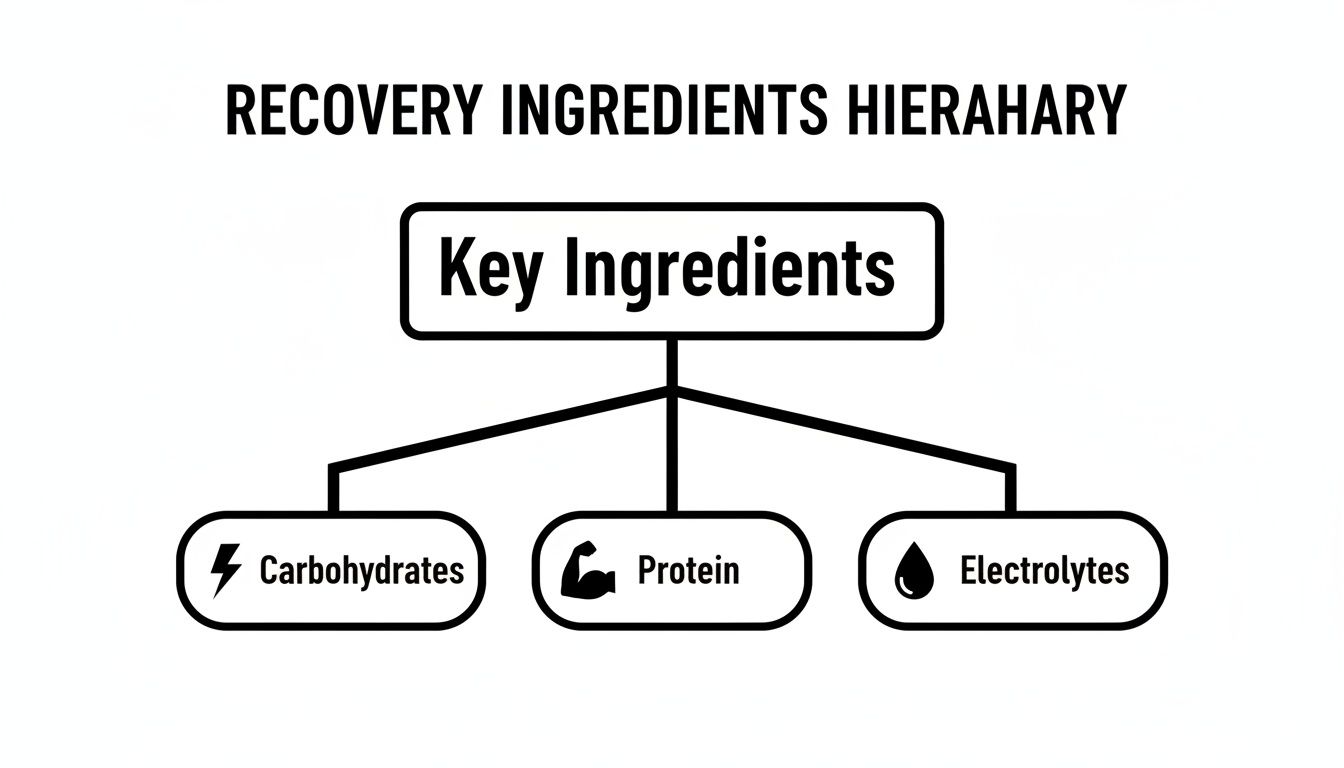
As you can see, everyone needs carbohydrates, protein, and electrolytes. The real secret is in the balance—and that’s what you need to adjust based on how you train.
Endurance Athletes: The Glycogen Replenishers
For anyone who goes the distance—runners, cyclists, triathletes—the biggest battle is glycogen depletion. Long, steady efforts can completely empty your muscle fuel tanks. That means your number one recovery mission is to refill those tanks as quickly and efficiently as possible.
Your recovery drink needs to be heavily loaded with carbohydrates. The gold standard for endurance recovery is a carb-to-protein ratio of 3:1 or even 4:1. The carbs get to work immediately on glycogen resynthesis, while a small dose of protein provides just enough amino acids to start repairing the muscle damage from all that repetitive motion.
- Focus On: Fast-absorbing carbs like dextrose and maltodextrin.
- Protein Needs: A moderate 15-25g of protein is all you need for repair without slowing down carb absorption.
- Electrolytes Are Key: With high sweat rates, replacing electrolytes is completely non-negotiable.
To learn more about fueling for long-haul activities, take a look at our complete guide on sports nutrition for endurance athletes.
Strength and Power Athletes: The Muscle Builders
If you’re a powerlifter, Olympic lifter, or bodybuilder, you have a totally different goal. Sure, you use glycogen, but your main focus is on repairing intense muscular breakdown. Your workouts are designed to create massive micro-tears in muscle fibers, and recovery is all about feeding your body the raw materials to repair that damage and build back bigger and stronger.
This is where protein takes center stage. Your recovery drink should pack a much higher protein punch to maximize muscle protein synthesis. A carb-to-protein ratio closer to 2:1 or even 1:1 is often the sweet spot. This gives you enough carbs to restore some immediate energy without interfering with the powerful muscle-building signal that protein sends.
For Olympic lifters and strongmen, this means protein shakes with 25g+ per serving are essential to aid repair. These athletes are driving the growth of a specialized market, which was valued at USD 9.045 billion and is forecasted to reach USD 15.51 billion. This surge is propelled by innovations catering to specific needs, from plant-based proteins for vegan athletes to clean formulas for those in keto communities.
Hybrid Athletes: The Balanced Approach
What about athletes in sports like CrossFit, soccer, or basketball? They face a unique challenge. Their training is a mix of endurance, strength, and power, which means they deplete glycogen and cause significant muscle damage all in the same session. This calls for a recovery approach that can handle both jobs at once.
A hybrid athlete’s recovery drink needs a balanced ratio of carbohydrates and protein, usually around 2:1. This provides a solid dose of carbs to start refueling while delivering a robust serving of protein to kickstart muscle repair. It’s a middle-ground strategy that ensures no part of recovery gets left behind, prepping the body for the multifaceted demands of the next workout.
Perfecting Your Post-Workout Timing and Intake

Knowing what to mix into your recovery drink is half the battle. Knowing when to drink it is what really separates good results from great ones. For years, the buzz was all about the "anabolic window"—that magical 30-minute slot post-workout where your muscles supposedly soaked up nutrients like a sponge.
While there's truth to the idea, we now know that timeline is a bit more forgiving. Think of it less like a slamming door and more like a wide-open gate. Your body is primed to absorb nutrients for at least a few hours after you train, but that first hour is absolutely prime time. Hitting that window gives you a serious head start on muscle repair and glycogen replenishment.
Putting off your recovery drink is like letting a fire smolder. The sooner you get those essential carbs and proteins in, the faster your body can flip the switch from breaking down tissue to building it back up.
Tailoring Ratios to Your Goals
There’s no such thing as a one-size-fits-all recovery drink. The best formula is one that matches the work you just put in. It all comes down to the carbohydrate-to-protein ratio, which needs to reflect the unique demands of your workout.
-
For Endurance Athletes (Ratio 3:1 to 4:1): After a long run, ride, or swim, your number one priority is restocking those depleted glycogen stores. A ratio of 3 or 4 parts carbohydrate to 1 part protein is your sweet spot. This carb-heavy mix rapidly refuels your muscles, with just enough protein to kickstart the repair of those hard-working muscle fibers.
-
For Strength Athletes (Ratio 2:1 to 1:1): A heavy lifting session creates a lot of muscle micro-trauma. Here, the priority shifts to providing the raw materials for repair and growth. A 2:1 or even a 1:1 ratio delivers a major dose of protein to maximize muscle protein synthesis, with just enough carbs to restore immediate energy without getting in the way of protein absorption.
Calculating Your Ideal Intake
Once you've got the ratio dialed in, the next step is figuring out how much to drink. Using your body weight is a simple and effective way to make sure you’re getting a precise dose for maximum impact.
A solid guideline is to consume 1.0 to 1.2 grams of carbohydrates per kilogram of body weight within that first hour post-exercise. For protein, you'll want to aim for 0.25 to 0.3 grams per kilogram of body weight.
Let's break it down for a 150-pound (68 kg) athlete:
- Carbohydrate Goal: 68 kg x 1.2 g/kg = 81.6 grams
- Protein Goal: 68 kg x 0.3 g/kg = 20.4 grams
This quick calculation gives our athlete clear targets that create a ratio of roughly 4:1—perfect after a demanding endurance session. This kind of precision takes your nutrition from guesswork to a real strategic advantage. It’s this attention to detail that will truly speed up muscle recovery and make your training count.
Timing isn't just about speed; it's about synergy. Consuming the right nutrients at the right time creates a powerful physiological response that accelerates every aspect of your recovery, from refueling energy to rebuilding stronger muscles.
This strategic approach ensures you’re not just bouncing back, but actively adapting and getting stronger from your training. If you want to dive deeper into the specifics of nutrient timing, check out our detailed guide on the best time to take electrolytes.
Simple and Powerful DIY Recovery Drink Recipes
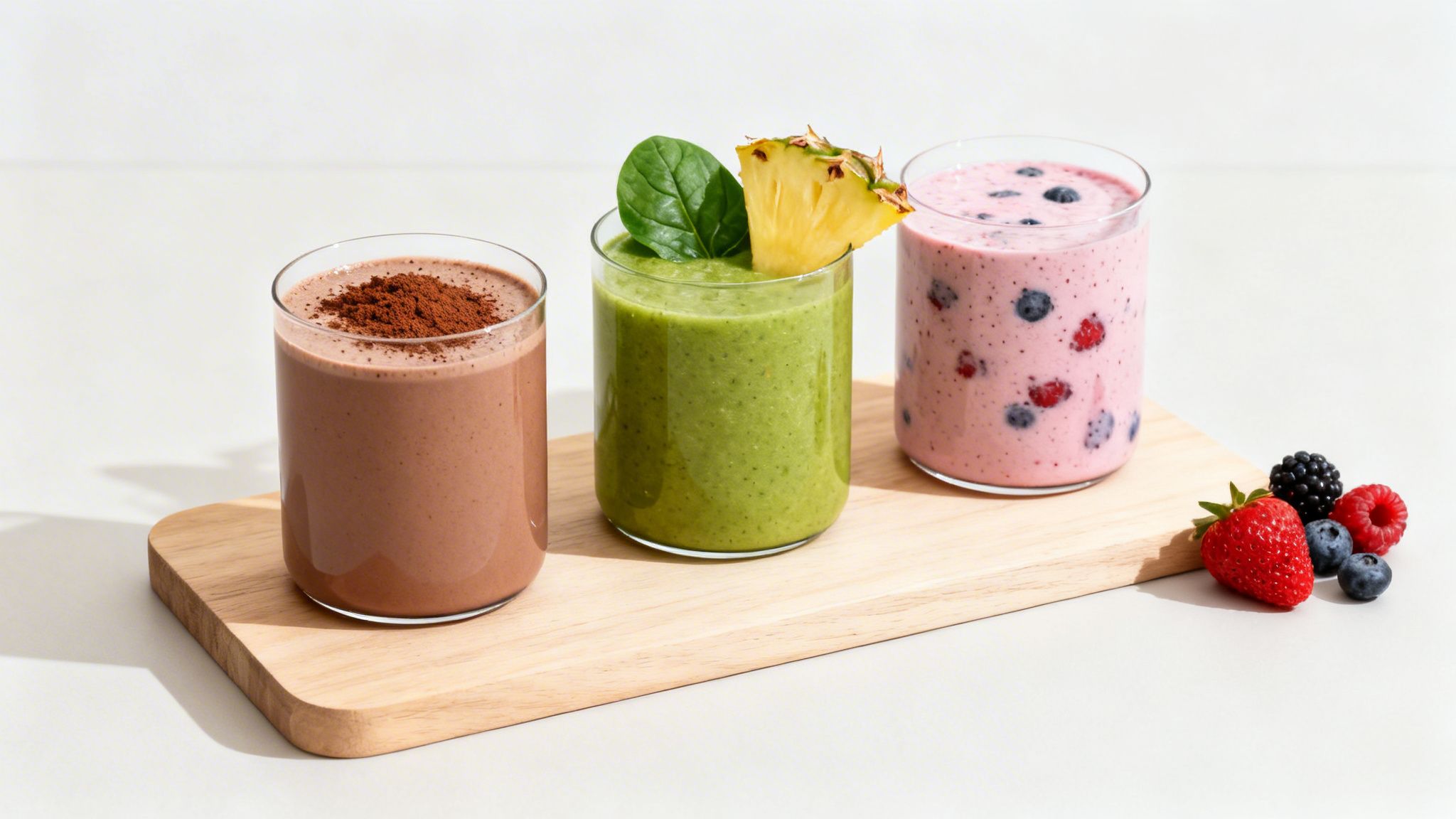
You don’t have to shell out big bucks on pre-made formulas to get an effective recovery drink. In fact, taking charge of your own post-workout nutrition is simple, cheaper, and lets you dial in the exact ingredients your body needs, right from your own kitchen.
These recipes are more than just tasty—they’re designed to kickstart your recovery using powerful whole-food ingredients. Each one is built for a specific athletic goal, whether you need all-around muscle repair or want to knock down inflammation.
Classic Chocolate Milk Upgrade
We all know chocolate milk is a classic for a reason. It’s a natural source of carbs, protein, and electrolytes. This recipe takes that proven foundation and cranks it up a notch for serious recovery. By adding a scoop of quality protein powder, you amplify its muscle-repairing power, making it a fantastic all-around choice.
-
Ingredients:
- 1 ½ cups low-fat milk (dairy or plant-based)
- 1 scoop chocolate whey or plant-based protein powder
- 1 tablespoon unsweetened cocoa powder
- 1 small banana (for extra carbs and potassium)
-
Instructions:
- Dump all the ingredients into a blender.
- Blend on high until it's completely smooth and creamy.
- Get it down within an hour of your workout for the best results.
This mix hits that sweet spot with a balanced carb-to-protein ratio, perfect for both restocking your glycogen stores and firing up muscle protein synthesis.
Tropical Anti-Inflammatory Smoothie
When you go hard, inflammation and soreness are part of the game. This smoothie is your secret weapon, packed with natural anti-inflammatory ingredients to help your body chill out, reduce that dreaded delayed onset muscle soreness (DOMS), and get you back in the gym faster.
The real MVP here is bromelain, an enzyme found in pineapple that’s been shown to help dial down muscle soreness and inflammation. When you pair that with the antioxidants from spinach, you’ve got a potent combo for fighting off post-workout aches.
-
Ingredients:
- 1 cup frozen pineapple chunks
- 1 cup fresh spinach
- ½ cup coconut water (for hydration and electrolytes)
- ½ cup unsweetened Greek yogurt or a plant-based alternative
- 1 teaspoon grated ginger
-
Instructions:
- Toss everything into a blender.
- Blast it until the mixture is smooth and a vibrant green.
- Drink it right away to get the most out of those nutrients.
This blend is especially clutch after a grueling endurance session or a high-impact workout. If you're looking to really fine-tune your mineral game, our electrolyte powder comparison offers some great insights.
High-Protein Berry Blast
After a heavy lifting day, your primary mission is serious muscle repair. For that, you need protein—and lots of it. This recipe uses Greek yogurt as its base to deliver a major protein punch, backed up by antioxidant-rich berries to help with recovery at a cellular level.
-
Ingredients:
- 1 cup plain Greek yogurt (or a high-protein dairy-free version)
- ½ cup mixed frozen berries (blueberries, raspberries, strawberries)
- ½ cup water or unsweetened almond milk
- 1 tablespoon chia seeds (for omega-3s and fiber)
-
Instructions:
- Put all the ingredients into your blender.
- Blend on high speed until it’s perfectly smooth.
- Drink this post-workout to flood your muscles with the amino acids they're screaming for.
Thanks to the Greek yogurt, this recipe provides a sustained-release protein source, making it an excellent choice for supporting muscle recovery over the long haul.
How to Choose the Right Commercial Recovery Drink
Walking down the supplement aisle can feel like a pop quiz you didn't study for. Tubs and bottles scream promises of faster recovery and peak performance, and it's easy to get lost in the marketing noise.
The secret to navigating this maze is simple: ignore the flashy claims on the front and become a label detective. It's all about what's inside the container. Making a smart choice isn't about finding some magic formula. It’s about understanding what your body actually needs after a hard session and learning to spot the products that deliver, without all the junk.
Decode the Nutrition Label
The nutrition facts panel and the ingredients list are where the truth lives. Forget the hype on the front of the tub; this is where you find out what you’re really buying. Your first mission is to check the macronutrient doses. You’re looking for a product that packs at least 20-30 grams of high-quality protein to get the muscle repair process started.
Next up, check the carbohydrates. As we've covered, the ideal amount really depends on your training. An endurance athlete might need a hefty 40-80 grams of carbs, while a strength athlete can get by with less. The source matters, too. For rapid glycogen replenishment, you want simple, fast-digesting carbs like dextrose or maltodextrin.
A transparent label is the hallmark of a trustworthy brand. If a company makes it difficult to see exactly what you're getting in each serving—and in what amounts—it’s a major red flag.
The supplement industry is seeing a huge shift toward protein-heavy formulas as athletes demand more effective recovery tools. In fact, the market for recovery drinks is projected to climb to $15.51 billion, driven almost entirely by this demand for functional, muscle-building ingredients. This trend alone shows why getting a handle on protein and carb content is so critical. You can learn more about the growth of the sports and protein drink market on bevindustry.com.
Spot and Avoid Red Flags
Once you’ve confirmed the core ingredients are there in the right amounts, it’s time to hunt for red flags. So many commercial products are loaded with fillers, artificial sweeteners, and mysterious proprietary blends that do a lot more for the company’s profit margins than for your recovery.
Here’s what to keep an eye out for:
- Proprietary Blends: This is a huge one. They’re listed as a "blend" with a single total weight, which completely hides how much of each ingredient you’re getting. This makes it impossible to know if you're getting an effective dose of anything.
- Fillers and Thickeners: Ingredients like excessive gums or cheap bulking agents are just there for texture. They offer zero nutritional value for your recovery.
- Artificial Sweeteners and Colors: While they aren't always harmful, they’re totally unnecessary additives in a clean, functional recovery product.
Look for Third-Party Certifications
How can you be sure the ingredients on the label are what’s actually in the bottle? This is where third-party certifications are invaluable. They act as an independent stamp of approval, verifying that a product is pure, potent, and safe.
Look for these logos on the packaging:
- NSF Certified for Sport: This certification confirms the product contains what the label says, has been tested for contaminants, and is free of more than 270 substances banned by major athletic organizations.
- Informed-Sport: Similar to NSF, this program tests every single batch of a product for banned substances before it’s released to the market. For competitive athletes, this provides an incredible level of confidence.
Choosing products with these certifications ensures you are fueling your body cleanly and safely. At REVSCI, this commitment to transparency and purity is at the very core of our philosophy. We formulate our solutions with research-backed ingredients at effective doses—and nothing else—to provide the clean, reliable recovery fuel that serious athletes depend on.
Got Questions About Recovery Drinks? We've Got Answers.
The world of athletic nutrition can feel like a maze. Even when you think you have a handle on the ingredients and the timing, a bunch of practical questions always seem to pop up. Let's cut through the noise and tackle some of the most common things athletes ask about using recovery drinks, giving you clear, science-backed answers to help you dial in your strategy.
Can't I Just Eat a Meal Instead?
This is a great question, and the answer isn't a simple yes or no—it's all about timing and what you're trying to accomplish right then and there. A real meal made from whole foods is absolutely vital for long-term recovery, but a liquid shake has one massive advantage in that critical window right after you train: speed.
Think of it like this: a liquid recovery drink is like an express lane for nutrients straight to your muscles, while a solid meal is more like taking the scenic route. Because its carbs and proteins are essentially pre-digested, they hit your bloodstream way faster than solid food. Right after a brutal session, you want that express lane to kickstart the repair and refueling process immediately.
- Recovery Drink: Your go-to for the first 30-60 minutes after a workout for lightning-fast nutrient delivery.
- Whole Food Meal: Perfect for 1-3 hours later to provide sustained energy and a wider spectrum of micronutrients.
They both have a job to do. The drink is your first responder, and the meal is the follow-up crew that makes sure everything gets rebuilt properly.
Are They Necessary After Every Single Workout?
Nope. Not every training session is a throw-down that requires a specialized recovery drink. The real key is to match your recovery effort to your workout intensity. If you just pushed your body to its limit on a two-hour ride or a monster squat session, you absolutely need a targeted nutritional response to bounce back.
But for lighter activity—say, a 30-minute jog, a yoga class, or a low-key technique day—your body isn't nearly as broken down or depleted. In those cases, just rehydrating with water and getting to a balanced meal within a couple of hours is more than enough to cover your bases.
Think of recovery drinks as a strategic tool you pull out for your most demanding sessions. Chugging one after every easy workout is overkill and can just add calories you don't really need. The goal is to repair damage and restock fuel, not just to drink a shake out of habit.
What's the Deal with All the Sugar in These Drinks?
The word "sugar" makes a lot of people nervous, but in the specific world of athletic recovery drinks, it plays a very deliberate, functional role. The simple carbs you see—sugars like dextrose—are not the same as the empty-calorie junk in a can of soda.
After you’ve gone all-out, your muscles are screaming for a fast-acting energy source to replenish their glycogen stores. Simple carbs are the quickest way to answer that call. They trigger an insulin response that acts like a key, unlocking your muscle cells to let in both glucose for immediate refueling and the amino acids from protein for repair.
When you're looking at a label, learn to see the difference between these functional sugars designed for rapid glycogen replenishment and the excessive added sugars that do nothing for your performance. A well-designed product uses sugar strategically to get you back in the game faster, not just to make the drink taste sweet.
For athletes who demand clean, effective, and transparently formulated solutions, Revolution Science provides the research-backed fuel you need. Our products are engineered without fillers or pseudoscience to help you recover faster and perform better. Explore our recovery solutions at https://rvsci.com.