
Your Cart is Empty


What Are Electrolytes Good For: Boost Hydration and Performance
At the most basic level, electrolytes are simply minerals that carry an electric charge. But that simple definition doesn't do them justice. They are absolutely essential for keeping your body’s most critical systems online, governing everything from maintaining fluid balance and enabling muscle contractions to supporting nerve function.
They are the unsung heroes of both daily health and peak athletic performance.
The Hidden Power Driving Your Performance
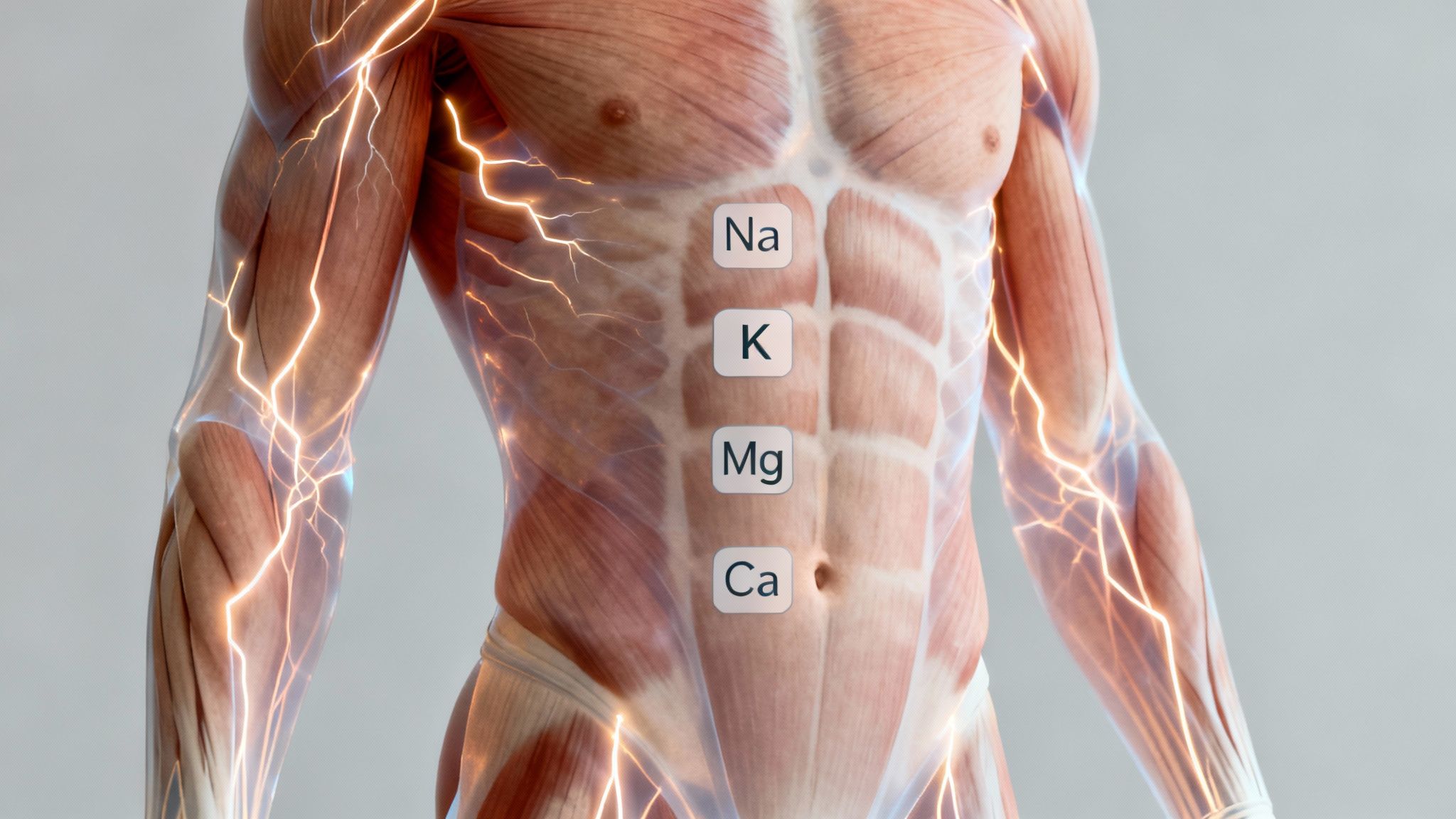
Think of your body as a high-performance engine. Water might be the coolant, but electrolytes are the spark plugs. When these minerals dissolve in fluid—like water or blood—they conduct electricity, and it’s this electrical energy that powers your most fundamental biological processes.
Without that charge, communication breaks down. Your nerves can’t fire signals, your muscles can’t contract, and your brain struggles to process information. It's an intricate electrical grid that controls nearly every move you make, from a single heartbeat to that final push across the finish line.
Meet the Key Players
While there are several electrolytes, a core group of four are the true MVPs of physical performance. Each one has a distinct job, but they all work together to keep your internal engine firing on all cylinders.
We've put together a quick-reference table to break down exactly what these powerhouses do for you.
Your Body's Key Electrolytes and Their Functions
| Electrolyte | Primary Role in the Body | Impact on Performance |
|---|---|---|
| Sodium | Master regulator of fluid balance; vital for nerve impulses and muscle contractions. | Prevents dehydration and muscle cramping by helping the body retain water. |
| Potassium | Works with sodium to manage fluid inside cells; key for heart rhythm and muscles. | Supports proper muscle function and helps prevent cramping and fatigue. |
| Magnesium | Involved in over 300 biochemical reactions, including energy production and muscle relaxation. | Aids in energy metabolism and helps muscles relax, preventing cramps and spasms. |
| Calcium | Famous for bone health, but also crucial for triggering muscle contractions. | Essential for the "go" signal that makes your muscles fire during exercise. |
As you can see, it's not about just one of them—it's about the team working in concert. This synergy is what keeps your body running like a well-oiled machine, especially when you're pushing your limits.
These powerhouse minerals—sodium, potassium, and magnesium—keep your body running like a well-oiled machine, especially when you're pushing hard in endurance events.
Take marathons, for instance. In hot conditions, runners can lose up to 1-2 liters of sweat per hour, flushing out 800-1,200 mg of sodium alone. That kind of rapid depletion shows just how critical consistent electrolyte replacement is for anyone serious about performance.
Understanding what these electrolytes are good for is the first step. The next is learning how to use them to unlock your true potential. If you're interested in the bigger picture, you can explore more on electrolyte drink trends to see just how vital these supplements have become.
Unlocking Your Peak Physical Potential

While chugging water is a good start, true performance isn't just about how much you drink—it's about what’s in the water. Electrolytes are the real MVPs here, acting as the tiny electrical conductors that control everything from muscle function to nerve communication. They’re the reason your body can execute powerful, coordinated movements without short-circuiting.
Ever had a workout derailed by a debilitating muscle cramp? That sudden, vice-like contraction is a classic SOS signal from your body that your electrolyte balance is off. Minerals like calcium and sodium are what tell your muscles to contract, while potassium and magnesium give them the signal to relax. Without this delicate balance, your body’s wiring gets crossed, leading to cramps and a sudden drop in power.
The Science Behind Sustainable Power
Every single lift, stride, or pedal stroke you make relies on a precise sequence of muscle contractions. Electrolytes are what make this intricate dance possible, ensuring your muscles fire exactly when you need them to and are ready for the next rep.
Here's a quick breakdown of the key players:
- Calcium: The primary trigger that floods muscle cells to initiate a contraction.
- Sodium: Helps transmit the initial nerve impulse that tells the muscle it’s time to work.
- Potassium: Crucial for "resetting" the muscle cell after a contraction so it can fire again.
- Magnesium: Plays a vital role in muscle relaxation, preventing them from getting stuck in a contracted state.
When you sweat, you don't just lose water; you lose these essential minerals. As they deplete, your ability to sustain effort plummets. This is ground zero for understanding what electrolytes are good for—they directly govern your capacity for both strength and endurance. You can dive deeper into managing this with our complete guide to hydration for athletes.
Preventing the Performance Wall
Hitting the wall isn't just about running out of fuel. It’s also about electrical failure. When electrolyte levels dip, nerve signals get weaker and muscle output grinds to a halt. To really unlock your peak potential and bounce back faster, you might consider the benefits of an Electrolyte Powder for faster recovery.
Imagine you're deep into a century ride or an ultra-marathon. It’s the electrolytes that are regulating your nerve signals and muscle contractions, keeping that dreaded bonk at bay. Take potassium—its levels can drop 15-20% during intense sweat sessions, which is enough to disrupt the hundreds of contractions happening in your heart alone every single day.
The research backs this up. Athletes who strategically supplement with electrolytes can seriously reduce fatigue and push their limits, especially in the heat. We're talking about a 25% reduction in fatigue and a 16% improvement in endurance—game-changing numbers that prove how critical mineral balance is.
Ultimately, managing your electrolytes is one of the most powerful things you can do to prevent cramps, sustain your power, and smash through old performance barriers. It’s what separates finishing strong from cramping up on the sidelines.
Sharpening Your Mental Edge
Peak performance isn’t just about physical strength; it's a game played between the ears. We talk a lot about muscle function and hydration, but electrolytes are just as critical for maintaining the sharp cognitive edge you need to win.
Your brain is basically a high-speed electrical network. Every single thought, reaction, and decision is an electrical signal firing between neurons. Sodium and potassium are the star players here, the minerals that conduct those signals. When they're balanced, communication is instant and clear. You're focused, decisive, and locked in.
But when you sweat and those mineral levels drop, that pristine communication network starts to get staticky. That's when the infamous "brain fog" rolls in.
From Brain Fog to Mental Clarity
Mental fatigue isn't just a feeling. It's a real, physiological event. An electrolyte imbalance can directly kneecap your ability to concentrate, slowing down your reaction time and clouding your judgment. For an athlete, that’s a missed opportunity. For a first responder, the stakes are even higher.
Keeping your electrolyte levels topped off ensures your brain has the juice it needs to run at full capacity. This is a perfect example of what electrolytes are good for beyond just preventing cramps. They are absolutely essential for:
- Sustained Focus: Helping you stay on task without your mind wandering.
- Rapid Reaction Time: Ensuring your brain processes information and responds in a split second.
- Decision-Making Clarity: Letting you assess a situation and make the right call, without hesitation.
Your brain relies on electrolytes to transmit nerve signals effectively. When you're properly hydrated with these minerals, you're not just fueling your muscles—you're powering the very processor that controls them. This connection between hydration and cognition is non-negotiable for anyone operating in high-stakes environments.
Bottom line: if you neglect your electrolytes, you’re neglecting one of your most powerful performance tools—your brain. By ensuring you have a steady supply of these essential minerals, you’re not just fighting off cramps. You’re sharpening your mental edge so you can perform with both physical power and mental precision when it counts.
Decoding Your Body's Electrolyte Needs
A one-size-fits-all approach to hydration is a recipe for mediocrity. Your body is constantly sending signals when its electrical system runs low, but it's all too easy to mistake these signs for simple fatigue or just being a little thirsty. Learning to read your body's unique language is the first real step toward building a hydration strategy that actually works.
Listening to your body is non-negotiable. The first warning signs of an electrolyte imbalance are often subtle, but they can escalate quickly if you ignore them. Pay close attention if you're dealing with persistent fatigue that sleep can't fix, nagging headaches, or feeling dizzy when you stand up too quickly.
Think of these symptoms as your body's check-engine light. It's telling you that the critical minerals responsible for nerve signals and fluid balance are in short supply, which can tank everything from your energy to your mental clarity.
When Your Needs Spike
Certain situations push your body's demand for electrolytes through the roof, far beyond what a normal diet can cover. Knowing these scenarios is absolutely key to getting ahead of depletion before it torpedoes your performance.
Your electrolyte needs are significantly higher if any of these sound familiar:
- Training in the Heat: When the temperature climbs, your sweat rate skyrockets. You're not just losing water; you're pouring out vital minerals—especially sodium—at an alarming rate.
- You're a 'Salty Sweater': Ever notice that white, chalky residue on your skin or workout gear after it dries? That's a dead giveaway that you lose a higher concentration of sodium in your sweat and need to be far more aggressive with replacement.
- Endurance Activities: Any workout lasting longer than 90 minutes—think marathons, triathlons, or long bike rides—puts a massive and continuous drain on your electrolyte stores. Water alone simply can't keep up.
- Following a Low-Carb Diet: Diets like keto or carnivore cause your body to flush out more water. When the water goes, so do the electrolytes. This makes proactive supplementation non-negotiable for avoiding the dreaded "keto flu" and keeping your energy levels stable.
An imbalance isn't just about feeling a little off; it's a direct threat to your performance. Muscle weakness and hitting the wall early are classic signs your electrolyte tank is on empty, preventing your muscles from firing with full force.
Recognizing these triggers in your own training and lifestyle allows you to stop guessing and start tailoring your intake. For a deeper dive, our guide on the best time to take electrolytes lays out specific protocols for pre-loading, in-session fueling, and recovery. By personalizing your approach, you move from hoping for the best to knowing exactly what your body needs to dominate. This proactive stance is what separates good from great.
Building Your Strategic Electrolyte Plan
Knowing what electrolytes are good for is one thing. Actually putting that knowledge into a plan is what separates decent performance from a true personal best. A real strategy isn't a one-size-fits-all scoop from a tub; it's a personalized approach that flexes with your body, your training, and your goals.
This is where the science hits the real world.
Building your plan starts with something simple: listening to your body. Pay attention. Are you the one who always cramps up on the back half of a long run? Do you feel completely foggy and drained after a heavy squat session? These aren't just feelings—they're crucial data points telling you exactly what you need.
The process is pretty straightforward once you know what to look for. It starts with recognizing basic signals and connecting them to the deeper imbalance that might be brewing.
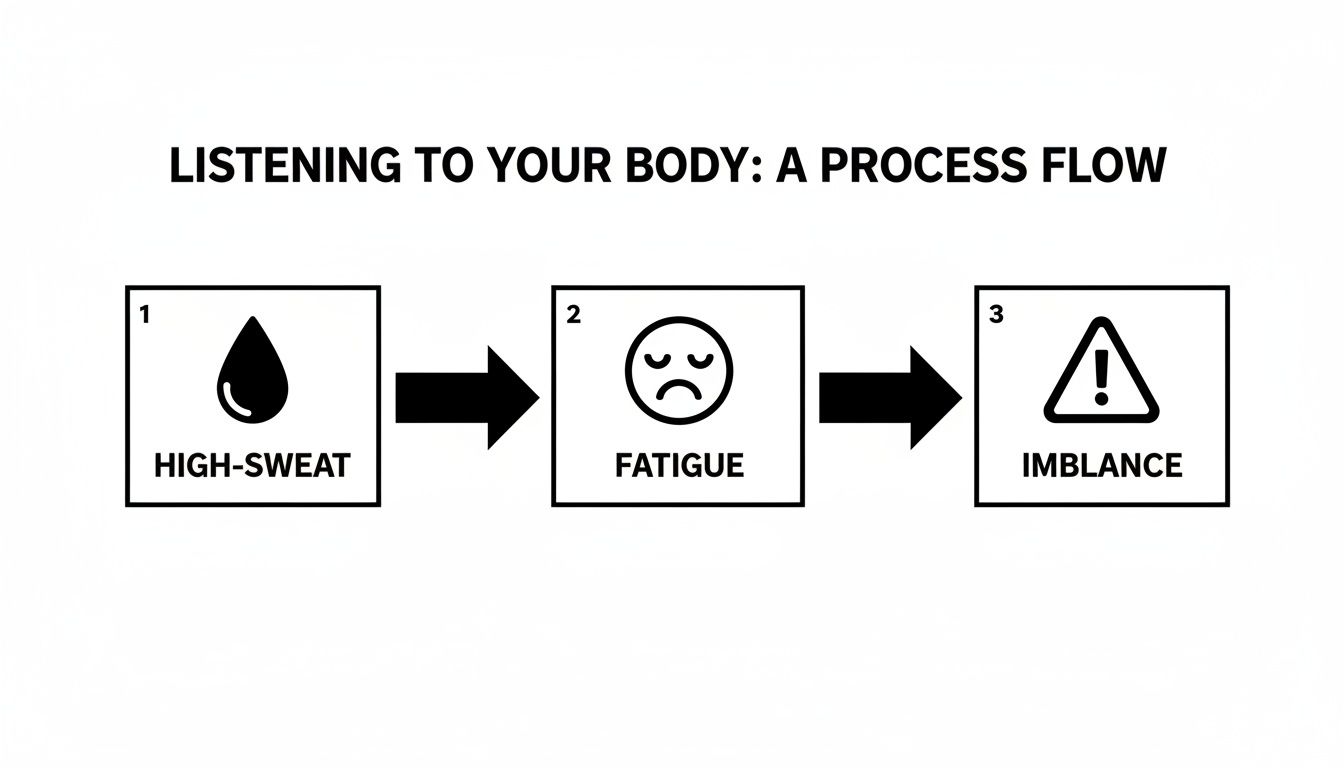
As you can see, what starts as simple heavy sweating can quickly cascade into performance-killing fatigue if you don't step in and correct the mineral imbalance.
Protocols For The Endurance Athlete
For marathoners, triathletes, and cyclists, the game is all about sustaining effort over hours and hours. Your biggest enemy is the massive loss of fluid and, critically, sodium. A smart plan here isn't reactive—it's proactive.
-
Pre-Workout (1-2 hours before): This is all about sodium loading. Getting in 500-1,000 mg of sodium with your pre-event hydration helps your body act like a sponge, holding onto fluids longer and building a buffer against dehydration. This is a non-negotiable for hot weather events.
-
Intra-Workout (During): Your mission is to replace what you're losing in real time. The target is 300-600 mg of sodium and 75-150 mg of potassium for every hour you're moving. This steady drip is what prevents that dreaded bonk and the late-race cramps.
-
Post-Workout (Within 30-60 minutes): Now, the focus flips to reloading and repairing. Potassium becomes the star player, helping drive glycogen back into your depleted muscles to kickstart the recovery process. Pairing it with sodium ensures you actually rehydrate at the cellular level.
Protocols For The Strength Athlete
If you’re a bodybuilder, powerlifter, or CrossFit athlete, your performance is measured in explosive power, not hours on the road. You might not sweat for as long, but the sheer intensity of your work creates a very different set of demands.
Think about it: the violent, full-body contraction needed for a heavy deadlift is governed by a precise electrical symphony. Magnesium and calcium are the conductors, signaling every muscle fiber when to fire and when to relax. An imbalance here means a loss of power.
Your strategy should be built around maintaining that peak muscular contractility and preventing the fatigue that robs you of those last few critical reps.
-
Pre-Workout (30-60 minutes before): A smaller dose of sodium and potassium here is perfect. It primes your neuromuscular system, making sure the communication lines between your brain and muscles are crystal clear from the very first set.
-
Post-Workout (Within 1 hour): This is your most important window. The priority is magnesium, which is crucial for helping your muscles relax. This prevents that post-workout tightness and spasming, and consistent intake is directly linked to better sleep quality—a cornerstone of muscle growth.
Protocols For Longevity And Wellness
You don’t have to be chasing a podium to need a smart electrolyte plan. For anyone focused on aging well, maintaining daily energy, or following a low-carb diet like keto, a consistent, balanced intake is just as important.
A daily maintenance dose centered on magnesium and potassium can do wonders for regulating blood pressure, improving sleep, and sidestepping the fatigue and "keto flu" that often come with low-carb eating. The best strategy is often the simplest: add a clean, well-formulated electrolyte powder to your water once a day. It’s the easiest way to fill in the gaps left by your diet.
Electrolyte Timing Guide For Different Athletes
To make this even easier, here’s a quick-glance table to help you dial in your timing based on your primary activity. This gives you a starting point to build your personalized plan.
| Athlete Type | Pre-Workout Focus | Intra-Workout Needs (per hour) | Post-Workout Priority |
|---|---|---|---|
| Endurance | Sodium loading (500-1,000 mg) 1-2 hours before to maximize fluid retention. | Sodium (300-600 mg) & Potassium (75-150 mg) to replace sweat losses. | Potassium & Sodium to rehydrate and replenish muscle glycogen stores. |
| Strength | Sodium & Potassium 30-60 minutes before to prime neuromuscular function. | Minimal, unless session exceeds 90 minutes in heat. | Magnesium to aid muscle relaxation, prevent cramps, and support recovery. |
| Aging/Wellness | N/A (focus on daily consistency) | N/A (focus on daily consistency) | Magnesium & Potassium daily to support nerve function, heart health, and sleep. |
Remember, this guide is a framework. Your individual sweat rate, diet, and the climate you train in will all influence your specific needs. Start here, and adjust based on how your body responds.
Of course, finding a formula that matches these protocols is key. To help you sort through the options, our in-depth electrolyte powder comparison breaks down exactly what to look for in a high-quality supplement. Ultimately, turning this knowledge into a real plan is what produces tangible results, powering everything you do inside and outside the gym.
Common Questions About Electrolytes
Even when you have a good handle on what electrolytes do, some practical questions always seem to pop up. Let's cut through the noise and tackle some of the most common myths and questions head-on, so you can put this knowledge to work with confidence.
Can I Get Enough Electrolytes From Food Alone?
For your average day-to-day, a solid diet loaded with fruits, vegetables, and whole foods lays a great foundation for your electrolyte needs. Things like bananas, avocados, spinach, and dairy are fantastic sources of potassium, magnesium, and calcium. This is usually plenty to keep you balanced when your activity level is low.
But that all changes the second you dial up the intensity. During a really tough workout, you can sweat out over 1,000 mg of sodium every single hour. Trying to close that gap with food alone—especially mid-run or in the middle of a heavy lifting session—is just not going to happen.
This is where smart supplementation becomes a game-changer. It’s not about replacing a healthy diet; it's about strategically plugging the massive holes that high-output training creates so you can keep performing at your peak.
Is Drinking Plain Water Enough to Rehydrate?
This is easily one of the biggest misconceptions out there. While plain water is obviously critical, relying on it alone during or after heavy sweating can backfire, and can even be dangerous. Real hydration isn't just about the volume of fluid you drink; it's about getting that fluid into your cells where it can actually do its job.
Think of electrolytes—especially sodium—as the gatekeepers for your cells. Without enough of them, water has a hard time getting inside. Instead, it can hang around in your bloodstream, diluting the sodium you have left. This can trigger a dangerous condition called hyponatremia, where your cells start to swell with too much water. The result? Nausea, headaches, confusion, and serious fatigue.
True cellular hydration requires a partnership. Water provides the volume, but electrolytes unlock the door, ensuring that fluid is absorbed effectively to fuel your muscles and brain.
That’s why combining water with a properly formulated electrolyte source is the only way to truly rehydrate after you've lost a lot of fluid.
Are All Electrolyte Drinks Created Equal?
Not even close. Walk down the sports drink aisle and you’ll find a wall of options, but a huge number of them are little more than sugar water with a tiny dusting of minerals. Many of the most popular drinks are engineered for sweet flavor, not function, packing in high-fructose corn syrup and artificial junk while offering barely any of the electrolytes you actually need.
A high-performance formula is built differently. It should be transparent, providing effective, science-backed doses of key minerals like sodium, potassium, and magnesium without any of the unnecessary fillers. When you’re looking at your options, always read the label. Look for a clean, potent formula that’s designed to meet the real demands of your training, not just to taste like candy. Understanding this difference is crucial for preventing muscle cramps and unlocking your best performance. To dig deeper into how electrolytes play a role, we've got a detailed guide on how to prevent muscle cramps.
At Revolution Science, we create clean, transparent, and research-backed supplements to help you perform at your best. Our Reviver Electrolytes are formulated without flavors, fillers, or pseudoscience to deliver exactly what you need to rehydrate effectively and recover faster.