
Tu carrito está vacío


Testosterone Booster Natural: A Practical Guide for Athletes
When you hear the term "natural testosterone booster," what comes to mind? It's not about injecting synthetic hormones or forcing your body to do something unnatural. Instead, it’s about giving your system the right tools to optimize its own testosterone production—helping you get back to your peak genetic potential.
So, How Do Natural Testosterone Boosters Actually Work?
Forget the idea of a crude fuel additive you just dump into the tank. A much better way to think about it is viewing your endocrine system as a high-performance engine. Natural boosters are the precision tuning tools, helping the entire system run more efficiently.
This isn't about pushing hormone levels past their natural, healthy limits. The real goal is to create the perfect internal environment for your body to restore and maximize what it’s already built to do. It’s a smart, science-backed approach to performance.
The Three Pillars of Natural T-Support
An effective strategy isn't about targeting one single thing. It’s about a holistic approach that supports the entire command center for testosterone production: the Hypothalamic-Pituitary-Gonadal (HPG) axis. Think of it as a three-pronged attack.
- Fine-Tuning Hormonal Signals: This is like getting the engine's timing just right. The goal is to improve the communication between your brain (the hypothalamus and pituitary) and your testes, making sure the signal to produce testosterone is loud and clear.
- Providing High-Quality Fuel: Your body can't build hormones from nothing. Key nutrients like Zinc and Vitamin D are the raw materials—the high-octane fuel—for testosterone synthesis. A deficiency is like trying to run a race car on cheap gas; it just won’t perform.
- Keeping the Engine Cool: Chronic stress cranks up cortisol, a hormone that breaks down tissue and directly fights against testosterone. Managing cortisol is like having a top-tier cooling system; it prevents your T-production from overheating and shutting down.
This holistic approach is why the market is exploding. The global demand for testosterone supplements hit USD 3.74 billion in 2023 and is projected to climb to USD 6.75 billion by 2030, with herbal-based products leading the charge. You can dig into the numbers over at FactMr.com.
This diagram perfectly illustrates how these three pillars work together.
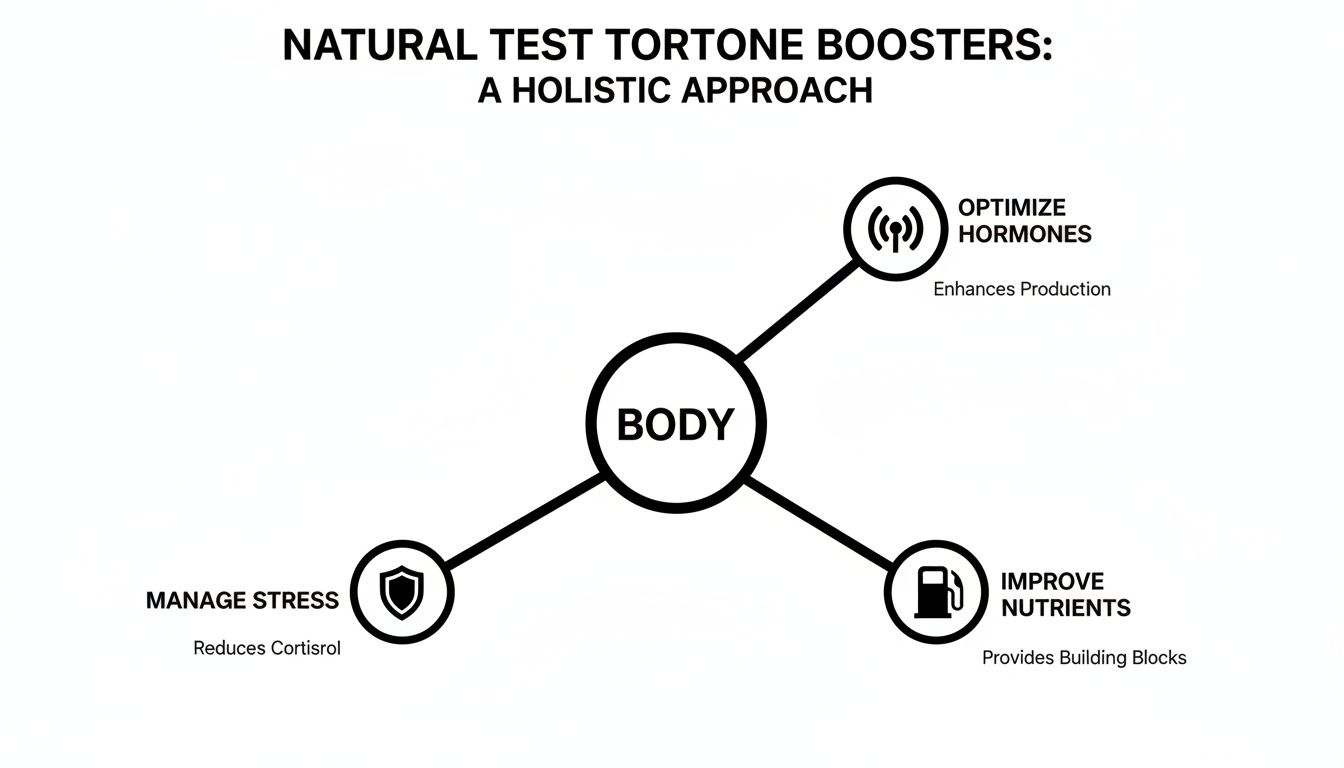
As you can see, a truly effective natural strategy is all about balance. You have to address hormones, nutrients, and stress all at once to get the best results.
Evaluating The Most Effective Natural Ingredients
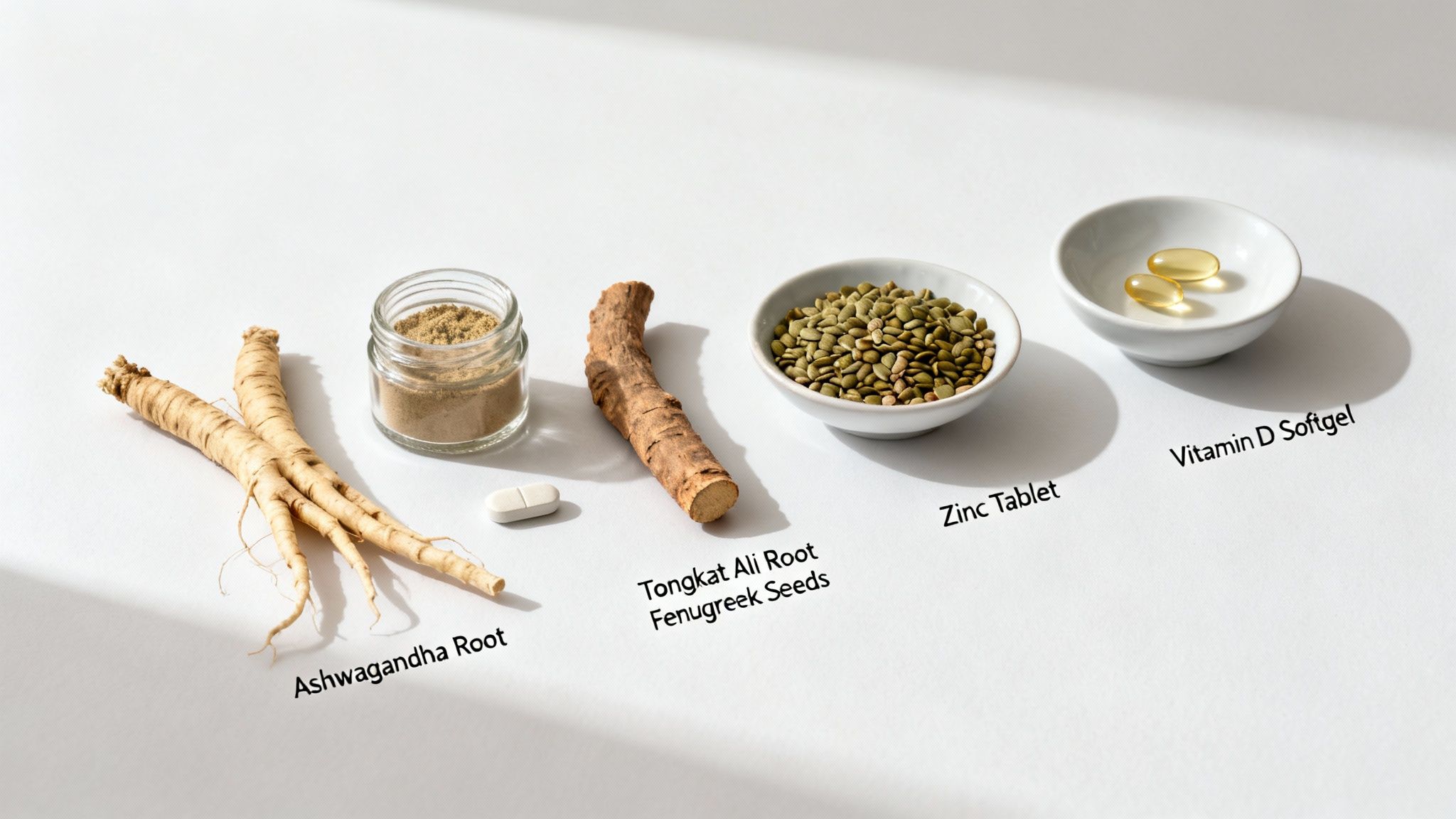
Walking down the supplement aisle for a testosterone booster natural formula can be overwhelming. Labels are packed with exotic-sounding herbs and basic vitamins, all promising to unlock your peak performance. But how many of them actually have the science to back up their claims?
Let's cut through the noise. We'll dig into the real evidence behind the most common ingredients you'll find in today's top formulas. Once you understand how these compounds work, you can make a smarter choice for your own athletic goals.
Ashwagandha: The Master Adaptogen
Think of chronic stress as a quiet alarm that’s always blaring in the background of your body. This alarm triggers a constant drip of cortisol, the primary stress hormone. While cortisol is useful in short bursts, it becomes a major problem when it’s always high.
Cortisol and testosterone have a seesaw-like relationship—when one goes up, the other tends to go down. This is where Ashwagandha (Withania somnifera) shines. It’s an adaptogen, a class of herbs that helps your body better manage and resist stress.
By taking the edge off your cortisol response, Ashwagandha essentially creates a more favorable environment for testosterone to do its thing. Studies show that supplementing with it can lead to noticeable drops in cortisol and, in turn, a rise in testosterone, especially for people dealing with high stress. It’s not forcing T production; it’s just clearing the roadblocks.
Tongkat Ali: The Hormonal Regulator
Tongkat Ali (Eurycoma longifolia) is another heavy hitter, but it works through a totally different pathway. Its main job seems to be influencing the complex feedback loops within your endocrine system.
More specifically, it helps “un-stick” testosterone that’s already in your system. A large portion of your testosterone is bound to a protein called Sex Hormone-Binding Globulin (SHBG), which renders it inactive. Tongkat Ali is thought to help lower SHBG, which frees up more testosterone, making it bioavailable for your body to actually use for muscle growth, energy, and recovery.
A key takeaway for athletes is that total testosterone is only part of the story. Increasing free testosterone—the portion that's active and unbound—is often more impactful for performance and well-being.
Fenugreek and D-Aspartic Acid
Fenugreek is a popular herb that contains unique compounds called furostanolic saponins. These are believed to slow down the enzymes that convert testosterone into other hormones, like estrogen (aromatase) and DHT (5-alpha-reductase). By putting the brakes on this conversion process, Fenugreek can help keep your active testosterone levels higher for longer.
D-Aspartic Acid (DAA) is an amino acid that works further upstream. It acts as a signaling molecule in your brain, telling the pituitary gland to release more Luteinizing Hormone (LH). LH is the direct messenger that travels to the testes and gives the order to produce more testosterone.
- Fenugreek: Works primarily to preserve the testosterone you already have.
- D-Aspartic Acid: Works to stimulate the production of new testosterone.
Most commercial blends are a cocktail of ingredients like these, along with zinc, magnesium, and vitamin D. While these formulas are everywhere, the proof behind them can be mixed, with some studies showing only modest results. This is pushing the industry towards using standardized extracts for more reliable potency, making it vital to find brands that prioritize quality control.
Evidence Snapshot Of Common Natural Booster Ingredients
To help you quickly compare the options, here’s a breakdown of the most popular ingredients, their proposed mechanisms, and the current state of evidence for athletic populations.
| Ingredient | Primary Mechanism | Level of Evidence for Athletes |
|---|---|---|
| Ashwagandha | Reduces cortisol (stress hormone), indirectly supporting T-levels. | Strong. Especially effective for individuals under high physical or mental stress. |
| Tongkat Ali | May increase free testosterone by reducing SHBG levels. | Moderate. Promising, but more large-scale human trials are needed. |
| Fenugreek | May inhibit enzymes that convert testosterone to estrogen. | Moderate. Some positive studies, but effects can be inconsistent. |
| D-Aspartic Acid | Stimulates Luteinizing Hormone (LH) to signal T production. | Weak to Moderate. Effects appear to be temporary and more pronounced in untrained or infertile men. |
| Zinc | Essential co-factor for testosterone synthesis. | Strong. Crucial for correcting deficiencies, which are common in athletes. |
| Vitamin D | Functions as a hormone precursor; receptors are in testicular cells. | Strong. Supplementation is highly effective for raising T in deficient individuals. |
This table shows that while some ingredients have strong foundational support, others are still in the "promising but needs more research" category. The most reliable bets are often the foundational vitamins and minerals.
Foundational Minerals: Zinc and Vitamin D
While the herbal extracts get all the attention, a few basic vitamins and minerals are the absolute, non-negotiable foundation of hormonal health. If you're deficient in either of these, your testosterone production will hit a wall.
Zinc is a critical player in hundreds of bodily processes, including the direct synthesis of testosterone. Athletes are especially at risk for zinc deficiency since it’s lost through sweat. Simply ensuring you have enough zinc is one of the most fundamental steps you can take.
Vitamin D is often called the "sunshine vitamin," but it really acts more like a steroid hormone in the body. The cells in the testes that produce testosterone are loaded with Vitamin D receptors. It's no surprise, then, that research shows a powerful link between healthy Vitamin D status and higher testosterone levels, particularly in men who were deficient to begin with.
Another interesting compound gaining traction is Shilajit, a mineral-dense substance from the Himalayas. For those curious about different ways to supplement, it's worth exploring the various forms it comes in. You can learn more by checking out our guide on Shilajit gummies and their potential benefits.
To get a better sense of the wide array of dietary aids available for athletes, we highly recommend browsing our comprehensive supplements category.
Building The Foundation with Lifestyle Changes
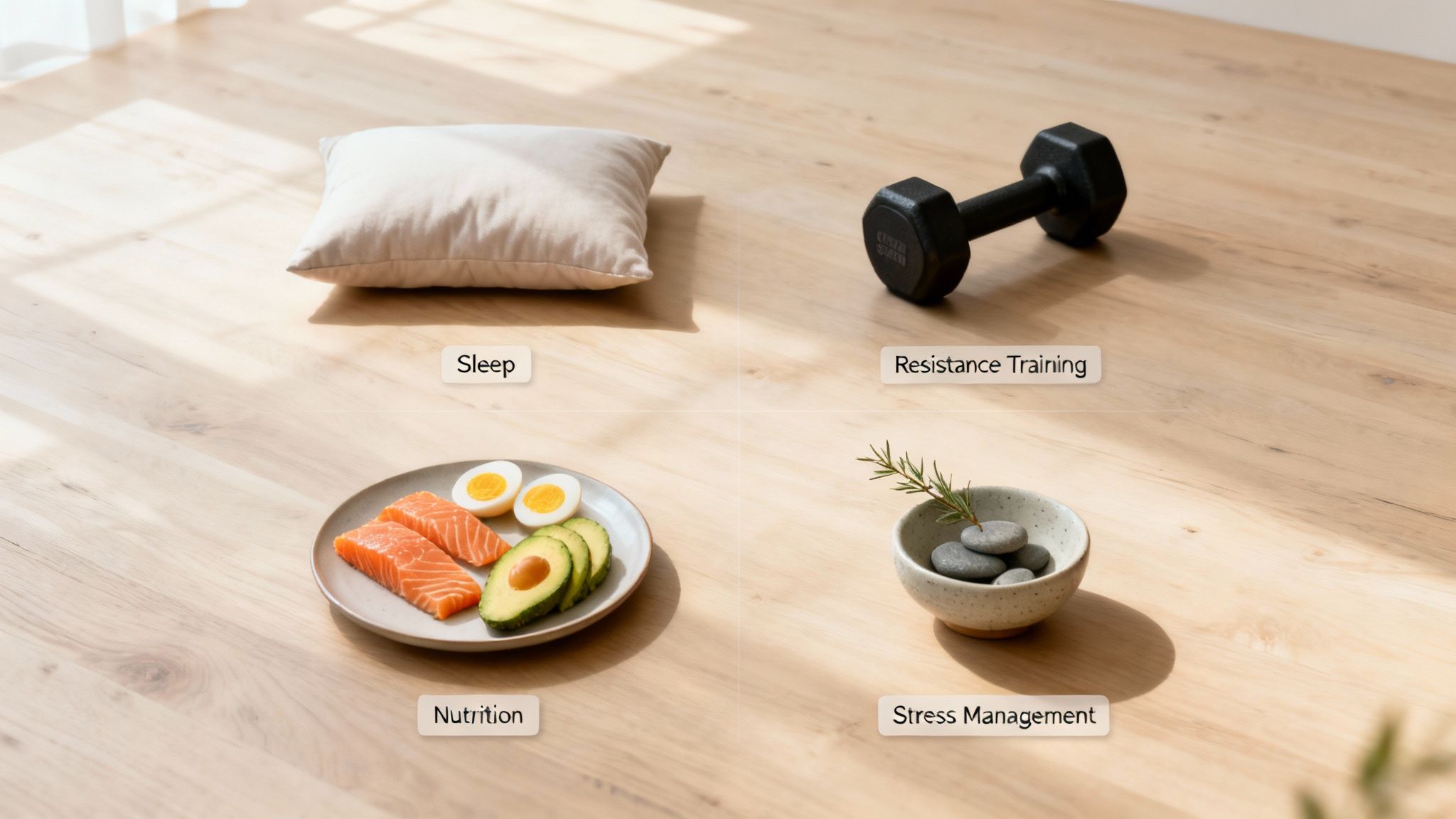
While smart supplements can give you an edge, they're useless on a broken foundation. Think of it like this: a testosterone booster natural formula is a high-performance turbo for your engine. But if that engine is running on bad fuel and low oil, the turbo won't make a lick of difference.
The most potent and permanent hormonal support you can get comes from mastering the non-negotiables of a high-performance lifestyle. These core habits create the ideal internal environment for your body to produce testosterone at its peak potential. Before you even think about supplements, your first job is to lock in these four key areas.
Prioritize Deep Restorative Sleep
Sleep isn't just downtime; it’s when your body’s repair crews and hormone production factories punch the clock. The majority of your daily testosterone is released during deep sleep, a process that's directly wired into your circadian rhythm.
Consistently shorting yourself on sleep is like ordering the factory to shut down early every single night. In fact, studies show that just one week of sleeping only five hours a night can slash daytime testosterone levels by 10-15%. For any serious athlete, that’s a massive blow to recovery, strength, and drive.
It’s not just about the hours logged in bed, but the quality of those hours. Here’s how to improve your sleep hygiene:
- Go Full Cave Mode: Make your bedroom as dark, quiet, and cool as you possibly can.
- Create a Wind-Down Ritual: Ditch the screens at least an hour before bed. That blue light wreaks havoc on melatonin, the hormone that tells your body it's time to sleep.
- Be Consistent: Try to go to bed and wake up around the same time every day—yes, even on weekends—to keep your internal clock dialed in.
Harness The Power Of Resistance Training
When it comes to hormonal signaling, not all exercise is created equal. While any activity is good, big, compound resistance exercises are uniquely powerful triggers for testosterone release. Think squats, deadlifts, bench presses, and overhead presses—movements that recruit huge muscle groups and create a massive metabolic demand.
This intense physical stress sends an undeniable signal to your body: get stronger, get more resilient. Your endocrine system answers the call, ramping up the production of anabolic hormones like testosterone and growth hormone to repair and build new muscle tissue.
The message for athletes is simple: make heavy, multi-joint lifts the cornerstone of your training. This is a direct line of communication to your hormonal system, telling it to build a stronger, more powerful machine.
Of course, recovery is just as critical as the work itself. The training creates the stimulus, but the growth happens when you rest. For a deeper dive on optimizing your downtime, check out our guide on how you can recover faster after a workout and get back in the game.
Fuel Your Body with The Right Nutrition
Your diet provides the literal raw materials your body needs to manufacture hormones. Three nutritional pillars are absolutely non-negotiable for a healthy endocrine system.
First, sufficient calories are a must. Slashing calories too hard for too long signals a famine state to your body. In response, it throttles down non-essential functions—like hormone production—to conserve energy.
Second, healthy fats and cholesterol are the direct building blocks of testosterone and other steroid hormones. A diet that's too low in fat is like trying to build a brick house without any bricks. Load up on sources like avocados, olive oil, nuts, and fatty fish.
Finally, key micronutrients like zinc and vitamin D are vital co-factors in the testosterone synthesis assembly line. A deficiency in either can create a serious bottleneck, no matter how well you're training or sleeping.
Manage Your Stress and Cortisol Levels
Chronic stress is the silent killer of hormonal health. When you're constantly under pressure, your body churns out the stress hormone cortisol. As we mentioned, cortisol and testosterone are on a seesaw—when cortisol is chronically high, testosterone gets pushed down.
Think of cortisol as your body’s emergency brake. It breaks down muscle for quick energy and slams the brakes on long-term projects like building new muscle. For an athlete, being stuck in this high-cortisol state completely sabotages progress. A key part of the puzzle is learning how to lower cortisol levels naturally, as this directly supports an optimal hormonal environment.
Simple practices like meditation, deep breathing, getting out in nature, or just intentionally scheduling some downtime can help tame your stress response. By keeping cortisol in check, you allow testosterone to do its job. Mastering these foundational habits is the most effective natural strategy of all.
How Body Composition Impacts Hormonal Health
Beyond what you do in the gym or the kitchen, there’s another massive lever you can pull to dial in your hormones: your body composition. The amount of body fat you carry isn't just a cosmetic issue; it has a direct, powerful impact on your testosterone levels. For any athlete serious about performance, this is a non-negotiable piece of the puzzle.
Think of your hormonal system as a finely-tuned orchestra. When everything is in sync, the music is powerful. But excess body fat throws a wrench in the works by housing huge amounts of an enzyme called aromatase. This enzyme has one primary job: to take androgens like testosterone and convert them into estrogens.
The more fat tissue you have, the more active aromatase you have. This creates a "hormonal leak," where your hard-earned testosterone is constantly being siphoned off and turned into estrogen. It's a physiological process that actively works against everything you're trying to achieve.
The Aromatase Engine and Its Effects
Imagine your body is a factory building high-performance race cars (testosterone). Now, picture that for every ten cars rolling off the line, a crew of workers (aromatase) immediately grabs three of them and converts them into family minivans (estrogen). That’s exactly what’s happening on a hormonal level when body fat gets too high.
This conversion doesn't just lower your total and free testosterone; it also jacks up your estrogen levels. This creates a hormonal profile that can kill muscle growth, sap your energy, and even encourage more fat storage. It’s a vicious cycle that can be incredibly tough to break.
The key insight here is that losing excess body fat isn't just about looking better; it's a direct strategy for plugging a hormonal leak. By reducing the amount of aromatase-rich fat tissue, you dramatically slow down the testosterone-to-estrogen conversion, preserving more of the hormone you need to recover and perform at your best.
Smart Fat Loss for Hormonal Support
Now, this doesn't mean you should aim for dangerously low body fat levels, which can also send your endocrine system into a tailspin. For most athletes, the sweet spot is simply maintaining a healthy, lean physique. Getting there requires a sustainable approach to fat loss that actually supports your hormones instead of crashing them.
An effective strategy always boils down to a few key elements:
- Strategic Caloric Deficit: You need a moderate, not extreme, reduction in calories. This coaxes your body to burn fat without triggering a "famine" alarm that crushes hormone production.
- Sufficient Protein Intake: Keeping protein high is non-negotiable for preserving lean muscle while you're in a deficit. This ensures you’re losing fat, not the valuable muscle you've worked so hard for. You can learn more about how to fuel your gains in our article on the best muscle growth supplement strategies.
- Prioritize Resistance Training: You have to keep lifting heavy. This sends a powerful signal to your body to hold onto muscle, even as the number on the scale goes down. It's critical for keeping your metabolism fired up and maintaining your strength.
When you combine these principles, you can effectively lower your body fat, slash aromatase activity, and build a much more favorable hormonal environment. This makes achieving a healthy body composition one of the most powerful natural testosterone booster strategies you have.
Understanding Safety, Interactions, and When to See a Doctor
Just because something is labeled "natural" doesn't automatically mean it's 100% safe. It's a common misconception. When you're considering a testosterone booster natural supplement, you need to approach it with a smart, informed mindset. An ingredient that comes from a plant can still have side effects or interact with other things you're taking. Your health always comes first.
Take common herbal ingredients like Tongkat Ali or Fenugreek. For some people, these can cause mild gastrointestinal issues like bloating or an upset stomach, especially when first starting out. More importantly, these active compounds can sometimes interfere with prescription medications. Some herbs, for instance, might affect blood sugar levels or have slight blood-thinning properties, which is a real risk if you're on medication for diabetes or a heart condition.
Sourcing Quality and Avoiding Contaminants
The supplement industry isn't regulated with the same iron fist as the pharmaceutical world, which makes product quality a genuine concern. A poorly made supplement could be under-dosed and totally ineffective. Worse, it could be contaminated with things you don't want in your body—heavy metals, bacteria, or even undisclosed drugs.
Always look for products that are third-party tested. This is your insurance policy. It means an independent lab has confirmed that what's on the label is actually what's in the bottle, and that it's clean from harmful contaminants.
When to See a Doctor
Optimizing your health with supplements and lifestyle changes is a powerful strategy, but it isn't a silver bullet for everything. If you're dealing with persistent symptoms that are tanking your quality of life, it's time to stop guessing and get a professional opinion. Trying to self-treat what might be an underlying medical issue can do more harm than good by delaying a proper diagnosis.
You should seriously consider booking an appointment with your doctor or an endocrinologist if you're consistently experiencing several of these symptoms:
- Constant, unexplained fatigue that just won't go away
- A major and lasting drop in your sex drive
- Noticeable trouble concentrating or persistent "brain fog"
- Unexplained mood swings, irritability, or depressive feelings
- Losing muscle mass and strength even though you're training hard
These could be red flags for clinically low testosterone, known as hypogonadism, which needs to be diagnosed with blood work. A doctor can run the right tests to measure your total and free testosterone levels and see what’s really going on under the hood. For a deeper dive into different supplement options, check out our overview of testosterone pills and their functions. Taking that step ensures you're making decisions based on solid data, not just a hunch.
Putting It All Together: Your Natural T-Support Strategy
Knowing the science is one thing. Actually applying it is what separates the winners from the rest of the pack. You’ve got the intel on the mechanisms, the ingredients, and the lifestyle habits that move the needle on your hormones. Now, let’s build this knowledge into a practical, sustainable game plan.
This isn't about finding one silver bullet. It's about building a fortress of smart habits and targeted support. When you stack these strategies correctly, you create an internal environment where your body can truly thrive. Think of this as your personal blueprint for hormonal optimization.
Step 1: Nail the Fundamentals First
Before you even think about opening a supplement bottle, you have to get the basics dialed in. These are the non-negotiables. They form the foundation of your hormonal health, and without them, any supplement is just a band-aid on a bigger problem.
- Own Your Sleep: Lock in 7-9 hours of solid, quality sleep every single night. This is where the magic happens—it’s the primetime for your body’s daily testosterone production.
- Train with Intent: Your workouts should be built around big, heavy compound lifts. Squats, deadlifts, presses—these are the movements that send powerful anabolic signals through your entire system.
- Fuel for Performance: Make sure you're eating enough total calories to support your training. Get plenty of healthy fats, and don't neglect key micronutrients like zinc and vitamin D.
- Crush Your Stress: High cortisol is the enemy of testosterone. You have to actively manage it. Find what works for you, whether it’s meditation, deep breathing exercises, or just carving out time for things you genuinely enjoy.
Step 2: Add Targeted Supplement Support
Once your lifestyle is rock-solid, then you can start looking at supplements to gain an edge. This isn't a shotgun approach; it’s about being strategic and precise.
Look back at the ingredients we covered. Feeling the pressure of a tough training block? An adaptogen like Ashwagandha could be a smart addition. Think your diet might be lacking? Getting blood work done and then supplementing with Zinc or Vitamin D could make a world of difference.
The goal of supplementation is to complement your lifestyle, not compensate for a poor one. Always choose high-quality, third-party tested products, and introduce them one at a time so you can actually tell what’s working.
Step 3: Listen, Track, and Adjust
Your body isn't a machine, and your plan can't be set in stone. The final step is to pay attention and be ready to adapt. The best feedback you’ll ever get is from your own body.
Start tracking the key indicators: How are your energy levels day-to-day? What about your mood and libido? How quickly are you bouncing back from your workouts? These signals tell you everything you need to know. If you feel consistently stronger, sharper, and more driven, you’re on the right path. If not, go back to Step 1 and make sure your foundation is still solid before tweaking your supplements.
Got Questions? We’ve Got Answers.
When you're digging into the world of natural testosterone support, a lot of questions pop up. It’s a complex topic. To help you build a smart and confident strategy, we've tackled some of the most common ones we hear from athletes.
How Long Until I See Results?
This is always the first question, and the honest answer is: it really depends. A natural approach isn't a magic pill. If you're seriously low in a key nutrient like Vitamin D or Zinc, you might feel a real difference in your energy and well-being within just a few weeks of correcting that deficiency.
But when it comes to the impact of herbal ingredients and lifestyle adjustments, you need to play the long game. It generally takes a solid 8 to 12 weeks of consistent effort to notice meaningful changes. Remember, you're not overriding your body's systems—you're supporting them. And that takes a little time.
Are Natural Boosters Safe to Take Long-Term?
For the most part, yes. The foundational habits—quality sleep, smart training, and a dialed-in diet—aren't just safe, they're critical for your health for life. When we talk supplements, ingredients like Zinc, correctly-dosed Vitamin D, and Ashwagandha are generally considered safe for long-term, consistent use.
That said, cycling certain herbal ingredients can be a smart play. For instance, you could run a specific formula for 12 weeks and then take a 4-week break. This little reset can help prevent your body from getting too accustomed to a supplement, which may help it stay effective over time.
It's always a good idea to chat with a healthcare professional before starting any new long-term supplement plan, especially if you have existing health conditions or are on other medications.
Will These Show Up on a Drug Test?
A high-quality, third-party tested natural testosterone booster should absolutely not make you fail a drug test. These formulas are designed to support your body's own hormone production within its normal, healthy range. They don't contain any synthetic hormones, prohormones, or anabolic steroids.
But—and this is a big but—the supplement industry is notoriously murky. Cross-contamination is a very real risk with cheap, untested products. To protect your career and your health, only choose brands that have their products certified by independent organizations like NSF Certified for Sport® or Informed-Sport. It’s the only way to be certain that what’s on the label is what’s in the bottle—and nothing else.
At Revolution Science, our entire mission is to create clean, transparent, and research-backed supplements that help dedicated athletes like you hit your goals. We build formulas to support performance, safely and effectively.
Discover the REVSCI difference and elevate your performance.