Your Cart is Empty
Free Shipping on all orders shipped in the USA

Forget the neon colors and trendy flavors. The best electrolyte drink for runners isn't about marketing gimmicks; it's a scientifically-formulated tool designed to replace exactly what you lose in your sweat. It needs a high dose of sodium, backed by potassium and magnesium, all without the junk sugars and artificial fillers that do more harm than good.
Its power lies in a clean, targeted formula that keeps your hydration and muscle function dialed in.
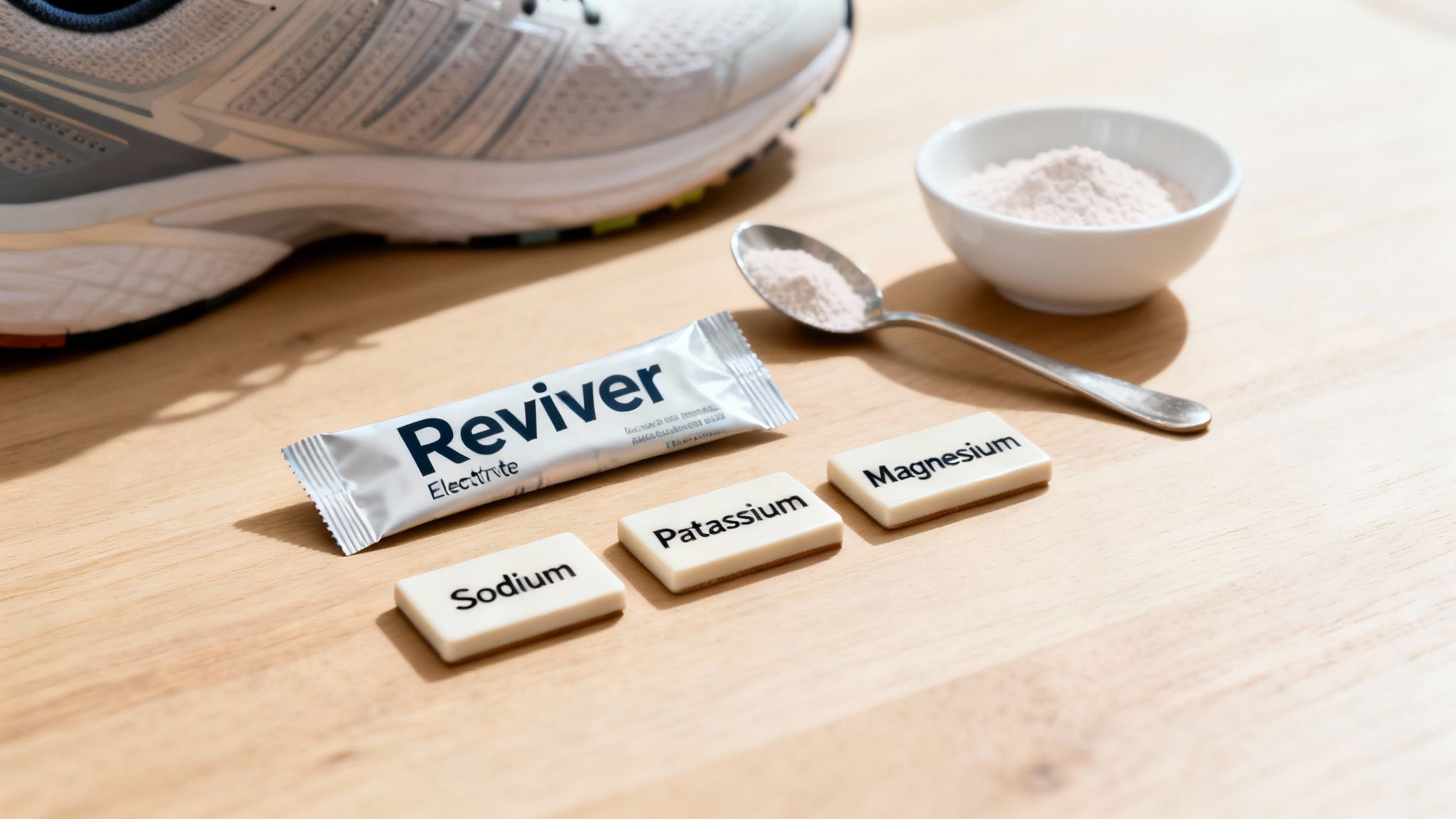
Let’s cut right through the noise. The ideal electrolyte drink for a runner has nothing to do with the catchiest name on the label. It’s all about the science inside. A proper formula is a strategic weapon built to counter the very specific physiological demands of running. Think of it less as a casual drink and more like precision fuel for your body's entire electrical system.
When you run, especially for longer than an hour, your sweat is pulling more than just water out of your system. It's draining you of critical minerals that control everything from muscle contractions to nerve signals. A top-tier electrolyte drink is engineered to replenish those specific losses in the right amounts.
The heart of an effective running electrolyte drink is its ingredient profile. It has to contain the right stuff at doses that actually make a difference, focusing squarely on performance, not just taste. This means loading up on what your body is screaming for and ditching everything it isn't.
Here are the non-negotiables:
A truly effective electrolyte drink focuses on a clean, research-backed profile. For example, a formula like REVSCI's Reviver is built around this principle, delivering targeted electrolytes without the fluff, ensuring every sip contributes directly to your performance and recovery.
To make things simple, the table below breaks down what you should be looking for on any product label. Getting familiar with these components is the first step toward fueling smarter on your runs. For a wider look at how different ingredients can boost your training, checking out the best supplements for athletic performance can provide some excellent context.
This table summarizes the essential components and considerations when choosing an effective electrolyte drink for running.
| Component | What to Look For | Why It Matters for Runners |
|---|---|---|
| Sodium | 300-600mg per serving | Directly replaces the primary electrolyte lost in sweat to maintain fluid balance and prevent cramping. |
| Potassium | 100-200mg per serving | Works with sodium to regulate fluid levels and supports proper muscle and nerve function. |
| Magnesium | 40-80mg per serving | Aids in energy production and muscle relaxation, helping to prevent fatigue and cramps. |
| Sugar/Carbs | Low to zero (unless needed for fuel) | Prevents GI distress and ensures the drink's primary purpose is hydration, not just energy delivery. |
| Additives | No artificial colors, flavors, or sweeteners | Ensures a clean formula that minimizes the risk of stomach issues during a run. Learn more in our guide to the best clean electrolyte powder. |
Understanding these key markers will empower you to choose a product that actually works, helping you hydrate more effectively and perform at your best.

Think of your body as a high-performance engine. Water is the coolant, keeping you from overheating on a long, hard run. But electrolytes are the spark plugs—the essential minerals that carry electrical signals, telling your muscles to contract and your nerves to fire. Without them, that engine sputters and stalls out.
When you're running, especially for anything over an hour, you lose a lot more than just water through sweat. You're constantly shedding these critical minerals. This is precisely why chugging plain water can be a massive mistake, leaving you wide open to performance drops, cramps, and worse. The best electrolyte drink for runners is built specifically to plug this mineral gap.
Four key electrolytes do most of the heavy lifting during a run. Understanding what they do makes it crystal clear why water alone just won't cut it. Each one has a distinct, non-negotiable job in keeping you moving forward, strong and steady.
Here are the "big four" you absolutely have to replenish:
When these minerals get low, your body's entire communication system starts to break down. That leads to all those all-too-familiar problems that can derail a great run.
That sudden, agonizing muscle cramp that stops you dead in your tracks? That overwhelming feeling of hitting "the wall" when you know you still have miles to go? These aren't just bad luck—they are often direct symptoms of an electrolyte imbalance. When your reserves are drained, your performance inevitably tanks.
The link between sweat, electrolytes, and performance isn't just a theory; it's backed by hard science. When you sweat, you're not just losing water. You're shedding a complex cocktail of minerals that are absolutely essential for peak function.
And this mineral loss is no joke. According to the American College of Sports Medicine, runners can lose an average of 1.49 liters of sweat per hour. A marathoner could easily lose up to 3 liters over the course of a race, along with 300-600mg of sodium per hour, especially in the heat.
One study on half-Ironman athletes showed that proper electrolyte supplementation slashed race times by an average of 8% while minimizing dehydration-related weight loss. You can dive into the full runner's hydration loss study to see the staggering impact for yourself.
Without replenishment, this deficit triggers a cascade of issues:
For any run lasting more than an hour, replenishing these minerals with a balanced drink isn't just a good idea—it's a non-negotiable strategy for sustaining your performance and preventing a mid-run meltdown.
Walking down the sports drink aisle is an exercise in confusion. Brightly colored labels shout promises of peak performance and rapid hydration, but the real story is always in the fine print. To find an electrolyte drink that actually works for you as a runner, you need to learn how to read a nutrition panel like a pro.
This skill is what separates a smart purchase from a mid-run disaster. Think of the label as the product's resume. Is it transparent and full of effective ingredients at doses that matter? Or is it hiding behind confusing jargon and unnecessary fillers that will only lead to stomach cramps and a performance nosedive?
First things first, let's learn how to spot the ingredients that do more harm than good. These are the deal-breakers, the things that should make you put the product right back on the shelf.
A clean, clear label is the sign of a product that has nothing to hide. For example, a formula like REVSCI's Reviver tells you the exact milligram amount of every single electrolyte. No guesswork, no secrets.
Beyond the ingredients themselves, the overall concentration of the drink—its tonicity—is critical. This single factor dictates how quickly your body can actually absorb the fluid and put it to use.
For runners, the science is crystal clear: A hypotonic solution is the best choice for rapid rehydration during exercise. Its low-concentration formula gets water and electrolytes into your muscles and bloodstream as fast as humanly possible, without upsetting your stomach.
To make your life easier in the store, just run through this simple mental checklist. A truly effective electrolyte drink for runners will check every one of these boxes. You can even see how different brands stack up against these criteria in this electrolyte powder comparison.
Using this simple framework, you can cut right through the marketing hype and choose a drink that’s built on science and will actually support your training goals.
Knowing which electrolyte drink to use is a huge step, but mastering when and how much is what separates a good run from a great one. The best electrolyte formula is only as good as the strategy behind it. This isn't about guesswork; it's about turning solid science into a practical plan that fuels your performance from start to finish.
Think of it like this: your body holds a small, finite reserve of electrolytes. For short, easy efforts, that's usually enough. But once you start pushing past a certain point, you begin running a deficit that only a dedicated hydration strategy can fix.
For shorter runs, simplicity is king. If you’re heading out for less than an hour at a moderate intensity, your body’s natural electrolyte stores have you covered. In these cases, plain water is perfectly fine. The goal is just to replace lost fluid, and your body can handle the mineral balance on its own.
But the game completely changes when you dial up the distance or intensity. This is where timing and dosage turn a good electrolyte drink into a great one. Research clearly shows that for runs under 60-75 minutes at a moderate pace, water does the job.
Cross that threshold, though—especially in the heat or if you're a heavy sweater—and the data demands action. Endurance athletes should be aiming for 300-600mg of sodium per hour as sweat losses mount. A systematic review even confirmed that sports drinks with electrolytes optimize hydration and performance over long efforts, putting less stress on the heart than water alone. You can read more about this in the runner's complete guide to electrolytes on Trail Runner Magazine.
A rock-solid hydration strategy is built around three key phases: before, during, and after your run. Each phase has a specific job that contributes to your overall performance and recovery. Nailing this sequence prevents dehydration before it starts and massively speeds up your bounce-back time. For a deeper dive, you can also explore our guide on the best time to take electrolytes.
1. Before You Run (Pre-Hydration)
The goal here is simple: start with a full tank. Aim to drink 16-20 ounces of an electrolyte drink about two hours before you head out. This gives your body plenty of time to absorb what it needs and get rid of any excess. A final top-off of 8-10 ounces about 20 minutes before you start is a great final step.
2. During Your Run (Sustaining Performance)
This is where precision pays off. While "drink to thirst" is a common piece of advice, a more structured approach works much better for longer distances. Try to consume 4-8 ounces of your electrolyte drink every 15-20 minutes. This steady, consistent intake helps maintain fluid balance and keeps your electrolyte levels from taking a nosedive.
3. After Your Run (Accelerating Recovery)
Your post-run mission is to fully replenish everything you lost. For every pound of body weight you lost during the run (a great way to measure fluid loss), you should drink 16-24 ounces of an electrolyte-rich fluid. This immediately kickstarts the recovery process, rehydrating your muscles and restoring that critical mineral balance.
Pro Tip: Train Your Gut
Just like you train your legs for a marathon, you need to train your stomach. Never, ever try a new hydration strategy on race day. Use your long training runs to practice drinking on the move. This allows your digestive system to adapt to absorbing fluids and nutrients while under the stress of running.
Let's put it all together. Here’s what a practical hydration plan could look like for a half-marathon. Remember, this is a template—you can and should adjust it based on your personal sweat rate, the weather, and your pace.
| Timing | Action | Rationale |
|---|---|---|
| 2 Hours Before | Drink 16oz of Reviver Electrolytes. | Tops off fluid and electrolyte stores to ensure you start fully hydrated. |
| 20 Mins Before | Drink 8oz of Reviver Electrolytes. | Provides a final hydration boost without making you feel bloated at the start line. |
| Every 20 Mins | Sip 4-6oz of your electrolyte drink at aid stations or from your bottle. | Maintains a steady intake of fluids and minerals to prevent dehydration and cramping. |
| Within 30 Mins After | Drink 16-24oz to begin rehydration. | Immediately starts the recovery process by replacing lost fluids and electrolytes. |
Generic hydration advice is a good starting point, but it's not where you'll find your best performance. Why? Because every runner is different. A one-size-fits-all approach often leads to being either under-hydrated or, just as bad, over-hydrated.
The real key to unlocking an effective strategy is understanding your own body. And the best way to do that is to figure out your personal sweat rate.
This might sound like something you'd need a sports science lab for, but it's surprisingly simple. All it takes is a bathroom scale, a one-hour run, and some basic math. By measuring exactly how much fluid you lose, you can stop guessing and start building a precise, science-backed hydration plan.
This quick test will give you a solid baseline for your fluid needs. For the most accurate results, try to run in conditions that are similar to your usual training or race environment.
Just follow these four steps:
Let's run through an example:
- Pre-run weight: 150 lbs
- Post-run weight: 148.5 lbs
- Fluid consumed: 16 oz
Your weight loss is 1.5 lbs, which is 24 oz (1.5 x 16).
Now, add the fluid you drank: 24 oz + 16 oz = 40 oz.
Your hourly sweat rate is 40 ounces per hour.
This simple infographic pulls it all together, showing you how to build a complete hydration strategy using your personal sweat rate.
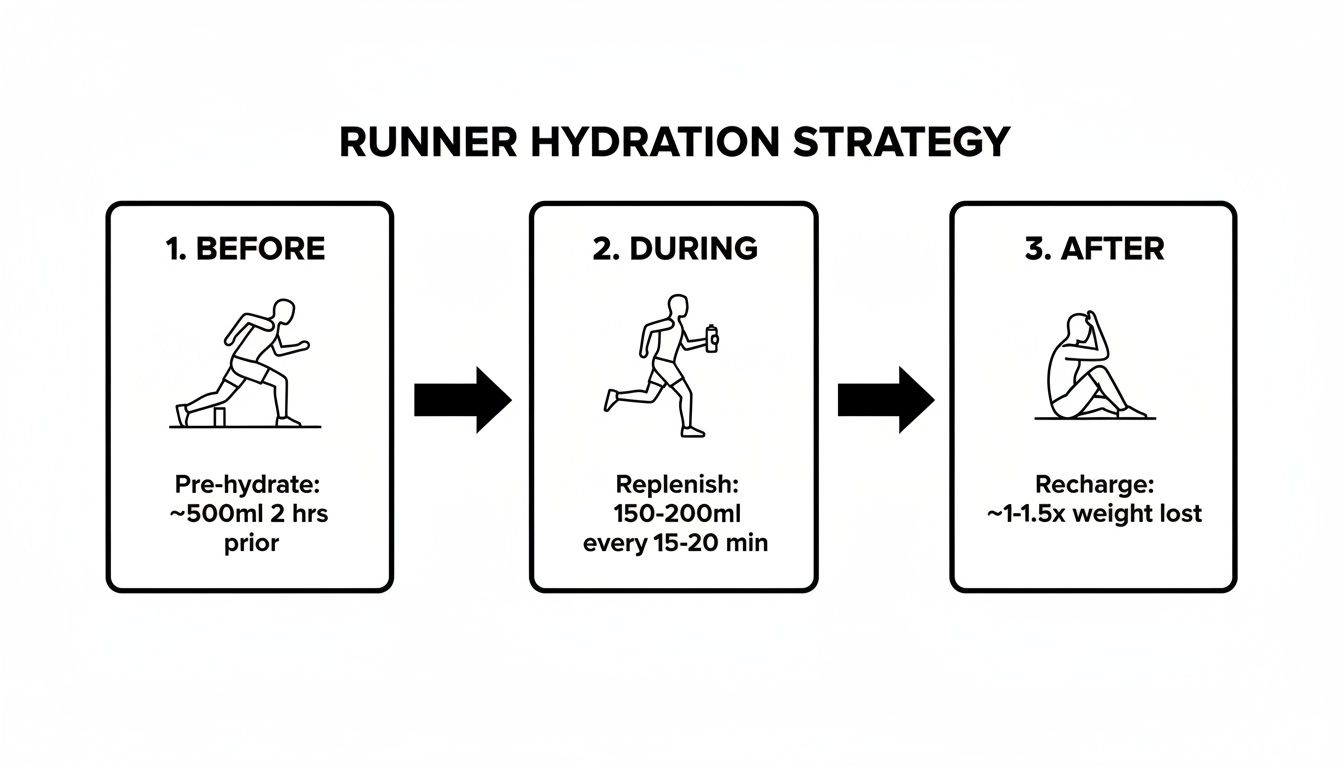
It gives you a great visual for structuring your intake before, during, and after a run to get the biggest benefit. For a more detailed breakdown, check out our dedicated guide on how to calculate sweat rate.
Okay, so you have your number. Now what?
Once you know your hourly sweat rate, you can build a truly personalized hydration plan. A solid rule of thumb is to aim to replace about 75-80% of the fluid you lose while you’re running. This keeps you performing at your peak without overwhelming your stomach with too much liquid.
Using our example of a 40 oz/hour sweat rate, you'd want to drink around 30-32 ounces of a quality electrolyte drink each hour. You could break this down into sipping 7.5-8 ounces every 15 minutes.
This targeted approach means you're replacing what you're actually losing, keeping both dehydration and dangerous electrolyte imbalances from derailing your run.
Remember, this is your baseline. You'll need to adjust for conditions. You're going to sweat a lot more on a hot, humid day, so you'll need to increase your intake to match. This is how you find the best electrolyte drink strategy for you and your goals.
For any runner serious about long-distance performance, electrolytes and carbohydrates are the ultimate dynamic duo. Think of them as a perfectly coordinated pit crew for your body. Electrolytes are the master mechanics, managing fluid balance and keeping your muscles firing correctly. Carbohydrates are the high-octane fuel, ensuring your engine doesn’t sputter out and "bonk" halfway to the finish line.
It helps to imagine your hydration strategy as a busy highway. Electrolytes, especially sodium, act as the traffic controllers, expertly directing water into your cells where it’s most needed. Meanwhile, carbohydrates are the fuel trucks, constantly delivering the energy you need to keep moving forward. A well-designed drink ensures both traffic and fuel flow without a hitch.
The secret to successfully combining hydration and fuel all comes down to concentration. Years of research have pinpointed a 6-8% carbohydrate solution as the gold standard for rapid absorption that won't cause gut issues. This specific concentration is just right, allowing your body to efficiently take in both the fluids and the sugar for simultaneous hydration and energy.
Push that concentration too high—anything over 8%—and you create a traffic jam in your digestive system. Your body actually has to pull water from your cells to dilute the syrupy mix, which slows everything down and often leads to cramps and bloating. Getting this balance right is a game-changer.
This isn't just theory; it's proven on the road. One major study on marathoners found that athletes drinking a 6-8% carb-electrolyte mix were able to finish the final, brutal miles of a simulated race an average of 45 seconds faster than those who drank plain flavored water. When every second counts, that’s a massive performance advantage. You can read the research summary from East Carolina University to see how they did it.
Now, while a combined fuel-and-hydration drink works wonders, it’s not your only play. Many experienced runners prefer to manage their energy and fluids separately. This gives you more precise control over your fueling strategy, which is especially useful on very long runs or during races where aid stations can be unpredictable.
This approach is incredibly effective and offers a ton of flexibility. Here’s how it usually works:
This method lets you dial in your sodium intake based on your personal sweat rate and the day's heat, while separately managing your carb intake to prevent those dreaded energy dips. For anyone looking to really fine-tune their entire performance diet, exploring the reasons to receive nutritional counseling can provide a much broader framework for success.
In the end, whether you combine them or keep them separate, understanding the critical partnership between electrolytes and carbs is the key to unlocking your best performance.
Even after dialing in your strategy, some questions always seem to pop up on the trail or the track. Getting those lingering doubts sorted out with straight answers is what builds real confidence in your fueling plan. Let’s tackle some of the most common questions we hear from runners about electrolytes.
It sounds like an easy hack, but relying on salt tablets alone is a strategy that can backfire, hard. Sure, they give you sodium, but they completely ignore the other key players like potassium and magnesium that your body is also sweating out. A well-formulated electrolyte drink is designed to replace the full spectrum of minerals you're losing, not just one.
Even more critical, downing salt tablets without enough water can actually make you more dehydrated. That concentrated hit of salt forces your body to pull water from your bloodstream into your gut to dilute it. You're essentially stealing precious fluid from the very muscles you need to perform. A proper drink mix delivers electrolytes with hydration, making it a much safer and more effective way to stay balanced.
This is a tough one because the symptoms feel so similar, especially when you're deep into a run. The key is to look for the subtle clues that can tip you off.
A huge red flag for an electrolyte issue is when you've been sweating buckets but only replacing it all with plain water. The best plan is always to be proactive. Use a balanced electrolyte drink during any long or intense effort to prevent both problems before they even start.
For most runners, probably not. On a 5K or any run that’s under an hour in mild weather, your body's built-in mineral stores are more than enough to get you through. For these shorter runs, plain water is all you need to worry about for hydration.
The big exception? If you're heading out into some serious heat and humidity, or if you're one of those people who ends a run looking like you're covered in a layer of salt. In those specific scenarios, pre-loading with an electrolyte drink and making sure to replenish afterward is a smart move. Just think of electrolytes as your endurance tool—they become non-negotiable once your mineral losses really start to add up over longer distances.
Ready to stop guessing and start hydrating with a formula built on science? REVSCI Reviver Electrolytes deliver the precise, high-sodium profile runners need without any sugar or fillers. Fuel your next run with Reviver today.