
Your Cart is Empty


The Ultimate Guide to the Best Intra Workout Carbs for Performance
Here’s the simple truth: the best intra workout carbs are the ones that stop you from hitting a wall. They deliver a steady stream of fuel so your performance never dips. For many athletes, Highly Branched Cyclic Dextrin is a top pick because it gets out of your stomach fast without causing GI issues, making it perfect for long endurance sessions and gut-busting workouts.
Why Intra Workout Carbs Are Your Performance Edge
Think of your body as a high-performance engine. Your main fuel for any intense activity is glycogen, which is just glucose stored away in your muscles and liver. But those stores are limited. Once they start running low, your performance will inevitably tank. This is the infamous "wall," where fatigue sets in, and your power output just vanishes.
Intra-workout carbs are like a direct fuel injection, letting you bypass that energy crisis entirely. By sipping on a steady supply of glucose, you unlock some critical performance benefits:
- Maintain Stable Blood Glucose: This is key to preventing the energy crashes and dizziness that come with low blood sugar. It lets you hold a higher intensity for much longer.
- Spare Muscle Glycogen: When you use the carbs from your drink for immediate energy, your body doesn't have to raid its own precious glycogen stores. That means you’ve got more fuel left in the tank for that final push, whether it’s the last mile of a race or the last heavy set of squats.
- Reduce Muscle Breakdown: Intense exercise is catabolic—it breaks down muscle tissue. Intra-workout carbs trigger a small insulin response, which is powerfully anti-catabolic and helps protect the muscle you’ve worked so hard to build.
Curbing Stress Hormones
Beyond just providing fuel, one of the biggest wins from intra-workout nutrition is its ability to manage the stress your body is under. Long, tough training sessions crank up stress hormones like cortisol, which can accelerate muscle breakdown and mess with your recovery. Chugging some carbs mid-session directly fights back against this.
A recent meta-analysis drove this point home, confirming that taking in 30g or more of carbohydrates per hour during endurance exercise powerfully blunts the release of cortisol and epinephrine. The athletes in these studies, who averaged about 78g of carbs per hour, saw a massive reduction in these performance-killing hormones. For cyclists, runners, and triathletes, this means intra-workout carbs aren't just fuel—they're a strategic weapon to prevent burnout and shield your body from excessive stress.
For any serious athlete, intra-workout fuel isn't an optional supplement—it's a fundamental part of a strategy to improve athletic performance and maximize your training output.
Ultimately, fueling during your workout is what bridges the gap between your current capacity and your true potential. It lets you train harder, keep your intensity up for longer, and recover faster, turning a good session into a great one.
Comparing the Top Intra Workout Carb Sources
Picking the right intra-workout carb isn’t about finding one “magic” powder. It's about knowing how different sources work inside your body and matching them to what you're doing. Things like how fast a carb gets out of your stomach (gastric emptying), its concentration in water (osmolality), and how quickly it spikes your blood sugar are all critical pieces of the puzzle. What works for a marathoner might be a gut bomb for a powerlifter.
Let's dig into the most popular options, looking past the marketing claims to see how they actually stack up when you’re in the middle of a tough session. We'll break them down based on what really matters for performance.
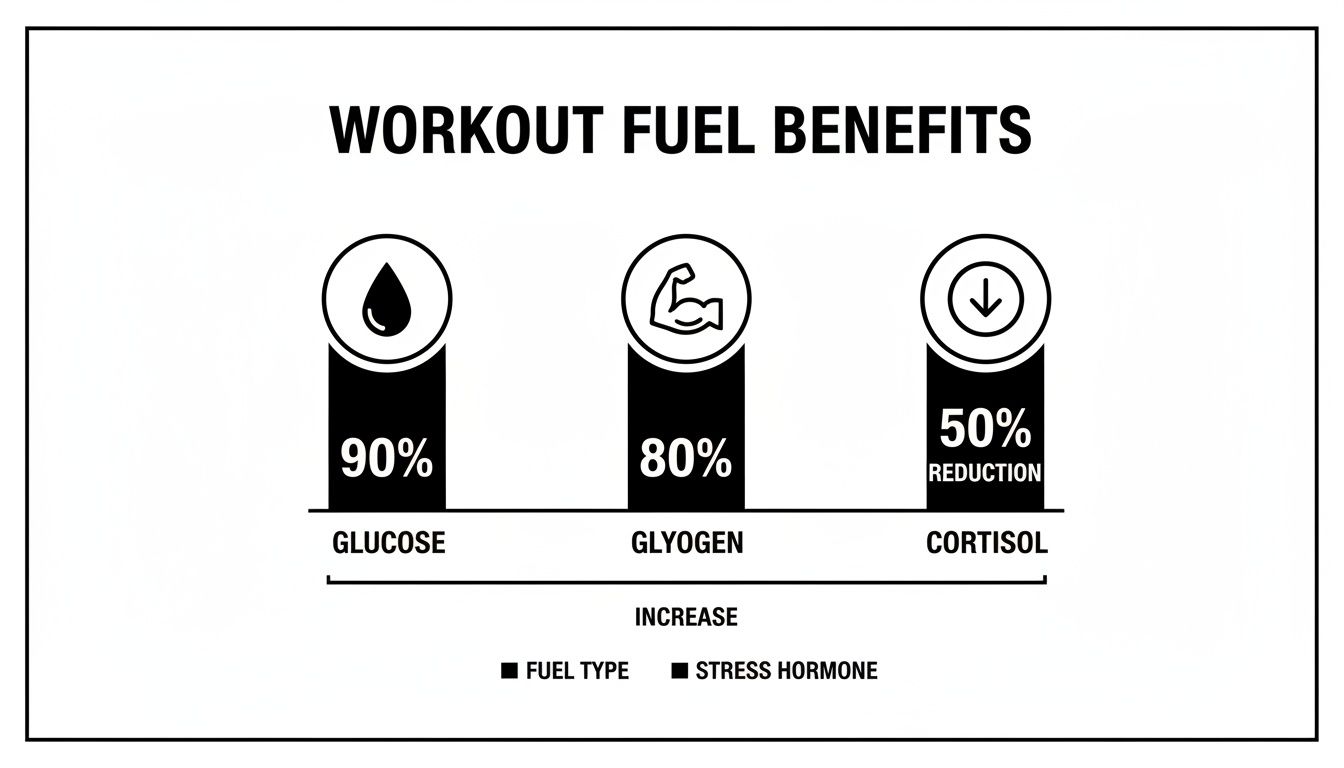
This graphic really drives home the core benefits of fueling mid-workout. Strategic carb intake directly supports your energy systems and keeps your hormones in check, leading to better, longer performance.
To make sense of the options, let's compare them side-by-side. The table below breaks down the most common intra-workout carbs, focusing on the practical details that will help you decide which one fits your training style.
Intra Workout Carbohydrate Source Comparison
| Carbohydrate Source | Absorption Speed | Insulin Spike | Gastric Emptying | Best For | Potential Downsides |
|---|---|---|---|---|---|
| Highly Branched Cyclic Dextrin | Fast | Moderate | Very Fast | Endurance sports, long training sessions (>90 mins), sensitive stomachs | Higher cost |
| Dextrose (Glucose) | Very Fast | Very High | Slow | Strength/power athletes, short bursts, strategic insulin spiking | High risk of GI distress, potential energy crash |
| Maltodextrin | Fast | High | Moderate | Team sports, CrossFit, workouts around 60-90 minutes | Can cause bloating in sensitive individuals |
| Waxy Maize | Slow | Low | Slow | Pre-workout fuel (1-2 hours prior) | Poor for intra-workout use, can feel heavy |
| Fructose/Sucrose | Moderate/Fast | Moderate | Slow | Blended with glucose sources to increase total hourly carb uptake | High risk of GI distress when used alone or in excess |
This comparison highlights that there's no single "best" carb—the right choice is always context-dependent. Your sport, the duration of your session, and your own digestive tolerance are the deciding factors.
Highly Branched Cyclic Dextrin (HBCD): The Endurance Champion
Highly Branched Cyclic Dextrin, which you’ll often see called Cluster Dextrin®, is a very advanced, engineered carbohydrate. It’s made by breaking down starch into smaller pieces and then rebuilding them into a unique circular structure.
That structure is its secret weapon. It gives HBCD a high molecular weight but a very low osmolality. In plain English, your stomach sees it as a very thin fluid, so it zips right through into your intestines for super-fast absorption. This rapid gastric emptying means you get a steady flow of glucose without the bloating or stomach sloshing that plagues so many other carbs.
Key Differentiator: Cyclic Dextrin delivers sustained energy with almost zero stomach issues. Its low osmolality and quick transit make it the undisputed king for long-haul endurance events where gut comfort is everything.
This is exactly why it's become the gold standard for marathoners, triathletes, and cyclists who need to pack in a lot of fuel per hour without wrecking their stomachs. It gives you a smooth, sustained energy lift, not a jarring spike and crash.
Dextrose: The Anabolic Spiker
Dextrose is just pure glucose, the simplest sugar your body uses for fuel. Since it requires zero digestion, it gets absorbed almost instantly, triggering a massive spike in both blood sugar and insulin.
This powerful insulin response is its main feature. While that kind of spike is terrible for endurance, it can be a powerful tool for strength athletes. Insulin is a potent anti-catabolic hormone, meaning it helps stop muscle breakdown during a brutal lifting session.
Sipping a small amount of dextrose between heavy sets can help protect muscle tissue and deliver immediate fuel for those explosive reps. But be warned: its high osmolality pulls water into your gut, which can easily cause bloating and cramps if you overdo it. It's best used in small, surgical doses, not as your main fuel source for a long workout.
Maltodextrin: The Versatile Workhorse
Maltodextrin is a glucose polymer—a chain of glucose molecules strung together. While it's technically a complex carb, it has a very high glycemic index and acts a lot like a simple sugar in your body. It absorbs quickly, though not quite as lightning-fast as dextrose.
Its biggest selling points are its versatility and low cost. It gives you a quicker energy hit than HBCD but with a slightly lower risk of stomach issues than pure dextrose because its osmolality is lower. This makes it a solid middle-of-the-road choice for a ton of athletes, from regular gym-goers to team sport players.
- Best Use Case: Team sports or CrossFit-style workouts where you need quick bursts of energy over 60-90 minutes.
- Mixing Tip: It works great with a small amount of fructose to open up multiple energy pathways, which can boost your total carb absorption per hour.
That said, some people are still sensitive to it, and it can cause problems at higher doses. It gives you a reliable performance bump but doesn't have the specialized benefits of something like Cyclic Dextrin.
Waxy Maize: The Slow Burner
Waxy Maize is a complex carb from cornstarch, known for its very high molecular weight and low osmolality, much like HBCD. For a while, it was hyped as a superior, fast-absorbing carb.
Turns out, that wasn't quite right. Research has shown that its digestion and absorption are actually pretty slow. It tends to hang out in the stomach longer than other options, leading to a much more gradual release of glucose. This slow delivery makes it a poor choice for intra-workout fuel when you need energy right now.
While its slow-release profile might have a place in a pre-workout meal, it just can't deliver the fast fuel needed to keep you going at a high intensity. Its potential to cause bloating because of that slow transit time has made it fall out of favor.
A Note on Fructose and Sucrose
Fructose (fruit sugar) and sucrose (table sugar) are rarely used by themselves during a workout, and for good reason. Fructose is absorbed through a different pathway than glucose and has to be processed by your liver first.
Slamming too much fructose during exercise is a well-known recipe for GI disaster. However, in small amounts and paired with a glucose source like maltodextrin, it can actually increase the total amount of carbs your body absorbs per hour by using multiple transport channels. Many sports drinks use a glucose-fructose blend for this very reason, but getting that ratio right is crucial. Mastering how you combine carb sources is just as important as reading an electrolyte powder comparison to nail your overall hydration and fueling strategy.
Fueling Protocols for Strength and Endurance Athletes
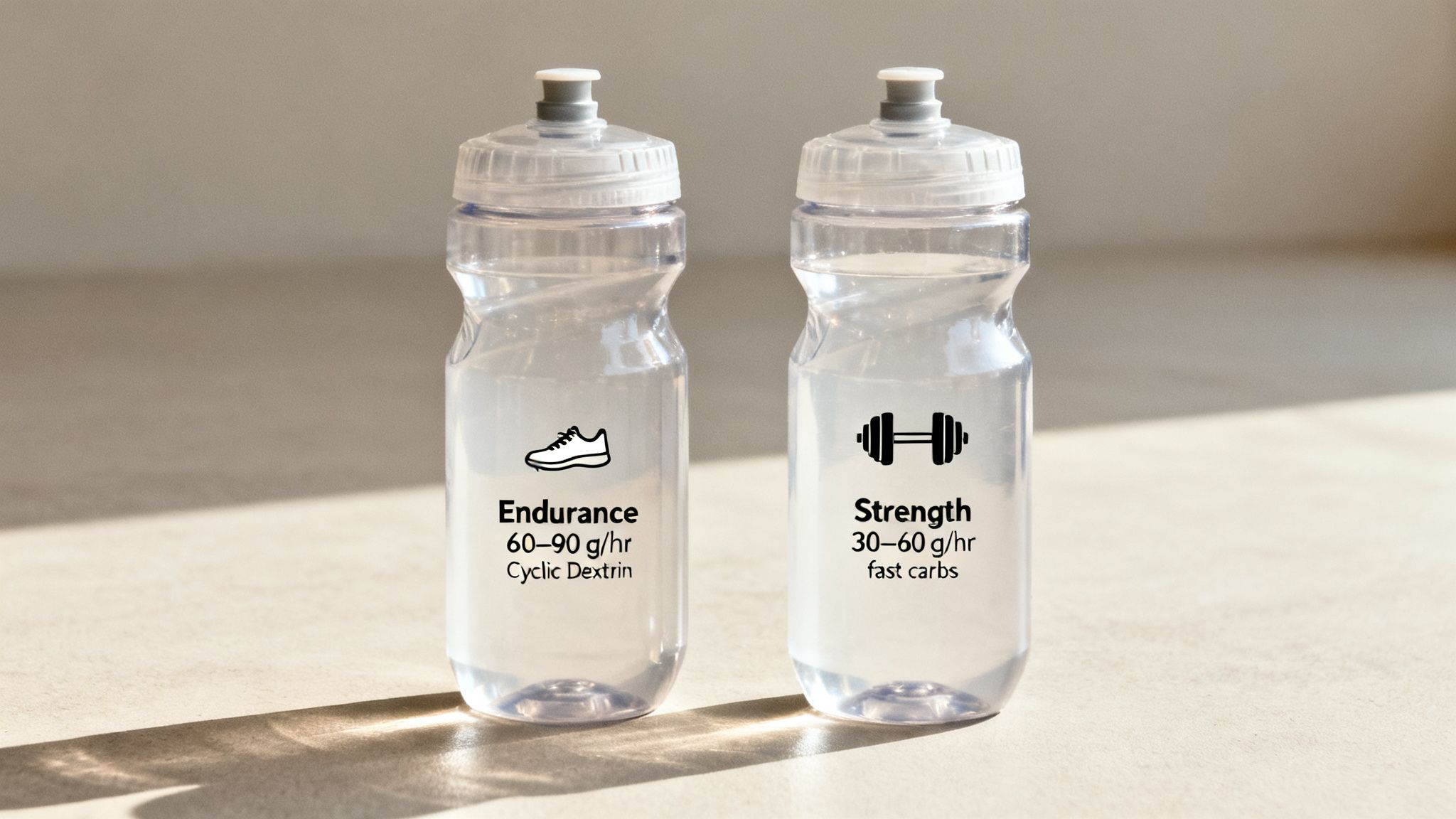
There’s no single "best" intra-workout carb. The right fuel is all about context. The needs of a marathoner grinding out miles for hours are worlds apart from a powerlifter chasing a one-rep max. If you want to unlock peak performance, you have to tailor your fueling strategy to your discipline—it’s the only way to avoid common disasters like stomach cramps or hitting the wall.
An endurance athlete’s entire race depends on sustained energy. Their biggest threats are depleted glycogen stores (the infamous "bonk") and GI issues that can end a race prematurely. For them, the choice of carbohydrate is absolutely mission-critical.
A strength athlete, on the other hand, needs to maintain explosive power and keep their nervous system firing for short, intense bursts. Their workouts can be long, but the energy demands are completely different. Their fueling plan has to support this without making them feel slow, sluggish, or setting them up for an energy crash.
The Endurance Athlete Protocol
For marathon runners, triathletes, and cyclists, the game is all about consistent, easy-to-digest fuel. You have to get a significant amount of carbs in every hour without wrecking your gut, which is already stressed from the demands of the sport.
The gold standard for long-haul events is 60-90 grams of carbohydrates per hour. To hit that number without your stomach revolting, you need a carb source with low osmolality that empties from the gut fast. This is where a top-tier carb like Highly Branched Cyclic Dextrin (HBCD) really shines.
- Carbohydrate Source: Stick with a low-osmolality carb like HBCD to keep GI distress to a minimum.
- Dosage: Start on the lower end (60g/hour) and see how your gut handles it before slowly increasing. Elite athletes might even push past 90g/hour by mixing in different carb types, like a little fructose.
- Mixing: Mix your hourly carb dose in 500-750ml of water with a full serving of electrolytes. You might need more fluid depending on the heat and how much you sweat.
- Execution: Sip your mix constantly every 10-15 minutes. Don't chug it. That's a surefire way to overwhelm your stomach.
This methodical approach guarantees a steady drip of glucose into your bloodstream, which spares your precious muscle glycogen and keeps you feeling strong for hours. It’s a foundational piece of any serious sports nutrition for endurance athletes and can be the difference between a good performance and a new personal best.
This entire protocol is about playing the long game. It’s not about getting a quick sugar rush; it’s about providing a reliable fuel source your body can depend on from the starting line to the finish.
The Strength Athlete Protocol
For powerlifters, bodybuilders, and anyone else focused on strength, the goals are different. You want to preserve muscle glycogen to stay explosive on heavy sets and prevent excessive muscle breakdown (catabolism) from intense resistance training. Fueling during the session is more about tactical support than pure endurance.
A solid pre-workout meal is your foundation, but intra-workout carbs can give you a real edge, especially in sessions that go past 75 minutes or involve a ton of volume. The key is to provide just enough fuel to keep performance high without causing any digestive issues that could mess with your ability to brace for a heavy lift.
Most strength athletes will do well with a lower intake, somewhere around 30-60 grams of carbohydrates per hour. Faster-acting carbs like Maltodextrin or even a bit of Dextrose work great here, since you’re just sipping between sets, not running a marathon.
- Carbohydrate Source: Maltodextrin is a solid, versatile choice. A blend with HBCD or a small dash of Dextrose also works well.
- Dosage: Aim for 30-45g per hour for most high-volume workouts. This is plenty to keep blood sugar stable and send an anti-catabolic signal to your muscles.
- Mixing: Combine your carbs and electrolytes in 500-750ml of water. Staying hydrated is just as important for strength as it is for endurance.
- Execution: Sip the drink between your big work sets. This gives you a small, steady stream of energy without making you feel full or bloated before a heavy squat or deadlift.
This isn't just bro-science, either. A comprehensive review found that while intra-workout carbs didn’t help in every single scenario, they were a game-changer for athletes training fasted. Without carbs, their muscle glycogen dropped 19.2% after a squat workout. With carbs, that drop was only 15.2%. That’s a significant amount of fuel saved for more quality reps. This glycogen-sparing effect is what it's all about for strength athletes trying to squeeze every last drop of performance out of their session.
Advanced Fueling for Keto and Hybrid Athletes
Traditional fueling advice usually falls flat for athletes with specific goals, like those deep into a ketogenic diet or guys who train fasted first thing in the morning. But that doesn’t mean you have to leave performance on the table. A smart, surgical approach to intra-workout carbs can give you a serious edge without derailing your metabolic state.
This isn't about carb-loading. Think of it more like a sniper shot of energy—a targeted, fast-acting fuel source delivered right when your muscles are screaming for it. It's how you maintain intensity when it truly counts.
Fueling Strategies for the Keto Athlete
The idea of taking carbs on a keto diet sounds like sacrilege, right? But it’s actually a well-known and powerful strategy called the Targeted Ketogenic Diet (TKD). The whole point is to use a small dose of fast-acting carbs immediately before or during your workout to power the kind of high-intensity effort that relies on glycolysis.
You’re not trying to refill your glycogen stores. The goal is just to provide enough quick glucose to prevent your performance from tanking during explosive movements like heavy squats or all-out sprints. For most, a tiny dose of 5-15 grams of a simple carb like dextrose does the trick. That small amount gets burned up by your working muscles so fast it’s unlikely to kick you out of ketosis for long, if at all.
Of course, nailing your fueling strategy for keto training also means knowing what suitable keto snack foods can keep you going outside the gym. Your performance window is only as good as your daily nutrition.
When Fasted Athletes Need Intra-Workout Carbs
Training completely fasted is a great tool for getting more fat-adapted. But there’s a tipping point. For long or brutally intense sessions, running on empty can lead to excessive muscle breakdown (catabolism) and a nosedive in performance. It’s no surprise that studies have shown athletes training after a 12-hour fast see performance drop by 12-20%—a dip that intra-workout carbs completely erased.
Here's when intra-workout carbs become a non-negotiable for fasted training:
- Sessions longer than 90 minutes: Once you hit that 90-minute mark, your glycogen is running on fumes. Without external fuel, your performance is going to suffer.
- High-Intensity Interval Training (HIIT): These workouts torch your glycogen stores. A small hit of carbs can be the difference-maker that lets you maintain power through those final, gut-wrenching intervals.
- High-Volume Strength Training: If you're grinding through a ton of sets and reps, a little bit of fuel mid-session can stave off fatigue and help you keep your form tight on every last rep.
For a fasted athlete, even just 15-30g of a fast-acting carb can be a complete game-changer. It gives you that immediate energy to protect muscle and sustain performance, all without needing a heavy pre-workout meal. To really dial things in, consider pairing your fuel with electrolytes from our guide on the best electrolyte supplements for keto.
The Hybrid Athlete Dilemma
Hybrid athletes—think CrossFit or functional fitness—are in a unique bind. They have to fuel explosive strength and grueling endurance, often in the same workout. This double-duty demand makes their intra-workout nutrition a tricky puzzle to solve.
The key is to match your carbs to the main focus of the day. If the workout is built around a long, grinding metcon, you'll want to fuel more like an endurance athlete. If it's a heavy strength day with just a short finisher, then a strength-focused protocol makes more sense.
The science on carb loading has come a long way; we now know that modern fueling protocols can boost muscle glycogen 10-15% higher than old-school methods. While one small study on CrossFit athletes didn't find a benefit from 60g of intra-workout carbs, the mountain of evidence for endurance athletes is clear: mid-workout fuel absolutely supports performance. For the hybrid athlete, this just means you've got to be your own scientist and experiment to find what works for you.
How to Build Your Perfect Intra Workout Shake
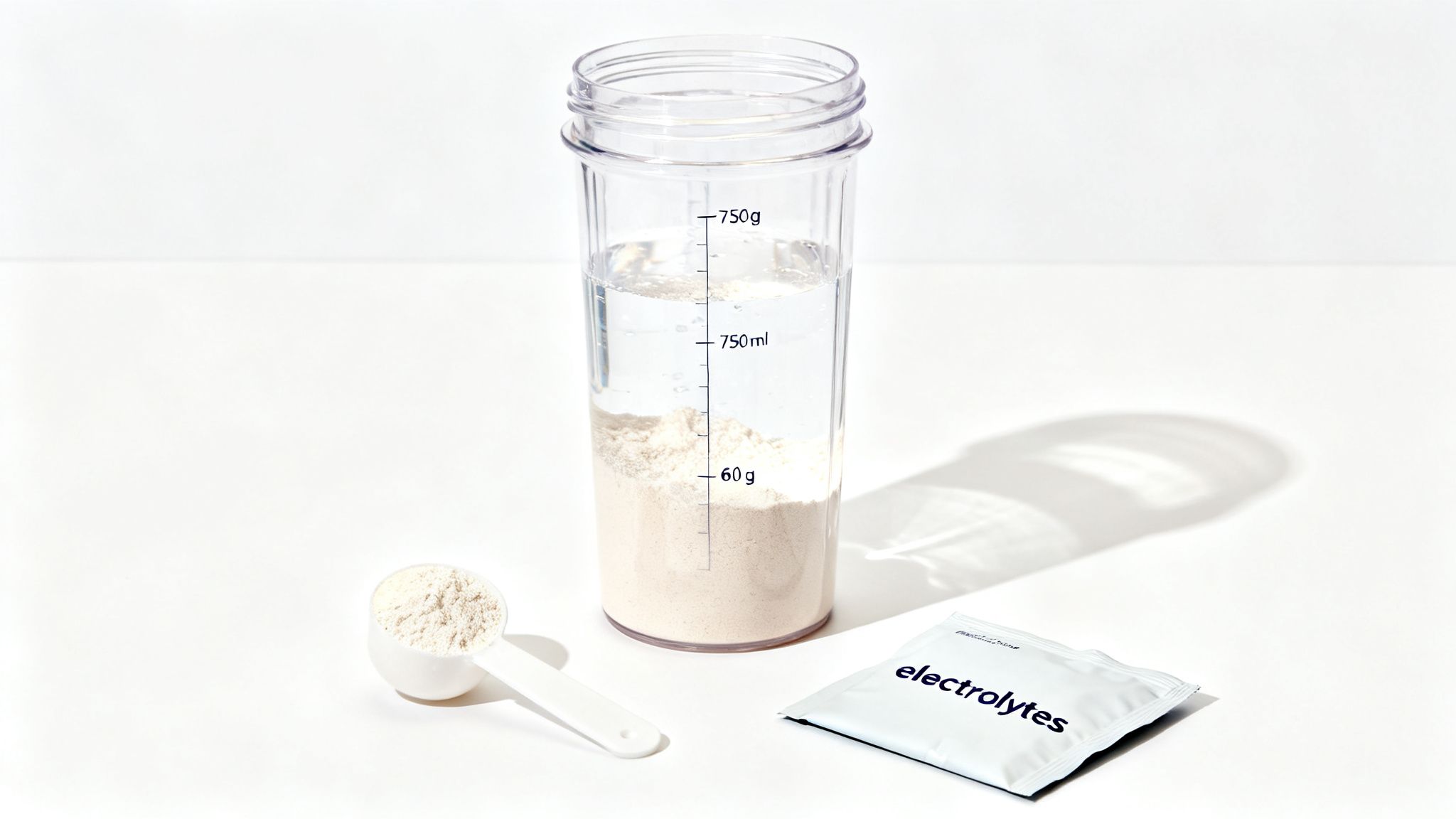
Putting together the ideal intra-workout shake isn't about some secret recipe. It’s a personalized strategy. The entire point is to get sustained energy and hydration into your system without wrecking your stomach in the process.
Nail a few key principles, and you can build a drink that fuels your specific needs, whether that’s a three-hour sufferfest on the bike or a high-volume squat day. This simple mix becomes your most reliable training partner. It all starts with the right foundation.
Step 1: Choose Your Carbohydrate Foundation
The carbs you choose should be a direct reflection of your workout's duration, its intensity, and what your gut can handle. Flip back to our big comparison and make a solid choice based on your sport.
- For Endurance Athletes: If you're going for more than 90 minutes, you need carbs with low osmolality to keep GI distress at bay. Highly Branched Cyclic Dextrin (HBCD) is the clear winner here. It empties from the stomach quickly and delivers a steady stream of energy.
- For Strength Athletes: Training sessions built around heavy lifts and power benefit from faster-acting carbs you can sip between sets. A workhorse like Maltodextrin is a great call, giving you a quick hit of energy without the bloating risk that comes with simple sugars.
Once you’ve got your fuel source locked in, it's time to add the components that manage hydration and keep your muscles firing. This is where electrolytes are completely non-negotiable.
Step 2: Integrate Essential Electrolytes
Carbs give you the gas, but electrolytes are what keep the engine running smoothly. When you train hard, you sweat out critical minerals like sodium, potassium, and magnesium. Ignoring this is a fast track to cramps, fatigue, and dehydration—all of which will kill your performance.
Tossing a full serving of a quality electrolyte powder into your shake is an absolute must. Look for a clean, comprehensive formula that gives you a meaningful dose of sodium, since that's what you lose most through sweat. This one-two punch of fuel and hydration is the real core of a smart intra-workout strategy.
Your body literally can't absorb and use the water you drink without enough electrolytes. Pairing them with the best intra workout carbs creates a powerful synergy, driving both hydration and fuel into your working muscles far more effectively.
Step 3: Dial In Your Dosing and Mixing Ratios
Now that you have your ingredients, it's time to mix. Getting the concentration right is the key to making this whole thing work without upsetting your stomach. Too concentrated, and the drink will pull water into your gut and cause bloating; too dilute, and you won't get enough fuel to make a difference.
Here are some real-world starting points for a standard 750ml (25 oz) bottle:
- Endurance Protocol (90+ minutes): Start with 60g of Cyclic Dextrin mixed with one full serving of electrolytes. This gives you about an 8% carbohydrate solution, which is the sweet spot for absorption during long, hard efforts.
- Strength Protocol (60-90 minutes): Mix 30-45g of Maltodextrin with one full serving of electrolytes. This slightly lower concentration is perfect for sipping between sets without feeling sloshy or full.
Always start on the lower end of any dosing recommendation and see how your body responds before you ramp it up. And please, sip your drink. Chugging it is a recipe for disaster. Aim for consistent sips every 15-20 minutes to give your body a steady supply of fuel and prevent your digestive system from getting overwhelmed.
Common Questions About Intra-Workout Carbs
Diving into the world of intra-workout nutrition can feel a little overwhelming. Let's clear up some of the most common questions athletes have so you can build a fueling strategy that actually works for you.
Can I Just Use Sports Drinks or Gels?
Sure, they're convenient, but most commercial sports drinks and gels aren't your best bet for optimized fueling. They often pack in simple sugars like sucrose or a ton of fructose, which have a high osmolality. This can draw water into your gut, leading to the bloating and GI issues that can completely wreck a long session.
Many are also loaded with artificial colors, flavors, and preservatives that do absolutely nothing for your performance. Using one of the best intra workout carbs in a pure powder form, like Cyclic Dextrin, puts you in the driver's seat. You get total control over the concentration, you can mix it with high-quality electrolytes, and you skip all the unnecessary junk. It's just clean, effective fuel.
Will Intra-Workout Carbs Make Me Gain Fat?
This is a huge fear, but it’s mostly unfounded if you’re using carbs the right way. When you’re training hard, your body is in a state of massive energy demand. The carbs you drink are immediately flagged to fuel your working muscles and keep your blood glucose stable.
The whole process is incredibly efficient—it partitions those calories directly for performance and recovery, not fat storage. The trick is to match your intake to your output. A three-hour bike ride needs a whole lot more fuel than a 45-minute lifting session. As long as your carb intake makes sense for your training, fat gain is highly unlikely.
The metabolic environment during intense training is all about fuel utilization, not storage. Your body uses these carbs exactly as intended—to power your performance in the moment.
Do I Need Carbs for Sessions Under An Hour?
For most workouts that last less than 60-75 minutes, you probably don’t need intra-workout carbs, especially if you had a solid pre-workout meal. Your muscle glycogen stores have plenty of gas in the tank to get you through.
But there are a couple of key exceptions. If you're training completely fasted or your session involves something insane like repeated max-effort sprints, a small dose can make a real difference. In those specific cases, 15-30g of a fast-acting carb can help you sustain power and avoid hitting a wall near the end.
How Do I Know If I Am Taking the Right Amount?
Nailing your perfect dose is a personal process of trial and error. It really comes down to your training duration, intensity, and your own gut tolerance. A great place to start for longer sessions is a conservative 30g of carbohydrates per hour.
From there, you just have to listen to your body and track what’s happening.
- Monitor Your Energy Levels: Feel a big drop in energy or power? You probably need to bump up your intake a bit.
- Watch for Digestive Issues: Any bloating, sloshing, or cramps are red flags that you’re either taking too much at once or your drink is too concentrated.
- Keep a Log: Track your carb intake, how you performed, and how you felt. Over time, you'll start to see patterns, and you can dial in that sweet spot that keeps you feeling energized and strong.
Ready to build the perfect intra-workout shake with clean, effective ingredients? Revolution Science provides research-backed fuel like Reviver Electrolytes to help you perform at your best, without the fillers or junk. Explore our formulas at https://rvsci.com.