
Your Cart is Empty


The Ultimate Guide to Electrolyte Powder for Runners
When you're out on a run, you're losing a lot more than just water with every drop of sweat. You're also losing the essential minerals that power every single stride. That's why a good electrolyte powder for runners is so critical—it replenishes those lost minerals, helping you sidestep muscle cramps, fight off fatigue, and maintain peak performance in a way that plain water just can't.
Why Your Body Needs More Than Just Water

It helps to think of your body like a high-performance engine. Carbs and fats are the fuel, sure, but that's not the whole story. An engine also needs oil and coolant to run properly, prevent overheating, and keep all the moving parts working together. For your body, electrolytes are that oil and coolant.
These tiny, electrically charged minerals—like sodium and potassium—handle critical jobs that water can't manage on its own. They're in charge of regulating nerve signals, controlling muscle contractions, and maintaining your body's fluid balance. When you sweat, you aren't just losing H₂O; you're draining your engine of its most vital fluids.
The Problem with Water-Only Hydration
Trying to rehydrate with only water during or after a long, sweaty run can actually create a dangerous imbalance. As you pour plain water back into your system, you dilute the concentration of the electrolytes you have left. This can kick off a cascade of performance-killing problems.
The most common consequences are things you've probably felt before:
- Persistent Muscle Cramps: When your sodium and potassium levels dip too low, your muscles lose their ability to contract and relax properly. The result? Those painful, involuntary spasms that can stop you in your tracks.
- Unexpected Fatigue: Electrolytes are a key part of cellular energy production. When they're depleted, your energy levels plummet, and every step starts to feel heavier than the last.
- Mental Fog and Dizziness: Your brain relies on the precise transmission of electrical signals to function correctly—a process governed by electrolytes. An imbalance can leave you feeling disoriented and out of it.
A dedicated electrolyte powder isn’t a luxury; it's a fundamental tool for any serious runner. It directly addresses the mineral deficit caused by sweat, ensuring your internal engine runs smoothly from the first mile to the last.
This isn't just anecdotal, either. The global market for electrolytes for runners was valued at USD 700 million in 2025 and is projected to hit USD 1,800 million by 2032. This surge shows just how much runners are demanding effective hydration solutions. For endurance athletes, powders can reduce dehydration risks by up to 30% compared to plain water.
Strategically putting these minerals back into your body is the key to unlocking consistent performance and faster recovery. To get a deeper dive on what these essential minerals do, check out our guide on what electrolytes are good for.
Understanding the Science of Sweat
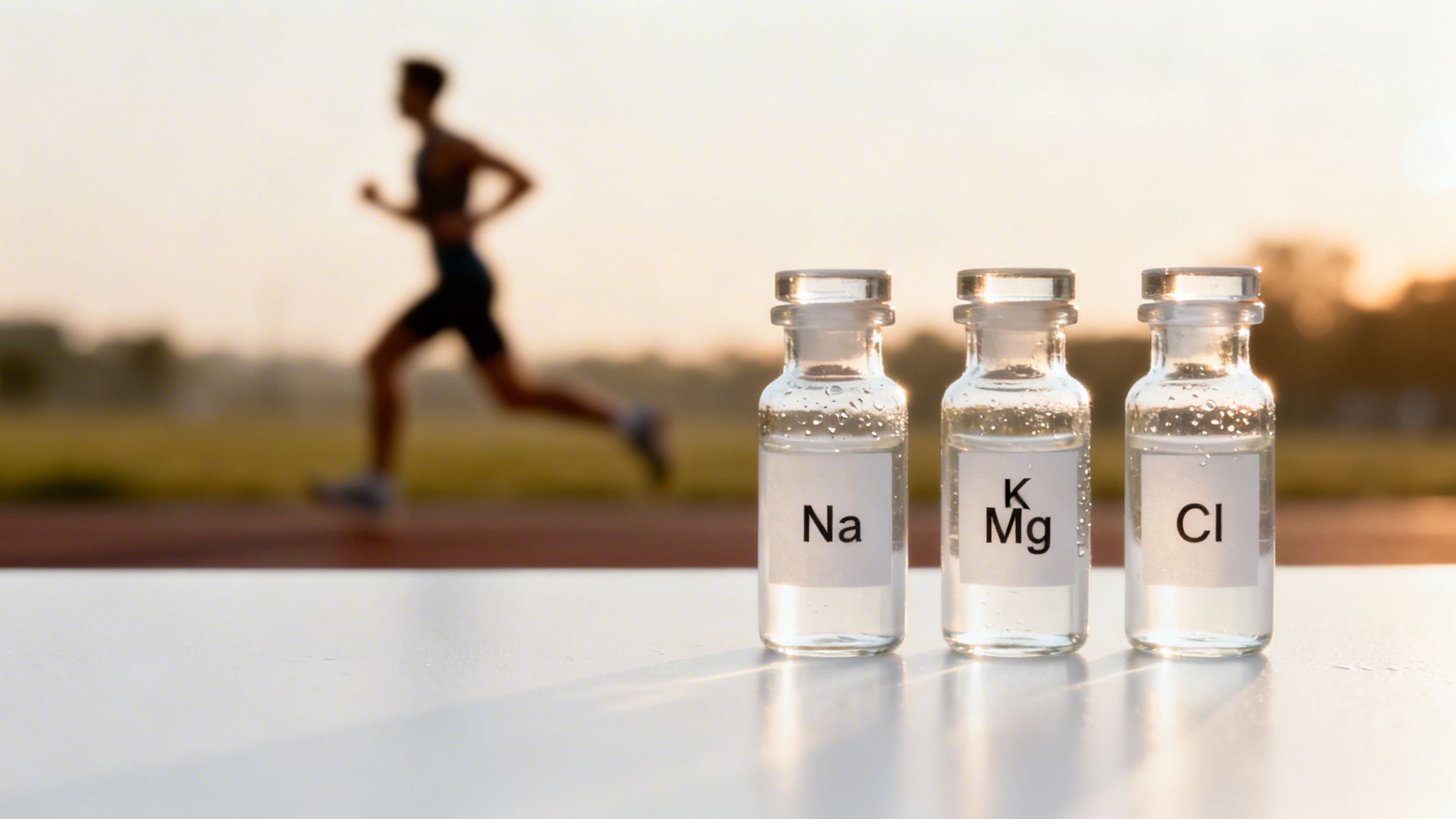
To really get why an electrolyte powder for runners works so well, we have to look at what's actually happening when you sweat. Sweat is much more than just water; it’s your body’s built-in cooling system, releasing a complex saline cocktail packed with the very minerals your muscles and nerves rely on to perform under pressure.
When you lose these critical minerals faster than you can replace them, your performance is going to tank. It’s like watching your phone battery drain—first the screen dims, then apps start to lag, and eventually, it just shuts down. Knowing exactly what you’re losing is the first step to replacing it strategically.
The Four Key Players in Your Sweat
While your sweat has trace amounts of a lot of different minerals, four really stand out for running performance: Sodium, Potassium, Magnesium, and Chloride. Each one has a distinct and non-negotiable job in keeping your body’s engine firing on all cylinders.
Think of them as a specialized pit crew working in perfect sync to keep you moving. Here’s a quick rundown of what each key electrolyte does and why it matters on the run.
Key Electrolytes and Their Roles in Running
| Electrolyte | Primary Role for Runners | Signs of Deficiency During Exercise |
|---|---|---|
| Sodium (Na+) | Manages fluid balance, telling cells how much water to retain. Crucial for hydration and nerve impulse transmission. | Headaches, nausea, confusion, muscle weakness, low energy. |
| Potassium (K+) | Works with sodium to regulate muscle contractions and nerve signals. Prevents cramping and supports heart function. | Muscle cramps, fatigue, weakness, irregular heartbeat. |
| Magnesium (Mg²+) | Essential for energy production (ATP synthesis), muscle relaxation, and preventing cramps. Involved in over 300 body reactions. | Muscle twitching or spasms, fatigue, nausea, general weakness. |
| Chloride (Cl⁻) | Partners with sodium to maintain proper fluid balance, blood volume, and blood pressure. | Dizziness, fatigue, weakness, difficulty breathing. |
This table shows why just drinking water isn't enough. Replenishing these specific minerals is what separates basic hydration from performance-optimized hydration. A well-formulated electrolyte powder for runners is designed to deliver this crew in ratios that mirror what you actually lose.
Your Unique Sweat Profile
It’s so important to remember that no two runners sweat the same. Your personal sweat rate and the mineral makeup of that sweat are as unique as your fingerprint. How much you lose, and what you lose, comes down to a few key things.
The biggest variables are:
- Intensity and Duration: A blistering track workout is going to produce far more sweat and mineral loss per hour than a slow, easy recovery jog.
- Heat and Humidity: As the temperature and humidity climb, your body has to work overtime to cool itself, which drastically increases your sweat output. A marathoner can lose around 3 liters of fluid, with the average sweat loss per hour of running being 1.49 liters.
- Genetics and Acclimation: Some of us are just "salty sweaters." If you regularly see white, crusty stains on your gear after a run, that’s you. It means your sweat has a higher concentration of sodium than the average person.
Because everyone is so different, a one-size-fits-all approach to hydration is bound to fail. Learning to listen to your body and understand your personal needs is the first step toward building a truly bulletproof fueling strategy.
If you're serious about nailing your hydration, it's worth taking the time to how to calculate your sweat rate. This gives you a much clearer, data-driven picture of your fluid and electrolyte needs.
By understanding what’s in your sweat, you’re no longer guessing. You’re making smart decisions to replace exactly what your body is losing, which is the real secret to staying strong, sidestepping cramps, and finishing every run feeling powerful. An electrolyte powder for runners gives you the precise tool to do just that.
How to Choose the Right Electrolyte Powder
Walking down the supplement aisle can feel overwhelming. You're hit with a wall of brightly colored tubs and packets, all screaming promises of peak performance. How are you supposed to pick the right electrolyte powder for runners?
The good news is you don’t need a degree in sports science to figure this out. The goal is simple: find a formula that gives you exactly what you need to perform, without any of the junk that can slow you down or wreck your stomach. Let's break down how to read a label like a pro.
Prioritize the Sodium Content
When it comes to electrolytes for running, sodium is the undisputed MVP. It's the mineral you lose most in your sweat, and it’s the primary driver of fluid balance in your body. If you don't replace it, you’re on the fast track to cramping, headaches, and a serious drop in performance.
Take a hard look at the sodium content. While everyone's needs are a little different, a solid starting point for most runners is a formula with at least 300-500 mg of sodium per serving. If you're a heavy sweater or you're out there grinding in the heat, you might need to bump that up to 800-1000 mg per hour. A powder with only 100 mg just isn't going to cut it when things get tough.
Analyze the Supporting Minerals
Sodium might be the star of the show, but it doesn't work alone. A well-rounded electrolyte powder needs a solid supporting cast to cover all the bases for muscle function and energy.
- Potassium: This mineral works side-by-side with sodium to manage muscle contractions. You lose way more sodium than potassium in sweat, so look for a ratio that reflects that—something like 2:1 or 4:1 sodium-to-potassium is a good sign.
- Magnesium: Think of magnesium as the spark plug for your body's energy systems. It’s absolutely critical for preventing muscle fatigue and spasms. It's often under-dosed, so find a product that includes a real amount, like 50-100 mg, to actually support your performance.
Choosing the right powder is an exercise in subtraction as much as addition. What's not in the formula is often just as important as what is. The cleanest, most effective products focus on performance minerals without the fluff.
Scrutinize the Sugar and Fillers
This is where a lot of popular sports drinks and powders completely miss the mark. A little bit of sugar (carbohydrates) can be useful for quick energy on very long runs—we're talking 90+ minutes—but too much is a recipe for disaster. High-sugar formulas often lead to bloating, stomach sloshing, and the dreaded energy crash.
For most of your training runs, a zero-sugar or very low-sugar formula is the way to go. Be skeptical of any product that lists sugar, fructose, or maltodextrin as the first ingredient. While you're at it, check for:
- Artificial Sweeteners: Ingredients like sucralose, aspartame, or acesulfame potassium can cause stomach issues for a lot of runners.
- Unnecessary Fillers: Things like artificial colors, gums, and anti-caking agents add zero performance benefit. All they do is get in the way of a clean formula.
The demand for clean, effective formulas is growing fast. Among endurance athletes, the market for electrolyte powders is exploding at a CAGR of 8.5% from 2024 to 2030, largely because powders give you precise control over what you’re putting in your body. In fact, a survey of 5,000 runners found that 72% reported fewer cramps and steadier energy with daily powder use during training blocks, showing just how big of a difference a clean, low-sugar formula can make. You can dig into more of the electrolyte powder market trends on grandviewresearch.com.
By focusing on these core principles—high sodium, the right supporting minerals, and no junk—you can confidently pick an electrolyte powder for runners that will actually fuel your performance. For a side-by-side analysis of some popular options, check out our electrolyte powder comparison guide.
Mastering Your Hydration and Fueling Strategy
Picking the right electrolyte powder is only half the battle. Knowing when and how to use it is where the real magic happens, unlocking performance you didn't know you had.
Proper hydration isn't just about chugging water whenever you feel like it. It's a calculated strategy built around your timing, your personal sweat rate, and the conditions you're running in. This is your playbook for every run, from a quick 5k to a grueling marathon.
A solid plan has three parts: before, during, and after your run. Each phase has a specific job, from topping off your mineral stores to actively replacing what you’ve lost and kickstarting your recovery. Nailing this timing is often the difference between hitting the wall and smashing your personal best.
The Power of Pre-Loading Before a Run
Think of it like filling up your car before a long road trip. You wouldn't start a cross-country drive on an empty tank, right? Same principle applies here. You don't want to start a long, hard run with your electrolyte levels already dipping into the red zone.
This is especially true before a big race or a long training session in the heat.
About 60-90 minutes before you head out, mix up a serving of a quality electrolyte powder. Drinking it down tops off your sodium and fluid levels, ensuring you start your run fully hydrated and primed to perform from the very first step.
Fueling During Long Runs
Once you push past the 60-90 minute mark, your body starts to burn through its initial reserves. This is where your in-run hydration strategy becomes non-negotiable. Skip it, and you're practically inviting fatigue, cramps, and a serious performance drop.
The goal here is simple: consistent replacement.
Try to take a few sips from your electrolyte mix every 15-20 minutes. You're not trying to replace every single drop of sweat in real-time—that's basically impossible. Instead, you're giving your body a steady drip of fluids and minerals to stave off dehydration and keep your muscles firing on all cylinders. This is a core part of learning how to fuel during a marathon, where those strategic sips of electrolytes are just as critical as your energy gels.
A classic runner’s mistake is waiting until you feel thirsty. By the time that thirst signal hits your brain, you’re already dehydrated. Your performance has already started to suffer. Proactive, scheduled sipping is always the winning strategy.
This decision tree helps you visualize the most important factors when choosing the right powder for your fueling plan.
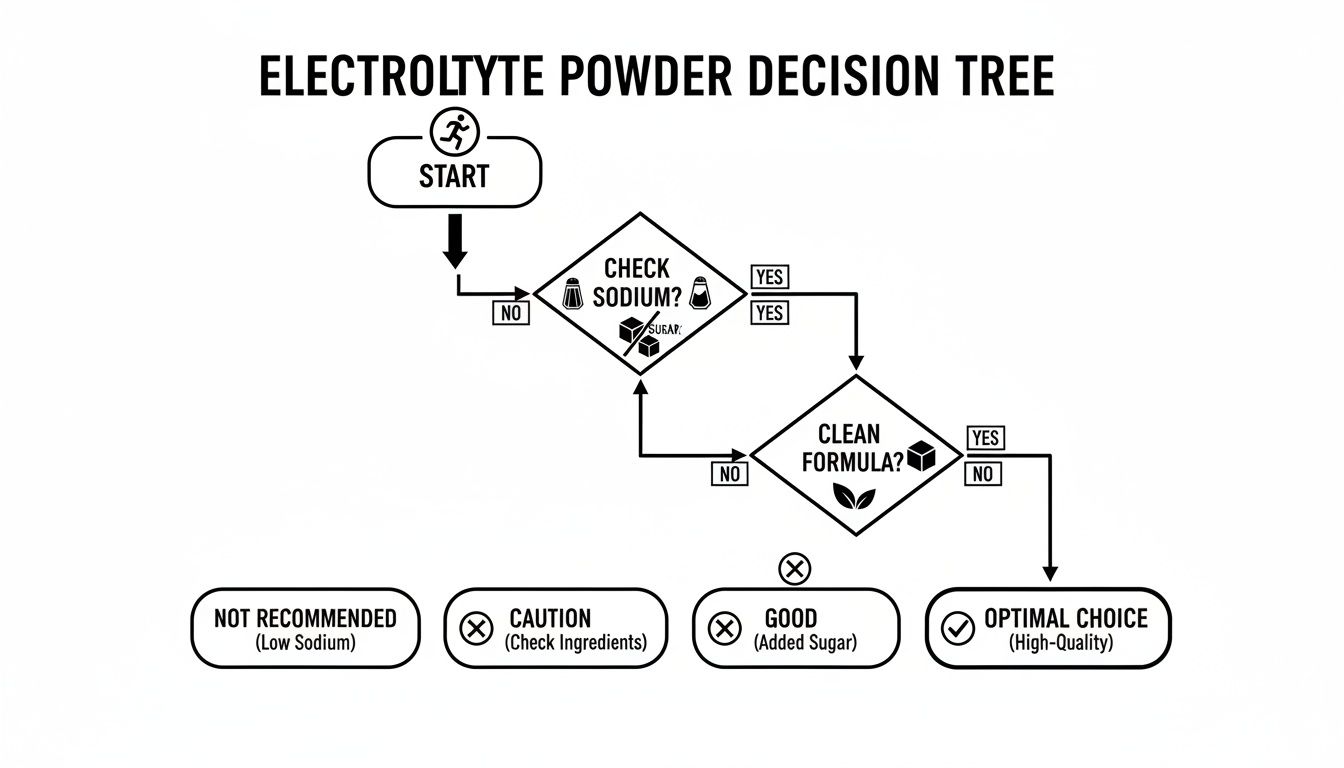
As you can see, a true performance formula puts the focus on high sodium content while steering clear of sugar and other junk fillers.
Electrolyte Timing for Runners: A Quick Guide
To pull this all together, here’s a simple table breaking down when to use electrolytes based on your run. Think of it as your cheat sheet for optimal hydration.
| Run Type / Timing | When to Hydrate with Electrolytes | Why It Matters |
|---|---|---|
| Before Any Long or Hot Run | 60-90 minutes pre-run | Tops off your fluid and sodium stores so you start fully hydrated and ready to perform. |
| During Runs > 60-90 Mins | Every 15-20 minutes | Staves off dehydration and electrolyte loss, preventing cramps and performance decline. |
| After Any Tough Run | Within 30-60 minutes post-run | Speeds up rehydration, replenishes lost minerals, and jump-starts muscle recovery. |
This systematic approach takes the guesswork out of hydration, allowing you to focus on your run.
Optimizing Your Post-Run Recovery
Don't just stop your watch and call it a day. The first hour after a tough run is a critical window for recovery, and what you do here sets you up for your next session. Your body is depleted and stressed, making immediate rehydration a top priority.
Within 30-60 minutes of finishing, get a serving of electrolytes in you. This does two key things:
- Rebalances Fluids: It helps pull water back into your cells far more effectively than plain water alone.
- Replenishes Minerals: It restocks the sodium, potassium, and magnesium you sweat out, which is vital for fighting off muscle soreness and those nasty post-run cramps.
Personalizing Your Plan by Calculating Sweat Rate
A generic plan is a good starting point, but a personalized one is a total game-changer. The best way to dial in your strategy is to figure out your own sweat rate. It sounds complicated, but it's not. This number tells you exactly how much fluid you're losing per hour in certain conditions.
Here’s a simple way to do it:
- Weigh yourself nude right before a one-hour run.
- Run for exactly one hour. Don't drink anything during this test.
- After the run, towel off completely and weigh yourself nude again.
- The difference in weight (in grams) is a rough estimate of your fluid loss in milliliters.
For instance, if you lost 1,000 grams (1 kg), your sweat rate is about 1,000 ml (1 liter) per hour. With that number, you can fine-tune your fluid intake with incredible accuracy. Just remember to re-test in different weather—your sweat rate on a cool morning will be a world apart from what it is on a humid summer afternoon.
For a deeper dive into timing your intake, check out our guide on the best time to take electrolytes.
By mastering these timing strategies and tailoring them to your body, you shift from just drinking to strategically hydrating. An electrolyte powder for runners becomes one of your most valuable tools for avoiding the bonk, crushing cramps, and pushing your limits safely.
Comparing Electrolyte Powders to Other Options
The hydration market is crowded. It's easy to get lost in the noise and wonder if a dedicated electrolyte powder for runners is just hype. After all, you’ve got sports drinks in every gas station and salt tablets lining the shelves at running stores.
So, are powders actually better? The short answer is yes. The long answer comes down to control, precision, and what you demand from your body on a run. While all these options touch on hydration, they aren't created equal, and understanding the trade-offs is key.
Electrolyte Powders vs Sports Drinks
The classic sports drink is usually the first thing people grab, but for any serious runner, it’s often a terrible choice. The biggest problem is sugar. Most of those brightly colored drinks are absolutely loaded with it, packing 14-19 grams of sugar into a small 8-ounce serving while offering surprisingly low levels of the electrolytes you actually need.
That sugar bomb can trigger stomach issues, energy spikes, and the inevitable crash—exactly what you don't want when you're miles from home. Powders, on the other hand, put you in the driver’s seat. You can go with a zero-sugar formula like Reviver Electrolytes for daily training or mix in your own carbs for race day. You get to separate hydration from fueling.
During a marathon, you can sweat out 800-1,200 mg/L of sodium, and that kind of loss can lead to a 20-30% drop in performance. A 2023 survey revealed that 85% of elite runners credited electrolyte powders with helping them finish cramp-free, showing just how effective they are compared to less-concentrated drinks.
The Limits of Salt Tablets and Gels
Salt tablets look like a simple, no-nonsense fix. They're a direct hit of sodium, right? The problem is their narrow focus. Most tablets only contain sodium and chloride, completely ignoring other critical minerals like potassium and magnesium that your body needs to fight off cramps and produce energy.
This one-note approach can easily throw your mineral balance out of whack. On top of that, tablets give you zero flexibility. You can't tweak the dose based on how much you're sweating or how hot it is. Electrolyte powders let you mix a weaker or stronger drink on the fly to perfectly match what your body is losing. That’s a level of precision tablets just can't touch.
Think of it this way: Salt tablets are a blunt instrument, while a high-quality electrolyte powder is a surgical tool. One gets the job done crudely, while the other allows for the precision needed for peak performance.
Can You Just Eat Salty Foods?
For a short, easy jog? Sure, grabbing a handful of pretzels or a banana can help a little. These whole foods give you a bit of sodium and potassium and are totally fine for casual efforts. But when the intensity ramps up or the miles get long, relying on snacks is inefficient and unreliable.
Here’s why whole foods fall short for serious performance:
- Slow Absorption: Your body has to work to digest solid food to get to the minerals inside, which is a much slower process than absorbing them from a liquid.
- Inconsistent Dosing: How much sodium is in that handful of pretzels? It's almost impossible to know, making it a guessing game when precision matters.
- Digestive Issues: Trying to digest solid food during a hard run often leads to stomach cramps and bloating as your body pulls blood away from your gut and sends it to your muscles.
While powders are incredibly effective, it's always smart to know all your options. If you're curious about what else is out there, you can explore other hydration products. But for runners who need reliable, fast-acting, and precisely dosed electrolytes, a purpose-built electrolyte powder for runners is the undisputed champion for maximizing performance and keeping you on the road.
Answering Your Top Electrolyte Questions
Even with the best plan, you're going to have questions when you add a new tool to your running kit. Getting real, no-nonsense answers is the key to feeling confident that your electrolyte powder is helping, not hurting. Let's dig into some of the most common questions we hear from runners.
Think of this as the final piece of the puzzle. We’re going to reinforce everything we've covered and give you the practical know-how to use your electrolytes safely and effectively. It's time to cut through the noise so you can get back to what matters: your run.
Can I Drink Too Many Electrolytes?
Absolutely, it's possible to overdo it. While coming up short on electrolytes is a far more common problem for runners, taking in too much—especially sodium—can lead to things like an upset stomach, bloating, or in more serious situations, a condition called hypernatremia.
The best way to think about it is as a balancing act. Your goal is simply to replace what you lose through sweat, not to overload your system with minerals it can't use. A relaxed 30-minute jog on a cool morning requires way less replenishment than a grueling two-hour training run in the summer heat.
Always start with the recommended serving size on the product you're using. From there, it's all about listening to your body and adjusting based on the specific demands of your run:
- Duration: The longer you're out there, the more sweat you'll lose and the more you need to replace.
- Intensity: Pushing the pace means a higher effort level, which ramps up your sweat rate.
- Weather: Heat and humidity are the two biggest variables that will accelerate how quickly you lose minerals.
Sticking to these principles helps you match your intake to your output, keeping you right in that sweet spot for optimal hydration and performance.
Will Electrolyte Powder Break My Fast?
This is a fantastic question, especially for those who do their training in a fasted state. The answer comes down to what's actually in the powder. A lot of formulas on the market are packed with sugars, various carbohydrates, or even amino acids, all of which can spike your insulin and technically break a fast.
However, a clean, zero-calorie electrolyte powder is built specifically to be fasting-friendly. If staying in a fasted state is your goal, you have to become a student of the nutrition label. You're looking for a formula that has:
- No sugar or any other caloric sweeteners.
- No carbohydrates like maltodextrin.
- No fillers or other junk additives.
A pure mix like Reviver Electrolytes gives your body the essential performance minerals—sodium, potassium, magnesium—without any of the calories that would kick you out of your fast. It lets you stay hydrated and keep cramps at bay without messing with your metabolic goals.
What Is the Difference Between a Powder and a Salt Tab?
This is a really common point of confusion, but the difference is huge. A salt tablet is pretty much what it sounds like: a compressed pill of sodium chloride. It delivers a direct shot of salt, sure, but for a runner's actual needs, it's a very incomplete solution.
An electrolyte powder for runners, on the other hand, gives you a much more complete and adaptable approach. The main benefits are clear:
- A Complete Mineral Profile: High-quality powders provide a balanced spectrum of electrolytes, including the powerhouse duo of potassium and magnesium. These are absolutely critical for fending off muscle cramps and supporting energy metabolism—and they're completely missing from a basic salt tab.
- Built-In Hydration: You mix powders with water, so they automatically contribute to your fluid intake. A salt tab has to be chased with water and doesn't support the actual process of hydration in the same integrated way.
- Dosing You Control: With a powder, you're in the driver's seat. You can mix a lighter concentration for a short, easy run or a stronger dose for a brutal summer long run. A fixed-dose tablet gives you zero ability to adapt to your specific needs.
A salt tablet is a one-dimensional tool for a multi-faceted problem. An electrolyte powder is a complete, balanced solution designed to meet the full range of a runner's mineral requirements.
How Do I Know If I Need More Electrolytes?
Your body is incredibly good at sending you signals when its mineral balance is off. The real skill is learning how to listen. Ignoring those early warnings is a surefire way to hit the wall, cramp up, or worse.
Pay close attention to these red flags, both during your run and afterward:
- Pesky Muscle Cramps: This is the classic sign, showing up most often in the calves, hamstrings, or quads.
- Weird Fatigue: If your legs feel heavy and drained way earlier in a run than they should, an electrolyte imbalance is a prime suspect.
- Dizziness or Brain Fog: Your nervous system relies on electrolytes to fire properly. When they're low, you can feel unsteady and unfocused.
- Headaches and Nausea: These are common symptoms of dehydration and sodium loss, especially on those long, hot efforts.
- White Streaks on Your Skin: Do you finish a run with a chalky, white film on your face, hat, or clothes? That means you're a "salty sweater." It's a clear visual cue that you're losing a lot of sodium and need to be extra diligent with replacement.
Once you start recognizing these symptoms, you can be proactive with your hydration strategy, staying ahead of depletion before it can sabotage your performance.
Ready to stop guessing and start hydrating with precision? The Revolution Science Reviver Electrolytes formula is designed for serious runners who demand clean, effective, and complete mineral replenishment without any sugar or junk fillers.