
Your Cart is Empty


Electrolyte Supplement for Fasting: The Essential Guide to Hydration and Energy
An electrolyte supplement for fasting is a simple, zero-calorie formula built to put back the essential minerals you lose—like sodium, potassium, and magnesium—when you're not eating. Taking one is the key to sidestepping common issues like headaches, fatigue, and muscle cramps, making the whole fasting experience feel less like a struggle and more like a reset.
Why Electrolytes Are Critical for a Successful Fast
If you've ever felt dizzy, irritable, or just plain foggy a day or two into a fast, you know the feeling. Most people chalk it up to hunger pangs, but the real culprit is almost always a rapid drop in critical minerals.
Think of your body like a high-performance, rechargeable battery. Electrolytes are the fluid inside that allows it to hold a charge and function properly. Without them, your energy plummets, and everything feels off.
This mineral loss speeds up during a fast for two main reasons. First, the obvious one: you're not getting any electrolytes from food. Second, as your insulin levels fall (a good thing!), it signals your kidneys to flush out more sodium. As sodium leaves, it takes water and other key minerals right along with it. This flushing effect is even more intense if you follow a low-carb or keto diet before you start your fast.
Recognizing the Symptoms of Imbalance
Your body is pretty good at telling you when its electrical system is running on fumes. Ignoring these signals can turn a beneficial fast into a miserable, draining experience. The most common symptoms are often mistaken for simple hunger, but they're actually direct pointers to specific mineral shortfalls.
Key red flags of an electrolyte imbalance include:
- Headaches and Brain Fog: This is often the first sign of low sodium, which throws off the fluid balance in your brain.
- Muscle Cramps and Twitching: A dead giveaway for low magnesium and potassium, two minerals that are absolutely essential for muscle function. For a deeper dive, check out our guide on https://rvsci.com/blogs/blog/how-to-prevent-muscle-cramps.
- Fatigue and Low Energy: All three major electrolytes—sodium, potassium, and magnesium—are non-negotiable for producing energy at the cellular level.
- Dizziness or Lightheadedness: This almost always comes from a drop in blood pressure caused by losing too much sodium too quickly.
To help you troubleshoot in real-time, here’s a quick reference guide.
Matching Fasting Symptoms to Electrolyte Needs
This table links common fasting side effects to the specific electrolytes your body is likely crying out for, so you can get ahead of the problem.
| Common Symptom | Likely Electrolyte Deficiency | Simple Solution |
|---|---|---|
| Headache or Brain Fog | Sodium | A pinch of high-quality sea salt in water. |
| Muscle Cramps or Spasms | Magnesium & Potassium | A magnesium-rich supplement and potassium from a balanced electrolyte mix. |
| Fatigue or Lethargy | Sodium, Potassium, Magnesium | A comprehensive electrolyte powder with all three major minerals. |
| Dizziness or Lightheadedness | Sodium | Increase sodium intake immediately; salt in water is the fastest fix. |
| Heart Palpitations | Potassium & Magnesium | Ensure adequate intake of both; often a sign of a significant imbalance. |
Don’t just guess—listen to what your body is telling you. A targeted approach can make all the difference between a rough fast and a great one.
By proactively managing your mineral intake with a quality electrolyte supplement for fasting, you are not just surviving the fast—you are setting yourself up to thrive through it. You directly address the root cause of these common discomforts.
The Science Behind Supplementation
This isn't just anecdotal. The growing awareness of the electrolyte-fasting connection is clear in the market itself. The global electrolyte mixes market is projected to hit USD 5.98 billion in 2025, fueled by the explosion in fasting and ketogenic lifestyles.
More importantly, research shows that fasters who supplement with electrolytes report 40-50% fewer side effects than those who go without. That’s a massive improvement in comfort and the ability to stick with it.
To really grasp why electrolytes are non-negotiable, it helps to see them as part of a bigger picture. They are some of the best supplements for cellular health and longevity because they support the most fundamental processes in your body. Giving your body these essential minerals is the key to unlocking all the benefits of fasting, without the unnecessary struggle.
The Four Key Electrolytes for Optimal Fasting
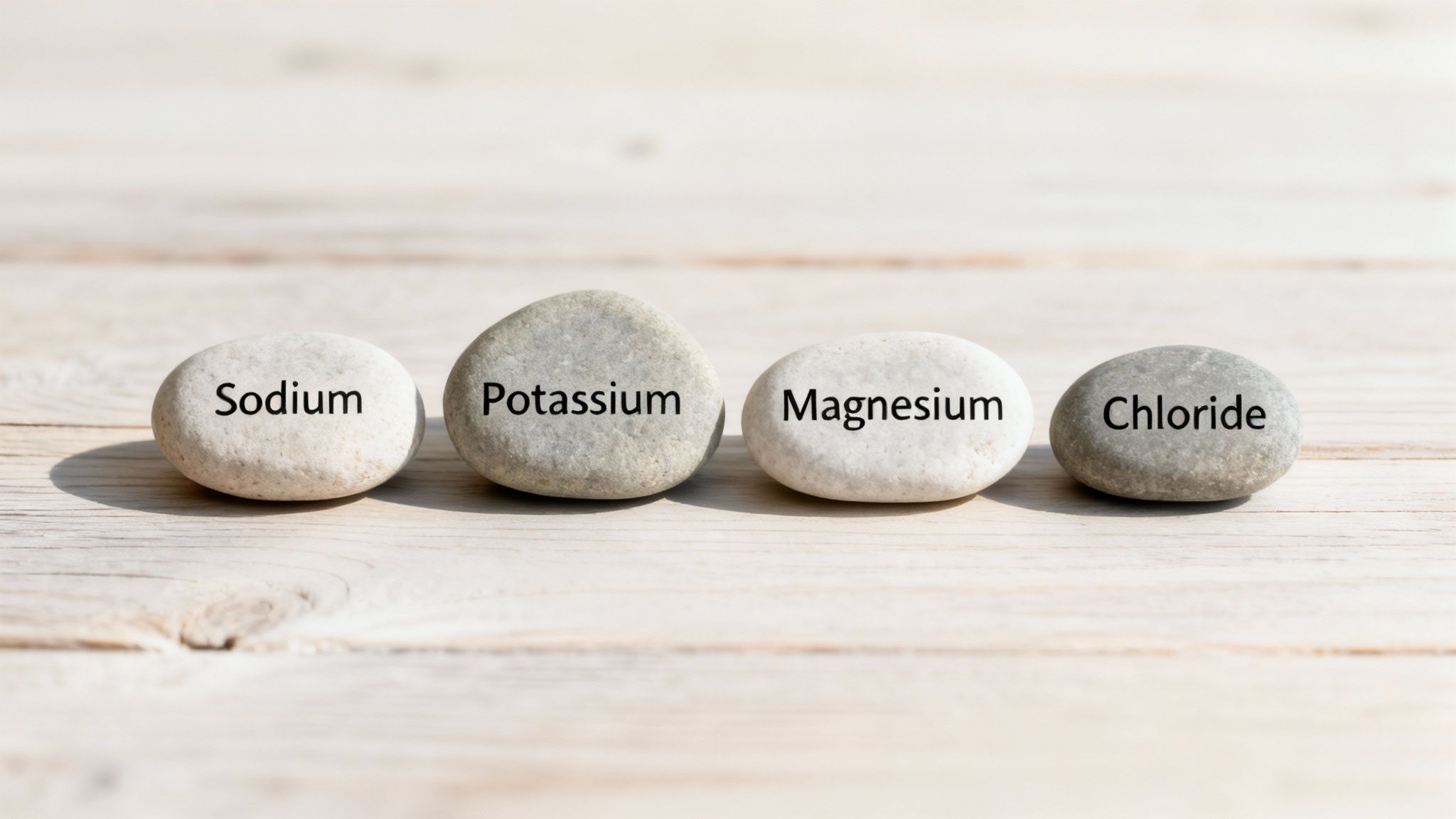
Knowing why you need electrolytes is the first hurdle. Now, it's time to meet the core team of minerals that will make or break your fast. Think of these four as the essential crew running your body’s electrical and fluid systems, each with a unique and non-negotiable job.
Getting the balance right is precisely what separates a draining, miserable fast from an energizing, clear-headed one. When you choose an electrolyte supplement for fasting, you're hiring this team to keep the entire operation running smoothly behind the scenes.
Sodium: The Master Hydrator
Sodium gets a terrible rap in the nutrition world, but during a fast, it becomes your most valuable player. It's the primary mineral that manages fluid balance outside of your cells, which directly controls your blood pressure and overall hydration.
When you fast, your insulin levels drop, which signals your kidneys to start flushing out sodium—and a lot of water with it. This is the main culprit behind that initial "whoosh" of water weight loss, but it's also why headaches, dizziness, and fatigue are so common. Without enough sodium, your body simply can't hold onto the water it needs.
Think of sodium as the general manager of your body's entire hydration strategy. It tells water where to go, making sure every system has the fluid it needs to function. A proper dose is what keeps that lightheaded, weak feeling from derailing your fast.
A common daily target for fasting is 3,000–5,000 mg of sodium (not just salt). This might sound like a lot, but you're working to replace what your body is actively kicking out.
Potassium: The Cellular Communicator
If sodium is managing the fluid outside your cells, potassium is its counterpart, handling everything on the inside. This delicate dance, known as the sodium-potassium pump, is the foundation of your entire nervous system.
It’s how your nerves fire, your heart maintains its rhythm, and your muscles contract. When potassium levels fall too low, you’ll feel it—muscle cramps, weakness, or even heart palpitations are common signs. This mineral ensures the electrical signals telling your body what to do are sent and received loud and clear.
This cellular balance is absolutely non-negotiable for feeling good. Without enough potassium, your body’s internal communication network starts to lag, leading to physical symptoms that can make fasting feel impossible.
A safe and effective daily dose during a fast typically falls between 1,000–3,500 mg of potassium. Getting this amount can be tricky, which is why a well-formulated electrolyte supplement for fasting is often the most practical route. For a deeper dive into finding a quality product, our electrolyte powder comparison guide breaks down the best options on the market.
Magnesium: The Great Relaxer
Magnesium is a true workhorse, involved in over 300 enzymatic reactions in the body. It’s a calming force for both your muscles and your mind, playing a critical role in energy production, DNA repair, and regulating your stress response.
A magnesium deficiency during a fast can show up as muscle twitches, poor sleep, anxiety, or cramps that just won't quit. It's the mineral that helps your muscles relax after they contract and soothes your nervous system, promoting a feeling of calm and well-being.
Unfortunately, most people are already running low on magnesium before they even begin a fast. This makes supplementing even more important to prevent minor issues from becoming major ones. A solid starting point for fasting is 300–500 mg of magnesium per day, often best taken in the evening to help with restful sleep.
Chloride: Sodium's Essential Partner
Chloride is the unsung hero of the electrolyte world. You almost never see it without sodium—it’s the "chloride" in sodium chloride, or table salt. Its main job is to work alongside sodium to maintain fluid balance and support the production of stomach acid.
When you lose sodium during a fast, you lose chloride right along with it. The good news is that you don't have to think too hard about this one. As long as your sodium source is a quality salt (like sea salt or a balanced supplement), you’ll get all the chloride you need.
How to Choose the Best Electrolyte Supplement for Fasting
Walking into the supplement aisle can be a headache. You're hit with a wall of products, all screaming about peak performance and incredible results. When you're fasting, though, the stakes are so much higher.
Get this right, and an electrolyte supplement for fasting can be the difference between a sharp, energized fast and a foggy, miserable slog. Get it wrong, and you might sabotage the whole thing with hidden sugars and cheap fillers that break your fast without you even knowing it.
You have to learn to cut through the noise and read a label like a pro. The goal is simple: find a clean, effective formula that gives your body exactly what it needs—and absolutely nothing it doesn't.
Think of yourself as a detective. Your first mission is to hunt down and eliminate anything that could trigger an insulin response. Insulin is the biological switch that tells your body the fast is over.
The Clean Fasting Supplement Checklist
Use this checklist to vet any supplement you're considering. If a product fails on any of these points, put it back on the shelf and walk away.
- Zero Sugar and Zero Calories: This one is completely non-negotiable. The label needs to say it loud and clear. Any kind of sugar—sucrose, dextrose, high-fructose corn syrup—will instantly kick you out of your fasted state.
- No Fast-Breaking Fillers: Keep an eye out for maltodextrin. It’s a super common filler in powdered supplements that your body treats just like sugar. Companies use it as a cheap bulking agent, but it’s a huge red flag for anyone serious about fasting.
- Fasting-Friendly Sweeteners: If you prefer a flavored product, make sure it’s sweetened with something like stevia, monk fruit, or erythritol. These are widely accepted as safe for fasting because they don't have a significant impact on blood sugar or insulin.
- Meaningful Doses: This is a big one. A good formula will provide real, substantial amounts of sodium, potassium, and magnesium. Watch out for products that "fairy dust" their formulas with tiny, useless doses just so they can list the ingredients on the label.
The market is definitely catching on to the demand for cleaner options. The electrolyte tablet market is projected to hit USD 1.34 billion in 2025 and is expected to double by 2032. This surge is being driven by clean-label trends, with 50% of consumers now preferring stevia-sweetened products that align with a fasting lifestyle. Learn more about these market trends on coherentmarketinsights.com.
Powders vs. Capsules vs. Liquids
How you take your supplement actually matters, both for convenience and how well your body absorbs it. Each format has its own set of pros and cons, especially when you're fasting.
Powders: For most fasters, this is the best way to go. Powders give you total control to customize your dose. You can mix it in your water and sip on it throughout the day, which keeps your hydration and mineral levels stable. They also tend to be the most cost-effective option.
Capsules: The biggest advantage here is convenience and taste—or lack thereof. If you can't stand the taste of electrolyte drinks, capsules are a great alternative. The downside is you might have to swallow a handful of them to get the right therapeutic dose, which can be a pain. Plus, they don't help you with your daily water intake.
Liquids/Tablets: Ready-to-go drinks or dissolvable tablets are super handy when you're on the move. But this is where you have to be extra careful. They are far more likely to be loaded with sugars, artificial colors, and other additives you want to avoid. You have to scrutinize the ingredient list on these with a magnifying glass.
Reading Beyond the Marketing Hype
At the end of the day, picking the right electrolyte supplement for your fast is all about transparency and purity. Look for brands that aren't afraid to list the exact amount of each mineral. For a deeper dive into what separates a truly premium product from the rest, check out our guide on the best electrolyte supplement options on the market at https://rvsci.com/blogs/blog/best-electrolyte-supplement.
And if you're looking for a supplement that supports your fast while also promoting overall wellness, you might want to explore options like an electrolyte powder for gut health and recovery.
Arming yourself with this knowledge means you can walk that aisle with confidence. You’ll be able to pick out a product that actually enhances your fast, helping you stay focused, energized, and strong.
Building Your Personal Electrolyte Protocol
There's no one-size-fits-all script for electrolyte supplementation during a fast. Think of it like adjusting the seasoning in a recipe—your needs will change based on your body, your activity level, and how long you're fasting. A successful protocol isn't about rigid rules; it’s one you can fine-tune in real-time based on how you feel.
Creating a personal protocol is all about having a solid starting point and knowing how to adapt. An electrolyte supplement for fasting gives you the raw materials, but you're in charge of the dosage and timing. This section will give you clear, actionable templates to build from, whether you’re doing a simple daily fast or pushing through an extended multi-day journey.
The goal here is to shift from guesswork to a confident, personalized strategy. Once you understand the core principles, you can dial in your intake for optimal energy, focus, and performance, no matter what your fasting schedule looks like.
Sample Daily Electrolyte Targets for Fasting
To get you started, here's a table with some common daily targets. Think of these as a baseline—a safe and effective starting point from which you can adjust based on your personal experience, activity levels, and how you feel.
| Fasting Type | Sodium Target (mg) | Potassium Target (mg) | Magnesium Target (mg) |
|---|---|---|---|
| Intermittent Fasting (16:8) | 1,000–2,000 | 500–1,000 | 200–300 |
| OMAD (24-Hour Fast) | 3,000–5,000 | 1,000–2,000 | 300–400 |
| Extended Fast (48+ Hours) | 5,000–7,000 | 2,500–3,500 | 400–500 |
Remember, these numbers are a guide. Hot weather, intense workouts, or following a ketogenic diet will increase your needs, particularly for sodium. Always listen to your body's feedback.
Protocol For Intermittent Fasting (16:8 To 20:4)
If you're practicing daily intermittent fasting, your electrolyte needs are generally lower but still incredibly important, especially if you follow a low-carb or keto diet. Since you're replenishing minerals in your eating window, supplementation acts as a bridge to prevent those classic energy slumps and brain fog during your fasted hours.
A great strategy is to mix a partial dose of your electrolyte powder into a large water bottle and just sip on it throughout your fasting window. This approach keeps your mineral levels stable without overwhelming your system.
- When to Take It: Start sipping your electrolyte water about mid-way through your fast. This is perfect for combating that late-morning or early-afternoon dip in energy.
- Workout Timing: If you train fasted, take about a third of your daily dose 30-45 minutes before you start. This will help support muscle function and ward off cramps. Sip the rest during and after your workout.
- Listen to Your Body: Some days you'll feel great and might need less. On hot days or after a killer workout, you'll probably need a bit more.
Protocol For 24-Hour Fasts (OMAD)
Once you push your fast to a full 24 hours, proactive supplementation is no longer optional—it's essential. Over this timeframe, your body flushes out a significant amount of sodium and other key minerals. Without support, headaches and fatigue are almost guaranteed.
With a 24-hour fast, the best approach is to spread your full daily electrolyte dose across the entire day. Chugging it all at once is a recipe for digestive disaster. Slow and steady wins the race here.
A common mistake is waiting for symptoms to show up before reaching for electrolytes. For a smooth 24-hour fast, you have to be preemptive. Start supplementing in the morning, long before that afternoon headache even thinks about setting in.
For a seamless experience, a well-formulated powder is your best bet. It lets you easily mix a day's worth into your water so you can drink it consistently. For a detailed breakdown on getting this right, check out our in-depth guide on how to use Reviver Electrolytes.
This flowchart gives you a simple way to decide if a supplement is right for your fast.
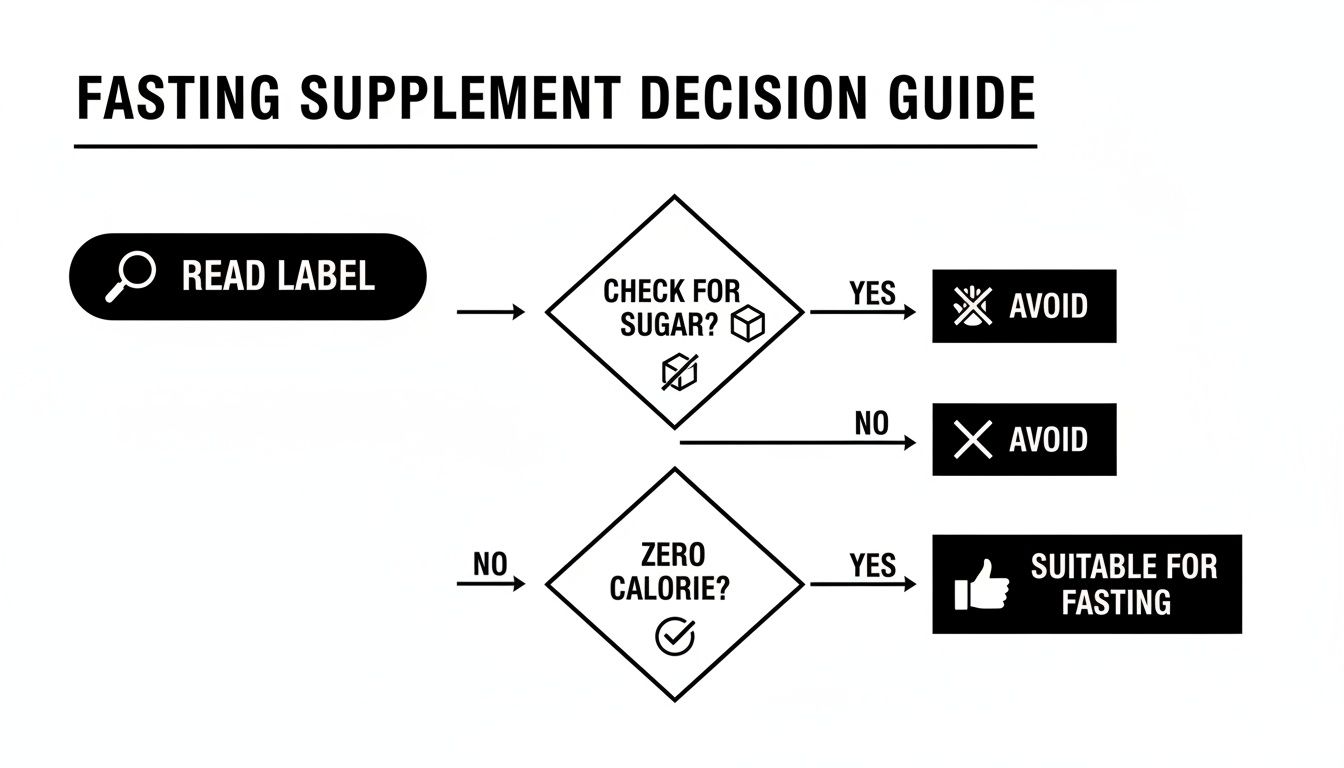
As you can see, the most critical steps are just making sure the product has zero sugar and zero calories. Anything else risks breaking your fast and undermining your efforts.
Protocol For Extended Fasts (48+ Hours)
Venturing into multi-day fasts demands a much more disciplined and structured approach to electrolytes. After 48 hours, your body is relying entirely on what you supplement. Dropping the ball here can lead to some pretty significant side effects and make the fast way harder than it needs to be.
For extended fasts, you need a full daily dose of electrolytes for every single day of the fast. Consistency is everything.
- Start on Day One: Don't wait until you feel bad on day two. Begin your full electrolyte protocol on the very first morning of your fast to get ahead of depletion.
- Divide Your Daily Dose: The best way to manage this is to mix your total daily requirement into a large container of water (like a gallon jug). Your only goal for the day is to finish that container.
- Adjust for Activity: If you're doing any light activity like walking, you may need to bump up your sodium intake slightly. Pay close attention to any signs of dizziness or fatigue.
- Never Stop Abruptly: Keep taking your electrolytes for the entire duration of the fast. Your body's need for these minerals doesn't go down over time—it stays constant.
By following these templates, you can build a reliable strategy that works for you. Your personal electrolyte protocol is what transforms fasting from something you just endure into a powerful tool for peak performance and well-being.
Common Mistakes and Safety Guidelines
Getting your electrolytes dialed in is an absolute game-changer for fasting, but using them the right way is what separates a good fast from a miserable one. A little knowledge and a responsible approach will help you sidestep the common pitfalls that can totally derail your efforts and, more importantly, your health.
Let's walk through the essential guidelines and the classic mistakes to steer clear of.
The most common error I see is people falling for the "more is better" trap. Yes, electrolytes are crucial, but flooding your system with too many minerals at once can create a whole new set of problems—especially digestive distress. Your body is constantly working to maintain a razor-thin mineral balance, and overdoing it is just as bad as having too little.
Don't Chug Your Electrolytes
Want to feel terrible, fast? Chug your entire day's worth of electrolytes in one go. A sudden, massive hit of minerals—especially sodium and magnesium—can completely overwhelm your digestive system. The result? Nausea, cramping, and an urgent trip to the bathroom. That’s just your body’s emergency response to expel the excess.
The right way to do it is to sip, not chug.
- Mix your daily dose into a large water bottle you'll drink from all day.
- Drink it steadily throughout your entire fasting window.
- Think of it as a constant, slow IV drip that keeps your levels perfectly stable.
This simple change allows your body to actually absorb and use the minerals efficiently, without any of the gut-wrenching side effects.
The whole point of electrolyte supplementation is to mimic the slow, steady intake you'd normally get from food. Spacing it out ensures stability and prevents the shock to your system that a single large dose causes.
Don't Wait for Symptoms to Appear
Another classic mistake is waiting until you feel awful—the headache, dizziness, or crushing fatigue hits—before you finally reach for your electrolytes. This reactive approach means you're always playing catch-up. By the time symptoms show up, your mineral levels are already in the red, and it takes a while to climb back out of that deficit.
A proactive strategy is infinitely more effective. Start taking your electrolytes on day one of your fast, long before any negative side effects have a chance to show up. This preventative approach keeps your mineral stores topped off from the get-go, setting you up for a smooth and energetic fast from start to finish.
Know When to Consult a Doctor
While fasting is a powerful tool for most healthy people, it's not for everyone. It places unique demands on the body, and messing with your electrolyte balance can interact with certain health conditions and medications. It's absolutely essential to talk to your doctor before starting any fasting protocol or supplementation plan if you have any pre-existing health issues.
Be especially cautious if you have:
- Kidney Disease: Your kidneys are in charge of filtering minerals. If their function is impaired, it can be incredibly difficult to manage electrolyte levels safely.
- Heart Conditions: Electrolytes like potassium and sodium have a direct impact on your heart's rhythm.
- High Blood Pressure: Sodium intake needs to be managed with precision.
- Type 1 Diabetes: Fasting requires close medical supervision, period.
Using a well-formulated electrolyte drink is a critical safety measure, particularly for longer fasts, as it helps prevent dangerous conditions like hyponatremia. This severe sodium deficiency isn't a fringe issue; it can affect 20-30% of people during extended fasts. Liquid formats are especially helpful for fast absorption and maintaining hydration—a key factor for any fasting athlete. To see more data on these trends, you can explore the latest market research on news.market.us.
Ultimately, your doctor can give you personalized advice based on your specific health needs, making sure your fast is both safe and successful.
Common Questions About Fasting Electrolytes
Getting the hang of electrolytes when you're fasting can feel a little confusing at first. Let's clear up some of the most common questions people have, so you can build a solid routine that works for you.
Will Taking an Electrolyte Supplement Break My Fast?
Nope, as long as you're using a properly formulated supplement, you're in the clear. A fast is "broken" by an insulin response, which is triggered by calories—specifically from carbs or protein.
A high-quality electrolyte supplement for fasting is designed to be zero-calorie and contain absolutely no sugar. Good formulas also steer clear of sneaky fillers like maltodextrin that can cause an insulin spike. Even sweeteners like stevia or monk fruit are generally fine, as they don't mess with insulin levels, keeping you on track with your goals, whether that's autophagy or weight management.
Can I Just Make My Own Electrolyte Drink at Home?
You absolutely can. Whipping up a homemade electrolyte mix is a simple, budget-friendly way to go. The classic recipe, often called "snake juice," just involves mixing a few common ingredients into your water.
A great starting point is:
- 1 liter of water
- ½ teaspoon of high-quality salt (for sodium chloride)
- ½ teaspoon of a salt substitute (like potassium chloride)
- (Optional) A pinch of magnesium powder
The golden rule for any DIY mix? Sip it slowly. Don't chug it. Gulping down a concentrated dose of minerals all at once is a recipe for an upset stomach. While homemade solutions get the job done, commercial products offer the convenience of perfectly measured, balanced ratios and are usually formulated to taste a lot better.
When Is the Best Time to Take Electrolytes During a Fast?
Honestly, consistency beats specific timing every single time. The best approach is to sip your electrolyte drink steadily throughout the day, not all at once.
Think of it like a slow, steady drip. This keeps your mineral levels stable and avoids the sudden spikes and crashes that can leave you feeling off. It also completely sidesteps the digestive issues that a big mineral dump can cause. The easiest way to do this is to mix your full day's worth into a big water bottle and just drink from it as your main source of hydration.
If you're active, though, a little timing can help. Try drinking some about 30 minutes before a workout and continue sipping during and after. This helps replace what you lose through sweat and keeps your muscles firing on all cylinders.
How Do I Know if I'm Taking Enough?
Listen to your body—it's your best source of feedback. The clearest sign you've nailed your electrolyte intake is that you simply feel good. No headaches, no dizziness, no muscle cramps, just clean energy and mental clarity. If that's you, your dose is probably perfect.
On the flip side, if those symptoms start creeping in, it’s a direct message from your body that it needs more minerals, especially sodium. The smart way to dial it in is to start with the baseline dose for your fast and adjust based on how you feel. Your body knows what it needs, so pay attention to its signals.
Ready to take the guesswork out of fasting hydration? The clean, zero-calorie formulas from Revolution Science are designed to provide the optimal balance of essential minerals you need to feel your best. Find your perfect electrolyte solution and elevate your fast today at https://rvsci.com.