Tu carrito está vacío


Electrolytes Without Artificial Sweeteners for Clean Hydration
Picture this: you’re an hour into a grueling run or a heavy lifting session. You reach for that brightly colored sports drink, take a big gulp, and minutes later your stomach starts to churn.
That all-too-familiar bloating and digestive distress sets in, sabotaging your performance right when you need to be at your peak. This happens to so many athletes, and the culprit often isn't the electrolytes themselves—it's the artificial sweeteners packed into the formula. For dedicated athletes, this realization is a turning point. It's the beginning of a shift toward clean hydration.

Why Top Athletes Demand Clean Electrolytes
The move toward electrolytes without artificial sweeteners isn't just another health trend; it's a strategic performance decision. Elite athletes know that their bodies are finely tuned systems. You wouldn't put low-grade fuel in a high-performance engine, and top performers are refusing to compromise their bodies with unnecessary additives.
Clean hydration is about giving your body exactly what it needs to function—essential minerals like sodium, potassium, and magnesium—without the gut-disrupting baggage of synthetic junk.
This shift is driven by real, tangible benefits that directly impact how you train and compete:
- Improved Gut Health: Ditching artificial sweeteners like sucralose and aspartame helps maintain a healthy gut microbiome. That means less risk of bloating, cramping, and GI distress during intense workouts.
- More Reliable Energy: Without the weird blood sugar spikes and crashes that some sweeteners can cause, athletes experience steadier, more sustainable energy levels.
- Enhanced Nutrient Absorption: A calm, happy digestive system is way better at absorbing the very electrolytes you’re taking, making sure they get to your muscles and nerves where they're needed most.
The market is definitely responding. The electrolyte drinks market is booming, valued at around USD 40.4 billion, and a huge part of that growth is a pivot toward products free from artificial sweeteners. In fact, unflavored options are projected to hit USD 15.1 billion, as a whopping 68% of health-conscious consumers now prefer neutral-tasting mixes. They're actively avoiding the 90% of mainstream products loaded with additives known to disrupt gut health. You can see more on these market trends at futuremarketinsights.com.
Sweetened vs. Unsweetened Electrolytes at a Glance
Sometimes, seeing the differences side-by-side makes the choice crystal clear. For athletes looking for every possible advantage, understanding the best electrolytes for athletes is crucial for unlocking new levels of performance.
Here’s a quick breakdown of how traditional sweetened drinks stack up against their clean, unsweetened counterparts.
| Feature | Artificially Sweetened Electrolytes | Electrolytes Without Artificial Sweeteners |
|---|---|---|
| Primary Goal | Mask mineral taste with intense sweetness | Deliver pure, essential minerals effectively |
| Gut Impact | High potential for bloating, gas, and distress | Minimal to no digestive irritation |
| Ingredient List | Often long, with chemical names and fillers | Short, transparent, and easy to understand |
| Ideal For | Casual users who prioritize taste over function | Serious athletes focused on peak performance |
As you can see, for anyone serious about their training, the choice is simple. It's about fueling for function, not just for flavor.
The Science of How Sweeteners Affect Performance
Think of your body during an intense workout like a high-performance engine. You wouldn't put low-grade, sludgy fuel in a finely tuned machine and expect it to run at its best, right? Yet, that's essentially what happens when you use artificially sweetened electrolyte drinks. It might seem harmless, but you're gumming up the works from the inside out.
Despite being marketed as a "healthy" sugar alternative, common artificial sweeteners like sucralose, aspartame, and acesulfame potassium can be surprisingly disruptive. Your gut is home to a massive ecosystem of bacteria called the gut microbiome, which is absolutely critical for digestion, absorbing nutrients, and even regulating your immune system. Emerging research shows that these non-nutritive sweeteners can throw this delicate ecosystem completely out of whack.
This disruption can trigger a cascade of problems right when you need your body firing on all cylinders. Bloating, gas, and general GI distress are common complaints from athletes who rely on these products. That discomfort isn't just a distraction; it's a clear signal your body is struggling to process synthetic compounds, diverting precious energy away from your muscles to deal with the chaos in your gut.
What you leave out of your electrolyte formula is just as important as what you put in. A clean, filler-free supplement means every ingredient has a direct performance purpose, eliminating the risk of digestive sabotage during a critical training session or competition.
How Sweeteners Interfere With Electrolyte Absorption
The whole point of an electrolyte supplement is to get essential minerals into your cells—fast. But when your digestive system is inflamed or irritated by artificial sweeteners, its ability to absorb those vital nutrients is seriously compromised. It’s like trying to water a plant with clogged soil; the water and nutrients simply can’t get where they need to go.
This means you might not be getting the full benefit of your hydration strategy, even if the product has a solid electrolyte profile on paper. The gut distress caused by sweeteners can block the absorption of key minerals, making your efforts far less effective. For an athlete who meticulously plans their nutrition, this is a massive problem. You're consuming the right stuff, but it's not doing its job.
The Power Trio of Pure Electrolytes
When you strip away the unnecessary additives, you let the core components of hydration do their work without interference. The magic of electrolytes without artificial sweeteners is that they deliver pure, unadulterated minerals that your body can use immediately. Let’s break down the "big three" and how they work in a clean formula.
- Sodium: This is the undisputed king of fluid balance. Sodium helps your body hold onto water, preventing the rapid onset of dehydration during a hard, sweaty effort. Without sweeteners in the way, it gets absorbed quickly to maintain blood volume and support muscle contractions.
- Potassium: Working hand-in-hand with sodium, potassium is vital for nerve signals and muscle function. A clean delivery system ensures it can effectively regulate your heartbeat and fend off those debilitating muscle cramps that come from an electrolyte imbalance.
- Magnesium: This mineral is a true workhorse, involved in over 300 enzymatic reactions, including energy production and muscle relaxation. When it's absorbed properly, free from sweetener interference, it helps you fight fatigue and kickstart your post-workout recovery.
Ultimately, choosing a supplement without these additives ensures your high-performance engine gets the pure fuel it needs to perform. The science is clear: for optimal function, nutrient absorption, and avoiding performance-killing gut issues, a clean formula is non-negotiable. To dig deeper into what makes a superior formula, you can explore our guide on the best electrolyte supplement for dedicated athletes.
How to Read Labels and Spot Hidden Additives
Walking down the supplement aisle can feel like a mission. Brands love to slap "sugar-free" and "zero-calorie" on their packaging to grab your attention, but those flashy claims often hide a more complicated reality. To find truly clean electrolytes without artificial sweeteners, you have to become a label detective. Forget the marketing on the front—the real story is in the ingredient list.
Many products that get rid of sugar just replace it with synthetic compounds that can cause the exact digestive issues you’re trying to prevent. Learning to spot these is the single most important skill you can have to make sure your hydration strategy actually helps your performance, instead of sabotaging it.
Your Checklist for Spotting Artificial Sweeteners
Think of this as your field guide. Artificial sweeteners are masters of disguise and often go by several different names. When you're scanning an ingredient list, keep an eye out for these common culprits and their aliases.
- Sucralose: This is one of the most common artificial sweeteners out there. You’ll usually see it listed under the brand name Splenda.
- Aspartame: Another incredibly common additive, known by brand names like NutraSweet and Equal.
- Acesulfame Potassium (Ace-K): This one often works in tandem with other sweeteners and is marketed as Sunett or Sweet One.
- Saccharin: One of the original artificial sweeteners, you might recognize it as Sweet'N Low.
If any of these names pop up on the label, you know the product doesn't meet the "no artificial sweeteners" standard, no matter what the front of the bottle is telling you.
What About So-Called Natural Sweeteners?
As people have become more skeptical of artificial ingredients, many brands have switched to "natural" zero-calorie sweeteners like stevia and monk fruit. While they are plant-derived and generally seen as a better choice, they're not a perfect solution for everyone.
Some athletes just can't stand the distinct, often bitter aftertaste they can leave behind. More importantly, some people still experience mild digestive issues from stevia or monk fruit, especially in higher amounts. For athletes who need absolute gut perfection and a completely neutral taste that won't mess with their other fuel, avoiding all sweeteners—natural or artificial—is the only way to go. This guarantees a pure, simple formula focused only on replacing minerals.
For a side-by-side analysis, our detailed electrolyte powder comparison breaks down different formulas to help you choose what’s right for you.
The ultimate goal of a clean electrolyte supplement is simplicity. The ingredient list should be short, readable, and contain only the essential minerals your body needs to rehydrate and perform, without any questionable fillers or flavor-masking agents.
Label Showdown: Clean vs. Conventional Electrolyte Ingredients
The difference between a clean formula and a conventional one becomes crystal clear the second you compare their labels. A quick glance at the ingredient list tells you everything you need to know about a company's philosophy—are they focused on your performance, or are they just masking cheap ingredients with intense flavors?
Here’s what that looks like in the real world.
| Ingredient Category | Typical Sweetened Drink Label | Clean Unsweetened Label Example |
|---|---|---|
| Electrolytes | Sodium Chloride, Potassium Citrate | Sodium Chloride, Potassium Citrate, Magnesium Malate |
| Sweeteners | Sucralose, Acesulfame Potassium | None |
| Flavors | Natural and Artificial Flavors | None |
| Fillers & Binders | Maltodextrin, Citric Acid, Silicon Dioxide | None |
| Coloring | Red 40, Blue 1 | None |
As the table shows, the clean label is really defined by what’s not on it. There are no fillers to bulk up the powder, no dyes to make it look pretty, and absolutely no sweeteners to hide the natural taste of the minerals. This transparency is the hallmark of a product genuinely built for high performance.
Customizing Your Clean Electrolyte Strategy
Your body isn't a one-size-fits-all machine, and your hydration strategy shouldn't be either. The way a powerlifter burns through energy and loses electrolytes is worlds apart from the demands on a marathon runner. This is where personalizing your approach to electrolytes without artificial sweeteners becomes a massive advantage, turning simple hydration into a precision tool for performance.
Generic advice just doesn't cut it. It completely ignores the unique variables of your sport, the environment you train in, and your own body. By tailoring your electrolyte intake, you're not just replacing what's lost—you're actively optimizing your body's ability to perform under specific kinds of stress. It's about getting the right minerals at the right time, without artificial junk getting in the way.
This flowchart breaks down how to choose the right product, making it easy to read labels and find a truly clean option.
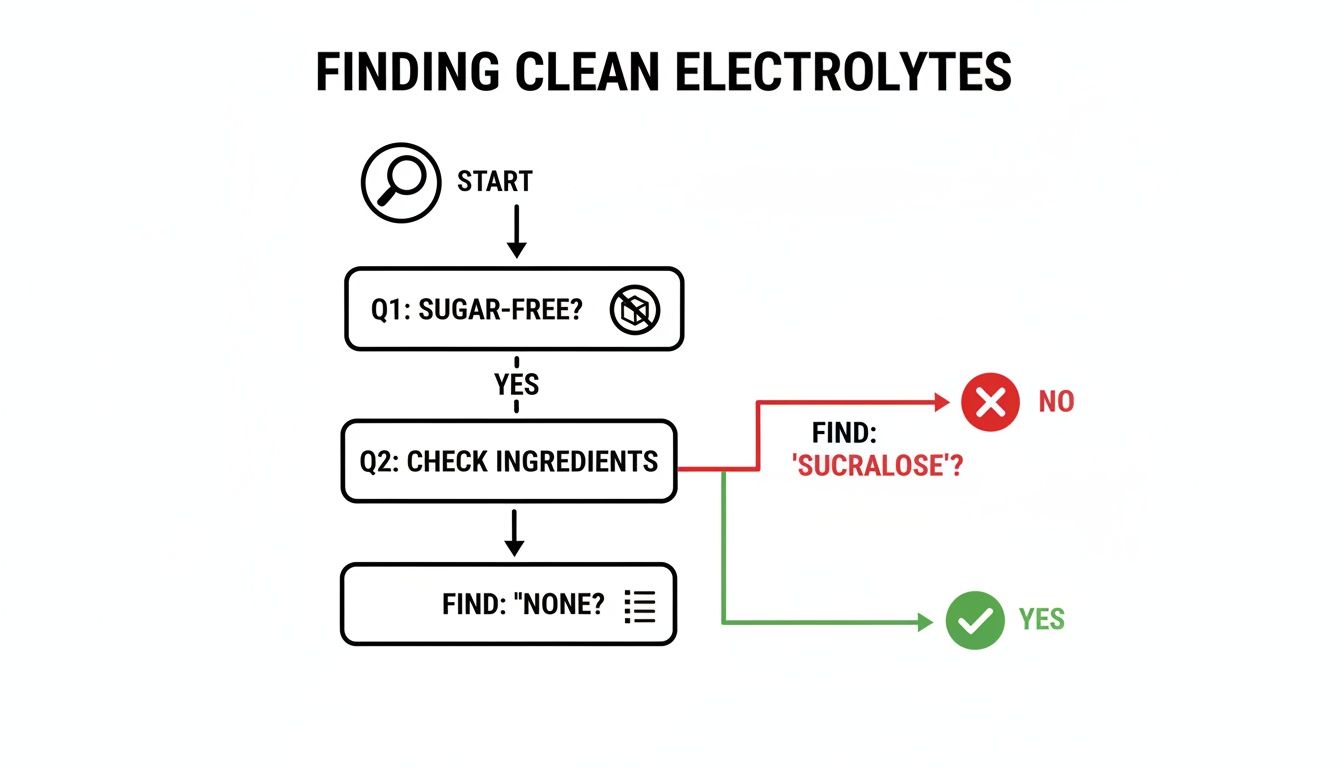
The main takeaway here is that "sugar-free" doesn't automatically mean "clean." You have to flip it over and check the ingredient list to make sure there are no artificial sweeteners like sucralose hiding in there.
Hydration Protocols for Endurance Athletes
Endurance athletes are basically sweat machines. Whether you're a cyclist grinding out a long climb, a triathlete pushing through three disciplines, or a runner logging double-digit miles, your biggest battle is against prolonged fluid and sodium loss. A winning strategy is always proactive, not reactive.
For this type of athlete, a three-phase approach works best. It’s all about consistent replenishment to head off the deep deficits that lead to cramping, bonking, and dehydration.
- Pre-Loading (60-90 minutes before): Drink 16-20 ounces of water mixed with a full serving of clean electrolytes. This effectively "hyper-hydrates" your system, making sure your mineral stores are topped off before you even start sweating.
- During Session (every 45-60 minutes): Aim to sip 8-12 ounces of your electrolyte solution per hour. If it's hot and humid, you'll likely need to increase this to keep up with higher sweat rates.
- Post-Session Recovery (within 30-60 minutes): Get another 16-20 ounces of electrolyte water down to kickstart the rehydration process. This helps restore balance and gives your muscles what they need to start repairing.
For example, a marathon runner getting ready for a race in warm weather might pre-load with 500mg of sodium. During the race, they'd consume another 250-500mg per hour, adjusting based on how much they're sweating and how they feel. This proactive approach keeps performance steady from the starting gun to the finish line.
Strategies for Strength and Power Athletes
Strength athletes—think powerlifters and bodybuilders—have a different set of demands. Their efforts are incredibly intense and explosive but happen in shorter bursts. While their total sweat volume might be lower than an endurance athlete's, they still lose a significant amount of electrolytes, especially sodium and magnesium, during those grueling, high-intensity sessions.
For these athletes, hydration is about maintaining peak central nervous system function and preventing the muscle cramps that can kill a heavy lift. The focus shifts from constant sipping to strategic timing around the workout.
- Pre-Workout Hydration (30-45 minutes before): Down 12-16 ounces of an electrolyte mix. This is critical for priming your muscles and nerves for maximum force production.
- Intra-Workout Sipping: Keep an electrolyte-infused water bottle with you. Take small sips between heavy sets to stay hydrated without feeling bloated or full.
- Post-Workout Rehydration: Immediately after your session, drink another full serving. This is vital for replacing lost minerals and supporting the muscle recovery process. Our guide on using an electrolyte supplement for fasting offers more insights into managing mineral balance during recovery.
Plans for Tactical and Hybrid Athletes
Tactical and hybrid athletes, like CrossFitters, first responders, or MMA fighters, face the most unpredictable challenges. Their training is a tough mix of strength, endurance, and high-intensity intervals, often done in harsh conditions or while wearing heavy gear.
Their hydration strategy has to be both robust and adaptable. The goal is to maintain physical stamina and cognitive sharpness, because mental fatigue can be just as dangerous as physical failure. This demands a consistent intake of clean electrolytes to support everything from muscle firing to clear-headed decision-making.
This health-first approach is driving a major shift across the industry. The electrolyte market is projected to grow at a 5.5% CAGR, with isotonic drinks holding a dominant 53.7% market share because they can rehydrate 30% faster than plain water. With 62% of gym-goers and 71% of athletes over 35 prioritizing digestive health, clean formulas are quickly becoming the new standard. These market trends show a clear demand from consumers for performance without compromise.
Unlocking Better Energy, Focus, and Recovery
Choosing electrolytes without artificial sweeteners is about more than just dodging potential digestive issues. It’s about actively upgrading your performance. While avoiding gut problems is a huge plus, the real magic is in what a clean formula gives you. You’re not just avoiding the bad stuff; you’re adding the good stuff.
When you fuel your body with pure minerals—and nothing else—you lay the groundwork for stable, reliable energy. A lot of sweetened sports drinks, even the sugar-free ones, can put you on a subtle energy rollercoaster. A clean formula, on the other hand, supports your body’s natural energy production, helping you power through those mid-workout slumps and finish just as strong as you started.

Sharpen Your Mental Edge
Your brain’s ability to stay locked in during a punishing race or under a heavy bar is directly linked to your electrolyte balance. Think of your nervous system as a high-speed electrical grid. Electrolytes are what allow the signals to fire instantly and accurately.
- Sodium is crucial for maintaining the fluid balance around your brain cells, which is non-negotiable for sharp cognitive function.
- Potassium is a key player in nerve impulse transmission, making sure the messages from your brain to your muscles are crisp and powerful.
When these minerals are delivered in a pure, unadulterated form, the impact on mental clarity is something you can feel. You can hold your focus longer, make smarter split-second decisions, and push back against the mental fatigue that almost always shows up before physical failure. For any athlete, that cognitive boost is a serious advantage.
An athlete's performance is as much a mental game as it is a physical one. Providing your brain with the raw materials it needs for optimal nerve function—without interference from artificial additives—is one of the most powerful strategies for gaining a competitive edge.
Accelerate Your Recovery Process
How fast you bounce back dictates how hard you can go tomorrow. Proper mineral balance is the absolute cornerstone of solid recovery, and clean electrolytes are the best tool for the job.
They get to work by tackling the two biggest recovery roadblocks: muscle cramping and cellular repair.
- Combating Cramps: We've all been there. Those painful, involuntary muscle cramps are often a direct signal of an electrolyte imbalance, especially low sodium, potassium, and magnesium. Topping off these minerals right after a workout helps your muscles relax and wards off the contractions that can derail your training.
- Supporting Repair: Magnesium is a true recovery powerhouse. It’s involved in over 300 biochemical reactions in your body, including protein synthesis and muscle function. A clean electrolyte formula ensures you’re absorbing high-quality magnesium to kickstart your body’s natural repair work, helping you show up to your next session stronger and more resilient.
By going with electrolytes free from artificial sweeteners, you’re doing more than just hydrating. You're investing in a complete system that builds sustained energy, sharp focus, and rapid recovery—the three pillars of making consistent progress.
Busting Common Electrolyte Myths
The world of performance nutrition is riddled with "bro science" and outdated advice, especially when it comes to hydration. Too many athletes are still following old-school rules without questioning them, and it could be what's holding back their performance. Let's clear the air and bust a few of the most stubborn electrolyte myths.
One of the biggest whoppers is that electrolytes are just for marathon runners or triathletes. The truth is, any intense effort that gets you sweating hard is going to drain your mineral stores. That absolutely includes heavy lifting. A powerlifter can sweat out a surprising amount of sodium during a grueling squat session—and that sodium is vital for nerve signaling and muscle contraction.
When you don't replace those lost minerals, you're setting yourself up for a nosedive in strength and focus. For a strength athlete, proper hydration with clean electrolytes is every bit as critical as it is for the endurance athlete pounding the pavement.
Myth 1: All Sugar-Free Drinks Are Healthy
This one is probably the most misleading of them all. When you see "sugar-free" on a label, it often just means the product is packed with artificial sweeteners like sucralose or aspartame. And while these drinks don't have sugar, they can bring a whole new set of problems to the table, from gut rot and bloating to messing with your microbiome—all issues that directly sabotage athletic performance.
A truly healthy option is all about purity. When you choose electrolytes without artificial sweeteners, you know you're rehydrating with only the essential minerals your body is screaming for, without any of the unnecessary chemical junk. This is exactly why the demand for clean-label products has been exploding.
It's a bit shocking, but a huge number of athletes don't realize that 85% of traditional electrolyte drinks use artificial sweeteners. Some research suggests these can hinder micronutrient uptake by as much as 20-30%—a massive disadvantage when your body needs those minerals the most.
Myth 2: More Is Always Better
It’s easy to get caught in the "more is better" trap. If a little is good, a lot must be great, right? Wrong. This is a dangerously simple way to look at it. Your body is a finely tuned machine that craves balance, and electrolytes are a perfect example. Pumping your system full of sodium without enough potassium to balance it out can throw your cellular function completely out of whack.
Going overboard can lead to bloating, stomach cramps, and in serious cases, much bigger health problems. The goal isn't to megadose. It's to simply replace what you've lost through sweat and get back to that healthy equilibrium. A well-formulated, clean electrolyte supplement gives you balanced ratios designed to restore harmony, not overwhelm your system. This global push for clean hydration is exactly why unflavored and unsweetened electrolyte options are growing so fast. You can dig into more insights on the clean hydration market at gminsights.com.
Your Questions on Clean Electrolytes, Answered
When you're dialing in your nutrition, a few practical questions always pop up. It's one thing to know why you're using electrolytes without artificial sweeteners, but another to know exactly how to use them for the best results. Let's tackle some of the most common questions athletes ask.
Can I Mix Unflavored Electrolytes with Other Supplements?
Absolutely. In fact, this is one of the biggest perks of going with a clean, unflavored formula. You can drop a scoop right into your pre-workout, mix it with your intra-workout carbs, or add it to your post-workout protein shake. No weird, clashing flavors—just the pure function you need.
This "stacking" approach is incredibly efficient. You’re combining your hydration strategy with your other performance or recovery nutrition in one bottle. It’s a simple way to make sure you’re covering all your bases without having to chug multiple different drinks.
What Are the Signs of an Electrolyte Imbalance?
Your body is pretty good at telling you when something’s off. The trick is learning to listen before a minor issue becomes a performance-killer.
Look out for these common signals:
- Persistent muscle cramping or little twitches, even when you're not training.
- A sudden wall of fatigue that feels way out of proportion to your effort.
- Headaches or dizziness, especially that light-headed feeling when you stand up too fast.
- Brain fog or finding it hard to stay focused on your workout.
If any of these sound familiar, your body is sending up a flare. It's a clear sign that you need to get your electrolytes back in check.
An electrolyte imbalance isn't just about cramps. It's a neurological issue. Minerals like sodium and potassium are the currency of your nervous system, firing the signals for everything from muscle contractions to clear thinking. When you ignore the signs, you're not just risking a muscle pull—you're risking a serious drop in cognitive performance, too.
Are These Electrolytes Suitable for Keto or Fasting?
Yes, they're a perfect match. When you start a ketogenic diet or go into a fast, your body flushes out a ton of water and, along with it, essential minerals. This is what causes the infamous "keto flu."
Because pure electrolytes have zero calories, sugars, or artificial sweeteners, they replenish exactly what you've lost without breaking your fast or knocking you out of ketosis. For anyone on these protocols, they're a non-negotiable tool for keeping energy levels stable and headaches at bay.
How Can I Estimate My Personal Sweat Rate?
Getting your dosage right starts with knowing how much fluid you're actually losing. A simple sweat test is the best way to get a personalized estimate.
Here's how to do it:
- Weigh yourself nude right before a one-hour workout.
- Go train for exactly one hour and don't drink anything.
- After you're done, towel off completely and weigh yourself nude again.
- The difference in your weight (in ounces) is a great starting point for your hourly sweat rate.
This one number can completely change your hydration game, allowing you to build a plan that's truly tailored to you.
Ready to feel the difference that clean hydration makes? Revolution Science formulates pure, filler-free electrolytes for athletes who refuse to compromise. Fuel your body with what it needs and nothing it doesn't. Shop our research-backed electrolyte formulas today.