
Tu carrito está vacío


How to Prevent Muscle Cramps During Exercise: Quick, Science-Backed Tips
When it comes to stopping muscle cramps during exercise, it really boils down to two things: managing neuromuscular fatigue and keeping your electrolyte balance in check, especially with sodium. It’s a mix of smart training, hydration, and the right nutrition—not just crossing your fingers and eating a banana.
Understanding Why Muscle Cramps Really Happen
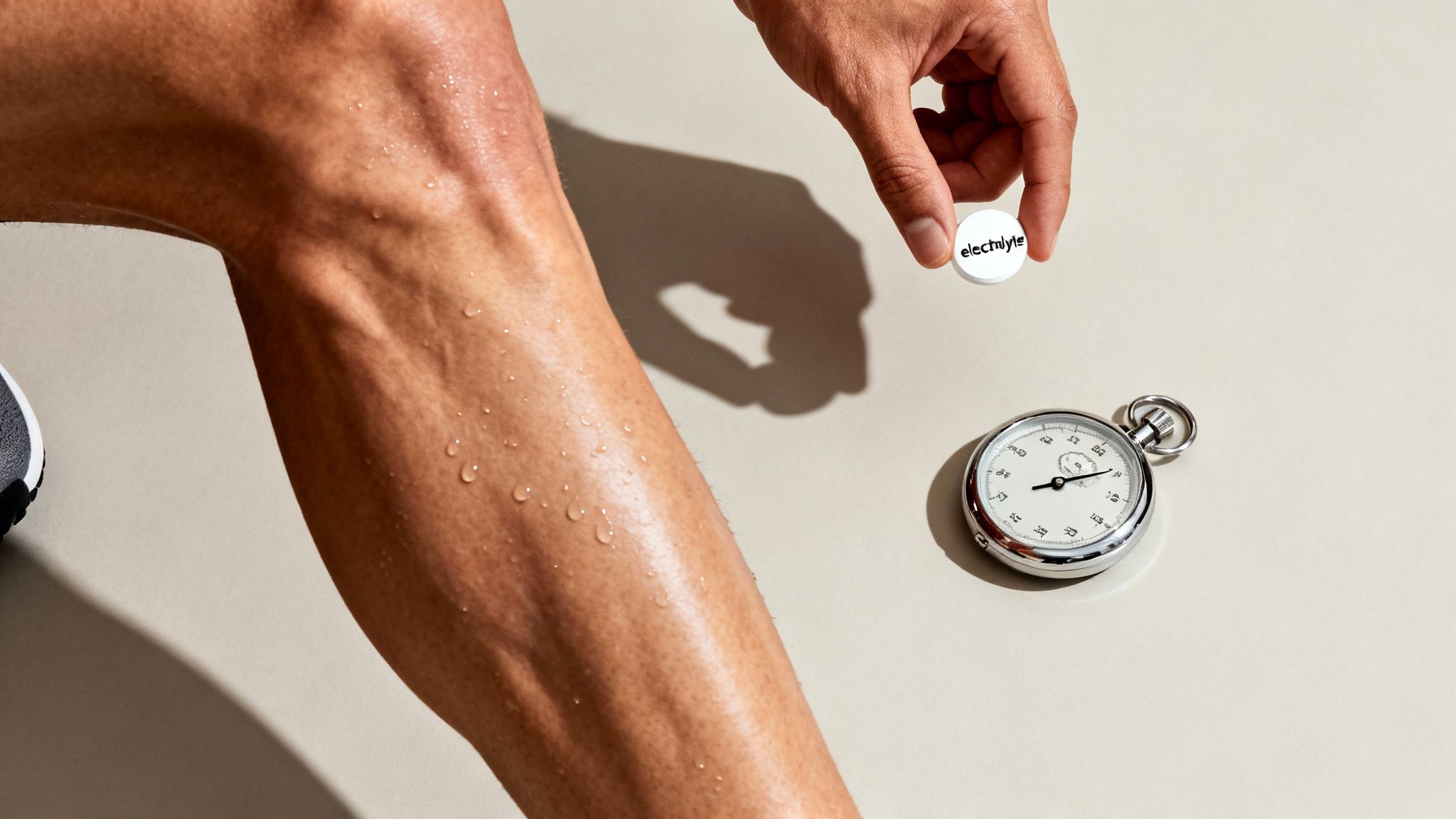
That sudden, vise-like grip of a muscle cramp can stop any athlete cold. For years, we were all told it was just dehydration or low potassium. While those can be part of the story, modern science paints a much more detailed picture.
Today, the two leading theories are the "altered neuromuscular control" hypothesis and the "electrolyte depletion and dehydration" hypothesis. Just think of them as two sides of the same coin.
The Neuromuscular Fatigue Factor
As you push your body hard during a long or intense workout, your muscles get tired. This isn't just a feeling; it's a real physiological event that messes with the communication between your nervous system and your muscles.
What happens is the nerves that tell your muscles to contract get over-excited, while the signals telling them to relax get lazy. This imbalance creates the perfect storm for a powerful, involuntary contraction—what we feel as a cramp. It’s exactly why cramps love to show up late in a race or during those last few grueling sets when you've pushed your muscles to their absolute limit.
Key Takeaway: A cramp is often your nervous system losing control due to fatigue. It’s less about a problem with the muscle itself and more about the chaotic signals it's receiving.
The Role of Electrolyte Loss
At the same time you're getting fatigued, you're also sweating. And you're not just losing water; you're losing critical minerals called electrolytes. While several are important, sodium is the main one you lose in sweat, and it's absolutely vital for managing fluid balance and nerve function.
When your sodium levels take a nosedive, it throws off the fluid balance in and around your muscle cells. This change can make your nerve endings overly sensitive and more likely to fire off randomly, which leads straight to a cramp. For a deeper dive, our guide explains in detail what electrolytes are good for and how they impact your performance.
- Heavy Sweaters: If you’re one of those athletes who ends up with white, salty streaks on your clothes, you're at a higher risk.
- Hot Conditions: Working out in the heat just fast-forwards the process, making you lose fluid and sodium much quicker.
- Long Duration: The longer you go, the more electrolytes you lose. It’s a simple accumulation problem.
Often, persistent cramps can also point to deeper biomechanical issues. Learning how to correct muscle imbalances can be a huge step in figuring out the root cause and preventing them for good. Ultimately, any solid strategy for preventing muscle cramps has to tackle both sides of the problem: conditioning your body to fight fatigue and intelligently replacing the fluids and electrolytes you lose along the way.
Building Your Pre-Workout Cramp Defense
The fight against muscle cramps isn't won in the middle of a workout; it's won hours, sometimes even days, before you take your first step or lift your first weight. A smart pre-exercise routine is your best weapon, fortifying your body against the neuromuscular fatigue and electrolyte imbalances that send your muscles into a painful lockdown. It’s all about being proactive, not reactive.
This goes way beyond a quick, half-hearted stretch. It's about a strategic combination of consistent training, smart movement, and intelligent fueling that primes your body for the work ahead. When you consistently prepare your muscles for the demands you're about to place on them, you build real endurance, pushing back the fatigue that can cause those nerve signals to go haywire.
Prime Your Muscles With Smart Movement
The old "bend and hold" static stretching has its place, but it's not right before a workout. Your muscles don't need to be put to sleep—they need to be woken up and activated. That’s where dynamic warming-up comes in.
Think of it as a dress rehearsal for your main event. These are active movements that take your joints and muscles through their full range of motion, jacking up blood flow, raising your core temperature, and firing up your nervous system. A solid pre-workout routine is non-negotiable, and learning how to warm up before exercise the right way can dramatically cut your risk of both injury and cramping.
A few go-to dynamic movements include:
- Leg Swings: Forward, backward, and side-to-side to really open up the hips.
- Walking Lunges with a Twist: Fires up the glutes, quads, and core while adding a crucial rotational element.
- High Knees and Butt Kicks: These directly mimic running mechanics and get the key leg muscles firing.
- Arm Circles: An essential for preparing the shoulder joints for any kind of lifting or swimming.
This kind of prep work ensures your muscles are pliable and responsive, making them far less likely to revolt with a sudden, involuntary cramp.
The Power of Pre-Loading Nutrients
You wouldn't start a long road trip on an empty tank of gas, so why would you start a tough workout with depleted fluid and electrolyte stores? Pre-loading is the simple but powerful practice of topping off your hydration and mineral levels before you even start sweating.
This is absolutely critical for endurance athletes. A staggering 67% of triathletes have dealt with exercise-associated muscle cramps (EAMC). It’s a huge issue across the board, hitting up to 70% of marathon runners and 60% of cyclists, which just goes to show how vital a proactive strategy really is.
Imagine this: A cyclist is gearing up for a hilly 100-mile ride in the summer heat. About 90 minutes before she clips in, she drinks a beverage loaded with 500-700mg of sodium. It’s a simple move, but it ensures her body starts with a surplus of the exact electrolyte she’s about to pour out through sweat.
For many athletes, a targeted supplement makes this dead simple, guaranteeing your mineral tanks are full from the get-go. This pre-emptive strike is one of the single most effective things you can do to stop cramps before they start. You can get more ideas in our guide on picking a great pre-workout supplement that actually supports your performance goals.
By combining consistent physical prep with a smart pre-loading strategy, you're building a powerful defense system. You’re not just crossing your fingers and hoping to avoid cramps; you're actively building a more resilient, better-fueled body ready to perform at its peak.
Your In-Workout Hydration and Fueling Blueprint
Once you start moving, your cramp prevention strategy has to shift from careful preparation to real-time management. The battle is really won or lost right in the middle of a tough session, based on every sip of fluid and every gram of fuel you take in. Building a plan isn't about guesswork; it's about listening to your body and understanding exactly what it needs under stress.
Think of your in-workout plan as a dynamic dashboard, not a static set of rules. You'll need to make slight adjustments based on the day's heat, the intensity of your effort, and your own unique physiology. The whole point is to stay one step ahead of fatigue and depletion by replacing what you lose, as you lose it.
Dialing in Your Fluid and Sodium Intake
Sweat isn't just water. It's your body's cooling system, and it carries away crucial electrolytes—with sodium being the biggest casualty. If you're an athlete who cramps up, just chugging plain water isn't going to cut it. In fact, drinking too much plain water can dilute your blood's sodium concentration, leading to a dangerous condition called hyponatremia that can, ironically, make cramping even worse.
The key is to replace both fluid and sodium at the same time. But how much? A great place to start is by figuring out your personal sweat rate.
- Weigh yourself nude right before a one-hour workout.
- After the workout, towel off completely and weigh yourself nude again.
- The difference in weight (in ounces) gives you a rough estimate of your hourly fluid loss. For example, a 16-ounce (1 lb) loss means you sweat about 16 ounces per hour.
This gives you a baseline for fluid, but what about the salt? It turns out this is a massive piece of the puzzle. Research on tennis and football players has shown that athletes who cramp can lose 50-100% more sodium in their sweat than their peers who don't. Some crampers lose a staggering 2.5 grams of sodium per liter of sweat, causing their blood sodium levels to tank mid-exercise. It’s a huge problem that affects 30-50% of runners and up to 60% of cyclists, as highlighted on BridgeAthletic's blog.
A Practical Guideline: For intense efforts or workouts in the heat, aim for 500-1000mg of sodium per hour. This is exactly why specialized electrolyte products are so much more effective than generic sports drinks, which often have nowhere near enough sodium to keep up with your losses.
Fueling to Fight Off Muscle Fatigue
Hydration is only half of the equation. As your workout progresses, your muscles are torching through their primary fuel source: glycogen. Once those fuel stores start running low, neuromuscular fatigue skyrockets, putting you right back in the cramp danger zone.
Taking in easily digestible carbohydrates during your session helps spare your stored glycogen and pushes that fatigue further down the road. This is absolutely critical for any activity lasting longer than 75-90 minutes.
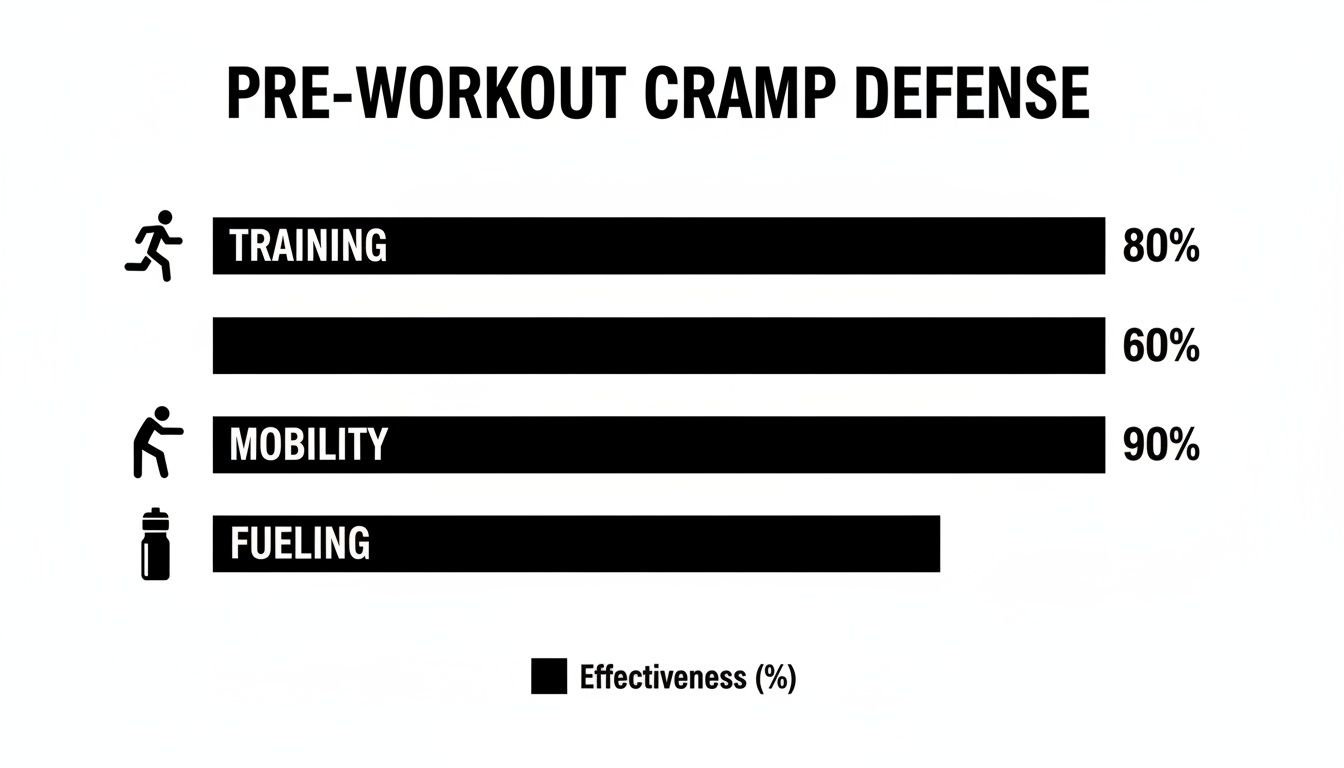
This chart really drives home the point that a balanced approach is key. You can't just focus on your training—proper fueling and mobility are just as vital for keeping muscle cramps at bay.
The general recommendation is to get 30-60 grams of carbohydrates per hour of sustained exercise. For ultra-endurance events, that number can climb to 90 grams or even more. The most efficient way to get this done is to find a single solution that pairs these carbs with your electrolytes. Our guide to the best intra-workout drinks digs into how you can combine these elements effectively.
In-Workout Fueling Comparison By Athlete Type
Your fueling and hydration plan has to match the demands of your sport. A marathoner's needs are worlds away from a weightlifter's. This table breaks down how different athletes can fine-tune their in-workout approach to sidestep cramps.
| Athlete Type | Primary Cramp Risk Factor | Recommended Sodium Intake (per hour) | Recommended Carb Intake (per hour) | REVSCI Product Protocol |
|---|---|---|---|---|
| Endurance Runner | High Sweat/Sodium Loss, Glycogen Depletion | 500-1000mg | 45-75g | Sip Electro-Carb every 15-20 minutes, alternating with sips of water. |
| Cyclist (Long Ride) | Sustained High Effort, Heat Exposure | 700-1000mg+ | 60-90g | Use two bottles: one with a concentrated Electro-Carb mix, the other with plain water. |
| CrossFit Athlete | High-Intensity Bursts, Neuromuscular Fatigue | 400-600mg | 20-40g | Drink a serving of Electro-Hydrate between WODs or during built-in rest periods. |
| Team Sport Athlete | Intermittent Sprints, Cumulative Fatigue | 500-800mg | 30-50g | Hydrate aggressively during breaks and halftime with a balanced Electro-Carb solution. |
This isn't about finding a magic bullet. Preventing muscle cramps mid-session comes down to executing a smart, consistent strategy that keeps your body balanced and performing at its best. By figuring out your sweat rate, aggressively replacing sodium, and fueling with carbs, you directly address the root causes of cramping in real-time.
How Post-Workout Recovery Prevents Future Cramps
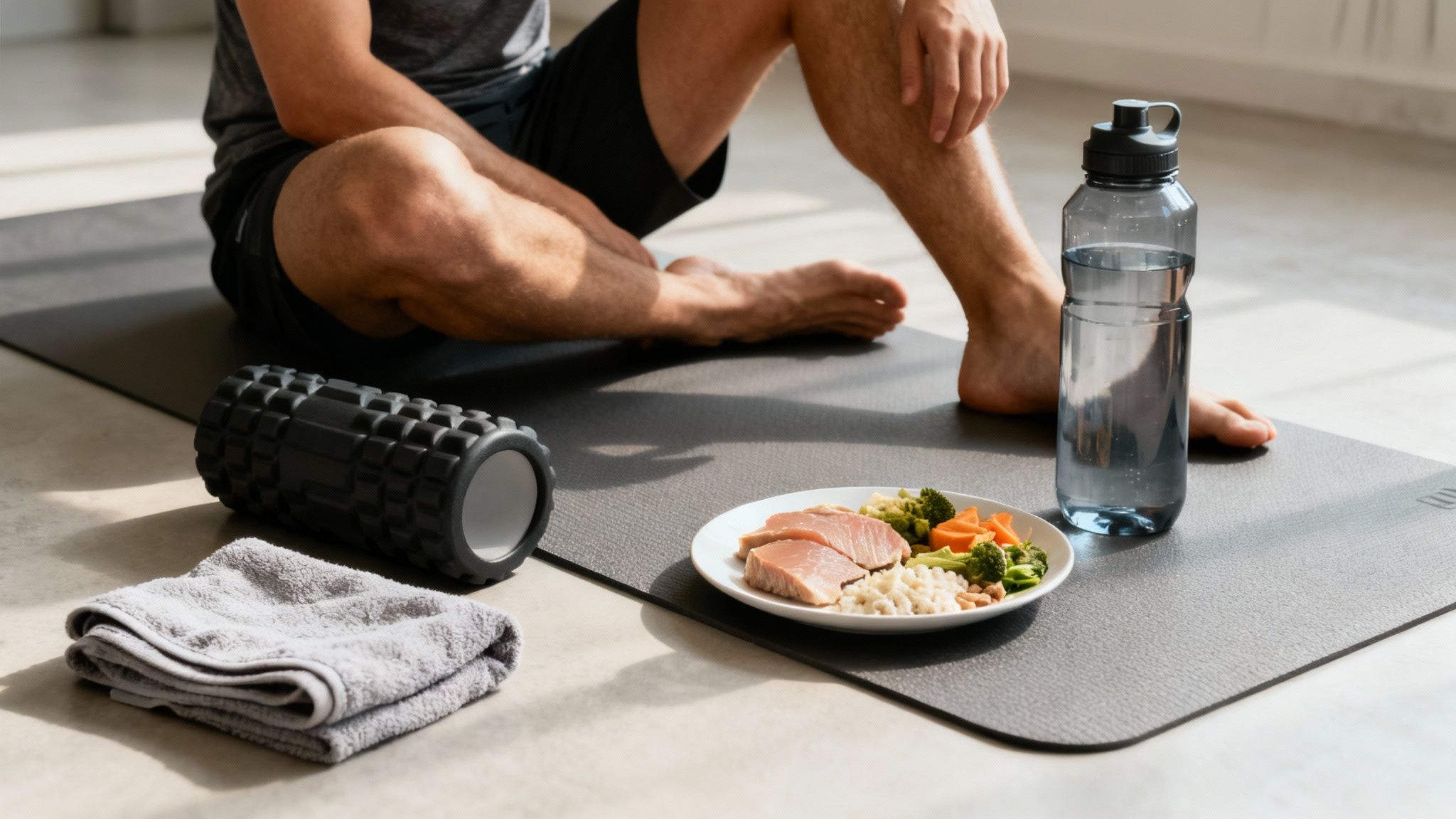
The moment you stop your watch isn’t the end of your cramp-prevention strategy. In many ways, it's just the beginning. How you recover right after a workout has a huge impact on whether you'll cramp up during your next one. A smart recovery plan isn't complicated; it really boils down to three key pillars: aggressive rehydration, smart muscle repair, and dedicated nervous system recovery.
Skipping your recovery is like training hard for a race but refusing to sleep the night before. You're just leaving performance on the table and practically inviting issues like cramps to derail all your hard work. The effort you put in after you train is what locks in your gains and builds a more resilient body.
Strategic Rehydration and Electrolyte Replenishment
It's a given that you'll finish a workout depleted. Staying that way, however, is a choice. Your absolute first priority is to aggressively replace the fluids and electrolytes you just sweat out. This is about more than just casually sipping on some water; it requires a calculated approach to get your body back in balance.
The goal is to drink back more fluid than you lost to account for ongoing processes like urination. A great rule of thumb is to consume 120-150% of the fluid weight you lost within a few hours of finishing. So, if you're down two pounds (that’s 32 ounces), you should be aiming to drink between 38 and 48 ounces of fluid.
Just chugging plain water isn’t the answer. Without enough sodium, your body can’t actually absorb and hold onto the fluid you’re drinking. Including sodium in your recovery drink is absolutely non-negotiable for proper rehydration.
This is exactly where a good electrolyte mix comes in handy. It ensures you’re getting the sodium, potassium, and magnesium your body needs to shuttle fluid back into your cells and get your neuromuscular system firing correctly again.
Kickstart Muscle Repair with Smart Nutrition
After a tough session, your muscles are full of microscopic tears. This is a good thing—it's how you get stronger. But these same damaged and tired muscles are prime targets for cramping if you don't give them the fuel they need to repair themselves.
You have to give your body the right building blocks, and quickly. A combination of protein and carbohydrates within an hour or two post-workout is the gold standard for a reason.
- Protein: This delivers the amino acids needed to rebuild that damaged muscle tissue. Shoot for 20-40 grams of a high-quality source.
- Carbohydrates: This is all about refilling the muscle glycogen (your energy stores) that you burned through. Topping off the tank is critical for preventing fatigue in your next session.
Think of it like restocking a store after a huge sale. You need to restock the energy (carbs) and repair the shelves (protein) so you’re ready for the next day. For more on this, check out our guide on how to recover faster after a workout, which gets deeper into nutritional strategies.
Calm Your Nervous System and Release Tension
At its core, a cramp is often tied to an over-excited nervous system. Your post-workout window is the perfect chance to help it chill out and reset, reducing the background static that can trigger those involuntary muscle spasms.
Simple techniques like foam rolling and static stretching work wonders here. Foam rolling acts like a deep tissue massage, breaking up knots, improving blood flow, and sending a signal to your nervous system that it’s time to relax. Following up with some gentle, long-hold static stretches (holding for 30-60 seconds) can ease any leftover tension and improve your flexibility.
But honestly, nothing beats quality sleep for true nervous system recovery. During deep sleep, your body goes into overdrive, releasing growth hormone and focusing on tissue repair. Consistently banking 7-9 hours of quality sleep is one of the most powerful things you can do to fight fatigue-related cramps and show up to your next workout fully restored.
Tailored Strategies for Cramp-Prone Athletes
While the basic game plan for hydration and fueling works for most people, some situations demand a much more precise approach. If you're constantly fighting off cramps despite doing everything "right," a standard plan just won't cut it.
When you're pushing your body to the absolute limit or dealing with unique factors like age or extreme weather, it's time to get specific. This isn't about throwing out the rulebook. It's about fine-tuning the proven methods to match the intense demands you're placing on your body. This is how you go from just dealing with cramps to truly getting ahead of them.
Navigating Training in Extreme Heat
Exercising in high heat and humidity sends your body's cooling system into overdrive. Your sweat rate skyrockets, which means you're losing fluid and—more importantly—sodium at an alarming pace. The hydration plan that works on a cool day will leave you stranded and cramping when the temperature soars.
The first step is to get acclimated. By gradually exposing yourself to hotter conditions over 10 to 14 days, your body gets smarter about cooling itself. It actually learns to sweat more efficiently, losing less sodium in the process. It's a powerful adaptation that can be a game-changer.
Beyond that, you need to get aggressive with your in-workout strategy:
- Pre-cool your body. Starting your workout with a lower core temperature can significantly delay heat stress. Try sipping an ice slurry or using cool towels right before you head out the door.
- Boost your sodium targets. Your typical hourly sodium intake might need to jump by 25-50%. For athletes who are heavy, salty sweaters, this could mean aiming for well over 1,000 mg of sodium per hour.
- Make every sip count. Ditch the plain water. A concentrated electrolyte drink ensures you're constantly replacing critical minerals, not just diluting what you have left.
Special Considerations for Masters Athletes
As we get older, the rules change. For athletes over 40, a few factors can make cramping more likely. We naturally lose some muscle mass, our muscles fatigue more quickly, and our sense of thirst isn't as sharp, making it easy to fall behind on fluids.
On top of that, age-related shifts in the nervous system can lead to less precise control over our muscles, making them more prone to the misfires that trigger a cramp. This means masters athletes need to attack the problem from two angles: supporting muscle health and staying on top of hydration.
Don't assume the plan that worked for you at 25 will work at 45. Listen to your body, prioritize recovery as much as you do your training, and be proactive with your hydration and minerals—even on rest days.
Key adjustments include a bigger focus on dynamic warm-ups to get muscles ready for action and a massive emphasis on post-workout recovery to help the nervous system reset. Adding regular mobility work and strength training will help maintain muscle mass and improve overall neuromuscular efficiency, building a much stronger defense against cramps.
Fueling Strategies for the Ultra-Endurance Athlete
When you're tackling an Ironman, a 100-mile ultramarathon, or a multi-day race, cramp prevention is a delicate balancing act. The sheer volume of fluid, electrolytes, and calories you need is massive. But take in too much, and you risk the gut issues that can end your day just as fast as a seized-up muscle.
For the ultra-athlete, the key is periodization and patience. You can't just force-feed yourself. Your gut needs to be trained to absorb a steady stream of fuel over many hours, just like your legs and lungs.
Here’s a simple framework for nailing your ultra-event fueling:
- Start Early, Stay Consistent. Begin fueling and hydrating within the first 30-45 minutes of your event. Don't wait until you feel thirsty or hungry. The goal is to stay ahead of depletion, not play catch-up from behind.
- Separate Your Fuel Sources. Many top athletes carry one bottle with a concentrated electrolyte mix and another with a carbohydrate solution, or they rely on gels and chews for calories. This allows you to adjust on the fly—if it gets hotter, you can drink more electrolytes without overloading your gut with carbs.
- Practice Everything in Training. Your long workouts are your laboratory. Never, ever try a new fueling strategy on race day. Experiment with different products, timing, and amounts to find out exactly what your stomach can handle when you're pushing hard.
By adopting these specific tactics, you can turn a major vulnerability into a well-managed part of your performance. It all comes down to understanding your unique challenges and meeting them with a smarter, more targeted plan.
Putting It All Together: Your Personal Anti-Cramp Game Plan
Alright, we've gone deep into the science and the strategies. But knowing why cramps happen is only half the battle. The real win comes from turning that knowledge into a bulletproof, personal plan that you can execute without even thinking about it.
This is where you become your own performance scientist. Think of your next few training sessions as data-gathering missions. Get a handle on your personal sweat rate by hopping on a scale before and after a tough workout—it’s a simple but incredibly powerful metric. Pay attention to how your body responds when you add a specific amount of sodium before a long run. Your body is always talking; your job is to learn its language.
Your Pre-Flight Checklist for a Cramp-Free Session
Before every key workout or event, you need a mental checklist. A quick, simple rundown to make sure you've ticked all the boxes for success.
- Strategic Pre-Load: Have you taken in your electrolytes, especially sodium, about 60-90 minutes before you start?
- In-Workout Fueling: Do you have a clear, rehearsed plan for your carbs and fluids during the session? No winging it.
- Smart Recovery: Is your post-workout shake ready to go? You need to hit that window with protein, carbs, and fluids to kickstart recovery and prep for tomorrow.
The single biggest shift you can make is moving from a reactive mindset to a proactive one. Stop waiting for the cramp to hit you and start building an internal environment where it simply can't get a foothold.
When you adopt this approach, you're no longer at the mercy of your muscles. You're the one in control, dialing in the variables and building the confidence to push harder and go longer, knowing you’ve done the work to stay cramp-free.
Answering Your Questions About Cramp Prevention
Even with the best-laid plans, questions are bound to come up. Let’s tackle some of the most common things I hear from athletes trying to get their cramping under control.
Do I Still Need Electrolytes on a Cool Day?
Yes, you absolutely do. It's a common mistake to think that just because you're not dripping sweat, you aren't losing anything important.
You're still losing crucial minerals like sodium with every bit of sweat, even if it's evaporating quickly in the cool air. On top of that, neuromuscular fatigue doesn't care about the temperature.
You might just need to dial back your intake a bit compared to a blistering summer day, but skipping electrolytes entirely is a gamble, especially on a long or hard effort. Think of it as cheap insurance.
Is Pickle Juice a Real Fix for Cramps?
For some people, it can be a surprisingly effective quick fix, but it's not a prevention strategy. The theory is that the vinegar in pickle juice triggers a neural reflex in your throat, which can help calm the over-excited nerves causing the cramp. It can work shockingly fast.
The catch is, if you're reaching for pickle juice, you're already in the middle of a cramp. The goal is to avoid getting there in the first place. A well-formulated electrolyte supplement used consistently is a much smarter approach to keep cramps from ever starting.
Why Do I Cramp Up During Sleep After a Hard Workout?
This is a classic sign that your body is still in deficit from your workout. Hours later, your nervous system can remain over-excited, and your muscles are likely still low on key minerals and fluids. It's the perfect storm for a midnight cramp.
To put a stop to this, you need to get serious about your post-workout recovery.
- Rehydrate Aggressively: Don't just sip water. Make sure you're fully replacing the fluids and, just as importantly, the sodium you lost in the hours after you finish.
- Stretch Before Bed: A few minutes of gentle stretching for your calves, hamstrings, and quads can make a world of difference.
- Check Your Magnesium: This mineral is a powerhouse for muscle relaxation. If you’re consistently cramping at night, it might be worth looking into your overall magnesium intake.
By taking care of those post-exercise deficits, you can help your system calm down and finally get a full, cramp-free night of recovery.
Stop letting cramps control your performance. Revolution Science offers clean, research-backed electrolyte solutions designed to keep you hydrated and balanced, so you can push your limits without fear. Build your cramp-proof strategy at https://rvsci.com.