
Tu carrito está vacío


When Is the Best Time to Drink Electrolytes for Peak Performance
Let's get straight to it. The "best" time to drink electrolytes isn't one specific moment. It’s all about when and why you're using them. True performance gains come from strategic timing—fueling up before, during, and after your training to crush your workout and bounce back faster.
Think of it like a pro pit crew fine-tuning a race car. Small, precise adjustments lead to massive results on the track. This guide will walk you through the science of why timing is so crucial, ditching the generic advice for actionable, real-world protocols. We'll show you exactly how to use clean, high-impact electrolytes to sidestep dehydration, shut down cramps before they even think about starting, and keep your edge from the first rep to the last.
Your Essential Guide to Electrolyte Timing
To really nail your hydration strategy, you have to understand the 'why' behind the 'when'. Electrolytes are the unsung heroes of your body's performance, acting like the electrical grid that powers everything. These critical minerals—sodium, potassium, magnesium—are behind every muscle contraction and nerve signal. When you push your body, the demand for them goes through the roof.
We'll break down the science in simple terms, showing you how being proactive with your timing prevents those dreaded performance slumps. It’s not about chugging a drink when you’re already thirsty; it's about methodically fueling your body's most critical systems. If you need a quick refresher on the fundamentals, you can learn more about what electrolytes are good for in our detailed guide.
A Three-Phase Approach to Hydration
Smart electrolyte timing is best viewed in three distinct phases, each with its own mission. This framework ensures you’re never playing catch-up with depletion and are always a step ahead.
- Before Your Workout: The goal here is all about pre-loading, sometimes called hyperhydration. Taking in electrolytes beforehand helps your body hang onto more fluid, creating a buffer against the sweat you're about to lose.
- During Your Workout: This is pure maintenance. The objective is to replace the minerals and fluids you’re losing in real-time. This is how you fend off performance drops, muscle cramps, and that brain fog that can derail a tough session.
- After Your Workout: Now the focus flips to rapid rehydration and recovery. Getting electrolytes back into your system helps shuttle nutrients into your depleted muscles and fires up the repair process.
This timeline gives you a clear visual of the three-phase approach, illustrating how to sync your electrolyte intake with every stage of your workout for the best results.
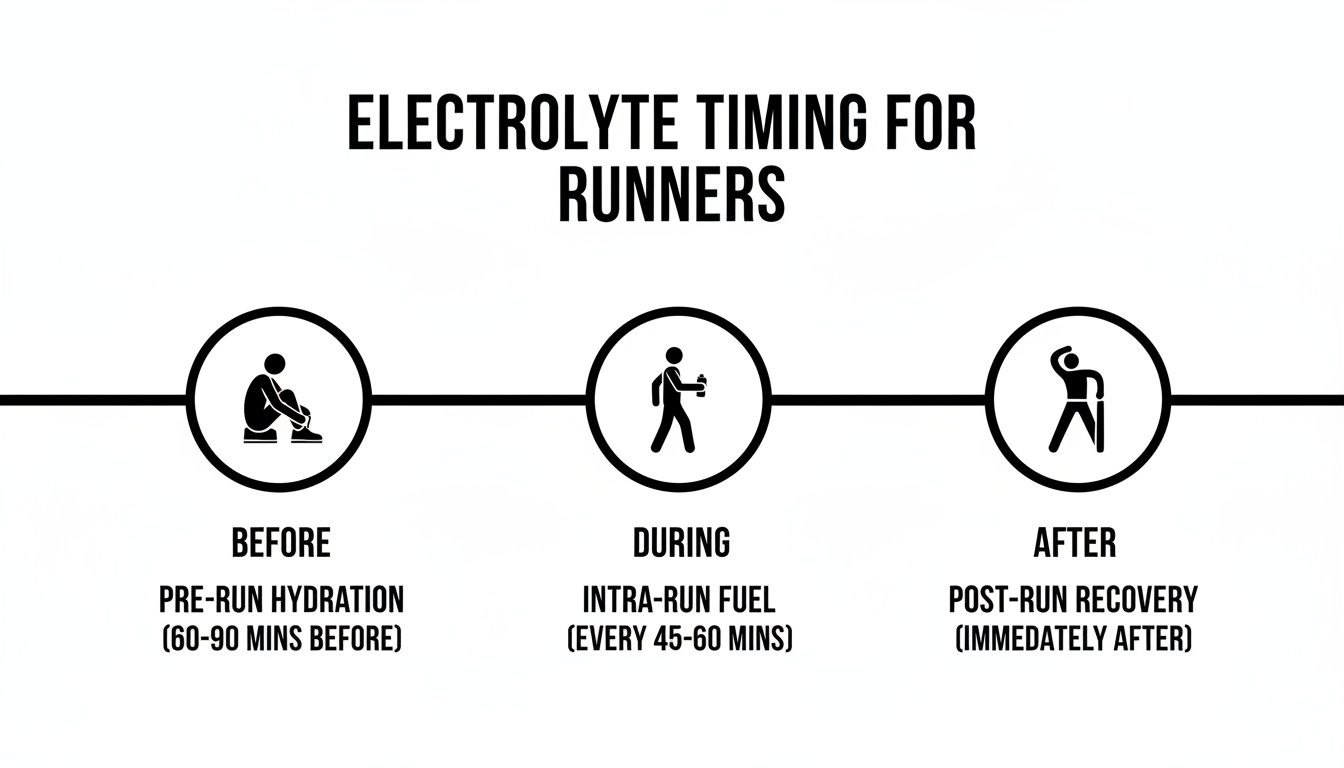
As you can see, electrolyte timing isn’t a one-and-done deal. It's a continuous loop that supports your body from warm-up all the way through recovery.
The Game-Changing Difference for Endurance Athletes
For athletes tackling intense sessions lasting over 60 minutes—think marathon runners and triathletes who trust Revolution Science to fuel their performance—sipping electrolytes every 10-20 minutes is an absolute game-changer.
The National Strength and Conditioning Association (NSCA) recommends that athletes drink 3 to 8 ounces (90 to 240 ml) of a 6% to 8% carbohydrate-electrolyte solution at these intervals. Why so specific? This strategy helps prevent dehydration from exceeding 2% of body weight loss, a threshold that can demolish endurance by up to 30% in some studies, while also keeping your electrolyte balance in the optimal zone.
Electrolyte Timing At a Glance
To make it even simpler, here’s a quick-reference table breaking down when to prioritize your electrolyte intake based on what you're doing.
| Scenario | Optimal Timing | Primary Goal |
|---|---|---|
| Short, Intense Workouts (<60 mins) | Before and After | Pre-load fluids; accelerate recovery. |
| Long Endurance Training (>60 mins) | Before, During, and After | Maintain hydration and prevent mineral depletion. |
| Hot & Humid Conditions | Before, During, and After | Aggressively combat heavy sweat loss. |
| Fasting or Keto Diet | Throughout the Day | Maintain baseline balance and prevent deficiency. |
| Illness (Fever, Vomiting) | Consistently Throughout Illness | Rehydrate and restore lost minerals. |
This table serves as a solid starting point. Your personal needs will always depend on your sweat rate, the intensity of your activity, and the environment you're in.
Understanding Why Electrolyte Timing Is a Game Changer
To really get a handle on hydration, you have to look past the what and dig into the why and the when. It's easy to think of electrolytes as just glorified salt water, but that’s like calling a Formula 1 engine a simple block of metal. These minerals—sodium, potassium, and magnesium—are the quiet workhorses of human performance.
Think of them as the sophisticated electrical wiring for your entire body.
These charged particles are what carry the signals between cells, firing the commands that tell your muscles to contract, your heart to beat, and your brain to stay locked in. Every single twitch, thought, and metabolic function hinges on this intricate electrical network. If the supply line gets cut, the signals get fuzzy, and your performance nose-dives.
When you push your body hard, the demand for these minerals goes through the roof. Sweat isn't just water leaving your body; it's a massive drain on your electrolyte reserves. This is exactly why timing your intake isn't just a good idea—it's a non-negotiable part of any serious training plan.
From Proactive Fueling to Reactive Chasing
Here's where so many athletes get it wrong. They wait until they feel the first pangs of thirst or the tell-tale twitch of a cramp before reaching for an electrolyte drink. By that point, the damage is done. You've already shifted from a proactive fueling strategy to a desperate, reactive game of catch-up.
Your performance has already taken a hit.
Imagine your body's electrolyte balance is the fuel gauge in your car. You wouldn't wait for the engine to sputter and die in the middle of a race before you think about finding a gas station. The same logic applies here. Smart timing is all about making sure your internal "tank" is topped off before you even get close to the red zone.
A loss of just 2% of your body weight through sweat can trigger a significant drop in both physical and cognitive performance. This isn't just about being thirsty; it's about the rapid depletion of electrolytes disrupting your fluid balance and crippling neuromuscular function.
Getting ahead of that loss is the entire game. By taking in electrolytes before and during your session, you maintain the precise fluid balance needed to keep your cardiovascular system running like a well-oiled machine. This stops your heart from having to work overtime just to pump blood, which keeps your heart rate lower and saves a ton of precious energy.
The Science of Maintaining Power and Focus
So, how does this translate to real-world results on the track, in the gym, or on the field? It all boils down to two mission-critical functions: muscle contraction and nerve signaling.
-
Preventing Muscle Cramps and Fatigue: Cramps are the most obvious and painful red flag of an electrolyte imbalance, usually pointing a finger at low sodium and potassium. These two minerals are absolutely essential for the electrical signals that make your muscles contract and relax. When their levels drop, the signals become chaotic, leading to those involuntary, seizing contractions we all dread. By drinking electrolytes strategically, you ensure a steady, uninterrupted supply to your muscles, keeping them firing smoothly and powerfully.
-
Maintaining Mental Sharpness: Your brain is incredibly sensitive to your hydration status. Even a hint of dehydration can mess with your concentration, screw up your decision-making, and slow your reaction time. Electrolytes are key to maintaining fluid balance inside your brain cells, ensuring the nerve impulses that control your cognitive function are transmitted cleanly and effectively. This is what keeps you focused, sharp, and mentally tough, even when your body is screaming.
At the end of the day, figuring out when is the best time to drink electrolytes isn’t about memorizing a rigid schedule. It’s about respecting your body’s physiology. It’s about giving your internal electrical system the critical parts it needs, exactly when it needs them. This proactive approach is what separates the good athletes from the truly great ones, letting you sustain peak power, fight off fatigue, and stay mentally in the fight from start to finish.
Pre-Workout Hydration for a Stronger Start
Peak performance isn't just something that happens in the heat of the moment. It’s built, meticulously, long before the starting gun ever fires. For serious athletes, this preparation includes a powerful strategy known as pre-loading, or hyperhydration. This is far more than just chugging a glass of water—it’s a calculated method for grabbing a decisive competitive edge.
When you drink an electrolyte-rich solution 30 to 90 minutes before a grueling workout, you're doing more than just quenching your thirst. You're telling your body to hang onto more fluid, creating a buffer that guards against the performance-killing effects of dehydration.
Think of it like this: your body is a high-performance engine that runs on fluid. Starting a tough session without pre-loading is like entering a race with half a tank of gas. Sure, you might feel strong at the start, but you’ll find yourself sputtering fast, especially when things get intense. Pre-workout electrolytes ensure your tank is completely topped off and ready for whatever you throw at it.
The Science of Starting Ahead
So what's happening under the hood? When you pre-load with a sodium-heavy electrolyte drink, you accomplish two critical things. First, that sodium actively helps your body retain more water right where you need it—in your bloodstream. This expansion of your plasma volume makes your entire cardiovascular system more efficient, meaning your heart doesn't have to work nearly as hard to shuttle oxygen to your muscles.
Second, this proactive hydration primes your body’s natural cooling system. With more fluid readily available, you can sweat more effectively to keep your core temperature in check. This dramatically cuts down your risk of overheating during intense efforts, especially in the heat.
The result? A lower heart rate, better endurance, and the ability to sustain a higher power output for much longer. It's a non-negotiable tactic for anyone looking to optimize their performance from the very first minute. It effectively turns your body into a more resilient machine, ready to handle the stress of a brutal workout without crashing early from fatigue or cramps. To really dial in your preparation, our in-depth look at pre-workout supplementation is another fantastic resource.
Actionable Pre-Loading Protocols
Alright, so what does this look like in the real world? The key is all about timing and concentration. You need to give your body enough time to absorb the fluid and electrolytes without feeling sloshy or bloated when it's go-time.
A solid, effective guideline is to get your electrolyte drink down between 45 to 90 minutes before you start. This window is the sweet spot for optimal absorption and fluid retention.
Pre-exercise electrolyte loading, specifically 20-30 minutes before starting, primes your body like nothing else for high-stakes efforts. A controlled study showed that downing a 500 mL electrolyte solution 20 minutes prior dropped systolic blood pressure by 6.6% and pulse rate by 17.6% post-exercise compared to just water.
This is backed by well-established protocols. One evidence-based approach suggests drinking 5-7 mL of fluid per kilogram of body weight about four hours before your event. If your urine is still dark two hours out, top it off with another 3-5 mL/kg. And here's the crucial part: this fluid needs to be spiked with 20-50 mEq of sodium (that's 460-1150 mg/L). This is what maximizes fluid retention and stimulates thirst, ensuring you start fully topped off.
Here’s how that might look for different athletes:
- The Endurance Runner: An hour before a long run, a marathoner could drink 16-20 ounces of a solution loaded with 500-700 mg of sodium to get ahead of sustained sweat loss.
- The CrossFit Athlete: 45 minutes before a high-intensity WOD, this athlete might down 12-16 ounces of a similar mix to combat the rapid fluid loss that comes with all-out, full-body movements.
- The "Salty Sweater": If you're the person who ends up with white, salty streaks on your gear, you know you lose a ton of sodium. You'll want to aim for the higher end of the recommendation (~1000 mg) to offset those heavy losses.
By dialing in your pre-workout hydration, you stop just reacting to thirst and start proactively setting the stage for success. You're giving your body every advantage it needs to perform at its absolute best.
Maintaining Balance During Your Workout
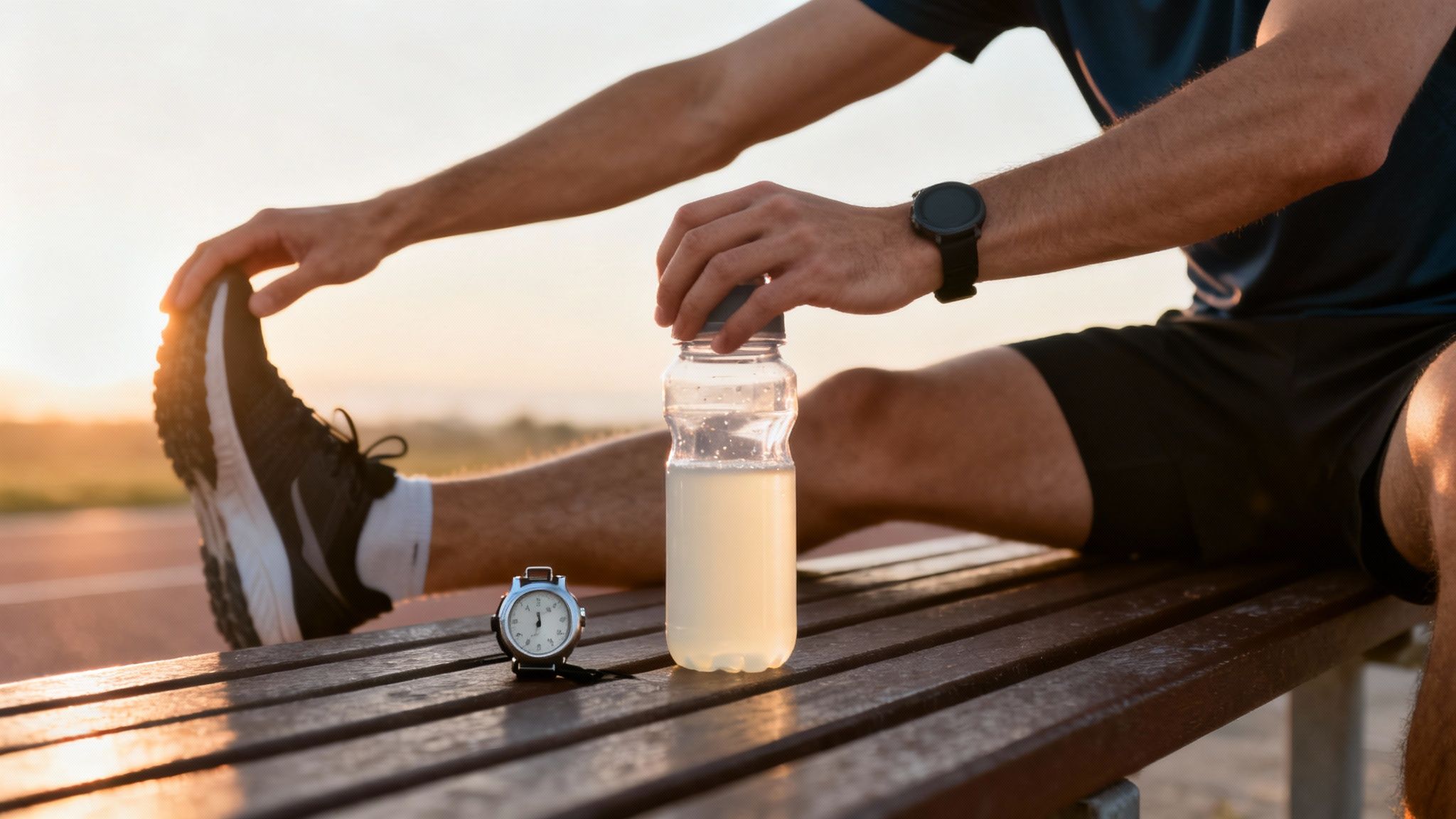
Once your session starts, the game changes. You’re no longer prepping for the effort; you're in the thick of it, and the goal shifts to active maintenance. During a workout, your only real job is to replace what you're losing in real-time. This is where you fight off that dreaded performance cliff that always comes with dehydration and mineral loss.
Think of your body like a high-performance engine in the middle of a race. Intra-workout hydration isn't just a drink; it's your live pit stop strategy. You can’t afford to wait until the tank is empty. You need to refuel consistently to keep the engine running smoothly and prevent it from seizing up.
This isn’t about frantically chugging a bottle at the halfway mark. It’s a disciplined, consistent sipping approach. The goal is to keep your internal systems humming without causing that awful stomach slosh that can derail an otherwise solid effort.
Tailoring Hydration To Your Activity
The two biggest variables that dictate what you need mid-session are intensity and duration. It’s just common sense: a 45-minute lifting session is a world away from a three-hour bike ride on a blistering summer day. The trick is to match your intake directly to your output.
For most workouts lasting under 60 minutes in a comfortable, climate-controlled gym, plain water will probably do the trick. Your pre-workout hydration should be enough to carry you through. But the second you push past that one-hour mark—or if you're training in the heat—electrolytes become absolutely non-negotiable.
For any activity lasting over 60-90 minutes, you need a systematic replacement plan. The goal here is to sip a well-formulated electrolyte solution every 15-20 minutes. This steady drip-feed of critical minerals helps maintain your blood volume, supports muscle contractions, and keeps crippling cramps at bay.
The Dangers Of Playing Catch-Up
So many athletes make the classic mistake of waiting until they feel thirsty to drink. Here's the hard truth: thirst is a lagging indicator. By the time you actually feel thirsty, you're already dehydrated, and your performance has started to tank. Taking electrolytes during your workout is the only way to stay ahead of that curve.
When you sweat out electrolytes and only replace them with plain water, you risk diluting the sodium concentration in your blood. This can lead to a dangerous condition called hyponatremia, which shows up as cramping, confusion, and extreme fatigue.
Sipping on electrolytes throughout your workout prevents this dangerous dilution and ensures your body can actually absorb and use the fluids you’re giving it. This is the secret to sustaining both physical power and mental focus deep into your training. You can dive deeper into this with our guide to effective intra-workout drinks for sustained performance.
Intra-Workout Electrolyte Dosing Guide
Finding your perfect intake number takes a bit of trial and error, but the science gives us some excellent starting points. Use this table to build a strategy that matches your specific training demands, and don't be afraid to tweak it based on your personal sweat rate and the day's conditions.
| Activity Duration | Intensity Level | Suggested Electrolyte Intake (per hour) | Example Athlete |
|---|---|---|---|
| Under 60 Mins | Low to Moderate | Water is typically sufficient. | A casual gym-goer doing a light circuit. |
| 60-90 Mins | Moderate to High | 16-24 oz with 300-500 mg sodium. | A CrossFit athlete in a demanding class. |
| 90 Mins - 2 Hrs | High | 20-30 oz with 500-700 mg sodium. | An endurance runner on a long training run. |
| Over 2 Hrs | High / Extreme | 24-34 oz with 700-1000+ mg sodium. | A triathlete during a race-pace brick workout. |
Remember, these are just guidelines. If you know you're a "salty sweater"—the kind of person who gets that white, gritty residue on your skin or clothes—you absolutely need to aim for the higher end of these sodium recommendations. Mastering your intra-workout hydration isn't just a small detail; it's a cornerstone of consistent, high-level performance.
Kickstarting Recovery After Your Workout
The moment you finish your last rep or cross the finish line, another race begins—the race to recover. The single most critical step you can take right away is rapid rehydration. While many athletes instinctively reach for a protein shake, replenishing the fluids and minerals you just sweated out is the true first responder in an effective recovery plan.
Your workout just put your body through a storm, draining fluid, sodium, and potassium with every drop of sweat. Think of your muscle cells post-workout as being completely parched and starving for nutrients. Just chugging water isn't enough here. Your body needs electrolytes to act as the "gatekeepers," unlocking the cells so they can actually absorb that water and start rebuilding.
This is precisely why post-workout electrolyte intake is so vital. It’s not just about quenching your thirst; it’s about kickstarting the entire repair process from the ground up.
The Anabolic Window for Hydration
You’ve probably heard of the "anabolic window" for protein, but there's a similar—and arguably more urgent—window for hydration. The 30 to 60 minutes immediately following your workout is a golden hour. During this time, your circulation is still elevated, and your muscle cells are incredibly receptive to soaking up nutrients.
Capitalizing on this window with an electrolyte-rich drink does a few powerful things all at once:
- Restores Fluid Balance: It rapidly brings your hydration levels back to where they need to be, which is non-negotiable for nearly every metabolic process in your body.
- Shuttles Nutrients: Sodium and potassium are key players in transporting glucose and amino acids into your muscles, providing the raw materials for repair.
- Clears Metabolic Waste: Proper hydration helps your system flush out metabolic byproducts like lactate that build up during intense exercise and contribute to muscle soreness.
Ignoring this window means you're leaving performance gains on the table. A slow or incomplete rehydration process can drag out recovery times, amplify next-day fatigue, and leave you feeling flat for your next session.
Post-workout, electrolytes shine for rapid rehydration and recovery. Research involving young athletes found that consuming electrolyte drinks significantly slashed thirst scores from 8.11 pre-exercise to their lowest point post-recovery. This underscores how effectively they meet the body's immediate needs after a tough session.
This finding lines up perfectly with other studies showing that fluid retention is much higher with electrolyte solutions compared to plain water—a crucial factor when you've lost more than 2% of your body weight in sweat. To dig deeper into the science of post-workout restoration, check out our complete guide to how you can recover faster after a workout.
A Practical Post-Workout Protocol
So, what does this look like in the real world? The goal is to drink 125-150% of the fluid weight you lost during your session within the first few hours afterward. This means if you sweated out two pounds (32 ounces), you should aim to drink 40-48 ounces of an electrolyte beverage.
Here’s a simple protocol to follow:
- Weigh Yourself: For serious athletes, hopping on the scale before and after training is the most accurate way to measure fluid loss.
- Calculate Your Needs: Every pound of weight you lost is about 16 ounces of fluid. Multiply that number by 1.5 to find your total rehydration target.
- Start Sipping Immediately: Begin drinking your electrolyte solution as soon as you can. Don't chug it all at once; sip consistently over the next hour or two for the best absorption.
- Prioritize Sodium: Your post-workout drink needs a solid amount of sodium—300-500 mg per 16 oz is a great starting point—to drive rehydration and replace what you lost.
Beyond just your drink, integrating practices like proper massage aftercare can seriously enhance your recovery, cutting down on muscle soreness. By combining smart rehydration with other recovery methods, you create a powerful system that gets you back to 100% as quickly as possible.
Drinking Electrolytes Beyond Your Workout

Thinking about electrolyte timing purely in terms of workouts is a mistake. Smart hydration strategies extend far beyond the gym floor or the race course, playing a huge role in daily life where plenty of situations can knock your mineral balance out of whack.
Knowing when is the best time to drink electrolytes is key to feeling your best, whether you're fighting off a bug or dialing in a new diet.
Unlike prepping for a workout, the goal here isn't to pre-load for a big effort. It's about maintaining a steady, consistent balance throughout the day to support your body's most basic functions and just feel good.
Navigating the Keto Flu
Jumping into a ketogenic diet is a perfect example of a non-exercise situation that demands electrolytes. When you slash your carb intake, your body starts dumping water—and essential minerals right along with it. This rapid flush is what triggers the dreaded "keto flu," leaving you with headaches, fatigue, and brain fog that can completely sabotage your new eating plan.
The secret to beating it? Sipping an electrolyte drink throughout the day. This is especially true during those first few weeks as your body adapts. It’s not about chugging one big dose; it's about a consistent, steady intake to replace what you're losing.
By getting ahead of the game with sodium, potassium, and magnesium, you can often sidestep the worst of the keto flu. It's a simple, proactive approach that helps your body ease into ketosis much more smoothly.
A solid tactic is to mix a serving of a good electrolyte powder into your water bottle and drink it from morning through the afternoon. This helps keep your energy stable and fights off that lethargy that can otherwise grind your day to a halt.
Accelerating Recovery During Illness
When you're down for the count with a fever, vomiting, or diarrhea, your body is losing fluids and electrolytes at a frightening pace. Plain water just doesn't cut it here. In fact, drinking too much plain water can dilute the electrolytes you have left, making a bad situation even worse.
This is a time when electrolytes are non-negotiable. They are the key that unlocks the door, allowing your body to actually absorb and hold onto the fluid it so desperately needs.
- During a Fever: That high body temp makes you sweat more, accelerating fluid loss.
- Vomiting or Diarrhea: This is a direct, rapid exit for water and crucial minerals like sodium and potassium.
In these moments, the best approach is to take small, consistent sips of an electrolyte drink all day long. It's gentle on an upset stomach and effectively restores what's been lost, giving your immune system the backup it needs to fight.
Supporting Wellness As You Age
As we get older, a couple of things happen: our bodies don't hold onto water as well, and our sense of thirst starts to fade. That's a risky combination that puts older adults at a much higher risk for chronic, low-grade dehydration.
Making sure your mineral balance is on point becomes a cornerstone of any long-term wellness plan.
A diet packed with mineral-rich foods is always your first line of defense. But adding a clean electrolyte drink a few times a week—especially after some light activity or on a hot day—is a simple, powerful way to support hydration, nerve function, and muscle health for the long haul.
Got Questions? We’ve Got Answers.
Even with the best strategy, real-world questions always pop up. Getting the details right is what separates a good hydration plan from a great one. Let’s tackle some of the most common points of confusion so you can feel confident in your approach.
Think of this as your go-to FAQ for dialing in the finer points of electrolyte timing.
Can You Overdo It With Electrolytes?
Absolutely, though it’s pretty rare for healthy athletes. The condition is called hypernatremia (too much sodium), and it can show up as nausea or swelling. The fix is simple: match your intake to your output. Don't just chug electrolyte drinks for the sake of it.
If you’re following the guidelines for pre-loading, in-session fueling, and recovery, you’re almost certainly in the clear. A well-formulated supplement makes it much easier to get the dosage right, unlike sugary sports drinks that encourage you to drink more than you need.
Is Plain Water Fine for a Shorter Workout?
For a light session under 60 minutes in a comfortable gym, water usually does the trick. But that's a big if.
If you're a heavy sweater, training in the heat, or smashing a high-intensity interval session, the game changes. In those cases, adding electrolytes will dramatically improve how well your body absorbs fluid and can be the difference-maker in preventing a performance dip. You can lose a surprising amount of minerals even in a short, intense workout, making electrolytes a smart move.
What About Electrolytes on Rest Days?
For most of us eating a well-rounded diet, it's not a must. You should be getting your baseline minerals from your food.
But there are a few key exceptions. If you're on a keto diet, living in a hot climate, or recovering from a multi-day race, keeping your electrolyte intake consistent is a game-changer. On those days, prioritize mineral-rich foods first and only add a supplement if you feel off—think nagging headaches or fatigue.
How Do You Know if You’re Running Low?
Your body is pretty good at telling you when something's wrong. You just have to know what to listen for. The classic signs of low electrolytes include:
- Nagging muscle cramps or twitches
- That "heavy legs" feeling or general fatigue
- A dull headache or brain fog
- Feeling lightheaded when you stand up too fast
Another dead giveaway? Look at your gear or skin after a hard workout. If you see chalky, white streaks, you're a "salty sweater." That's your cue that you need more sodium than the average athlete to stay on top of your game.
At Revolution Science, we focus on clean, evidence-based formulas that help you perform—no fillers, no hype. Get your hydration dialed in with electrolytes designed for serious results at https://rvsci.com.