
Tu carrito está vacío


The Ultimate Guide to Intra Workout Drinks for Peak Performance
If you’ve ever felt your performance take a nosedive mid-session, you know how frustrating it is. You start strong, but then the tank just feels empty. Pre-workouts get you in the door and fired up, and post-workout shakes handle the repair work afterward. But what about the during?
That’s where intra-workout drinks come in. They are specifically formulated to be consumed during your training to sustain energy, keep you hydrated, and support your muscles when they need it most.
What Are Intra Workout Drinks and Why Do They Matter
Think of your body like a high-performance race car. The pre-workout is the ignition—it gets the engine roaring. The post-workout protein is your pit crew, fixing the wear and tear after the race.
So, what keeps the car from running out of fuel or overheating on the track?
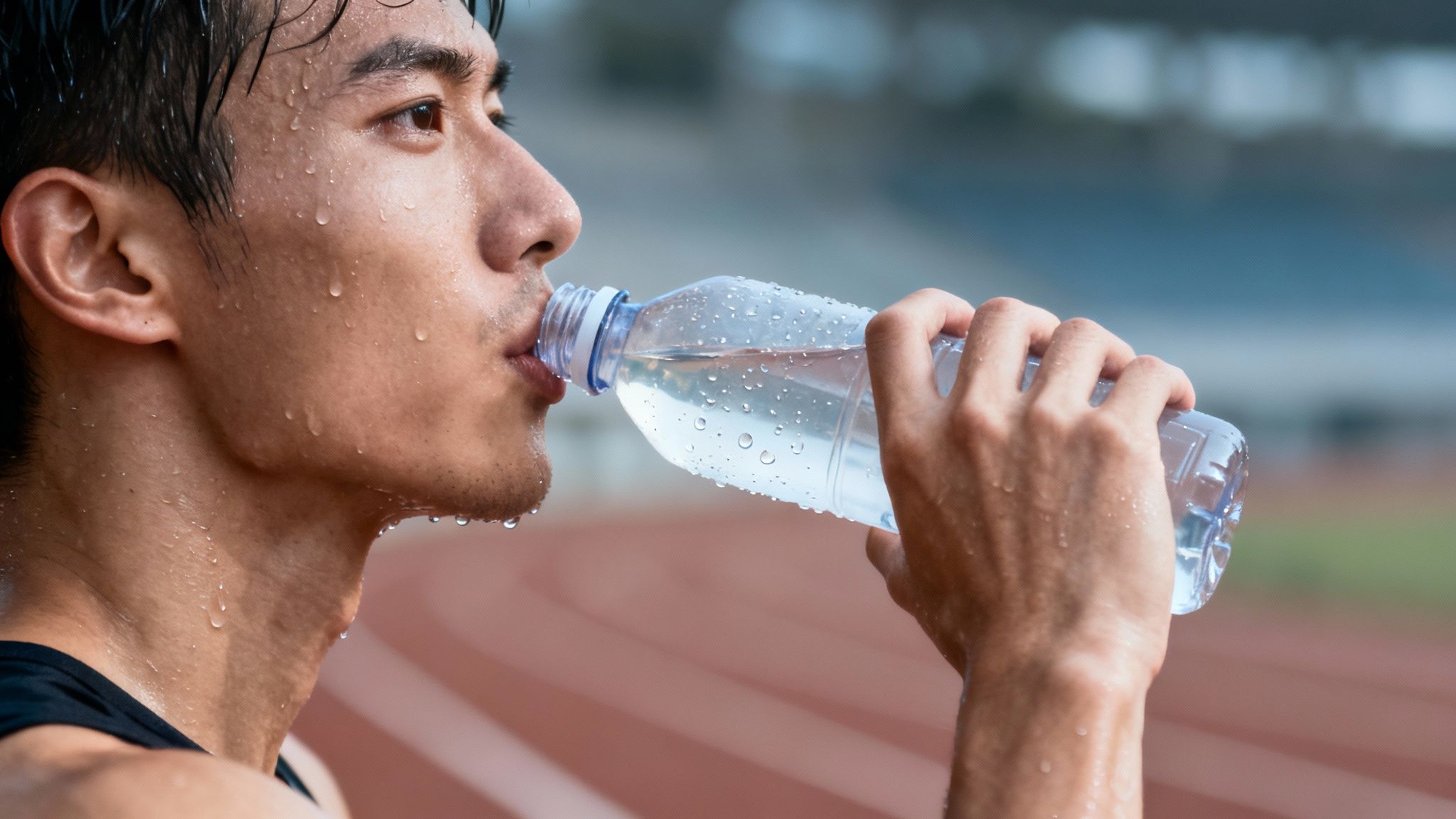
That’s your intra-workout drink. It's the mid-race refueling system, delivering exactly what your body is screaming for right in the heat of the moment. For anyone serious about pushing their limits, this kind of strategic fueling is a complete game-changer.
Beyond Simple Hydration
Water is non-negotiable, but once you push past 60-90 minutes of intense work, it’s often not enough. When you sweat, you’re losing more than just H2O—you’re dumping vital electrolytes and burning through your stored energy at an alarming rate. An intra-workout drink is built to combat the exact issues that arise from this depletion:
- Dodging Energy Crashes: A steady supply of fast-acting carbs keeps your blood sugar stable. This is your defense against that dreaded "bonk" where you suddenly hit a wall.
- Preventing Cramps and Fatigue: Electrolytes like sodium and potassium are the gatekeepers for muscle contractions and nerve signals. Topping them off keeps your muscles firing properly and helps prevent debilitating cramps.
- Protecting Your Muscle: When a workout gets long and grueling, your body can start breaking down muscle tissue for fuel. Supplying amino acids (like BCAAs or EAAs) gives your body an alternative energy source, effectively shielding your hard-earned muscle from being cannibalized.
To give you a clearer picture, here’s a quick-glance guide on when an intra-workout drink becomes a powerful tool in your arsenal.
Intra Workout Drink Quick Reference Guide
| Training Duration | Primary Goal | Key Ingredients Needed |
|---|---|---|
| Over 90 minutes | Sustain energy & prevent muscle breakdown | Carbs, EAAs/BCAAs, Electrolytes |
| 60-90 minutes (High Intensity) | Maintain hydration & fight fatigue | Electrolytes, Carbs (optional) |
| Under 60 minutes | General hydration | Water is typically sufficient |
This table helps illustrate that intra-workout nutrition isn't an everyday necessity but a strategic weapon for your most demanding sessions.
From Niche Supplement to Performance Staple
What was once a secret of pro bodybuilders is now a well-understood tool for athletes across all disciplines. This isn't just hype; it's a reflection of our growing understanding of exercise physiology and the massive benefits of fueling your body in real-time.
The global market for intra-workout drinks was valued at around USD 1.95 billion in 2024. It’s projected to grow at a compound annual rate of about 7.1% through 2033, which tells you one thing: athletes are seeing real results and demanding more sophisticated fueling strategies.
This growth is a direct response to the performance problems these formulas solve. Of course, intra-workout is just one piece of the puzzle. To truly maximize your gains, you need to see the bigger picture, which includes a solid guide to pre and post-workout nutrition. When you nail down your fueling strategy before, during, and after training, you create a complete ecosystem for peak performance and recovery.
Decoding the Science Behind Key Ingredients
Looking at the back of an intra-workout drink can feel like you’re cramming for a chemistry final. But don't let the scientific names fool you. Each ingredient is a simple, powerful tool designed to solve a specific problem you face mid-workout. Let’s break down what's inside, cutting through the jargon so you know exactly what you’re sipping on.
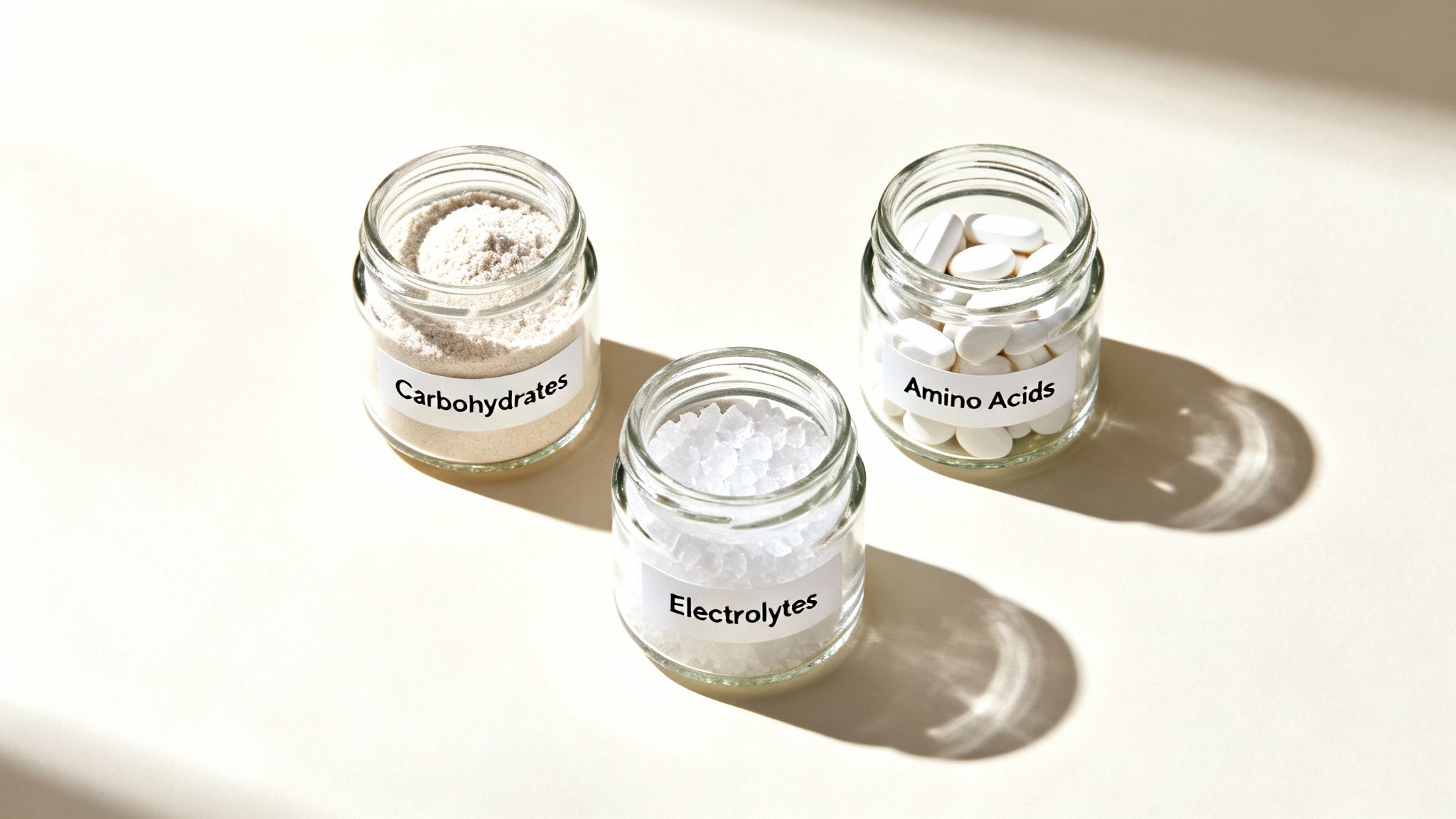
Picture your body during a tough workout as a factory running at max capacity. It needs a constant supply of raw materials (fuel), a flawless electrical grid (nerve signals), and a maintenance crew to protect the machinery (your muscles) from breaking down. A well-designed intra-workout drink is built to deliver exactly that.
Carbohydrates: The High-Octane Fuel Source
Carbohydrates are your body's go-to fuel for intense activity—they're the most efficient energy source you have. As you train, you burn through your stored glucose (glycogen) like a muscle car guzzles gas. Once those tanks get low, performance drops off a cliff. This is the dreaded "wall" or "bonk."
Sipping on carbs mid-workout is like refueling a race car during a pit stop. It provides an immediate source of energy for your working muscles, which means you don't have to drain your precious glycogen reserves. This lets you push harder, for longer.
Of course, not all carbs are built for this job.
- Fast-Absorbing Carbs: Think dextrose, maltodextrin, or cyclic dextrin. These are engineered for speed, moving from your stomach to your bloodstream in a hurry for a quick energy kick without bogging you down.
- Sustained-Energy Carbs: Some formulas might include slower-burning sources, perfect for ultra-endurance events where you need a steady drip of fuel over many hours.
The goal is simple: provide readily available energy to keep your engine redlining from the first rep to the very last.
Electrolytes: Your Body’s Electrical Wiring
If carbs are the fuel, electrolytes are the electrical system that makes the whole machine go. These essential minerals—mainly sodium, potassium, magnesium, and chloride—are the spark plugs that govern everything from muscle contractions and nerve signals to your body's fluid balance.
When you sweat, you’re not just losing water; you’re losing these critical minerals. This loss is what triggers performance-killers like muscle cramps, sudden fatigue, and a noticeable drop in power. It's like trying to run a high-tech machine with frayed wires—signals get crossed and systems start to fail.
Key Takeaway: Replenishing electrolytes isn’t just about staying hydrated. It’s about maintaining the neuromuscular communication that powers every single squat, stride, and pedal stroke.
This is why plain water often falls short during long, hot, or intense sessions. You need to top off your electrolytes to keep all internal systems firing on all cylinders. For a deeper look at how these minerals stack up, check out our electrolyte powder comparison.
Amino Acids: The Muscle Preservation Crew
During a long, grueling workout, your body can slip into a catabolic (breakdown) state. To get the energy it needs, it can start cannibalizing your own muscle tissue—the very thing you're trying to build. Amino acids, the building blocks of protein, act as a defense force for your hard-earned muscle.
Think of it this way: your body is desperate for energy and will take it from anywhere. By giving it a steady stream of amino acids, you offer up an easy alternative. Instead of tearing down valuable muscle fibers, it uses the aminos floating in your bloodstream for fuel.
This brings us to one of the biggest debates in the intra-workout world.
BCAAs vs. EAAs: A Quick Comparison
For years, Branched-Chain Amino Acids (BCAAs)—leucine, isoleucine, and valine—were the gold standard. They're well-known for their role in kicking off muscle protein synthesis and can be used as an energy source.
But the science has moved on. Essential Amino Acids (EAAs) include the three BCAAs plus six others your body can't make on its own. Since you need all nine EAAs to properly build and repair muscle tissue, providing the full set is like giving a construction crew the entire toolkit, not just a hammer and some nails.
| Feature | BCAAs (Branched-Chain Amino Acids) | EAAs (Essential Amino Acids) |
|---|---|---|
| Composition | Leucine, Isoleucine, Valine | All 9 essential amino acids |
| Primary Role | Signals muscle protein synthesis | Provides all building blocks for muscle repair |
| Best For | Reducing muscle soreness, fasted training | Comprehensive muscle preservation & recovery |
While BCAAs are certainly helpful, EAAs provide a more complete solution. They are the superior choice for most athletes focused on protecting muscle mass and kick-starting recovery during tough training.
The broader sports drink market is huge, but intra-workout formulas serve a specialized and increasingly savvy niche of endurance, strength, and hybrid athletes. Isotonic drinks—those formulated to match your body's fluid concentration for rapid absorption—currently hold about 53% of the sports drink market share in 2024. This reflects decades of athletes learning the importance of fluid and electrolyte balance. You can dig deeper into these trends on Mordor Intelligence. By understanding these core ingredients, you can cut through the marketing hype and choose a formula that truly supports your goals.
Tailoring Your Intra Workout Drink to Your Sport
Knowing the key ingredients is one thing, but applying that knowledge is where you unlock your true performance potential. An intra-workout drink isn't a one-size-fits-all solution; the perfect formula for a marathon runner would be overkill for a powerlifter, and vice versa. Your sport dictates the demands, and your drink should be built to meet them head-on.
Think of it like choosing the right tires for a vehicle. A race car needs slick tires for grip and speed, a truck needs rugged, treaded tires for hauling heavy loads, and an all-terrain vehicle needs a balanced design for versatility. Each is optimized for a specific job. Let's engineer the right fuel mix for your specific athletic engine.
The Endurance Athlete Fueling Protocol
For marathon runners, cyclists, and triathletes, the primary enemies are glycogen depletion (bonking) and dehydration. Your workout is a long, slow burn, and your fueling strategy needs to prioritize sustained energy and consistent fluid replacement above all else. The goal is to drip-feed your system just enough fuel to keep the engine running smoothly for hours.
Your primary focus should be on two key components:
- Carbohydrates: This is your main energy source. The goal is to consume easily digestible carbs to spare your stored muscle glycogen. A general guideline is 30-60 grams of carbohydrates per hour for events lasting between one and two-and-a-half hours. For ultra-endurance events, this can increase to 90 grams per hour.
- Electrolytes: As you sweat for prolonged periods, you lose critical minerals. Sodium is the most important electrolyte to replace, as it helps with fluid retention and preventing cramps. Your drink must have a meaningful dose of sodium to combat dehydration effectively.
For these athletes, amino acids are a secondary concern during the activity itself, as the immediate need for fuel and hydration takes precedence. Learn more about how to find the best electrolytes for runners in our detailed guide.
The Strength Athlete Fueling Protocol
Powerlifters, bodybuilders, and strongmen face a different set of challenges. Their workouts are typically characterized by long rest periods between short, explosive bursts of maximal effort. While total session time can easily exceed 90 minutes, the primary goal isn't preventing a cardio-based bonk, but rather minimizing muscle breakdown (catabolism) and maintaining performance rep after rep.
Here, the formulation of your intra-workout drink shifts significantly.
While endurance athletes focus on refueling the gas tank, strength athletes must focus on protecting the engine's parts from wear and tear. Muscle preservation is the name of the game.
For a strength athlete, the ideal mix prioritizes:
- Essential Amino Acids (EAAs): Sipping on 10-15 grams of EAAs during a long workout provides your body with an alternative fuel source. This prevents it from breaking down your hard-earned muscle tissue for energy, especially as fatigue sets in during those final heavy sets.
- Electrolytes: Heavy lifting, particularly in a warm gym, can still lead to significant sweat loss. Maintaining electrolyte balance helps ensure your nervous system can recruit muscle fibers effectively for maximal force production.
- Carbohydrates (Optional): Carbs are less critical here unless the session is extremely high-volume or you're training in a fasted state. A small amount, around 15-30 grams, can help keep energy levels stable without causing digestive discomfort.
The Hybrid Athlete Fueling Protocol
Hybrid athletes—like CrossFitters, tactical professionals, or MMA fighters—live in the demanding middle ground. They need the stamina of an endurance athlete combined with the power of a strength athlete. Their workouts blend metabolic conditioning with heavy lifts, requiring a drink that can do it all.
The strategy here is to create a balanced formula that addresses both energy needs and muscle preservation simultaneously.
A balanced hybrid formula might look like this:
- Moderate Carbohydrates: Aim for 25-45 grams of fast-acting carbs per hour to fuel the high-intensity conditioning portions of the workout and keep energy levels from crashing.
- Essential Amino Acids: Include 5-10 grams of EAAs to provide a steady stream of muscle-sparing fuel, protecting you during grueling WODs or circuits.
- Comprehensive Electrolytes: Due to the high-intensity nature and significant sweat rates common in these sports, a robust electrolyte profile is non-negotiable to maintain hydration and muscular function.
Athlete-Specific Intra Workout Formulation Guide
Every athlete's engine runs on a slightly different fuel. This table breaks down the core priorities for each discipline, helping you dial in the right mix for your specific training demands.
| Athlete Type | Primary Goal | Recommended Carb Intake (per hour) | Recommended Electrolyte Focus | Amino Acid Priority |
|---|---|---|---|---|
| Endurance | Glycogen preservation, hydration | 30-90g | High Sodium, Potassium | Low |
| Strength | Muscle preservation, force output | 0-30g | All key electrolytes | High (EAAs) |
| Hybrid | Sustained energy, muscle preservation | 25-45g | Comprehensive profile | Moderate (EAAs) |
By matching your intra-workout drink to your specific athletic demands, you move from generic supplementation to a precise performance tool. This targeted approach ensures you're giving your body exactly what it needs, right when it needs it most.
How to Customize Your Fueling Strategy
True performance happens when you stop using generic, one-size-fits-all plans and start listening to your body. A standard intra-workout drink is a great place to start, but dialing in the details for your specific needs is what separates good from great.
Think of your body like a high-performance race car. A mechanic wouldn't use the same engine tune for a hot desert track as they would for a cool, damp one. You need to be your own mechanic, adjusting your fuel mix based on the unique challenges of the day.
Fine-Tuning for Environmental Stressors
The weather plays a massive role in your body's demands. A cool, overcast morning is a completely different beast than a sweltering, humid afternoon, and your intra-workout drink has to reflect that reality.
When the heat and humidity climb, your body works overtime to cool itself, which means you sweat—a lot. This is where most athletes mess up. They chug water to replace fluids but completely ignore the massive loss of electrolytes, especially sodium.
- Hot & Humid Conditions: Your number one priority should be upping the sodium in your drink. Losing too much sodium is a fast track to muscle cramps and a nosedive in performance. Don't hesitate to toss in an extra electrolyte tab or even a small pinch of salt on those really brutal days.
- High Altitude: Training at altitude makes you breathe faster and lose more fluid through respiration, even if it doesn't feel like you're sweating buckets. You have to stay on top of hydration with a solid, balanced electrolyte profile to fight off this "invisible" dehydration.
Accounting for Individual Physiology
Here’s the thing: no two athletes are the same. Even if you’re following the exact same training program as your buddy, your personal sweat rate, diet, and genetics mean your fueling needs will be different.
One of the biggest variables is your sweat rate. Some of us are just "salty sweaters," losing way more sodium than the average person. You'll know if this is you—just look for the white, chalky stains on your gear after a hard session. If that sounds familiar, a standard electrolyte mix probably isn't going to cut it.
A personalized approach means you learn to read your body’s signals. If you consistently cramp up even when you think you’re hydrating properly, that's a huge red flag that your electrolyte strategy—and specifically your sodium intake—needs a serious overhaul.
This chart gives a solid overview of how different types of athletes should think about their fueling priorities.
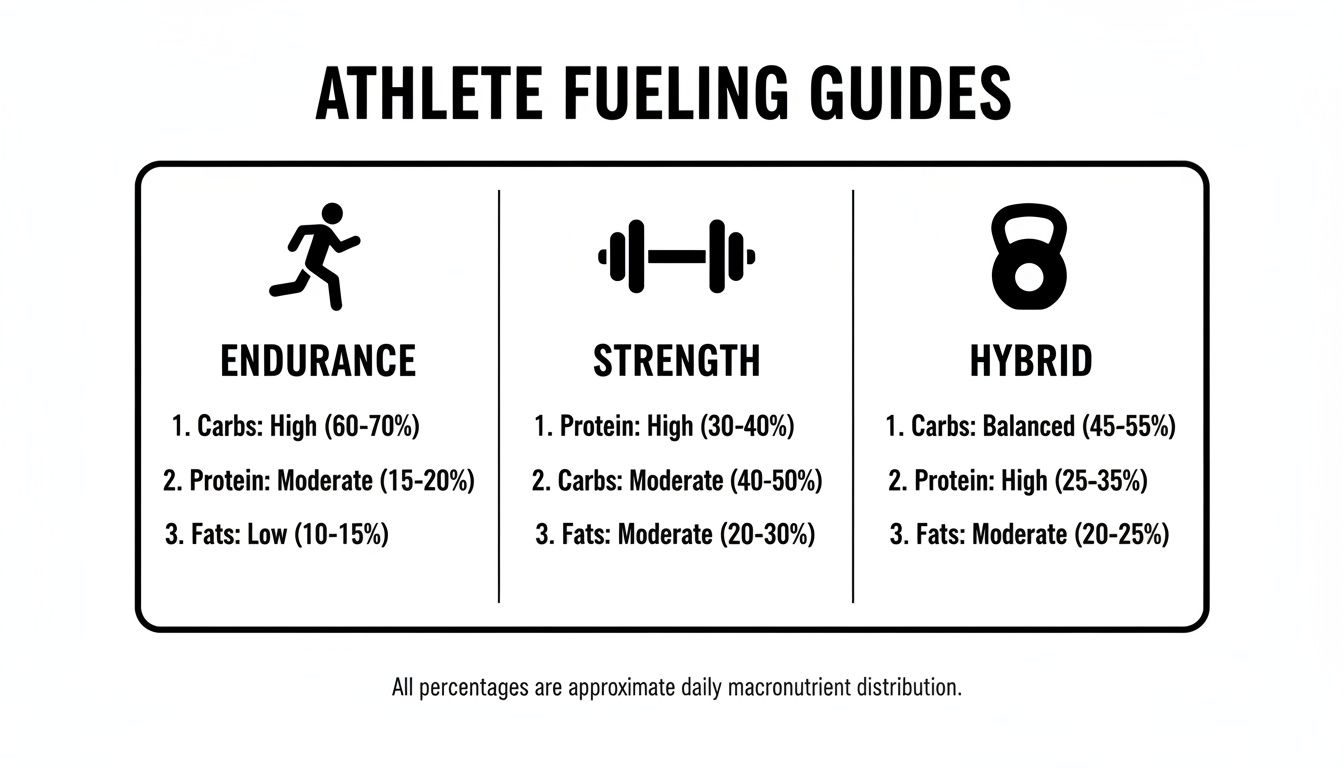
As you can see, endurance, strength, and hybrid athletes all have different macronutrient demands they need to meet to perform at their best.
Fueling for Specific Dietary Contexts
What you eat day-to-day has a huge impact on what you need during your workout. The strategy for someone on a high-carb diet is useless for someone who trains fasted or follows a ketogenic lifestyle. Customizing your drink for these scenarios isn’t just a good idea; it’s essential.
Take fasted training, for example. You’re going into a workout with an empty tank, which puts you at a much higher risk of muscle breakdown (catabolism). Your intra-workout drink suddenly becomes your first line of defense for preserving hard-earned muscle.
- Fasted Training Protocol: The focus shifts entirely to amino acids. Sipping on 10-15 grams of Essential Amino Acids (EAAs) during your session gives your body the building blocks it needs, stopping it from cannibalizing your own muscle tissue for energy. You can learn more about how a quality https://rvsci.com/blogs/blog/amino-acids-supplement supports these goals.
- Ketogenic Diet Protocol: On a keto diet, your body is trained to use fat for fuel. You still need to replace electrolytes, and you can benefit from performance aids that don't kick you out of ketosis. A formula heavy on electrolytes, sometimes with exogenous ketones added, can help you maintain physical performance and mental sharpness.
Remember, your intra-workout drink is just one piece of the puzzle. For a truly complete approach, you need to integrate it with a solid guide to pre and post-workout nutrition. This ensures your body is primed for success before, during, and after every single session.
Common Fueling Mistakes to Avoid
Nailing your intra-workout drink is a science, but even the best formula can fall flat if you stumble into a few common fueling traps. Getting the execution right is every bit as important as picking the right ingredients. Let's walk through the mistakes that can turn your performance strategy against you.
Sidestepping these errors means your fueling efforts actually translate into better performance. It's about making your nutrition work for you, helping you break through barriers instead of building new ones.
Over-Concentrating Your Drink
More isn't always better. It’s so tempting to throw in an extra scoop for a bigger boost, but this is one of the fastest ways to derail your own performance. When your intra-workout drink is too concentrated, it becomes hypertonic—it has a higher concentration of solutes (like carbs and electrolytes) than your blood.
Instead of absorbing quickly, this thick, sugary mix just sloshes around in your stomach. Your body actually has to pull water from your system just to dilute it, leading to the exact opposite of what you want:
- Bloating and stomach cramps
- Nausea and gut rot
- Delayed hydration and fuel delivery
Pro Tip: Always follow the mixing instructions on the label. They’re designed to create an isotonic solution that matches your body's fluid concentration for rapid absorption without the digestive drama. Your drink should feel light and refreshing, not thick and syrupy.
Relying on Your Pre-Workout
A lot of athletes think the buzz from their pre-workout will carry them through an entire session. While a pre-workout is great for getting you fired up, its key ingredients—caffeine, beta-alanine—are really designed for the first 30-60 minutes. They're the ignition, not the fuel tank.
Once you get past that initial window, especially in sessions lasting over 90 minutes, your body's real-time needs for fuel and hydration kick in. Your pre-workout just doesn't have the sustained carbohydrates or the right electrolyte balance to replace what you’re sweating out. Trying to run a long session on pre-workout alone is like trying to run a marathon on a single cup of coffee. It won't end well.
Ignoring Electrolyte Balance
Focusing only on carbs and water while forgetting electrolytes is a surefire way to run into a wall. Electrolytes, especially sodium, are the conductors for your body's entire electrical system. They govern every single muscle contraction.
When you sweat, you lose these vital minerals, and that leads directly to performance killers. This imbalance is one of the main culprits behind those debilitating muscle spasms. You have to actively replace what you lose to keep your muscles firing properly. For a deeper dive, our guide on how to prevent muscle cramps gives you actionable strategies. Under-fueling electrolytes is one of the most common—and painful—mistakes you can make.
Choosing a Safe and High-Quality Supplement
In a crowded market, knowing what’s actually inside your shaker bottle is non-negotiable. Not all intra-workout drinks are created equal, and prioritizing quality is the only way to ensure you're supporting your performance—not sabotaging it with mystery ingredients.
Your first line of defense? Third-party testing.
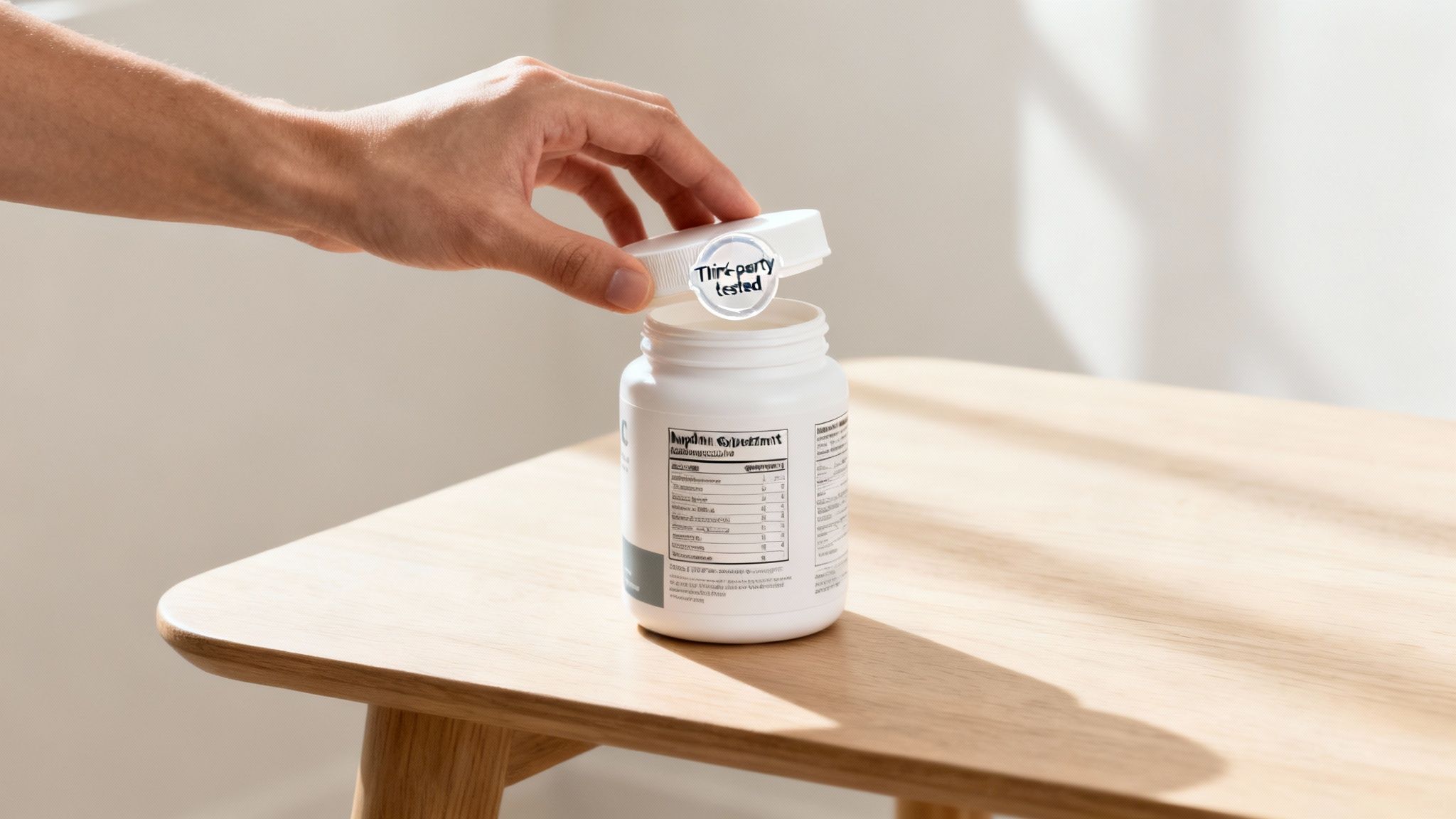
Certifications from independent bodies like NSF Certified for Sport or Informed-Sport are your guarantee of quality. These organizations rigorously test products to verify that what's on the label is what's in the bottle. More importantly, they check for banned substances and harmful contaminants, so you can fuel your body with confidence.
How to Read a Supplement Label
Beyond certifications, the label itself tells a crucial story. A high-quality supplement will have a fully transparent label, listing the exact dosage of every single active ingredient. Be on the lookout for a major red flag: proprietary blends.
A proprietary blend lumps multiple ingredients under a single name, listing only the total weight. This practice hides individual ingredient dosages, making it impossible to know if you're getting an effective amount of anything or just a sprinkle of expensive "fairy dust."
Look for clean, simple formulas that skip the unnecessary fillers, artificial colors, or excessive sweeteners. The best products deliver effective doses of what works without the fluff. The container you mix it in matters, too. For instance, understanding BPA-free plastics is important for making sure your shaker bottle is also safe.
The Importance of Brand Transparency
The sports nutrition world is massive—the U.S. market alone is estimated at USD 29.42 billion in 2024. With so many options, brands that are transparent about their sourcing, manufacturing, and testing really stand out.
Trustworthy companies provide clear information and stand behind the purity of their products. They aren't just selling a powder; they're offering a reliable tool for your performance toolkit.
Common Questions on Intra-Workout Drinks
Even when you've got a solid plan, new questions always pop up. Let's tackle some of the most common ones about intra-workout drinks so you can fuel your sessions with confidence.
Can I Just Drink Water During My Workout?
For shorter workouts, sure. If you're training for under an hour, water is usually fine. But once you start pushing past that mark, especially for grueling sessions over 90 minutes, water alone just won't cut it.
That's because you're not just losing water when you sweat—you're losing critical electrolytes. On top of that, your body is burning through its fuel reserves. An intra-workout drink is built to solve both problems, replenishing fuel and minerals while you're still in the fight.
Will an Intra-Workout Drink Make Me Gain Weight?
Not if you're using it as intended. The carbs in these drinks are there for one reason: to be burned for immediate energy during your workout, not to be stored as fat. You’re simply giving your body a readily available fuel source to match the calories you're burning in real-time.
Think of it like adding fuel to a car while the engine is running. The energy gets used right away to keep things moving, which prevents your body from having to break down hard-earned muscle tissue for energy instead.
The goal here is performance, not a calorie surplus. A well-formulated intra-workout drink powers your training intensity, which ultimately helps you hit your body composition goals more effectively.
How Soon Should I Start Drinking It?
The biggest mistake you can make is waiting until you feel thirsty or tired. By then, the damage is already done. A good rule of thumb is to start sipping your intra-workout about 20-30 minutes into your session.
This timing is key. It allows the nutrients to hit your bloodstream just as your body’s initial energy stores start to run low. From there, sip it steadily throughout the rest of your workout. This provides a constant drip of fuel and hydration, which is far better than chugging it all at once and risking digestive issues.
At Revolution Science, we create clean, research-backed supplements to help you perform at your absolute best. Our products are designed for transparency and effectiveness, giving you the tools you need to push past your limits. Explore our full range of performance nutrition solutions.