
Your Cart is Empty


Best Supplements for Muscle Recovery
The absolute best supplements for muscle recovery are the ones that get right to the heart of the matter: supporting muscle protein synthesis, refilling your energy tanks, and keeping inflammation in check. For almost everyone, a high-quality protein powder (whey or plant-based) and creatine monohydrate are the unbeatable one-two punch for kickstarting repair and growth after you’ve put in the work.
Why Muscle Recovery Is Your Most Important Workout
Most athletes are conditioned to think that all the magic happens in the gym. It's all about that final, grueling rep or that last punishing mile. But the truth is, the most critical part of your training isn't the workout itself—it’s what you do after. Real, lasting fitness gains aren't forged while you're lifting or running; they're built in the quiet hours and days that follow.
This period isn’t just about putting your feet up. It's an active, complex biological process of rebuilding.
Think of your muscles as a brick wall. Your workout is like a controlled storm that rolls through. The intense exercise creates tiny, necessary micro-tears in the muscle fibers—it’s like chipping away at the mortar and knocking a few bricks loose. This damage sounds bad, but it’s the very signal that tells your body it’s time to get stronger.
Once the "storm" passes, your body immediately dispatches a dedicated construction crew to the site. This crew's job is not just to patch up the damage but to reinforce the wall so it can handle an even bigger storm next time. This entire repair process is known as muscle protein synthesis (MPS). Your body rushes nutrients and amino acids (the new bricks and mortar) to the damaged area to rebuild it bigger, stronger, and more resilient than before.
The Science of Rebuilding Stronger
This is precisely where the right supplements come into play. They aren't magic pills that build muscle out of thin air. Instead, think of them as high-efficiency power tools that equip your internal construction crew to do its job faster and more effectively.
- Supplying Materials: A good protein supplement provides a rapidly-absorbed source of amino acids, ensuring your crew has all the raw building materials it needs, right when it needs them.
- Providing Energy: Supplements like creatine help quickly refuel the muscle's immediate energy systems, which powers the demanding repair process without any delay.
- Managing the Site: Certain nutrients help manage the post-workout inflammation, clearing away the debris and rubble so the rebuilding can happen on a clean, stable foundation.
Understanding this cycle is the key to unlocking your true potential. Without proper recovery, you’re just repeatedly damaging the wall without ever giving the crew the time or resources to rebuild. This is a fast track to plateaus, burnout, and a much higher risk of injury.
Ultimately, your workout is just the stimulus. The real work—the growth, the strength gains, and the improved endurance—happens when you give your body the tools and the time it needs to adapt. When you learn how to recover faster after a workout, you transform your training from a simple cycle of breakdown into a powerful engine for progress. The best supplements for muscle recovery are simply catalysts for this natural, powerful process.
The Foundational Supplements for Muscle Repair
Once you grasp that recovery is an active construction project happening inside your body, the next move is obvious: you have to give your internal crew the right tools for the job. Countless products out there promise miracles in a bottle, but only a select few have consistently proven their worth under the harsh lights of scientific scrutiny and in the real world of hard-training athletes.
These foundational supplements are the undisputed heavy hitters of any smart recovery strategy. Each one plays a distinct—and vital—role in the rebuilding process.
Think of it like a toolkit. You need raw materials to build with, a power source to run the machinery, a project manager calling the shots, and a cleanup crew to handle the mess. Let's break down the supplements that fill these essential roles.
The visual below breaks down the three core stages of muscle recovery: the initial damage from your workout, the rebuilding phase where the magic happens, and the growth that follows.
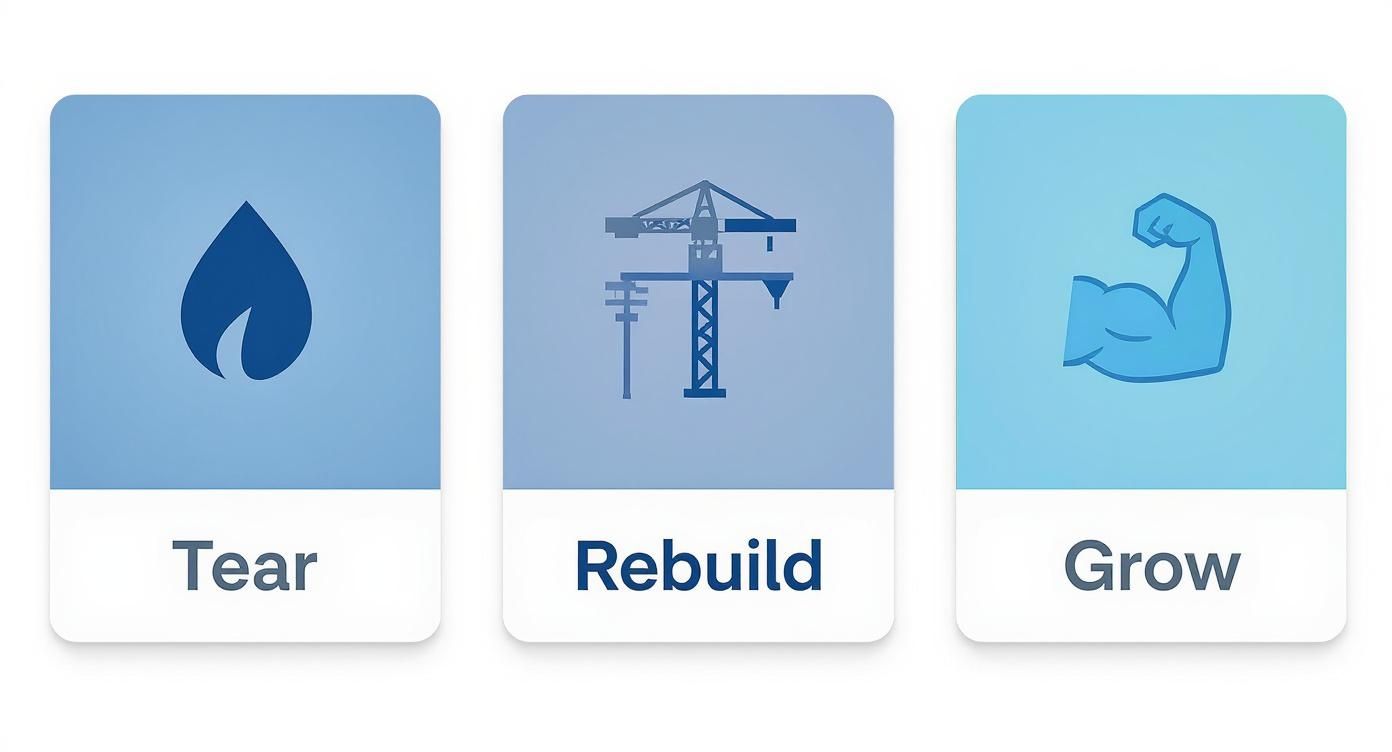
This simple progression is key. It shows how those exercise-induced micro-tears are the necessary trigger for the repair and adaptation process that ultimately makes you stronger and more resilient.
Protein: The Essential Building Materials
If your muscle fibers are a brick wall, protein is the fresh supply of bricks and mortar needed to patch it up and build it higher. After a tough workout, your body flips the switch on for muscle protein synthesis (MPS), but this process grinds to a halt without a ready supply of amino acids—the literal building blocks of protein.
Consuming protein, especially in that critical post-workout window, is like having a delivery truck drop those materials right at the construction site. This ensures your body can not only repair the damage but also add new material, making the muscle bigger and stronger than before.
It’s no wonder protein powders are the most popular recovery tool. In fact, muscle recovery supplements are a cornerstone of the booming U.S. sports supplements market, which was valued at $43.16 billion and is projected to hit $86.74 billion by 2033. Protein powders dominate this space, commanding a massive 72.53% of revenue, with convenient ready-to-drink shakes making up over half of all liquid supplement sales.
You have a few high-quality options to choose from:
- Whey Protein: This is the fast-acting superstar. Whey digests quickly, sending a rapid spike of amino acids straight to your muscles. It's the perfect choice for immediately after a workout.
- Casein Protein: Think of this as the slow-release workhorse. Casein forms a gel in the stomach, which leads to a slow, steady drip-feed of amino acids for hours. This makes it ideal before bed to fuel recovery overnight.
- Plant-Based Proteins: Excellent options like pea, rice, and soy protein have become incredibly effective and popular. For the best results, look for a blend of different plant sources to ensure you’re getting a complete amino acid profile, just like you would from whey or casein.
For most athletes, a serving of 20-40 grams of high-quality protein within an hour or two after training is the gold standard for kickstarting muscle repair.
Creatine: The Rapid Recharge Station
While protein provides the raw building materials, creatine is the power supply for your muscle cells. It works by topping off your body's stores of phosphocreatine, a molecule that helps rapidly regenerate adenosine triphosphate (ATP)—the primary energy currency for every cell in your body.
Think of it as a rapid-recharge power bank for your muscles. A hard training session completely drains this immediate energy source. Supplementing with creatine ensures this power bank is always full, allowing your muscles to perform at a higher level during your workout and providing the raw energy needed to fuel the demanding repair process afterward.
Study after study confirms that creatine supplementation leads to increased strength, better performance, and faster recovery between sets and workouts. It is hands-down one of the most researched and effective supplements on the planet.
How to Use Creatine Effectively:
- Loading Phase (Optional): Take 20 grams per day (split into four 5-gram doses) for 5-7 days. This will quickly saturate your muscles.
- Maintenance Phase: After loading, or if you choose to skip it, just take 3-5 grams daily. This is all you need to keep your muscle stores topped off. Timing isn't as critical as just taking it consistently every day.
BCAAs: The Project Foremen
Branched-Chain Amino Acids (BCAAs) are a special group of three essential amino acids: leucine, isoleucine, and valine. While a good protein powder gives you all the amino acids you need, BCAAs—and particularly leucine—play a unique role.
Leucine acts like the project foreman on the construction site. It's the one that blows the whistle and directly signals the body to kick off muscle protein synthesis. By taking BCAAs, you're essentially sending a loud and clear message to your muscle cells: "The materials are here! Get to work rebuilding, now!"
This is why BCAAs can be particularly helpful for protecting hard-earned muscle during intense training blocks or when you're in a calorie deficit. They help reduce muscle soreness and fight off fatigue by signaling repair and preventing your body from breaking down existing muscle tissue for energy. Many athletes find that using specific supplements for athletes gives them a critical edge in both performance and recovery.
Tart Cherry Extract: The Inflammation Cleanup Crew
After the "storm" of a workout, your muscle tissue is inflamed. A little inflammation is a good thing—it’s part of the signal for recovery. But when that inflammation gets out of hand or hangs around too long, it cranks up soreness and can slow down the repair process.
This is where tart cherry extract shines. It acts as the "inflammation cleanup crew," thanks to its incredibly high concentration of anthocyanins, which are powerful antioxidant compounds.
These compounds help gently manage exercise-induced inflammation and oxidative stress without completely shutting down the natural healing response. The result? Studies have shown that supplementing with tart cherry can significantly cut down on post-workout muscle soreness and help you get your strength back faster. It won’t eliminate soreness completely, but it definitely takes the edge off, allowing you to get back to training sooner and with far less discomfort.
For the best results, consistency is key. Try taking 400-500 mg of tart cherry extract or drinking concentrated tart cherry juice daily, especially on and around your toughest training days.
To make it easier to see how these key players fit into your routine, here's a quick look at the top-tier supplements for muscle recovery.
Top Muscle Recovery Supplements At a Glance
This table summarizes the heavy hitters, what they do, and how to use them for the best results.
| Supplement | Primary Function | Typical Daily Dose | Optimal Timing |
|---|---|---|---|
| Protein Powder | Provides essential amino acids for muscle protein synthesis (MPS) | 20–40 grams | Within 2 hours post-workout |
| Creatine Monohydrate | Replenishes ATP (energy) to fuel muscle repair and growth | 3–5 grams | Daily, anytime |
| BCAAs | Leucine signals the start of MPS; reduces muscle breakdown | 5–10 grams | Pre-, intra-, or post-workout |
| Tart Cherry Extract | Manages inflammation and reduces muscle soreness | 400–500 mg | Daily, especially around tough workouts |
Think of these four as your foundational crew. By supplying the right materials, power, and signals at the right time, you create the perfect environment for your body to not just repair, but to come back stronger than before.
Situational Supplements for Advanced Recovery Needs
Once you’ve got your foundational recovery plan dialed in, it’s time to start thinking like a specialist. Just as a mechanic reaches for a specific tool to fix a unique problem, an athlete can use situational supplements to tackle very specific recovery challenges. These aren’t everyday essentials for most people, but for the right person in the right situation, they can be absolute game-changers.
This next level of support moves beyond general muscle repair. We're now targeting the more nuanced aspects of recovery, like managing exercise-induced stress, buffering metabolic byproducts, and shoring up an overworked immune system. Think of these as strategic upgrades to your core recovery protocol.
Beta-Alanine: The Endurance Buffer
If you’ve ever felt that intense, burning sensation in your muscles during a high-rep set or a final sprint, you’ve met lactic acid. Beta-alanine’s job is to help your body produce more carnosine, a compound that acts as a buffer against this acid buildup right inside your muscles.
Imagine it like adding a pinch of baking soda to an acidic liquid—it helps neutralize the environment. By boosting your carnosine levels, beta-alanine allows you to push through that burn for a few more reps or a few more seconds, ultimately increasing your total work capacity. This means you can train harder for longer, creating a more powerful stimulus for growth and adaptation.
For athletes in sports that demand repeated bursts of high-intensity effort—think CrossFit, HIIT, or mid-distance running—beta-alanine can provide a significant performance edge.
L-Glutamine: The Immune System Supporter
Intense, prolonged training is a massive stressor, and not just on your muscles. It puts a heavy tax on your entire body, especially your immune system. L-glutamine happens to be the most abundant amino acid in your body and a primary fuel source for your immune cells.
When you're consistently pushing your limits, your body's demand for glutamine can outpace its ability to produce it, potentially leaving your immune system vulnerable. Supplementing with L-glutamine ensures these crucial cells have the energy they need to function at their best. This is particularly valuable for endurance athletes or anyone grinding through a grueling training block who simply can’t afford to get sidelined by illness.
While its direct role in muscle growth is often debated, its value in keeping you healthy enough to train consistently is undeniable. You can’t recover from a workout you couldn’t do because you were sick.
Omega-3 Fatty Acids: The Inflammation Manager
While some inflammation is a necessary and productive signal for muscle repair, chronic, systemic inflammation can grind your recovery to a screeching halt. Omega-3 fatty acids, particularly the EPA and DHA found in fish oil, are powerful anti-inflammatory agents.
They work at a cellular level to help resolve inflammation throughout the body, which can translate to less overall muscle soreness and better joint health. This makes them one of the best supplements for muscle recovery when soreness becomes a limiting factor in your training frequency. For aging athletes or those whose joints take a constant pounding, a daily dose of high-quality omega-3s is a smart, proactive strategy. For optimal hydration support, especially during intense sessions, you can review our comprehensive electrolyte powder comparison to find what works for your needs.
Ashwagandha: The Stress Reducer
Recovery isn't just physical; it's hormonal, too. Cortisol, the body's primary stress hormone, is naturally elevated after a hard workout. That's normal. The problem arises when chronic life stress keeps cortisol levels high around the clock, as this can interfere with muscle repair and even promote muscle breakdown.
Ashwagandha is an adaptogen, a class of herbs that helps the body manage and adapt to stress more effectively. By helping to moderate cortisol levels, it fosters a more favorable hormonal environment for recovery and growth. This makes it an excellent tool for busy professionals, competitive athletes feeling the pressure, or anyone whose high stress levels might be sabotaging their efforts in the gym.
The demand for these kinds of specialized ingredients is on the rise. The global post-workout supplements market is expected to grow from $86.4 million to $127 million by 2031. In the same vein, the sports herbal supplements market, which features ingredients like ashwagandha, is projected to expand from $2.58 billion to $4.42 billion by 2034, highlighting a clear trend toward these targeted recovery solutions.
How to Match Your Supplements to Your Training Style
A one-size-fits-all approach to supplements is like giving every athlete the exact same workout plan—it just doesn't fly. The best supplements for muscle recovery are the ones that line up perfectly with the unique beating you put your body through. A powerlifter’s needs are worlds away from a marathon runner’s, and both are different from an older athlete working to maintain strength for life.
This is where a personalized strategy is the difference between good intentions and real results. When you match your supplement protocol to your training style, you know every dollar you spend and every scoop you take is directly fueling your goals. Let's break down the recovery playbooks for three very different types of athletes.
For the Strength Athlete: Powerlifters and Bodybuilders
For those who live and die by the barbell, recovery has one primary mission: maximizing muscle protein synthesis (MPS). Your training sessions are all about creating massive muscle damage, which is the direct signal for growth. Your supplement strategy needs to be ruthlessly focused on providing the raw materials and activating the signals for an aggressive rebuild.
The name of the game is speed, efficiency, and power.
- Whey Protein Isolate: The second your workout ends, the priority is to flood your muscles with amino acids as fast as humanly possible. A fast-digesting whey isolate gets those building blocks delivered with unmatched speed.
- Creatine Loading and Maintenance: Strength is your currency, and creatine is the absolute gold standard for minting more of it. A loading phase of 20 grams per day for a week, followed by a daily 5-gram maintenance dose, keeps your immediate energy stores topped off for explosive power.
- Casein Before Bed: The rebuilding process doesn’t clock out when you go to sleep. A slow-digesting casein protein shake before bed creates a steady drip-feed of amino acids all night long, fighting off muscle breakdown and fueling repair while you rest.
This trifecta creates a 24/7 anabolic environment, making sure your body is always primed to turn hard work into real, measurable gains. If you want to go even deeper on this, our guide on a complete muscle growth supplement strategy breaks it down further.
For the Endurance Athlete: Marathoners and Triathletes
Endurance athletes are playing a totally different sport. Your recovery isn't just about rebuilding muscle tissue. It's about restocking the fuel tanks, managing system-wide inflammation, and rebalancing electrolytes lost over hours of sweating.
Your playbook is all about stamina and efficiency.
- Rapid Glycogen Replenishment: Glycogen is your primary fuel. Slamming fast-acting carbs with some protein right after training is non-negotiable for refilling those depleted energy tanks so you can show up for your next session.
- Electrolyte Balance: You lose critical minerals like sodium, potassium, and magnesium through sweat, and they are essential for your muscles to even function. Consistent electrolyte replenishment is the only way to prevent cramping and keep performance from tanking.
- Inflammation Management: The sheer repetitive stress of endurance work creates widespread inflammation. Tools like tart cherry extract and omega-3 fatty acids are your best friends for keeping soreness in check and supporting long-term joint health.
For an endurance athlete, recovery is a constant balancing act. If you fail to refuel and manage inflammation, you're on a direct path to overtraining and burnout. Your supplements are the tools that help you maintain that crucial equilibrium.
For the Active Ager: Maintaining Lifelong Vitality
For athletes over 40, the rules of the game have changed. The goal shifts from hitting new PRs to maintaining hard-earned muscle mass, preserving strength, and supporting mobility for the long haul. Your new main opponent is sarcopenia—the age-related loss of muscle.
Your supplement strategy should be defensive, built around preservation and resilience.
- Leucine-Rich Protein: As we get older, our bodies get a little "deaf" to the signals that trigger MPS. We can overcome this "anabolic resistance" by consuming more protein, specifically protein high in the amino acid leucine, which acts like the master switch for muscle building. Aiming for 30-40 grams of protein per meal is a smart play.
- Consistent Creatine Use: Creatine isn’t just for the young guns. For aging athletes, a steady daily dose of 3-5 grams has been shown to improve strength, preserve muscle mass, and even support cognitive function.
- Vitamin D: This vitamin is crucial for bone health and muscle function, and it's something many older adults don't get enough of. Making sure your levels are adequate supports the entire musculoskeletal system, giving you a solid foundation to stay active.
By tailoring your approach, you stop guessing and start knowing. You ensure your recovery strategy is just as specialized and effective as your training itself.
Choosing Safe and Effective Supplements

Let's be honest: navigating the supplement industry can feel like walking through a minefield. Between the flashy labels and bold claims, it’s tough to know which products are genuinely effective and, more importantly, safe. Making the right choice here isn't just about getting results—it's about protecting your health.
The global market for muscle recovery supplements is already worth around $695 million and it's not slowing down. As more athletes understand how critical recovery is, more brands jump into the game. But not all of them play by the same rules. If you're looking for the best supplements for muscle recovery, your most powerful tool is knowing how to verify a product's integrity. You can dig deeper into these trends in this detailed market analysis.
Look for Third-Party Certifications
Think of third-party certifications as an independent quality audit. These organizations test products to make sure what's on the label is actually in the bottle, and to ensure it’s free from harmful contaminants or banned substances. For any serious athlete, this is non-negotiable.
Your go-to seals of approval should be:
- NSF Certified for Sport: This is the gold standard, trusted by major sports leagues like the NFL and MLB. It verifies what’s on the label and screens for over 270 substances banned in sport.
- Informed-Sport: This certification provides an extremely high level of assurance by testing every single batch of a product for prohibited substances before it hits the market.
When you see one of these logos, it means the company has voluntarily opened its doors to rigorous, unbiased inspection. It’s a clear sign of transparency and a commitment to quality that goes way beyond marketing fluff.
How to Decode a Supplement Label
A supplement label tells a story. Once you learn to read it, you can spot red flags instantly. It’s about more than just glancing at the ingredient list; you have to know what you’re looking for.
Keep an eye out for these potential warning signs:
- Proprietary Blends: This is a huge red flag. Companies use this term to hide the exact amount of each ingredient, making it impossible for you to know if you're getting an effective dose or just a sprinkle of the good stuff.
- Unnecessary Fillers: Scan the ingredients list for things like magnesium stearate, silicon dioxide, or artificial colors. If they're high up on the list, it can be a sign of a low-quality product cutting corners.
- Outlandish Claims: If a supplement promises "steroid-like gains" or "instant fat loss," walk away. Reputable brands back their products with science, not sensationalism.
By prioritizing third-party tested products and scrutinizing labels, you can confidently choose supplements that are pure, potent, and actually help you reach your goals. This diligence ensures your investment is enhancing your recovery, not undermining your health.
Got Questions? Let's Talk Recovery Supplements
Look, even when you have a solid game plan, questions pop up. That’s just part of dialing in your recovery. The world of sports nutrition can get confusing, and getting straight answers is often the difference between breaking through a plateau and just spinning your wheels.
This section is designed to cut through all that noise. We're going to tackle the most common questions about muscle recovery supplements head-on. Think of it as that last huddle with your coach—clearing up any final doubts so you can go execute with confidence.
Can't I Just Get Everything I Need From Food?
In a perfect world? Maybe. And let’s be clear: food should always be the bedrock of your nutrition plan. But for anyone pushing their body hard, supplements offer a strategic edge that food alone often struggles to provide.
It really boils down to three things: speed, concentration, and convenience.
- Speed of Absorption: A whey protein shake gets critical amino acids into your muscles way faster than your body can digest a chicken breast. In that immediate post-workout window, that speed is everything.
- Targeted Dosing: Trying to get a clinically effective dose of creatine (3-5 grams) or tart cherry extract from whole foods is practically impossible. Supplements give you the precise, concentrated dose you need to actually trigger a biological response.
- Practicality: Let's be real. After a gut-busting workout, the last thing you want to do is cook a full meal. A recovery shake is simple, effective, and guarantees you don't miss that critical window for repair.
Supplements don’t replace good nutrition. They’re a targeted tool to enhance it, filling the specific gaps created by a demanding athletic lifestyle.
How Long Until I Actually See Results?
This is the million-dollar question, and the honest answer is, "it depends." Some supplements give you feedback pretty quickly. You might feel less muscle soreness from tart cherry within just a few days of consistent use, for example.
But for foundational players like protein and creatine, the real magic happens over the long haul.
The benefits of the best recovery supplements are cumulative. They work by creating a better internal environment for your body to adapt over weeks and months. It’s not about how you feel after one workout; it’s about consistently giving your body the tools it needs to rebuild stronger, session after session.
Think of it like investing. You don't get rich overnight. But small, consistent contributions compound over time to build serious wealth. It’s the same with supplements—consistent use is what leads to those measurable gains in strength, size, and performance you see in your training log. The real results show up in your logbook, not just in how you feel the next day.
Which Supplements Are a Waste of Money?
Knowing what to avoid is just as important as knowing what to take. The market is absolutely flooded with products that make huge promises but deliver next to nothing.
Here’s a quick list of red flags to watch out for:
- Proprietary Blends: If a label hides its ingredient amounts behind a "secret formula" or "matrix," put it back on the shelf. You have no idea if you're getting an effective dose of anything. Always demand transparent labels.
- "Testosterone Boosters": The vast majority of over-the-counter products making these claims are packed with useless herbs that have little to no real impact on your hormone levels.
- Sugar-Bomb Weight Gainers: Many "mass gainer" products are just low-quality protein powder bulked up with massive amounts of cheap sugar or maltodextrin. You’re far better off getting your carbs from real food you can control.
Is It Safe to Combine or "Stack" Supplements?
Absolutely. Stacking foundational supplements is not only safe but often the best way to maximize your results. The key is to stack smartly by combining ingredients that work through different, complementary pathways.
A classic, battle-tested stack is protein powder and creatine monohydrate. Protein provides the raw building blocks for muscle repair, while creatine helps supply the energy for that entire rebuilding process. They work together perfectly without any negative interactions, forming the cornerstone of countless effective recovery strategies.
At Revolution Science, our entire focus is on creating clean, effective, and transparently dosed formulas that actually support your performance and recovery. We engineer our products without the fillers or pseudoscience, so you know exactly what you’re putting in your body. Explore our research-backed supplements to build your perfect recovery stack.