
Your Cart is Empty


How to Fuel for a Marathon A Science-Backed Runner's Guide
Fueling for a marathon isn't just about what you eat the morning of the race; it's a carefully orchestrated plan for carbohydrates, fluids, and electrolytes that starts long before you even get to the starting line.
The entire strategy really boils down to this: practicing on your long runs so you can confidently nail 60-90 grams of carbs and 500-750 mL of fluid every single hour on race day.
Your Marathon Fueling Blueprint
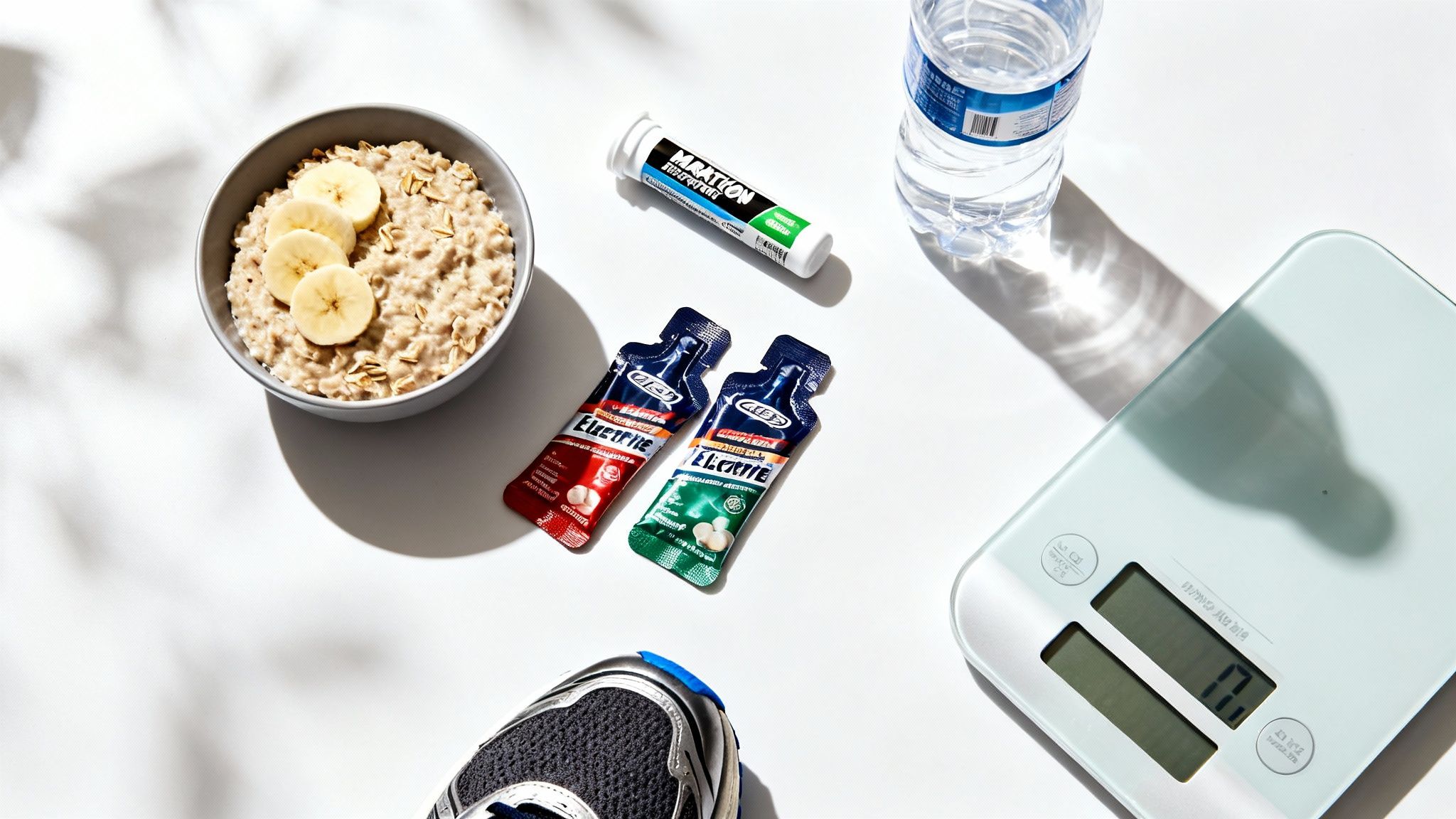
If you're thinking you can just "wing it" on race day, it's time for a reality check. Your nutrition strategy is every bit as important as your long runs and tempo workouts. Getting your fueling right is a science, and it's your best defense against hitting the dreaded "wall" and unlocking your best performance over 26.2 miles.
Think about it—your body can only store enough glycogen (your most accessible form of carb energy) for about 90-120 minutes of hard running. When those reserves get low, everything goes downhill. Your pace drops, your mind gets foggy, and every step feels like you're running through mud. This is where your fueling plan becomes your single most important piece of gear.
Why a Fueling Plan Is Non-Negotiable
A well-practiced fueling plan takes the guesswork out of race day. It's not just about surviving; it's about giving your body what it needs to perform from the first mile to the last. The goals are simple but incredibly powerful:
- Maintain Energy Levels: By consistently taking in carbs, you keep your glycogen stores topped off, which keeps your muscles firing and your brain in the game.
- Prevent Dehydration: Balancing fluids and electrolytes is absolutely critical for muscle function, keeping your body cool, and staving off cramps. We touch on some of these fundamentals in our guide to building endurance for running.
- Avoid GI Distress: This one is huge. Practicing with your chosen fuels during training teaches your gut how to handle them, preventing the stomach problems that have ruined countless marathon dreams.
This guide is designed to give you the building blocks for creating your plan. We'll lay out the targets for carbs, fluids, and electrolytes, but see them as a starting point, not a rigid set of rules. For a broader look at athletic performance, digging into football nutrition strategies for energy can be surprisingly helpful, as the core principles of strategic fueling and recovery apply here, too.
The biggest mistake runners make is under-fueling. The goal isn't just to survive the 26.2 miles; it's to have the energy to thrive and finish strong. Your fueling plan is your secret weapon.
Once you nail these principles, food transforms from a source of stress into a serious competitive advantage. You'll show up to the starting line feeling confident, prepared, and ready to run your race.
Mastering the Pre-Race Carb Load

The pre-race carb load is an almost legendary ritual in marathon prep, but it's also widely misunderstood. This isn't about one giant pasta dinner the night before you run. Not even close.
It’s actually a deliberate nutritional strategy you’ll execute over the 48 to 72 hours leading up to the race. The entire point is to completely saturate your muscles with glycogen—your body's absolute best, high-octane fuel for endurance.
When you do it right, your energy tanks are literally overflowing, giving you the best possible shot at delaying fatigue and blowing right past that infamous "wall." Getting this right is a huge piece of the puzzle.
Your Glycogen Loading Blueprint
The plan is simple in theory: you’re going to jack up the percentage of carbohydrates in your diet while pulling back on fat and fiber. You're not necessarily trying to eat more calories overall, but changing where those calories come from to prioritize carbs that are easy to digest.
For this two- to three-day window, your target is 8 to 12 grams of carbohydrates per kilogram of body weight (that’s about 4 to 5.5 grams per pound). So, for a 150-pound (68 kg) runner, you're shooting for a massive 544 to 816 grams of carbs each day. Yes, it feels like a ton of food, but that’s what it takes to completely max out your glycogen stores.
Key Takeaway: A smart carb load isn't about stuffing yourself silly. It's a calculated, two- to three-day increase in your carb-to-body-weight ratio while your training volume drops to almost nothing.
To make this much food manageable, think smaller, more frequent meals and snacks. Spreading your intake out keeps you from feeling bloated and helps your body process all those carbs much more efficiently.
What to Eat and What to Limit
During the carb load, your food choices get very specific. You need to focus on simple, low-fiber carbs that your body can quickly turn into glycogen without giving you any GI grief.
Excellent Carb-Loading Foods:
- White rice, white pasta, and plain bagels
- Potatoes (peel them!)
- Bananas and applesauce
- Low-fiber cereals like Cream of Wheat or even Rice Krispies
- Pretzels and rice cakes
- Pancakes with a generous helping of maple syrup
At the same time, you have to temporarily dial back foods high in fiber, fat, and even too much protein. These things slow digestion and take up precious real estate in your stomach that should be going to carbs. If you want to get into the weeds on how these macros work, check out our guide on sports nutrition for endurance athletes.
Foods to Reduce Temporarily:
- High-fiber veggies (broccoli, Brussels sprouts, big salads)
- Legumes (beans and lentils)
- Whole grains and seedy, high-fiber breads
- Fatty meats, cheese, and anything with a creamy sauce
Remember, this is a very short-term plan. You'll get back to your normal balanced diet right after you cross the finish line.
A Sample 72-Hour Timeline
Sometimes seeing it laid out makes it easier to plan. Here’s what the final three days before your marathon could look like.
3 Days Out (72 hours before):
- Goal: Start shifting your macros. Aim for the lower end of your carb range (around 8g per kg).
- Example Meal: Dinner could be a big serving of pasta with a simple marinara sauce and a small piece of lean chicken. Keep any side salad small and skip the heavy dressing.
2 Days Out (48 hours before):
- Goal: This is peak carb day. You're aiming for the middle-to-high end of your target (think 10-12g per kg).
- Example Meal: Kick off the day with oatmeal, a sliced banana, and a good drizzle of honey. Keep pretzels and sports drinks handy for snacks all day long.
1 Day Out (24 hours before):
- Goal: Keep the carbs high but start making the meals smaller and super easy to digest.
- Example Meal: Your last big meal of the day should be simple and relatively small, like plain white rice with a splash of soy sauce. Your glycogen stores are already topped off; this is just the final little top-up.
Despite all the science backing this up, many runners just don't get enough carbs in. One study on marathon participants found the average runner only ate about 1g of carbs per kilogram of body weight before the race—a fraction of the recommended 7-12g/kg target.
By sticking to a structured plan, you're putting yourself in a much, much stronger position to have a great race day.
Your Race Morning Fueling Ritual
Race morning is no time to start experimenting. This is the culmination of everything you’ve practiced on all those long training runs. What you eat—and just as importantly, when you eat it—is the final, critical piece of the puzzle. The goal is to top off your energy stores without inviting any last-minute digestive drama.
Simply put, you need to wake your system up, finalize hydration, and give your body one last, easy-to-digest shot of carbs.
The Perfect Pre-Race Breakfast
Your ideal race morning meal should be consumed two to three hours before the gun goes off. This window is non-negotiable. It gives your body enough time to digest the food and absorb the nutrients, which is key to preventing those dreaded stomach cramps or side stitches once you start moving. Eat any closer to the race, and you risk having undigested food sloshing around.
The meal itself needs to be all about simple, easily digestible carbohydrates. Stay far away from anything high in fiber, fat, or protein. Those things slow down digestion and are a fast track to GI distress on the course.
Think of this breakfast as the final deposit into your glycogen bank. Tried-and-true options that runners swear by include:
- A plain bagel with a little honey or jam.
- A bowl of instant oatmeal with half a banana.
- Two pieces of white toast with a thin layer of peanut butter (only if you know you tolerate it well).
- A sports drink or a simple smoothie that you've used countless times in training.
See the theme here? Bland, simple, and familiar. That's exactly what you're aiming for.
The Final Hour Top-Off
As you get closer to go-time, the strategy shifts. About 15 to 30 minutes before the gun, it’s time for one final, small hit of fuel. This isn’t a meal; it's a strategic move to stabilize your blood sugar and ensure your muscles have fuel ready to burn from the very first step.
Popping a gel or a few energy chews right before you walk into the starting corral ensures you aren't starting on an empty tank. This tiny act can make a huge difference in delaying fatigue over those first few miles.
This is your bridge from waiting around to actually running. It should be something incredibly simple and fast-acting, like your favorite energy gel or a handful of chews taken with a few sips of water. So many runners skip this, but it’s an essential step that sets you up for a much stronger start.
Finalizing Your Hydration
What you drink on race morning is just as crucial as what you eat. You should be sipping water or an electrolyte drink from the moment your alarm goes off. The key is to sip, not chug. You're aiming for steady intake, not waterlogging your system.
Try to get in about 16-20 ounces (500-600 mL) of fluid in the two to three hours before the race. A good visual cue is pale, straw-colored urine. Plan to stop drinking about 45 minutes before the start—this gives you enough time for one last trip to the porta-potty before you get locked into the corral. This routine gets you to the starting line perfectly balanced: fueled, hydrated, and ready to go.
Fueling and Hydrating During Your Marathon
Once the starting gun fires, your fueling plan flips from preparation to execution. This is where all those training miles pay off. The biggest mistake runners make is waiting until they feel tired or thirsty. You have to get ahead of the game.
Think of your in-race fueling as a proactive strategy, not a reactive one. By the time you feel an energy dip, you're already playing catch-up. The goal is to consistently feed your body the carbs and fluids it needs on a strict schedule, right from the very first hour.
This simple, three-step process is the key to getting your race morning fuel right and setting the stage for a strong performance.
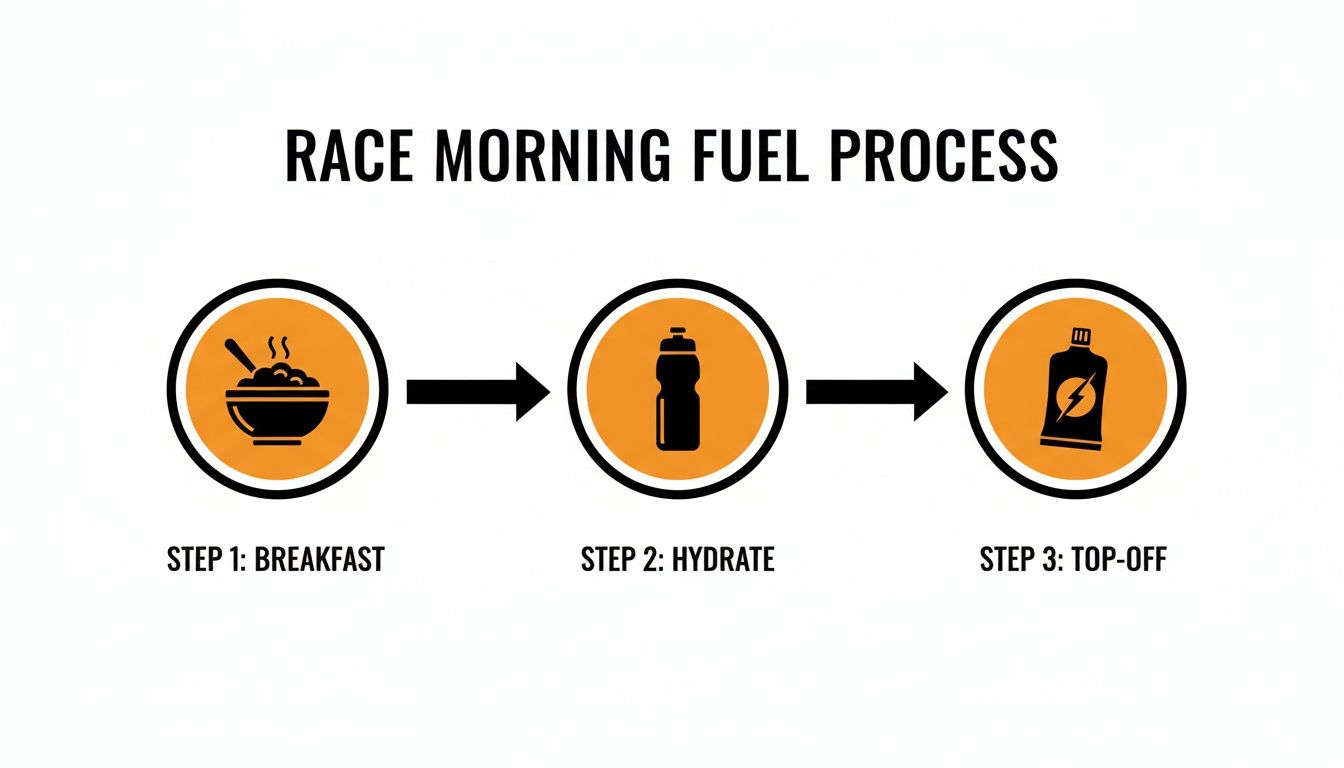
The flow is logical: a solid breakfast, steady hydration, and a final carb boost before you hit the start line. This structured routine is non-negotiable for a successful marathon.
Hourly Fueling Targets by Marathon Finish Time
Use this table as a starting point to dial in your hourly carbohydrate and fluid goals based on your target race pace and finish time.
| Target Finish Time | Carbohydrates (grams/hour) | Fluid (mL/hour) | Example Fueling Strategy |
|---|---|---|---|
| 4:30 - 5:00+ | 45-60g | 500-750 mL | 1 gel every 30 mins + sips of water at aid stations |
| 3:30 - 4:30 | 60-75g | 500-750 mL | 1 gel every 25 mins + sips of water/electrolyte drink |
| Sub 3:30 | 75-90g | 500-750+ mL | 1 gel every 20 mins, alternating with chews + electrolyte drink |
Remember, this is a guide. Your personal needs will vary based on heat, humidity, and individual tolerance, so practice is essential to find what works for you.
Nailing Your On-The-Go Fueling Menu
There’s no magic bullet for marathon fuel. The "best" fuel is simply the one your stomach handles well and that you enjoy taking. Your long runs are the perfect laboratory to experiment with different products and find your favorites.
The golden rule of race day nutrition is sacred: nothing new on race day. Every single gel, chew, or drink you plan to use should be a trusted friend, tested extensively during your hardest training sessions.
Here’s a breakdown of the most common fuel sources:
-
Energy Gels: The go-to for a reason. They're portable, fast-acting, and come in precise doses (20-25 grams of carbs is typical). Always take them with a bit of water to help your gut absorb them and prevent GI issues.
-
Energy Chews: A fantastic alternative if you prefer a more solid texture. They deliver the same quick carbs as gels, but you can eat them one by one to meter your intake more gradually.
-
Sports Drinks: These pull double duty, providing both carbs and crucial electrolytes. Just be careful—relying only on sports drinks can make it tough to hit higher carb targets without drinking way too much fluid.
-
Solid Foods: Finding the best energy bars for running can offer sustained energy and prevent hitting the wall. Small pieces of bars or even real foods like dates can work, but they demand more from your digestive system.
Most runners I know use a mix-and-match approach. You might alternate between a gel and a few chews, while sipping on an electrolyte drink at aid stations to cover all your bases.
Don't Forget Hydration and Electrolytes
Fueling is only half the battle. Get your hydration wrong, and your race can fall apart just as quickly. Dehydration thickens your blood, spikes your heart rate, and cripples your body's ability to cool itself—all of which will bring you to a screeching halt.
As a starting point, aim for 500-750 mL (about 16-24 ounces) of fluid per hour. In practice, this usually means grabbing a cup or two of water at every aid station you pass.
But it's not just about water. When you sweat, you lose critical electrolytes—especially sodium. Sodium is absolutely essential for muscle function and fluid balance. If you don't replace it, you're setting yourself up for late-race cramping and bonking.
Consider adding an electrolyte supplement to your plan, especially if it's warm. For a truly personalized strategy, you can learn how to calculate your sweat rate during training.
Gut Training: The Most Important Practice of All
The most perfectly calculated fueling plan means nothing if your stomach rebels on race day. This is where "gut training" comes in. It’s the process of teaching your digestive system to process carbs and fluids efficiently while you’re running hard.
Start introducing your race-day fuel on your medium-long runs. Begin with small amounts and gradually increase the frequency and quantity as you get closer to race day. This lets your gut adapt, drastically reducing the risk of nausea, bloating, or the dreaded mid-race porta-potty dash.
By the time you step up to that start line, fueling should feel like second nature.
The Critical Role of Hydration and Electrolytes
Everyone obsesses over carbohydrates, but your hydration and electrolyte strategy is the unsung hero of a great marathon. Seriously. If you get this part wrong, even the most dialed-in carb plan will completely fall apart.
Dehydration isn't just about feeling thirsty. It actually thickens your blood, forces your heart rate to skyrocket, and cripples your body's ability to absorb the very fuel you’re so carefully taking in.
Effective hydration means more than just chugging water. It's a delicate balancing act of fluids and key minerals that keep your muscles firing and your mind sharp. When you sweat, you're losing more than water—you’re losing critical electrolytes, and for marathon runners, sodium is the one that matters most.
Understanding Sweat and Sodium Loss
No two runners sweat the same. Your sweat rate and the amount of sodium in that sweat can vary dramatically from one person to the next. This is precisely why a one-size-fits-all hydration plan is doomed to fail. Sodium is the master electrolyte; it regulates your fluid balance and enables the nerve impulses that tell your muscles to contract.
Losing too much sodium without replacing it is a recipe for disaster. It can lead to a whole cascade of problems:
- Muscle Cramping: That dreaded, race-ending moment when your calf or hamstring seizes up is often directly linked to major sodium depletion.
- General Fatigue: Low sodium can make you feel unusually weak and exhausted, even if you’re hitting your carb targets.
- Mental Fog: Your brain needs proper electrolyte balance to function. A deficit can leave you feeling dizzy, confused, and unable to make good decisions.
Even runners who think they have a plan often struggle to execute it on race day. A fascinating study of trained marathoners found a huge gap between their planned and actual fueling. Runners aimed for 26 grams of carbs per hour but only managed 22 grams—a 16% deficit—without even realizing they had missed their mark. You can read more about these common fueling mistakes in the full Runner's World report on marathon nutrition.
Building Your Personal Hydration Plan
First things first, you need a rough estimate of your personal fluid needs. The easiest way to get this is with a one-hour sweat test during a training run. Try to do it in conditions that mimic what you expect on race day.
- Weigh yourself nude right before you head out.
- Run for exactly one hour at your target marathon pace. Keep track of any fluid you drink (in ounces or milliliters).
- After the run, strip down, towel off completely, and weigh yourself again.
- Calculate the difference in your pre- and post-run weight, then add back the volume of any fluid you consumed. This final number is your estimated hourly sweat rate.
This isn't an exact science, but it gives you a powerful starting point. For example, if you lost 32 ounces (about 950 mL) in that hour, that's your rough target for hourly fluid intake. For a much deeper dive, check out our complete guide on hydration for marathon runners.
A Note on Hyponatremia: While dehydration is the enemy, it's also possible to drink too much plain water. This can dilute the sodium concentration in your blood, leading to a dangerous condition called hyponatremia. This is why pairing your fluid intake with electrolytes is completely non-negotiable.
Your sodium needs can be anywhere from 300mg to over 1000mg per hour, depending on how much you sweat and how salty your sweat is. A simple trick is to look at your gear after a hot run. If you see white, salty streaks on your hat or shirt, you're almost certainly a "salty sweater" and need to be on the higher end of sodium replacement.
This is where products like electrolyte capsules or powders are a game-changer. They let you precisely dial in your sodium intake without adding unwanted sugar, giving you total control. Test different amounts during your long runs to find the sweet spot that leaves you feeling strong and, most importantly, cramp-free.
Got Questions About Your Marathon Fueling?
Even with the perfect plan on paper, things can get messy out on the road. Marathon fueling is incredibly personal, and figuring out the little details is all part of the process. Let's tackle some of the most common questions runners have so you can build a rock-solid, confident race day strategy.
What If I Get an Upset Stomach During the Race?
Gastrointestinal (GI) distress is every marathoner's biggest fear, but it doesn't have to be a race-ender. If you feel your stomach start to turn, the very first thing to do is slow down. It's that simple. Slowing your pace helps redirect blood from your legs back to your digestive system, which can often be enough to settle things down.
Once you've eased off the pace, skip your next gel. Instead, just focus on sipping water or a light electrolyte drink at the next aid station. The problem is often just a simple case of too much concentrated sugar and not enough fluid to help your gut process it.
But the best defense is a good offense. This is exactly why "training your gut" isn't just a trendy phrase—it's absolutely essential. You have to practice with your exact race-day fuel on every long run so your stomach learns how to handle carbs under stress. If you're consistently running into trouble, it might be worth trying a fuel with simpler ingredients; sometimes those complex formulas are the real culprits.
How Am I Supposed to Carry All This Fuel?
The logistics of carrying five, six, or even more gels—not to mention chews or salt caps—can feel a bit like playing Tetris. Luckily, you've got some great options. The trick is just finding what works for you without driving you crazy.
- Running Belts: These are popular for a reason. Modern belts have dedicated loops for gels and zip-up pouches that hold everything snug against your body without bouncing.
- Shorts with Pockets: A lot of brands are now designing shorts and tights with endurance runners in mind. Look for gear with multiple built-in pockets in the waistband or along the thighs that keep gels tucked away securely.
- Hydration Vests: If you're already carrying your own fluids or just need more storage space, a lightweight vest is a fantastic choice. They have a ton of easy-to-reach pockets for all your fuel.
The golden rule here is to test your carrying system on your longest training runs. You do not want to find out at mile 15 that your belt chafes or that you can't actually pull a gel out of a pocket while running. Never, ever try a new system on race day.
Can I Just Use the Fuel at the Aid Stations?
Relying entirely on what's handed out on the course is a huge gamble, and one I wouldn't recommend. For starters, aid stations can be pure chaos. It’s surprisingly easy to miss a cup or fumble your fuel in the crowd, forcing you to stop and lose your rhythm.
Even more important, the sports drink or gel they're offering might be totally new to your system. Introducing an unfamiliar product mid-race is a classic recipe for stomach cramps, bloating, or worse. You completely give up control over your timing, the ingredients, and how much you're taking in.
The smartest strategy is to be self-sufficient. Carry your own fuel—the same stuff you've been training with for months—and think of the aid stations as a bonus. Use them for water to wash down your gels and to supplement your main hydration plan, but never let them be your only source of calories.
How Should I Change My Fueling Plan for a Hot Race?
Heat and humidity change everything. While your hourly carb needs stay about the same, your body's ability to actually absorb them takes a nosedive as you get dehydrated. This means hydration and electrolytes have to become your number one priority.
You'll need to drink more often and be way more diligent about replacing sodium. A hot day sends your sweat rate and sodium loss through the roof. This is where a customizable electrolyte supplement really shines, since you can increase your sodium intake without chugging a ton of extra sugar from a sports drink.
Your heat plan should start days before the race with a focus on pre-hydration. On race day, start sipping fluids at the very first aid station—don't wait until you feel thirsty. A solid plan for the heat means prioritizing fluids and electrolytes even more than carbs, because without proper hydration, your body can't process those carbs anyway.
At Revolution Science, we create clean, research-backed supplements to help you dial in your performance nutrition. Our flavorless electrolyte formulas allow you to precisely control your sodium intake without extra sugar, ensuring your hydration strategy is perfectly matched to your needs. Learn more at https://rvsci.com.