
Your Cart is Empty


Finding the Pre Workout Supplement Best Suited for Your Goals
Trying to find the best pre-workout supplement isn't about chasing one magical formula. It's about finding the right one for you. The best product is the one that directly fuels your personal goals, whether that's stacking on more plates, pushing your endurance to the limit, or just getting locked in for a tough session.
Finding the Right Pre-Workout for Your Fitness Goals
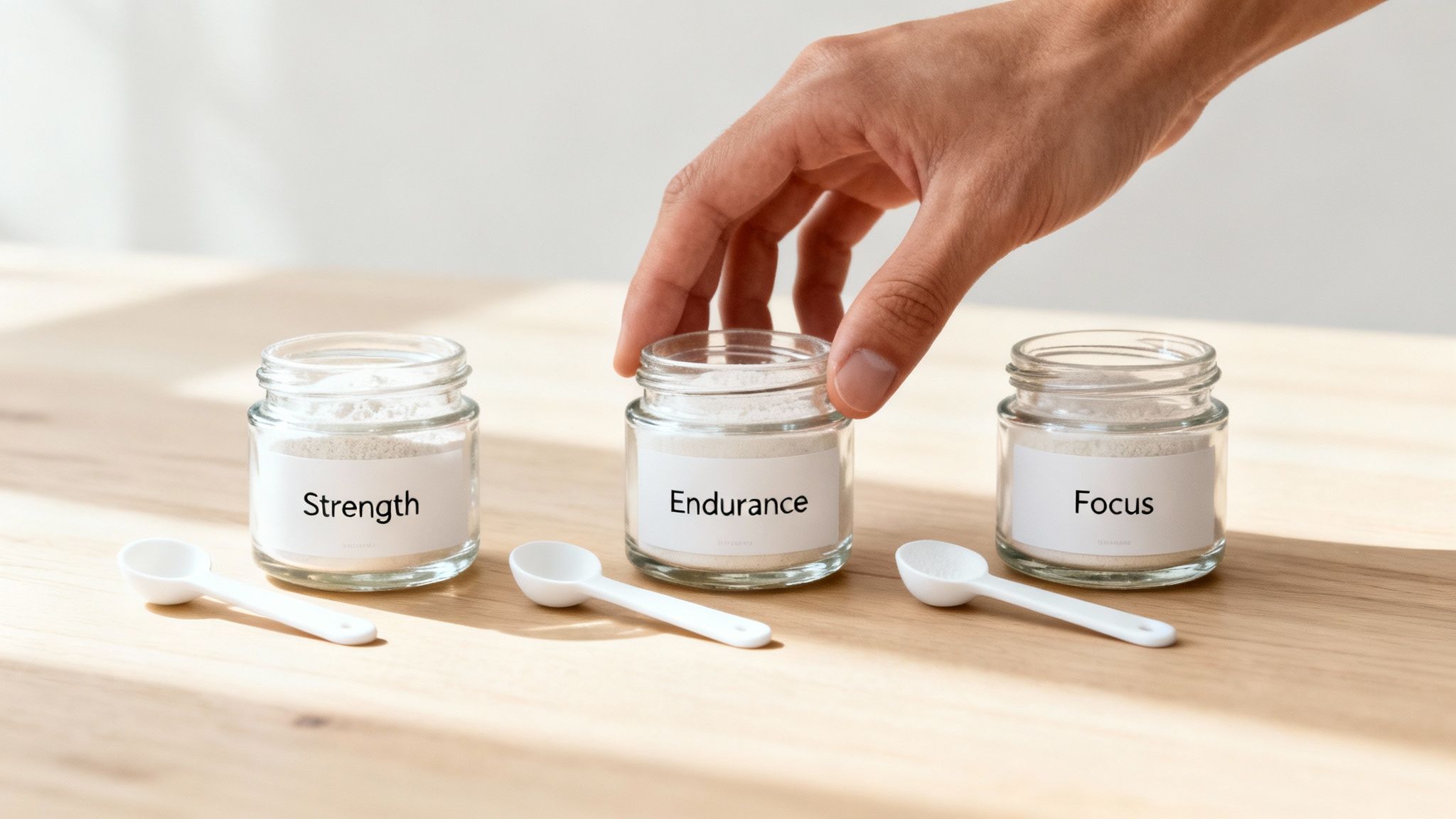
Let’s be honest: the pre-workout aisle is a confusing place. With so many brands shouting about their "proprietary blends" and making wild claims, it’s tough to separate genuinely effective, science-backed formulas from under-dosed products wrapped in flashy marketing. We’re here to cut through that noise.
There’s a reason this corner of the sports nutrition world is exploding. The global pre-workout market hit roughly USD 16 billion in 2024 and is on track to climb to USD 24 billion by 2030. That growth is powered by a real demand from people who are serious about their fitness and want an actual edge. The right ingredients, dosed correctly, really do work. You can get a deeper look at this trend over at DeepMarketInsights.
Before you can make a smart choice, you have to understand the most fundamental fork in the road: stimulant vs. non-stimulant. This one decision completely changes how a pre-workout feels, performs, and fits into your life.
Stimulant vs. Non-Stimulant at a Glance
Think of this as your first filter. A quick look at the core differences will help you immediately narrow down what works for your training schedule and body.
| Feature | Stimulant-Based Pre-Workout | Non-Stimulant Pre-Workout |
|---|---|---|
| Primary Effect | That immediate hit of energy, alertness, and drive. | A focus on muscle pumps, blood flow, and muscular endurance. |
| Key Ingredient | Caffeine Anhydrous | L-Citrulline, Beta-Alanine |
| Best For | Early morning or afternoon workouts, or days you're dragging. | Evening lifters, anyone sensitive to caffeine, or "stim-break" cycles. |
| Potential Downside | Can mess with sleep, or cause jitters and anxiety in some. | You won't feel that instant "kick" or rush of energy. |
At the end of the day, picking the right supplement starts with knowing yourself.
The most effective pre-workout isn't the one with the craziest label. It's the one whose ingredients and dosages are a perfect match for your unique biology, training style, and specific goals.
Once you know what you’re trying to achieve—lift heavier, run farther, or just stay dialed in—you can start looking at labels with a critical eye. This guide will give you the tools to do just that, making sure you invest in something that will actually move the needle for you, safely and effectively.
Analyzing Key Pre-Workout Ingredients That Deliver Results
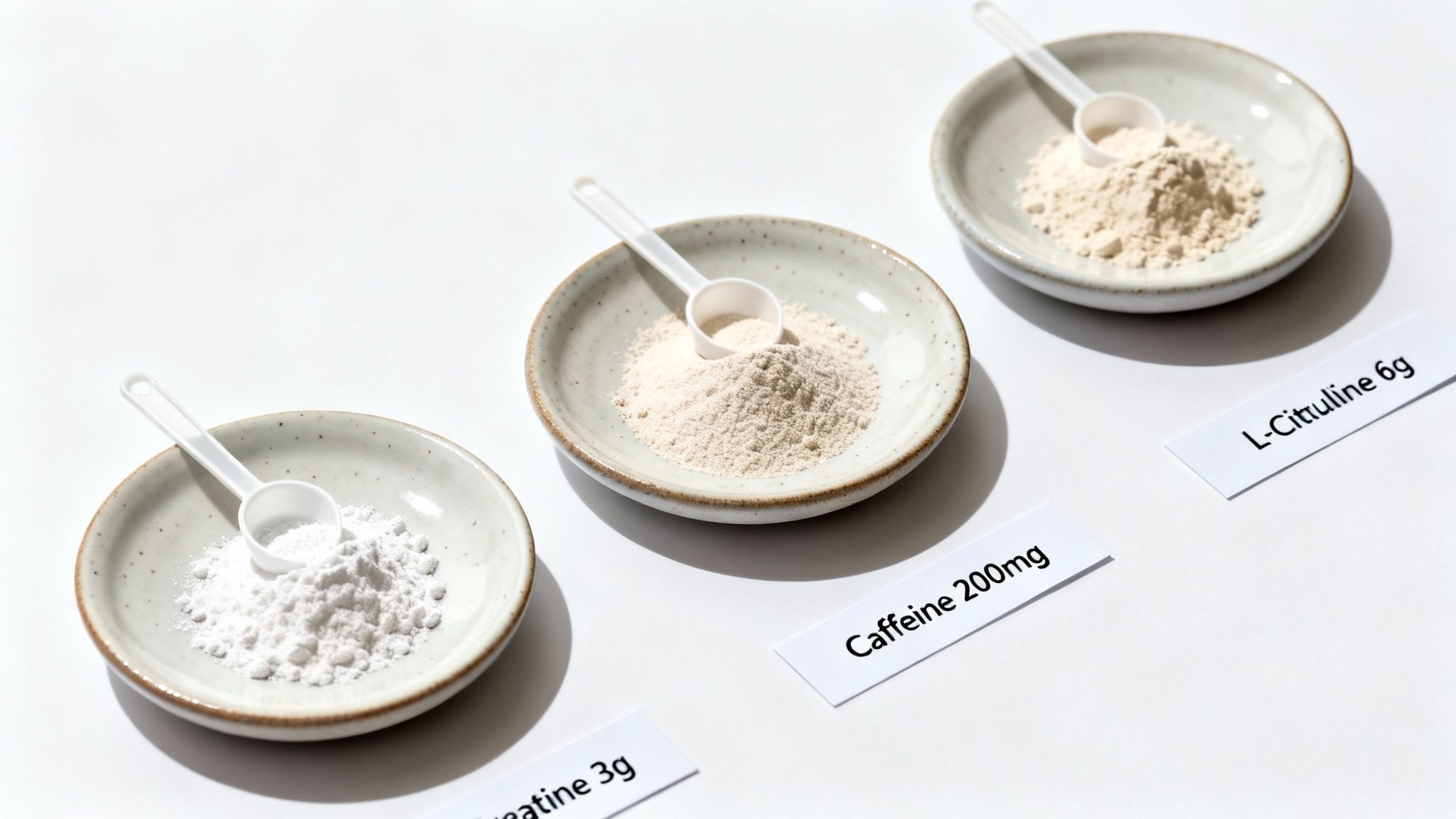
If you really want to find the best pre-workout supplement, you have to look past the flashy labels and get down to what’s actually inside the tub. Any formula is only as good as its active ingredients and, just as importantly, their doses. Knowing what these compounds do—and how much you need—is the key to unlocking a product’s real potential.
We can break down the most impactful ingredients into four distinct categories. This makes it much easier to see what each component is designed to do, from that initial energy kick to the sustained power that gets you through your final, grinding rep.
Energy and Focus Activators
This group is all about getting your mind and body locked in for the work ahead. These are the ingredients responsible for that signature pre-workout "jolt," making you feel alert, motivated, and mentally sharp.
Caffeine Anhydrous is, without a doubt, the king of pre-workout stimulants. As a potent central nervous system stimulant, it works by blocking adenosine receptors in your brain. This action dials down feelings of fatigue and ramps up alertness. For most people, a dose between 150-300 mg is the sweet spot for performance.
Working right alongside it is L-Theanine, an amino acid naturally found in green tea. When you combine it with caffeine, something amazing happens. L-Theanine smooths out the harsh edges, getting rid of the jitters and anxiety while promoting a state of calm, clean focus. You'll often see it dosed in a 1:1 or 2:1 ratio of L-Theanine to caffeine for the best effect.
Strength and Power Drivers
These are the workhorses for anyone serious about moving heavy weight and building muscle. You won't get an immediate sensory rush like you do from stimulants, but they work tirelessly behind the scenes to crank up your raw strength and power.
Creatine Monohydrate is probably the most studied and validated sports supplement on the planet. It works by topping off your body's phosphocreatine stores, which helps you rapidly regenerate ATP—the energy currency for short, explosive movements like lifting weights. A clinical dose is 3-5 grams taken daily.
Another major player is Betaine Anhydrous, a compound derived from beets. It’s been shown to improve power output and muscular endurance, partly by supporting cellular hydration. To reap the full benefits, you'll want to see 1.5-2.5 grams on the label.
A common mistake is judging a pre-workout solely on how it "feels" right after you drink it. Ingredients like Creatine and Betaine offer profound, cumulative benefits for strength that you won't notice after one dose, but they are absolutely critical for long-term progress.
Endurance Enhancers
For athletes who push themselves for longer durations, these ingredients are essential. They help your body fight off fatigue, plain and simple, letting you hold a higher intensity for more time.
The most well-known ingredient here is Beta-Alanine. It boosts your muscle carnosine levels, which act as a buffer against the build-up of metabolic byproducts that cause that all-too-familiar muscle "burn." By holding off fatigue, it allows you to squeeze out a few more reps or keep your pace for that much longer.
The effective dose for Beta-Alanine is 3.2-6.4 grams. Don't be surprised if it causes a harmless tingling sensation called paresthesia—it’s a sign that it’s working. If you want to dive deeper, you can check out our detailed guide on what makes a great pre-workout.
Pump and Blood Flow Agents
That "pump" isn't just for show. Better blood flow means more oxygen and nutrients are getting delivered to your working muscles, while metabolic waste gets cleared out more efficiently. This directly enhances performance and can even speed up recovery.
L-Citrulline is the undisputed champion in this category. Your body converts it to L-Arginine, which in turn elevates nitric oxide (NO) production. This process relaxes and widens your blood vessels, leading to a massive improvement in blood flow.
For the best results, you need to see 6-8 grams of L-Citrulline or its cousin, Citrulline Malate, on the supplement facts panel. Be warned: this is one of the most commonly underdosed ingredients on the market, so always check the label.
Effective Doses for Key Pre-Workout Ingredients
To help you cut through the noise, here’s a quick-reference table that lays out the key ingredients, their benefits, and the doses proven to work. Use this as your cheat sheet to judge any pre-workout you're considering.
| Ingredient | Primary Benefit | Clinically Effective Dose | What It Does |
|---|---|---|---|
| Caffeine Anhydrous | Energy & Focus | 150-300 mg | Blocks fatigue signals in the brain and increases alertness. |
| L-Theanine | Smooth Focus | 150-300 mg | Complements caffeine to reduce jitters and promote calm focus. |
| Creatine Monohydrate | Strength & Power | 3-5 g | Fuels explosive movements and supports muscle growth. |
| Beta-Alanine | Muscular Endurance | 3.2-6.4 g | Buffers metabolic byproducts to delay muscle fatigue. |
| L-Citrulline | Pump & Blood Flow | 6-8 g | Increases nitric oxide production to improve nutrient delivery. |
| Betaine Anhydrous | Power Output | 1.5-2.5 g | Supports cellular hydration and enhances strength. |
Having this knowledge empowers you to look at a supplement label and know instantly whether the formula is built for real results or just filled with hype.
Choosing Between Stimulant and Non-Stimulant Formulas
One of the biggest decisions you'll make when picking a pre-workout is whether to go with a stimulant-based or a non-stimulant formula. This choice isn't just about ingredients; it's about matching the supplement to your lifestyle, how you handle caffeine, when you train, and what you’re trying to achieve. Let's skip the generic pros and cons and look at this through some real-world situations to figure out which path is right for you.
The core difference, of course, is the presence of central nervous system stimulants like caffeine. A stimulant-based pre-workout is built to give you that immediate, noticeable kick in energy, focus, and motivation. It’s the kind of formula you feel working almost right away.
The Case for Stimulant-Based Formulas
Let’s say you’re an early-morning lifter. The alarm blares at 5 AM, and the last thing on your mind is tackling a heavy squat session. This is the perfect time for a stimulant formula. The caffeine gets to work fast, boosting alertness and making those first few heavy sets feel way more doable.
That jolt of energy is incredibly good at cutting through morning grogginess or that mid-afternoon slump after a long day at the office. For a lot of people, this mental and physical surge is the only way to unlock a level of intensity they couldn't otherwise find.
But that energy comes with a few strings attached. If you’re sensitive to caffeine, even a moderate dose might bring on jitters, anxiety, or a racing heart, which is more distracting than helpful. On top of that, taking stimulants too close to bed—usually within 6-8 hours—can absolutely wreck your sleep, which kills recovery and sabotages your progress in the long run.
The power of a stimulant pre-workout is undeniable for an immediate boost in energy and drive. The trick is to use it strategically so it elevates your training without messing with your sleep or overall well-being.
When Non-Stimulant Formulas Shine
Now, picture a different scene. You’re a dedicated athlete who hits the gym in the evening, maybe around 8 PM. Downing a stimulant-heavy pre-workout at that hour is a surefire way to stare at the ceiling all night. This is where a non-stimulant formula really proves its worth.
Non-stim pre-workouts target different performance pathways. Instead of giving you a rush of energy, they are expertly designed to crank up muscular endurance, power output, and—most famously—the pump. They pull this off with clinically-dosed ingredients like L-Citrulline, which ramps up nitric oxide for incredible blood flow, and Beta-Alanine, which helps buffer lactic acid to put off muscle fatigue.
This approach gives you a powerful, effective workout without any of the stimulant side effects. You get better performance and a monster pump without worrying about jitters or a restless night. Non-stim options are also the perfect tool for taking a "stim break" to reset your caffeine tolerance, which makes your regular pre-workout feel potent again when you bring it back. If you want to dive deeper, you can learn more in our detailed guide on the benefits of a non-stim pre-workout.
In the end, it’s not about which type is universally "better," but which one is best for you in your situation. Think about your daily schedule, how your body reacts to caffeine, and when you train. The right pre-workout fits into your life like a missing puzzle piece, pushing your performance forward without causing problems.
Matching a Pre Workout Formula to Your Training Style
Finding the right pre-workout isn't about chasing the biggest stimulant buzz. It’s about understanding the engine under the hood. The perfect blend for a powerlifter pulling a new one-rep max is worlds apart from what a marathon runner needs to grind out the final few miles.
The key is to match the ingredient profile directly to your training demands.
This simple decision tree can help you make that first crucial choice: are you training for pump and performance, or do you need that raw energy kick?

This clarifies the most important fork in the road, guiding you toward a formula that prioritizes either the immediate energy from stimulants or the endurance-boosting pumps from non-stimulant ingredients.
For Strength and Power Athletes
If your workouts are all about heavy, explosive movements—think bodybuilding, powerlifting, or Olympic weightlifting—your pre-workout needs to be engineered for pure power, skin-splitting pumps, and raw muscular force. You’re chasing strength output and muscle growth.
A formula loaded with L-Citrulline is non-negotiable here. A clinical dose of 6-8 grams will jack up your nitric oxide production, flooding your muscles with blood. This isn't just for a good mirror flex; this massive blood flow delivers oxygen and nutrients, letting you push out those extra growth-inducing reps.
Next, you need proven strength drivers. Look for formulas packing 3-5 grams of Creatine Monohydrate and 1.5-2.5 grams of Betaine Anhydrous. These two work together to fuel ATP regeneration and keep your muscle cells hydrated, directly translating to more power and strength. We take a much closer look at this in our guide on how a specific pre-workout powder benefits Olympic weightlifters.
A strength athlete's pre-workout is less about feeling a frantic buzz and more about fueling the engine for peak power. Prioritize ingredients that support blood flow and anaerobic performance over an overwhelming dose of stimulants.
For Endurance Athletes
Runners, cyclists, and swimmers are fighting a different battle. Your enemy isn't a heavy barbell; it's the slow, creeping fatigue that sets in over miles and hours. The best pre-workout for you is one that builds stamina and pushes that wall of exhaustion further and further back.
Your MVP is Beta-Alanine. A dose of 3.2 grams or more is critical for buffering the metabolic junk that causes that all-too-familiar muscle burn, letting you hold your pace longer. It’s a direct assault on muscular fatigue.
Hydration is also everything. Ingredients like sodium and potassium are essential for maintaining fluid balance and warding off cramps that can kill a personal best. A moderate dose of caffeine (100-200 mg) is also a smart move, as it can lower your perception of effort, making those long distances feel just a bit more manageable.
For Hybrid and Functional Athletes
CrossFitters, HIIT junkies, and functional fitness athletes need a pre-workout that can keep up. Your workouts demand a mix of strength, stamina, power, and mental grit, often all in the same session. A one-trick-pony formula just won’t do.
Your ideal pre-workout is a true jack-of-all-trades. It needs to combine the best of both worlds: a solid dose of L-Citrulline (6+ grams) for blood flow and Beta-Alanine (3.2+ grams) to fight off that lactic acid burn during a WOD.
A smart dose of caffeine (around 200-250 mg) paired with L-Theanine is the perfect combination for clean energy and sharp focus without the jitters or crash. This keeps you dialed in through complex barbell movements and grueling metabolic conditioning, ensuring you have the fuel for every part of the workout.
To make it even clearer, let's break down which profiles are best suited for different athletes.
Pre Workout Recommendations for Different Athlete Profiles
| Athlete Profile | Primary Goal | Key Ingredients to Look For | Why It Works |
|---|---|---|---|
| Strength Athlete | Maximize power, strength, and muscle hypertrophy. | L-Citrulline, Creatine Monohydrate, Betaine Anhydrous | Boosts nitric oxide for muscle pumps, supports ATP regeneration for explosive power, and enhances force production. |
| Endurance Athlete | Delay muscular fatigue and improve stamina over long durations. | Beta-Alanine, Electrolytes (Sodium, Potassium), moderate Caffeine | Buffers lactic acid to reduce muscle burn, maintains hydration to prevent cramping, and lowers perceived effort. |
| Hybrid/Functional Athlete | Achieve a balance of strength, power, endurance, and focus. | L-Citrulline, Beta-Alanine, Caffeine + L-Theanine | Delivers blood flow for lifts, stamina for conditioning, and clean, focused energy for complex, high-intensity workouts. |
| Aging Athlete | Preserve muscle mass, support joint health, and maintain energy levels. | Creatine Monohydrate, HMB, Caffeine (moderate), Collagen Peptides | Supports muscle maintenance and strength, prevents muscle breakdown, provides sustainable energy without jitters, and aids joint integrity. |
Ultimately, the "best" pre-workout is the one that understands your discipline. By dissecting a formula and aligning its key ingredients with your specific training style, you can ensure your supplement is an active partner in achieving your performance goals, not just a random cocktail of stimulants.
Using Pre Workouts Safely and Effectively
Finding the right pre-workout is just the first step. Knowing how to use it correctly is what truly separates a good session from a great one. This isn't about dry-scooping powder on your way out the door; smart, safe use is key to unlocking long-term benefits while avoiding the downsides.
Timing is everything. Most pre-workouts are best taken 30-45 minutes before you start training. This window is the sweet spot—it gives your body just enough time to absorb the active ingredients. This way, compounds like caffeine and L-citrulline hit their peak levels in your system right as you grab the bar for your first working set. Take it too soon, and you risk the effects wearing off halfway through your workout.
Start Low and Assess Tolerance
Even if you're a seasoned gym-goer, you should never jump in with a full serving of a new pre-workout. Every formula is different, with unique stimulant blends and ingredient ratios that your body needs to get used to.
The best approach is to start with a half-scoop for your first few workouts. This lets you gauge your individual tolerance without getting slammed with jitters, anxiety, or an uncomfortable rush you can't shake. If you respond well and the effects feel productive, you can then think about moving up to a full dose.
The goal of a pre-workout is to enhance your performance, not to feel frantic and out of control. Starting low ensures the supplement works for you, not against you.
This conservative approach is especially critical for formulas with higher stimulant content. For a deeper dive into this, check out our guide on how to approach a preworkout with caffeine.
The Importance of Cycling and Hydration
Your body is an amazing adaptation machine. If you take a stimulant-based pre-workout every single day, your adrenal system will eventually build up a tolerance. That powerful kick you felt at first will start to fade, tempting you to take more and more for the same effect—a path that’s neither sustainable nor healthy.
To keep your pre-workout effective and give your system a much-needed break, it’s vital to cycle your stimulant-based products. A proven protocol is to use them for 6-8 weeks, then take a 1-2 week break. During this "off" period, you can switch to a non-stimulant formula to keep your routine and performance going strong.
Hydration is also non-negotiable. This is especially true when using ingredients like creatine, which pulls water into your muscle cells to work its magic. To get the most out of every ingredient and prevent dehydration, make sure you’re drinking plenty of water all day long, not just around your workout.
Verifying Purity with Third-Party Testing
The supplement industry isn't as tightly regulated as most people think, which is why third-party testing certifications are so important. Always look for seals from respected organizations like NSF International or Informed-Sport on the label.
These certifications provide a simple guarantee from an independent lab that the product:
- Contains exactly what the label claims.
- Is free from unsafe levels of contaminants.
- Has been tested for banned substances.
Choosing a product that’s been third-party tested gives you confidence that what you’re taking is not only effective but also safe, letting you put all your focus where it belongs: on your performance.
Demand Transparency in Your Supplements
When you're searching for the best pre workout supplement for your goals, the final stop should always be the label. Unfortunately, the supplement industry is rife with a shady tactic called the "proprietary blend." It's a marketing trick that allows companies to hide the exact dosages of each ingredient.
They’ll list what's inside, but then lump all the amounts together under one number. This leaves you completely in the dark, and it’s a massive red flag. More often than not, it’s a way to conceal underdosed, ineffective formulas. You have no way of knowing if you’re actually getting the research-backed 6 grams of L-Citrulline or 3.2 grams of Beta-Alanine needed to feel a real difference. A truly effective product has absolutely nothing to hide; its creators are proud of their clinical dosing and want you to see it.
True performance is built on what you can measure. Choosing a supplement with a fully transparent label is the first step in holding brands accountable and ensuring your investment delivers tangible results.
Your Path to an Informed Choice
The pre-workout market is exploding—it's projected to be worth as much as USD 44.7 billion by 2035. As it grows, so will the number of subpar products flooding the shelves. You can read more about these market projections to see where the industry is headed on FutureMarketInsights.com. Protecting your investment and, more importantly, your body, comes down to a simple, repeatable process.
To make a confident decision every time, just follow these key steps:
- Define Your Goal: First, know exactly what you’re training for. Are you chasing strength, building endurance, or a mix of both?
- Analyze the Ingredients: Look at the label and match the compounds to the specific performance benefits you need.
- Verify the Doses: Check the amounts listed against the clinically effective ranges we've already covered.
- Demand Transparency: This is non-negotiable. Only choose brands that reject proprietary blends and clearly list every single ingredient and its exact dosage.
Your performance deserves to be fueled by supplements grounded in science and honesty. By following this simple framework, you can cut through the marketing hype and choose a product that is actually proven to work.
Common Questions We Hear About Pre-Workouts
Even after you've nailed down the ingredients and found a formula that looks right, some practical questions always pop up. Let's tackle some of the most common things people ask when they're figuring out how to best use a pre-workout.
Should I Take a Pre-Workout Every Single Day?
Probably not, and definitely not if it's packed with stimulants. Think of a pre-workout as a specialized tool in your arsenal—you pull it out for your most demanding training days to really push your performance. On rest days or for lighter, less intense workouts, you're better off skipping it.
It's also a smart move to cycle off any stimulant-based pre-workouts from time to time. A good rule of thumb is to take a one or two-week break every 6-8 weeks. This gives your system a chance to reset its caffeine tolerance, which helps keep the supplement effective when you do use it.
What If I Take Pre-Workout and Don't Work Out?
Honestly, it's not a great idea, especially if you're taking a formula with stimulants. That surge of energy is meant to be channeled into physical activity. Without that outlet, you're likely to just feel jittery, anxious, or notice your heart racing for no reason.
A pre-workout is designed to fuel activity. Without that physical demand, the ingredients meant to boost performance can instead create discomfort and distraction, especially the tingling sensation from beta-alanine.
How Long Until I Feel My Pre-Workout Kick In?
For most people, you'll start feeling the effects within 30-45 minutes of drinking it. This timing is pretty strategic; it allows key ingredients like caffeine and L-citrulline to hit their peak levels in your bloodstream right as you’re getting into the core of your workout.
Of course, your own metabolism and whether you've eaten recently can shift that window a bit. You might notice the initial tingle from beta-alanine (that pins-and-needles feeling called paresthesia) a little sooner, sometimes around the 15-20 minute mark.
Can I Mix My Pre-Workout with Other Supplements?
Yes, "stacking" supplements is common, but you need to be smart about it and pay close attention to the labels. For example, many pre-workout formulas already include a clinical dose of creatine, so adding more would be pointless. If yours doesn't, adding 3-5 grams of creatine monohydrate is a proven and highly effective strategy.
The main takeaway here is to always be aware of the total amount of each ingredient you're taking across all your supplements. This simple check helps you avoid taking too much of any one thing and ensures each product can do its job properly.
At Revolution Science, we're committed to giving you the tools to perform at your best, safely and effectively. We do that with transparent, research-backed formulas. Check out our lineup of clean, clinically-dosed supplements at https://rvsci.com.