
Your Cart is Empty


Testosterone enhancer: Boost Energy and Performance (testosterone enhancer)
So, what exactly is a testosterone enhancer? Let's clear the air. We're not talking about synthetic hormones or anything you'd need a prescription for. A testosterone enhancer is a natural supplement, usually a blend of specific vitamins, minerals, and time-tested herbal extracts, all chosen to help your body's own hormone-making machinery run at its best.
The whole point is to support your internal systems, not replace them. This is a huge distinction for any guy looking to reclaim some of that lost energy, vitality, and drive without going the pharmaceutical route.
Understanding the Role of a Testosterone Enhancer

It’s just a fact of life: as men get older, testosterone levels naturally start to dip. For most of us, this process kicks off sometime after age 30, with a steady decline of around 1-2% per year. You might not notice it at first, but over time, this can lead to some real, tangible changes in your energy, mood, muscle mass, and even your libido. It's this slow, creeping reality that has so many men looking for a way to push back.
This is where a testosterone enhancer steps in. Think of it less as a miracle cure and more as a top-tier support crew. Imagine your body's hormone production is like a high-performance engine. An enhancer doesn't replace that engine; it provides the premium fuel, the high-grade oil, and the essential tune-ups to help it run as efficiently as possible.
Why Are These Supplements Gaining Traction?
The buzz around these supplements isn't random. It’s directly tied to a massive shift in how men are approaching their own health. More than ever, guys are being proactive about their vitality and longevity, and that's created a huge demand for natural, accessible options that don't involve a doctor’s visit.
The main drivers behind this surge are pretty straightforward:
- Age-Related Concerns: Men want to counteract that natural hormonal decline to hold onto their energy and drive for as long as possible.
- Fitness and Performance: Athletes and weekend warriors alike are looking for an edge to support muscle growth, get stronger, and bounce back faster from tough workouts.
- Overall Well-being: It’s about more than just muscle. It’s about improving mood, sharpening focus, and recapturing that general sense of "on-ness" that can fade over the years.
This isn't just a niche trend; the numbers are staggering. The global market for testosterone booster supplements was recently pegged between USD 3.5 to 3.7 billion. And it's not slowing down. Projections estimate it could balloon to over USD 6.2 billion by 2030, which tells you everything you need to know about its mainstream appeal. You can dig into the numbers and read the full research about testosterone supplement market trends to see the data for yourself.
The core idea behind a quality testosterone enhancer is support, not replacement. It works with your body's natural pathways, providing key nutrients that may be lacking, which in turn helps your endocrine system function at its best.
At the end of the day, a testosterone enhancer is for the man who wants to take control. It’s for the guy who gets that a smart lifestyle, good nutrition, and targeted supplementation all work together to build a powerful foundation for long-term health and peak performance.
How Do Natural Testosterone Boosters Actually Work?
First, let's get one thing straight. A natural testosterone booster isn't putting synthetic hormones into your body. That's Testosterone Replacement Therapy (TRT), a completely different ballgame. These supplements don’t add external testosterone; they're designed to help your body optimize its own natural production.
Think of it like this: your body’s hormone production system is a high-performance engine. A natural booster doesn't try to swap out that engine. Instead, it acts as the premium fuel, the high-grade oil, and the expert tune-up needed to get your own machinery running at peak efficiency. It's all about supporting the system you already have, and it generally works in three key ways.
Supplying the Essential Building Blocks
Your body can't just create testosterone out of thin air. It needs very specific raw materials—vitamins and minerals—to synthesize it. If your diet is lacking or your lifestyle is burning through these crucial nutrients, your production line is going to slow down. It’s that simple.
A good booster acts like a direct supply line, making sure your endocrine system has everything it needs on hand. This is the most fundamental way to support healthy hormone levels right from the source.
The most common players you'll see here are:
- Zinc: This is a non-negotiable mineral for testosterone production. Tons of studies have shown a direct link between zinc deficiency and low T levels.
- Vitamin D: We call it the "sunshine vitamin," but it really acts more like a hormone itself. Having solid Vitamin D levels is strongly correlated with healthier testosterone.
- Magnesium: This mineral is a workhorse, involved in hundreds of processes in your body, including some that directly influence testosterone.
Managing Hormones That Get in the Way
Your body is a constant balancing act. Some hormones and enzymes can actually work against your testosterone, either by converting it into estrogen or by shutting down production. The biggest offender here is often cortisol, the primary stress hormone.
When you're chronically stressed out (and who isn't these days?), your cortisol levels can stay elevated. This sends a clear signal to your body to pump the brakes on anything it considers non-essential for immediate survival—and unfortunately, that includes making testosterone.
This is where adaptogenic herbs come in. These are natural compounds that help your body get better at managing physical and mental stress. By helping to keep cortisol in a normal range, they prevent it from derailing your testosterone production.
This is why ingredients like Ashwagandha are so popular. They are well-known for helping the body moderate its stress response, essentially clearing the runway so your testosterone production can take off.
Making Your Testosterone More Effective
Here’s a detail that catches a lot of guys by surprise: most of the testosterone floating around in your blood isn't actually usable. A huge chunk of it—often over 98%—is locked up, bound to two proteins called Sex Hormone-Binding Globulin (SHBG) and albumin. Only the "free" testosterone that isn't bound up can actually get into your cells and do its job.
This means you could have a great number on a "total testosterone" blood test, but if most of it is shackled to SHBG, you won't feel the benefits. Some of the smartest ingredients in testosterone boosters target this exact problem.
Their goal is to gently reduce the activity of SHBG, which "unleashes" more of your existing testosterone and makes it bioavailable. This doesn’t increase the total amount you’re making, but it dramatically improves the efficiency of what you’ve already got. For things like energy, libido, and performance, that can make all the difference.
Evaluating the Most Common Ingredients
Staring at the back of a testosterone enhancer bottle can feel like you need a chemistry degree to understand it. You'll see a long list of ingredients, all promising big results, but it's hard to tell what’s actually backed by science and what’s just slick marketing. The truth is, a formula is only as good as the sum of its parts—and the dosages they come in.
Let’s pull back the curtain on some of the most common players you'll find in these supplements. We'll look at what they are, how they’re supposed to work, and what the real-world evidence says. Getting familiar with these ingredients is the first step to becoming a smarter consumer.
A good formula doesn't just throw one ingredient at the problem; it supports the body's natural hormone production from multiple angles.
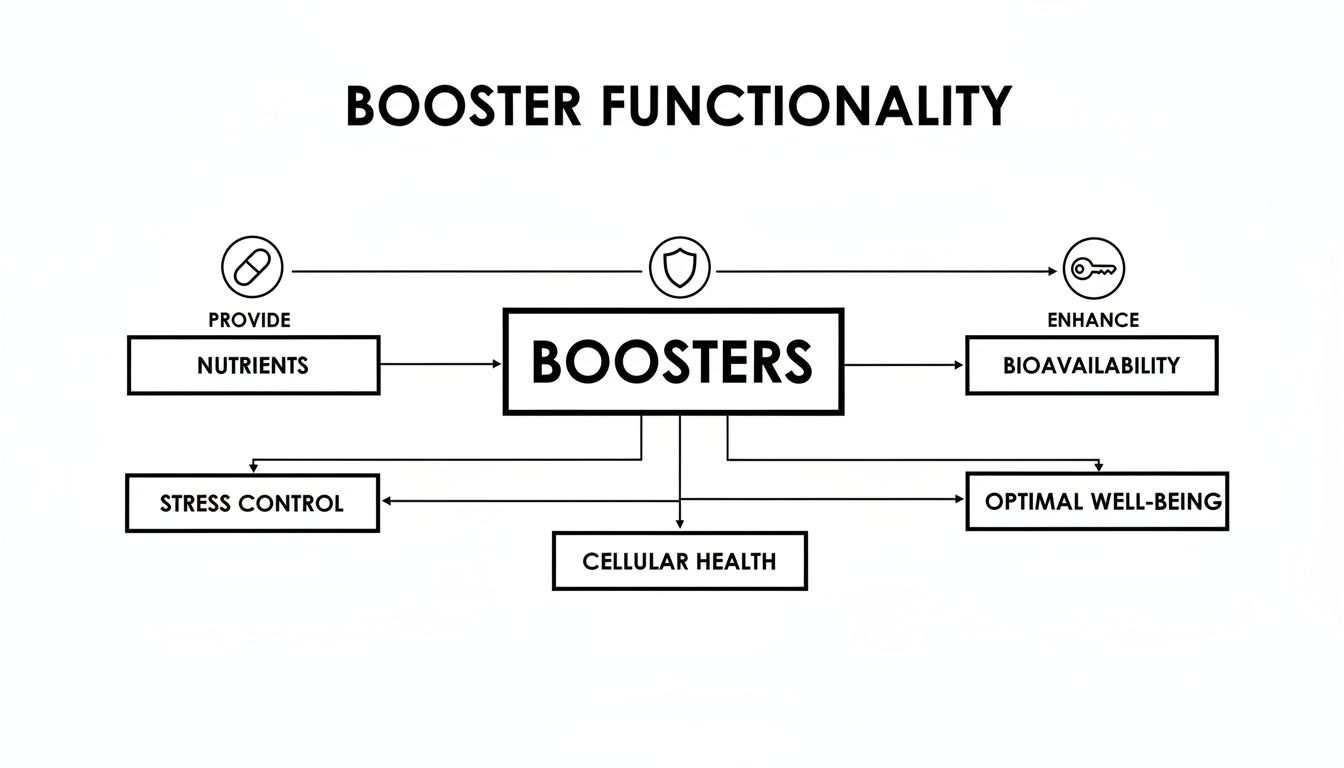
As you can see, the goal is a multi-pronged approach: provide the raw materials, manage hormonal roadblocks like stress, and make the testosterone you already have more effective.
The Foundational Building Blocks
Before we get into the more exotic herbal extracts, we have to start with the basics. Your body simply can't produce testosterone without certain key vitamins and minerals. In fact, deficiencies in these fundamentals are a common and highly correctable cause of low T-levels.
-
Zinc: Think of zinc as an essential raw material on the hormonal assembly line. It’s directly involved in the creation of testosterone. A ton of research shows a clear link between low zinc and low T, making it an absolute must-have in any serious formula.
-
Vitamin D: Often called the "sunshine vitamin," Vitamin D really acts more like a powerful hormone in the body. Study after study has drawn a straight line between healthy Vitamin D levels and optimal testosterone. For anyone not getting consistent, direct sun exposure, supplementation is practically a necessity.
These two are the bedrock. If a product skimps on them or leaves them out entirely, it’s a major red flag that the formula isn't built on a solid scientific foundation.
The Stress-Busting Adaptogen
Modern life is a recipe for chronic stress, which means constantly elevated levels of the hormone cortisol. High cortisol is testosterone’s arch-nemesis; it basically signals your body to shut down production. This is where adaptogenic herbs come into play.
Ashwagandha (Withania somnifera) is probably the most studied and respected adaptogen for this job. It doesn’t directly make testosterone. Instead, it helps your body build resilience to stress.
By helping to bring cortisol levels back into balance, Ashwagandha removes a major obstacle that’s holding back your natural testosterone output. Studies consistently show that men taking it not only feel less stressed but also show significant boosts in T-levels compared to placebo groups. It simply creates a better internal environment for your hormones to thrive.
The Amino Acid That Sends a Signal
Beyond the basics and stress management, some ingredients work by triggering the initial command to produce more testosterone. This is where certain amino acids can make a difference.
D-Aspartic Acid (DAA) is an amino acid that hangs out in the central nervous system and testes. The theory is that it stimulates the release of luteinizing hormone (LH) from the pituitary gland in your brain.
You can think of LH as the messenger that travels from mission control (your brain) to the factory (your testes) with one simple order: "Make more testosterone!" By amplifying that signal, DAA aims to get the factory to ramp up production.
But here’s the catch: the research on DAA is a mixed bag. Some short-term studies, especially on men who are sedentary, have shown some impressive spikes. On the other hand, studies on guys who are already hitting the weights hard have found little to no benefit. This suggests DAA might be more useful for getting someone off the starting blocks than for helping an already-trained athlete.
The Herbal That Frees Up Testosterone
Finally, some ingredients aren't about making more testosterone, but about making what you have more effective. A huge chunk of the testosterone in your body is latched onto a protein called Sex Hormone-Binding Globulin (SHBG), which keeps it locked up and unusable. Anything that can lower SHBG is a huge win.
Fenugreek (Trigonella foenum-graecum) is a popular herb that shines here. It contains compounds called furostanolic saponins, which are thought to do two things: inhibit the conversion of testosterone to estrogen and, more importantly, reduce SHBG levels.
By lowering SHBG, fenugreek helps increase your "free testosterone." This is the active, bioavailable form of the hormone that actually does all the work—from building muscle to firing up your libido. Several studies have found that men taking fenugreek while resistance training saw significant increases in both free and total T, along with better strength and body composition.
Common Testosterone Enhancer Ingredients and Their Evidence
To give you a quick reference, we've broken down some of the most popular ingredients you'll see on a label, how they're supposed to work, and where the science currently stands.
| Ingredient | How It Works (Proposed) | Level of Scientific Evidence |
|---|---|---|
| D-Aspartic Acid (DAA) | Stimulates luteinizing hormone (LH) release from the brain, signaling the testes to produce more testosterone. | Mixed. Some studies on sedentary men show short-term increases, but effects appear to diminish over time and are less pronounced in active individuals. |
| Tribulus Terrestris | Believed to increase LH production, similar to DAA. Also proposed to enhance androgen receptor density. | Weak. Once popular, most modern human studies show it has little to no direct effect on testosterone levels in healthy men. |
| Fenugreek | May inhibit enzymes that convert testosterone to estrogen and reduce SHBG, increasing "free" testosterone. | Moderate to Strong. Multiple studies, particularly in active men, support its ability to improve free and total testosterone levels and strength. |
| Zinc | An essential mineral that is a direct precursor and cofactor in the testosterone production process. | Strong. Evidence is very clear that correcting a zinc deficiency will restore and optimize testosterone levels. |
| Vitamin D | Functions as a steroid hormone. Receptors are found in testicular tissue, suggesting a direct role in hormone production. | Strong. A large body of research links higher Vitamin D levels with higher total and free testosterone levels. |
| Ashwagandha | An adaptogen that primarily works by lowering the stress hormone cortisol, which is antagonistic to testosterone. | Strong. Well-supported by clinical trials showing it can significantly reduce cortisol and, in turn, increase testosterone. |
| Tongkat Ali | Thought to free testosterone from SHBG and stimulate LH release while also reducing cortisol. | Moderate. Growing evidence supports its role in improving testosterone, managing stress, and enhancing libido, especially in men with low T. |
| Boron | A trace mineral that appears to decrease SHBG and reduce inflammatory markers that can suppress T production. | Moderate. Several studies show it can effectively increase free testosterone and decrease estrogen in a short period. |
This table isn't exhaustive, but it covers the heavy hitters. As you can see, some ingredients have a much stronger scientific pedigree than others, which is critical to remember when you're evaluating a product.
Who Should Consider a Testosterone Enhancer?
So, who are these supplements actually for? It's not a simple yes-or-no question. Think of a natural testosterone enhancer less like a light switch and more like a targeted tool for specific guys looking to optimize their hormonal health.
The goal here is to support your body's own production, not replace it. This makes it a compelling option for men who are after a subtle, steady improvement rather than a drastic chemical overhaul. Understanding who really stands to gain from this is the first step to making a smart, effective choice.
Prime Candidates for Testosterone Support
Certain guys are just more likely to feel the difference from a well-formulated supplement. They usually share common goals or are at a life stage where hormonal balance plays a huge part in their daily performance and well-being.
See if any of these sound like you:
- Men Experiencing the Natural Age-Related Decline: It's just a fact of life. After age 30, it's normal for testosterone to dip by about 1-2% annually. If you're over 35 and feeling a slump in energy, noticing slower recovery from workouts, or just don't have the drive you used to, supporting your body’s natural production might be the nudge you need. For more on this, check out our guide on energy supplements for men.
- Fitness Fanatics and Athletes: If you're constantly pushing your body to its limits, optimal hormone levels are non-negotiable for muscle repair, strength gains, and keeping that competitive edge. A testosterone enhancer can provide the key nutritional building blocks needed to support peak recovery and performance.
- Guys with Potential Nutrient Gaps: Let's be honest, modern diets aren't always perfect. It's easy to miss out on specific vitamins and minerals—like zinc and vitamin D—that are absolutely essential for making testosterone. If you suspect your nutrition isn't quite hitting the mark, a supplement can help fill in those crucial gaps.
Who Should Steer Clear
Just as important as knowing who these are for is knowing who they're not for. These supplements are not a universal fix, and using them when you don't need them can be ineffective at best and counterproductive at worst.
Key Takeaway: Testosterone enhancers are designed for healthy adult men. They are not a magic bullet and should be avoided by certain groups to ensure safety and proper hormonal development.
Specifically, you should skip these supplements if you are:
- A Teenager or Young Adult: Guys under 25 are generally at their natural peak of testosterone production. Throwing a booster into the mix is totally unnecessary and could potentially interfere with your body's normal hormonal development.
- Diagnosed with a Medical Condition: If you have any pre-existing health issues—especially hormone-sensitive conditions, liver problems, or heart disease—you must talk to your doctor before even thinking about taking a new supplement.
- Expecting a Miracle Pill: These supplements are there to support a healthy lifestyle, not replace it. If your sleep is terrible, your diet is junk, and you never exercise, a pill isn't going to fix the real problem.
It’s also critical to understand the difference between natural support and medical treatment. A testosterone enhancer is for optimization, not for treating clinically diagnosed low testosterone (hypogonadism). That's a medical condition requiring a doctor's care, which often leads to Testosterone Replacement Therapy (TRT). The TRT market, valued at USD 1.89 billion, exists to serve this distinct medical need—a sharp contrast to the supplement market's focus on general health optimization. You can read more about the growth of the TRT market at Consegic Business Intelligence.
Foundational Lifestyle Habits for Healthy Testosterone
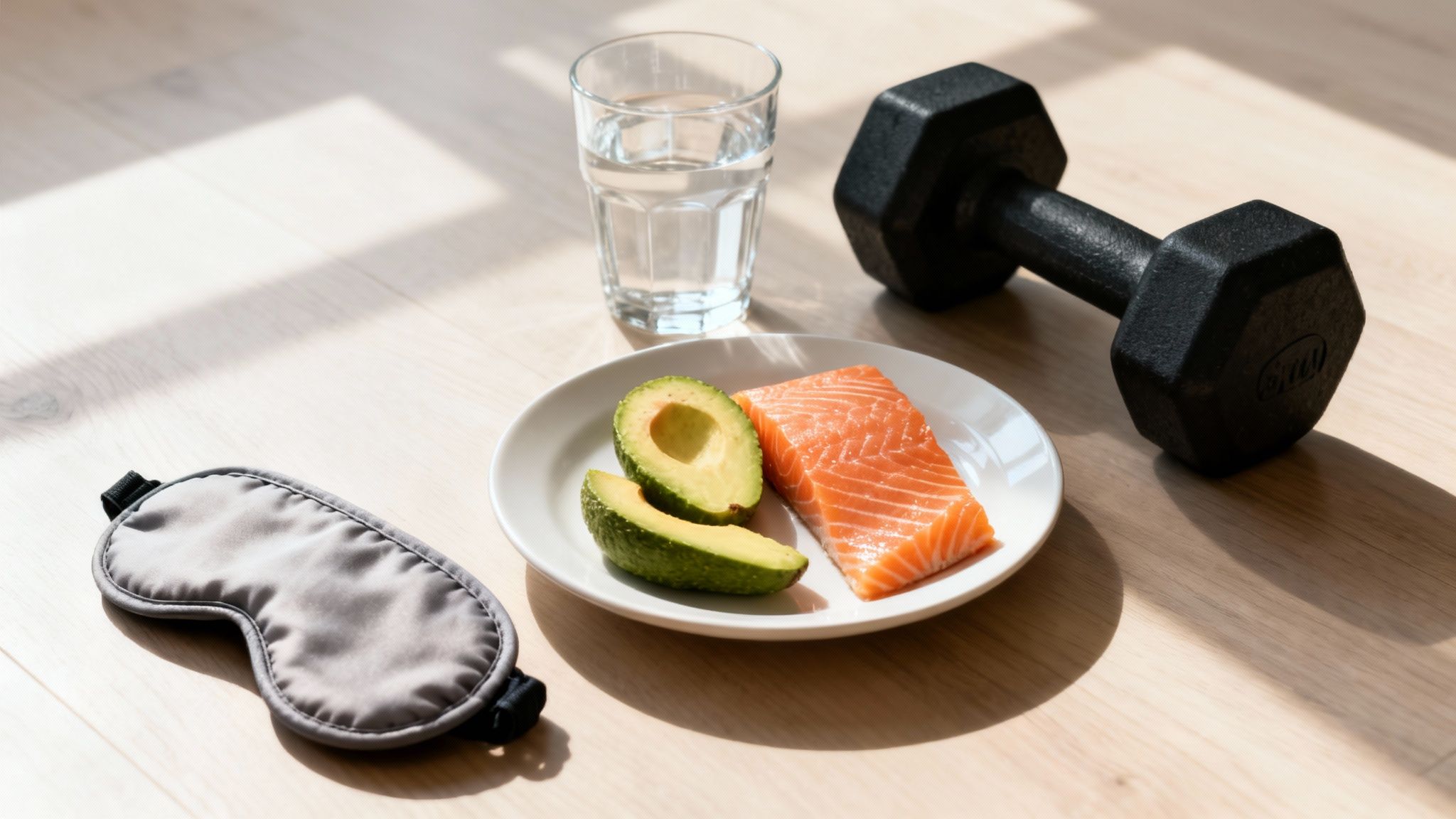
While a high-quality testosterone enhancer can give you a targeted edge, let’s be real: no supplement can ever outrun a bad lifestyle. True hormonal health is built day in and day out on a solid foundation of smart habits.
Think of it like building a house. Your lifestyle—sleep, diet, training, stress management—is the concrete foundation. The supplement is the frame you build on top. Without that solid base, the whole structure is weak and unstable. A supplement simply works better when it has a healthy internal environment to support.
Prioritize Resistance Training
If you want to send your body a direct signal to produce more testosterone, start lifting heavy things. It's that simple. Resistance training, particularly big compound movements that hit multiple large muscle groups, sparks a powerful hormonal response.
Squats, deadlifts, bench presses, and overhead presses are your best friends here. The physical demand of lifting heavy signals a crucial need for muscle repair and growth, and testosterone is a primary player in that entire process. Shoot for 2-4 strength sessions a week and focus on progressive overload—always pushing to add a little more weight or an extra rep over time.
Master Your Sleep Schedule
You cannot cheat sleep. Period. Your body produces the vast majority of its testosterone during the deep REM cycles of sleep. If you consistently cut that short, you're actively sabotaging your own hormone levels.
It doesn’t take long to see the damage. Research shows that getting just 5 hours of sleep for a single week can slash daytime testosterone levels by 10-15%. That's a huge hit from just a few bad nights.
The bottom line is simple: if you're not getting 7-9 hours of quality sleep per night, you are actively suppressing your body's natural ability to produce testosterone. This is the single most important lifestyle factor you can control.
Manage Your Stress Levels
Chronic stress is the silent killer of T-levels. When you’re constantly wound up, your body floods your system with the stress hormone cortisol. The problem? Cortisol and testosterone have an inverse relationship. When one goes up, the other tends to go down.
This is a primal survival mechanism. Your body is prioritizing the immediate threat (stress) over long-term projects like building muscle or reproduction. To get a handle on it, build some stress-reducing activities into your daily routine:
- Mindfulness or Meditation: Just 10-15 minutes a day can help dial back cortisol.
- Time in Nature: Getting outdoors has a proven stress-reducing effect.
- Disconnecting: Deliberately set aside time away from screens and work notifications.
Fuel Your Body with the Right Nutrients
Your diet provides the actual raw materials your body needs to manufacture hormones. A common-sense approach focused on whole foods is non-negotiable for anyone serious about supporting their T-levels.
Make sure you're getting a solid balance of macronutrients:
- Healthy Fats: Monounsaturated and saturated fats are critical for synthesizing steroid hormones, including testosterone. Load up on sources like avocados, olive oil, nuts, and whole eggs.
- Lean Protein: You need adequate protein from chicken, fish, and lean beef to support muscle repair and overall metabolic health.
- Complex Carbohydrates: Quality carbs from things like oats, sweet potatoes, and quinoa are essential for fueling tough workouts and helping to keep cortisol in check.
Beyond the macros, certain micronutrients are vital. Foods rich in zinc (oysters, beef), magnesium (spinach, almonds), and Vitamin D (fatty fish) give your body the essential tools it needs for hormone production. For those looking to really optimize their nutritional density, exploring the benefits outlined in our guide to organ supplements can provide a powerhouse of these key vitamins and minerals.
How to Choose a Safe and Effective Supplement
Walking into the supplement aisle can be completely overwhelming. With countless brands screaming bold claims from their labels, it's a real challenge to tell what's backed by science and what's just clever marketing. Choosing the right testosterone enhancer really comes down to having a sharp eye for detail and valuing quality over hype.
The good news is, there are some clear giveaways that separate a trustworthy product from a questionable one. Once you learn how to read labels like a pro and make independent verification a priority, you can make a choice that’s not only safe but also far more likely to get you the results you're after. Think of this as your personal toolkit for investing wisely in your health.
Decode the Supplement Label
Your first mission is to get fluent in reading the "Supplement Facts" panel on the back of the bottle. This is where companies are required to list what’s inside, and how they do it speaks volumes about their transparency.
Look for a product that clearly lists every single ingredient and its specific dosage in milligrams (mg) or international units (IU). This kind of full disclosure is what allows you to check the formula against actual clinical research and see if you’re getting an effective dose.
What you need to avoid at all costs are "proprietary blends." This is a sneaky marketing term that lets companies lump a bunch of ingredients under one fancy name, hiding the exact amount of each. They might list some great-sounding ingredients, but if they're only present in tiny, useless amounts (a practice known as "fairy dusting"), you’ll be none the wiser.
A transparent label with precise dosages isn't just a nice-to-have—it's a non-negotiable sign of a reputable brand. If a company won’t tell you exactly what’s in their product, you shouldn't trust it.
Prioritize Third-Party Testing
In an industry where regulation can be spotty, independent verification is your best friend. Third-party testing means an outside, unbiased lab has analyzed the product to confirm that what's on the label is actually what's in the bottle.
These certifications give you peace of mind that the product is free from nasty contaminants like heavy metals or bacteria and that it meets its potency claims. Keep an eye out for seals from these established organizations:
- NSF International: This is one of the most respected and rigorous certifications for dietary supplements.
- U.S. Pharmacopeia (USP): A gold-standard verification program that ensures purity and potency.
- Informed-Choice / Informed-Sport: Absolutely critical for athletes, as they test specifically for substances banned in sports.
When a brand invests in this level of testing, it shows they’re serious about quality control and have nothing to hide.
Scrutinize Reviews and Understand the Market
Customer reviews can offer some real-world perspective, but you have to read them with a critical eye. Look for detailed feedback that talks about specific effects over a realistic amount of time—like improved energy or better gym recovery after a few weeks—not just vague, over-the-top praise.
It also helps to get a feel for the market. North America is the biggest player in the testosterone booster game, grabbing over 40% of global revenue. This huge demand is fueled by a health-conscious culture and a massive fitness industry, but it also means the market is flooded with options. By zeroing in on products with transparent labels and third-party validation, you can cut right through the noise. You can discover more insights about the testosterone booster supplements market at Grand View Research.
Making the right choice is about putting all these pieces together. By carefully checking the formula, verifying its purity with testing, and sizing up real-world feedback, you can confidently pick an effective testosterone enhancer. To continue your research, check out our deep dive into how testosterone pills can support your goals.
Frequently Asked Questions About Testosterone Enhancers
Even after getting the full picture of how a testosterone enhancer works, it's totally normal to have some practical questions. Let's dive into the most common ones we hear to clear up any lingering doubts you might have.
How Long Does It Take to Notice a Difference?
Patience and consistency are your two best friends here. You aren't going to feel a seismic shift overnight.
Based on clinical studies of the key ingredients, most men start to notice the initial benefits—like better energy levels and a welcome lift in libido—after about 4 to 6 weeks of consistent, daily use.
For the more substantial changes, especially things you can see like muscle mass or body composition, you’ll typically need at least 8 to 12 weeks to really see them take shape. Remember, these supplements are designed to support your body's own natural machinery, and that process just takes time.
Are There Any Side Effects to Worry About?
When used as directed by healthy adults, natural testosterone enhancers are generally very well-tolerated. The formulas are built from vitamins, minerals, and herbal extracts that have a long history of study and safe use.
That said, some people might experience mild side effects, particularly if they have a known sensitivity to certain herbs. These can include:
- Minor digestive upset
- Occasional acne flare-ups
- Changes in mood
Sticking to the recommended dose is non-negotiable. And if you have any underlying health conditions or are taking other medications, having a quick chat with your healthcare provider beforehand is always the smartest move.
Important Note: It's crucial to understand that a natural testosterone enhancer is a completely different animal from products containing Human Growth Hormone (HGH) precursors. For anyone curious about that specific pathway, you can get the full rundown in our detailed guide on the role of an HGH supplement and how it works.
Will a Testosterone Enhancer Cause a Failed Drug Test?
For the vast majority of guys, the answer is a clear no. The standard drug screenings used in most workplaces simply aren't looking for the natural vitamins, minerals, or legal herbal extracts found in these kinds of supplements.
The big exception? Competitive athletes. If you're subject to strict anti-doping rules, like those from the World Anti-Doping Agency (WADA), you have to be extremely careful. The supplement industry can sometimes have issues with cross-contamination. To stay in the clear, athletes should exclusively use products that are third-party certified for sport (like NSF Certified for Sport) to completely eliminate the risk of a positive test.
At Revolution Science, we're committed to formulating transparent, research-backed supplements that support your performance goals safely and effectively.
Discover our full range of clean, filler-free supplements at rvsci.com