
Your Cart is Empty


The Ultimate Guide to Testosterone Boosters
So, what exactly is a testosterone booster? It's a natural supplement built to support your body's own hormone production, not replace it with synthetic stuff. These products use a mix of herbs, minerals, and amino acids to help get your testosterone levels back on track if they’ve dipped due to age, stress, or other lifestyle factors.
What Is a Testosterone Booster
Let's cut through the noise. Testosterone boosters are worlds apart from anabolic steroids or testosterone replacement therapy (TRT). Instead of pumping foreign hormones into your system, these supplements work by giving your body the raw materials it needs to fire up its own natural production lines.
Think of your body's hormone-making machinery like a well-oiled engine. Over time, it might not run as cleanly as it used to. A testosterone booster is like the high-octane fuel and expert tune-up crew. It doesn't drop in a new engine; it just gives your original one the premium resources to perform at its peak again.
Setting Realistic Expectations
It’s absolutely critical to understand what these supplements can and can’t do. They’re designed to help optimize your testosterone within a healthy, normal range. They are not a treatment for clinical medical conditions like hypogonadism—that’s a serious issue that requires a diagnosis and guidance from a doctor.
So, why do people use them? The goals are usually pretty straightforward:
- Supporting lean muscle and strength gains from all that hard work in the gym.
- Boosting energy, vitality, and that get-up-and-go feeling every day.
- Helping with recovery and shaking off that feeling of being constantly drained.
- Maintaining a healthy libido and a general sense of well-being.
A huge mistake is seeing these supplements as a magic pill. The truth is, they work best when they're backing up a solid foundation of good nutrition, consistent training, and quality sleep. They're a support crew, not a shortcut.
The Growing Interest in Hormonal Support
The buzz around these supplements has exploded, moving out of hardcore bodybuilding circles and into the mainstream. This shift is happening because more men are clued into their health, an aging population wants to stay vital, and online stores have made these products easier to find than ever.
The market numbers back this up, with projections showing revenue climbing from USD 3.74 billion in 2024 to an estimated USD 6.75 billion by 2030. You can dig into the full market analysis on Grand View Research to see just how much fitness and anti-aging trends are driving this. This isn't just a fad; it highlights a massive public interest in finding natural ways to support hormonal health.
At the end of the day, a quality testosterone booster gives your body the nutritional tools it needs to keep things balanced.
Decoding The Ingredients Inside The Bottle
Walking down the supplement aisle can feel like trying to read a foreign language. The labels on testosterone boosters are often crammed with scientific-sounding names and exotic herbs, leaving you to wonder what’s actually legit and what’s just clever marketing. Let's pull back the curtain and decode the most common ingredients you'll find inside.
Getting a handle on these ingredients is all about empowering yourself. Instead of just falling for hype, you can learn to spot a well-formulated product that’s actually backed by some science. Think of it like learning the key players on a team—each has a specific role, and a winning formula needs the right ones working together.
This diagram breaks down the core idea: a testosterone booster uses natural ingredients to support your body's own production. It's fundamentally different from synthetic steroids.
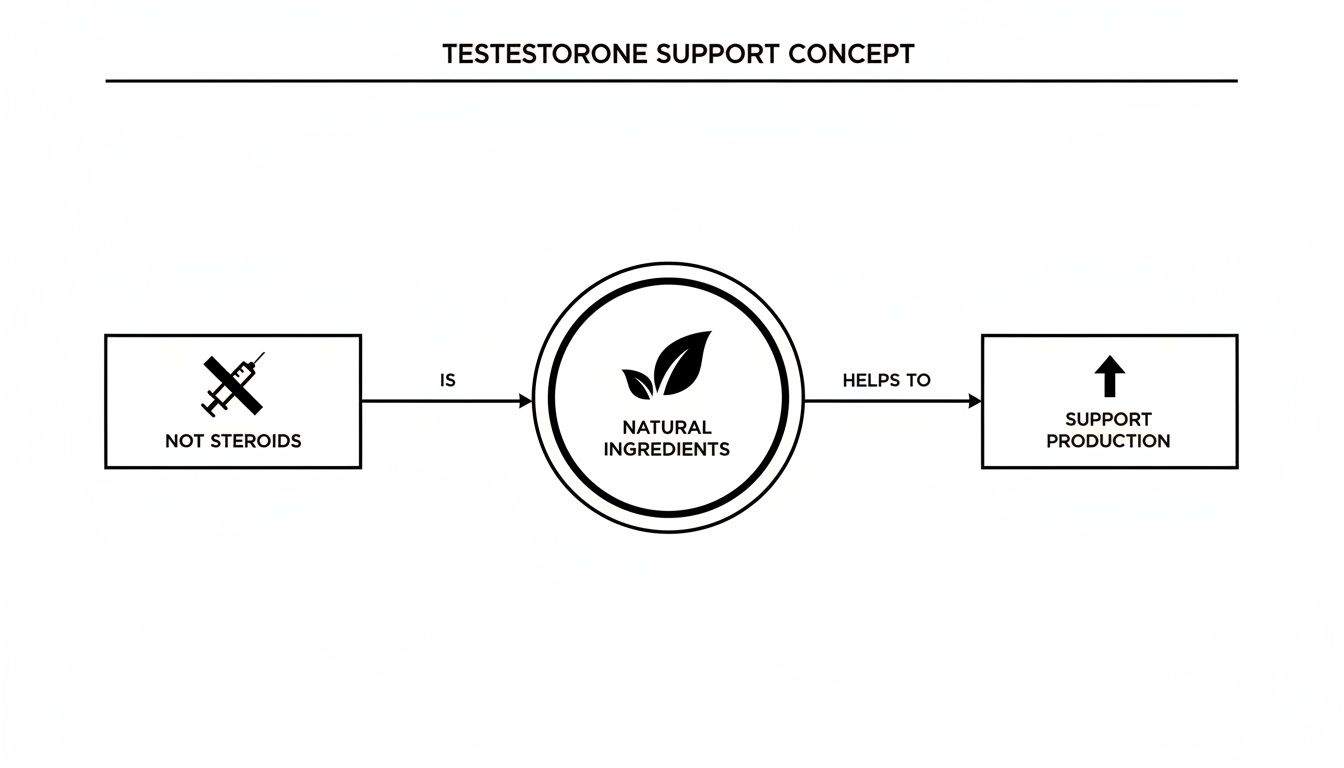
The key takeaway is that these supplements are designed as a support system, not an artificial replacement for your body's hormonal health.
The Primary Signalers And Hormone Modulators
Some ingredients work by sending signals that encourage your body to produce more testosterone on its own. Others help manage hormones that get in the way. They're like the communicators, telling your internal systems it's time to ramp up production.
-
D-Aspartic Acid (DAA): This amino acid is thought to act in the central brain region to release key hormones, like luteinizing hormone. Luteinizing hormone then travels down to the testicles, where it gives the green light for testosterone production. It’s like a dispatcher sending a crucial work order to the factory floor.
-
Fenugreek: A well-known herb, fenugreek contains compounds called furostanolic saponins. The idea here is that these may help reduce the enzymes that convert testosterone into estrogen, helping you hang on to more of your free testosterone.
The demand for these kinds of natural ingredients is huge. Industry research shows that natural botanicals were projected to grab about 60% of the ingredient market share in global sales, showing a massive consumer preference for "natural" formulas.
Adaptogens For Stress And Cortisol Management
Chronic stress is a known killer of healthy T-levels. When you're constantly wound up, your body pumps out excess cortisol, a hormone that directly interferes with testosterone production. This is where adaptogens come in.
Think of cortisol and testosterone on a seesaw. When cortisol goes way up, testosterone often goes down. Adaptogens help balance the seesaw.
Ashwagandha is the star player in this category. This ancient medicinal herb helps the body manage stress, which in turn can lead to lower cortisol levels. By helping to keep this primary stress hormone in check, ashwagandha creates a much more favorable environment for testosterone to thrive. For a closer look, our guide on the topic provides more context on this mechanism: https://rvsci.com/blogs/blog/testosterone-enhancer.
The Essential Building Blocks: Minerals And Vitamins
Your body can't create hormones out of thin air. It needs specific raw materials—vitamins and minerals—to run the production line smoothly. If you're deficient in these key nutrients, you can bring everything to a grinding halt.
Two of the most critical micronutrients for testosterone are:
-
Zinc: This essential mineral is a cornerstone of hormonal health. It’s directly involved in the testosterone production process, and even a mild deficiency can slam the brakes on it. Oysters, beef, and pumpkin seeds are great places to get it from your diet.
-
Vitamin D: Often called the "sunshine vitamin," this is technically a pro-hormone. It plays a vital role in tons of bodily functions, including the health of the male reproductive system. Studies consistently show a strong link between having enough Vitamin D and having healthy testosterone.
Common Testosterone Booster Ingredients And Their Evidence
To make sense of it all, here's a quick-glance table breaking down some of the most popular ingredients you'll see on a label, how they're supposed to work, and where the science currently stands on their effectiveness for boosting testosterone.
| Ingredient | Proposed Mechanism | Level of Evidence (Strong/Moderate/Limited) |
|---|---|---|
| D-Aspartic Acid (DAA) | Stimulates the release of luteinizing hormone (LH), a precursor to testosterone production. | Limited (Initial studies were positive, but follow-ups have been mixed, showing effects primarily in sedentary or infertile men.) |
| Fenugreek | May inhibit enzymes (aromatase, 5-alpha reductase) that convert testosterone into estrogen or DHT. | Moderate (Several studies show positive effects on free testosterone and libido, but more research is needed.) |
| Ashwagandha | An adaptogen that lowers cortisol, reducing the stress hormone's suppressive effect on testosterone. | Moderate (Good evidence for reducing stress and cortisol, with associated increases in testosterone, particularly in stressed individuals.) |
| Zinc | Acts as an essential cofactor for enzymes involved in testosterone synthesis. | Strong (Evidence is robust for correcting low testosterone if a deficiency exists. Less effective if levels are already sufficient.) |
| Vitamin D | Functions as a hormone and is correlated with testosterone levels; mechanism is not fully understood but may regulate enzymes. | Strong (Similar to zinc, supplementation is highly effective at raising testosterone in men who are deficient.) |
| Tribulus Terrestris | Believed to increase luteinizing hormone, similar to DAA. | Limited (Despite its popularity, most human studies show no significant effect on testosterone levels in healthy men.) |
This table isn't exhaustive, but it covers the heavy hitters. As you can see, the evidence ranges from strong (for correcting deficiencies) to pretty speculative.
For those exploring options beyond traditional supplements, some new research is looking into specific peptides for testosterone that might influence hormone production through different biological pathways.
By understanding these core ingredients—the signalers, the stress managers, and the essential building blocks—you can look at any testosterone booster label and know exactly what you're seeing. It's the first step to making a truly informed choice.
Who Actually Benefits from These Supplements?
Let's get one thing straight: a testosterone booster isn't some kind of universal fix. Whether it's the right move for you depends entirely on who you are, what you're trying to achieve, and your current stage in life. Before even considering one, the smartest first step is to know your starting line. Getting a blood test gives you a clear picture of your current testosterone levels and provides a solid baseline for making an informed decision with your doctor.
Think of these supplements less as a magic pill and more as a specific tool for a specific job. For some guys, they’re about fine-tuning an already high-performance machine. For others, they're a strategic way to support energy and well-being as the years add up. Figuring out which camp you're in is key.

The market itself tells this story. Demand is split right down the middle between two main groups: serious fitness enthusiasts and men over 40 who are paying attention to age-related hormonal changes. While the gym crowd is the biggest group right now, the vitality and anti-aging demographic is growing faster than any other.
So, let's break down the three main profiles of guys who often see real benefits.
The Strength Athlete Chasing Peak Performance
Picture a guy who lives in the gym. He’s been lifting for years, his diet is on point, and he prioritizes recovery, but he’s hit a wall. A hard wall. His numbers on the bar have stalled, and he just isn’t seeing the muscle growth he used to, no matter how hard he pushes.
For this athlete, a testosterone booster isn't a replacement for hard work—it's a support system for it. It helps ensure his body's natural hormone production can keep up with the intense demands he places on it, optimizing for:
- Muscle Protein Synthesis: Giving his body the building blocks it needs to effectively repair and grow muscle tissue after a brutal workout.
- Faster Recovery: Helping him bounce back from soreness so he can hit the next session with the same intensity.
- Mental Drive: Supporting that aggressive, focused mindset needed to move heavy weight and break through plateaus.
It’s all about creating an internal environment that can match his external effort.
The Endurance Athlete Balancing Stress and Stamina
Now, think about a marathoner or a triathlete. These guys are machines, logging punishing hours that, while great for their hearts, place an enormous amount of stress on the body. This kind of chronic physiological stress can spike cortisol—the stress hormone that’s a direct antagonist to testosterone.
In the endurance world, it's a constant tightrope walk between performance and burnout. Sky-high cortisol from overtraining can crush testosterone, leading straight to fatigue, poor recovery, and a nosedive in performance.
This is where a testosterone booster formulated with adaptogens like Ashwagandha can be a game-changer. By helping the body manage its stress response and keep cortisol from running wild, it fosters a more favorable hormonal state. The payoff is more consistent energy, better recovery between grueling sessions, and maintained hormonal health against the onslaught of extreme training.
The Man Over 40 Supporting Vitality
Finally, let's look at the guy in his 40s, 50s, or beyond. He might not be training for a competition, but he’s noticed things have... changed. His energy tanks by 3 PM, his mental focus isn't as sharp, and that old spark just isn't there like it used to be.
This is the classic scenario where supporting healthy testosterone is really about enhancing your quality of life. For this man, it’s not about hitting a new PR in the gym; it's about:
- Fighting Off Fatigue: Helping to reclaim that daily energy and push back against that feeling of being constantly run-down.
- Supporting a Healthy Libido: Maintaining a core part of his masculine well-being and confidence.
- Improving Body Composition: Making it easier to hold onto muscle and keep body fat in check, which gets tougher as hormones shift with age.
For this group, a well-formulated supplement is a proactive tool to hang onto vigor, confidence, and an overall better quality of life for the long haul.
Understanding the Safety and Potential Side Effects
Let’s be honest: navigating the world of supplements means putting your health and safety first. When you’re looking into a testosterone booster, you need to have a clear-eyed view of the potential risks and how to tell a quality product from a waste of money—or worse, something dangerous. The point here isn't to scare you, but to arm you with the right knowledge so you can make a smart, confident decision.
For the most part, natural testosterone boosters built around well-researched ingredients like Ashwagandha, Zinc, and Vitamin D are generally safe for healthy adults, especially when used as directed. These ingredients have been around for a long time. But the safety of any product really boils down to quality, transparency, and using it responsibly. The supplement industry can be a bit of a wild west, which makes the reputation of the brand you choose incredibly important.
The Dangers of Proprietary Blends
If you see the term "proprietary blend" on a supplement label, that’s your first major red flag. This is a loophole that lets a company list a bunch of ingredients in a mix without telling you exactly how much of each ingredient is actually in there.
So, what's the big deal?
- Hidden Dosages: You have no way of knowing if you’re getting a dose that’s been proven effective in studies, or just a microscopic amount that does nothing.
- Risk of Over-Supplementation: That blend could be overloaded with certain minerals, like zinc, which can cause problems if you take too much.
- Masks a Weak Formula: Often, it's just a slick marketing tactic to hide a cheap, underdosed product behind a long list of impressive-sounding ingredients.
A brand that stands by its product will be completely upfront about what’s inside and at what dosage. If a company is hiding its formula, you have to ask yourself what they're trying to hide.
A trustworthy testosterone booster will always have a fully transparent label. It will list every single ingredient and its precise dosage, allowing you to do your own research and feel confident that it aligns with what science says is safe and effective.
Third-Party Testing and Brand Reputation
Supplements aren't regulated as strictly as prescription drugs, so independent verification becomes your best friend. Third-party testing is when an outside lab analyzes the product to confirm that what’s on the label is what’s actually in the bottle. They check for purity, potency, and screen for nasty contaminants.
Choosing a brand that invests in this kind of quality control isn't just a good idea—it's non-negotiable for your safety. While supplements are one path for hormonal support, it's interesting to see how other compounds are being researched. For those curious about the broader landscape of hormonal health, you can learn more about related research in our guide to HGH supplements.
Potential Side Effects to Monitor
Even with natural boosters, which tend to have a low side effect profile, everyone’s body is different. Some people might experience mild digestive issues like nausea or an upset stomach, especially when they first start. Other, less common issues could include things like mood shifts or skin breakouts.
The most important thing is to listen to your body. If you notice any side effects that stick around or feel concerning, stop taking the supplement and talk to a doctor. At the end of the day, a testosterone booster is supposed to help you feel better, not worse. Making the right choice always starts with putting safety, transparency, and quality above everything else.
Lifestyle Habits That Amplify Your Results
Let's get one thing straight: a testosterone booster isn't a magic pill. Think of it more like a high-octane fuel additive for a performance engine. It can absolutely help you get more out of your system, but it's not going to fix a flat tire or a shoddy transmission.
To truly tap into what a quality supplement can offer, you have to build a solid foundation first. Your lifestyle choices—how you train, eat, sleep, and manage stress—are what send the most powerful signals to your body to optimize its own hormone production. A good supplement amplifies those signals; it can't create them from scratch or override a system that's constantly being sabotaged by poor habits.
So, before we even talk about what's in the bottle, let's dial in your game plan.
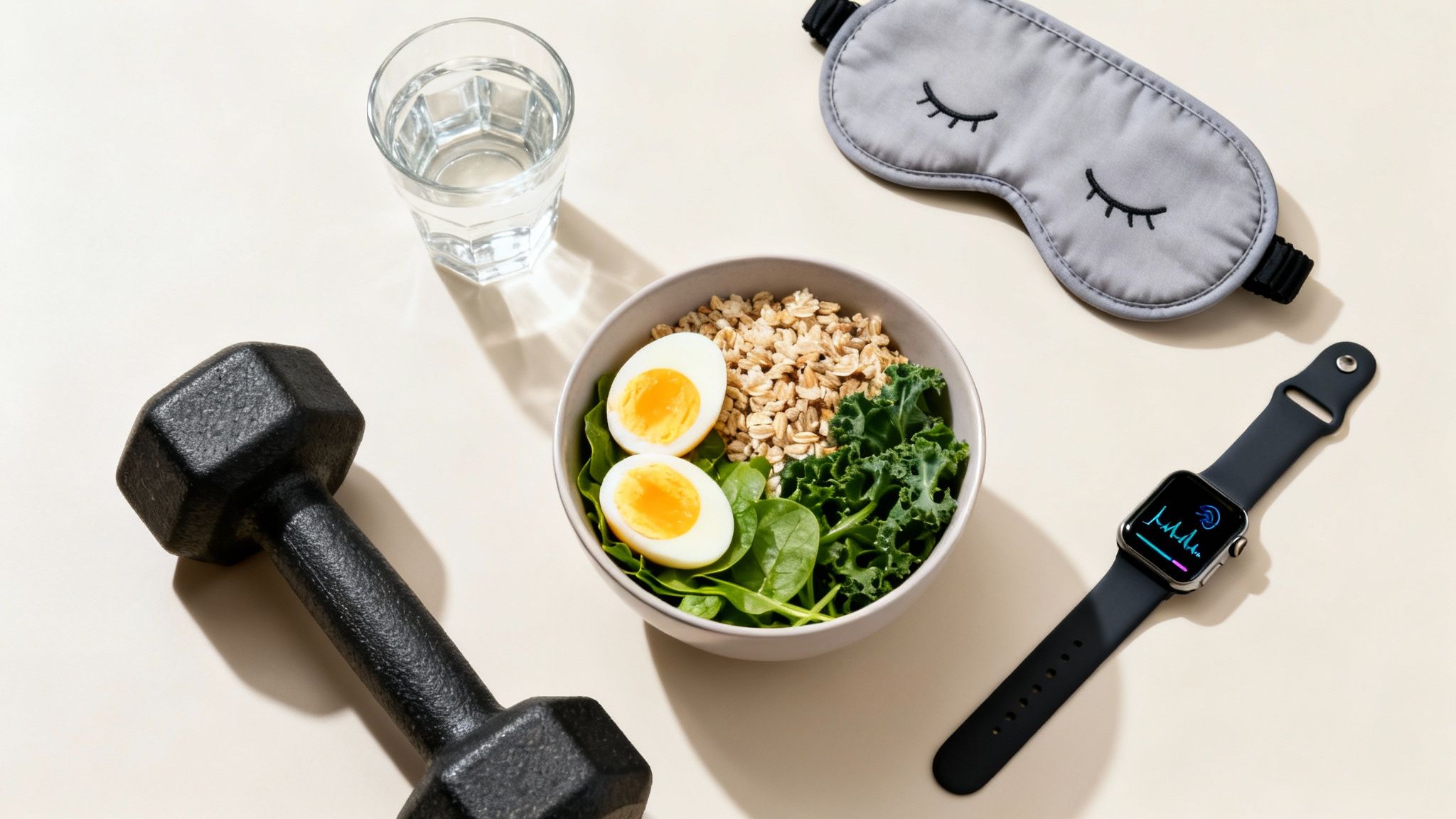
Build Your Foundation with Resistance Training
If there's one non-negotiable activity for supporting healthy testosterone levels, it's lifting heavy things. It's a primal signal. Resistance training, especially big compound movements that recruit a ton of muscle, is a direct command to your body to get stronger and more resilient. That demand triggers a powerful hormonal response, including a short-term spike in testosterone.
The biggest bang for your buck comes from exercises like:
- Squats: The undisputed king of lower-body lifts, hitting your entire posterior chain and core.
- Deadlifts: A true full-body movement that builds raw, functional strength and puts a massive metabolic demand on your system.
- Bench Presses: Your go-to for building upper-body pushing strength in the chest, shoulders, and triceps.
- Overhead Presses: A fundamental lift for developing powerful shoulders and rock-solid core stability.
A word of caution, though: more is not always better. Pushing yourself into a state of chronic fatigue and overtraining can flip the script, sending cortisol through the roof and crushing your testosterone. The goal is strategic, progressive overload—not total system burnout. This is just one piece of the puzzle; for a deeper look at how this all fits together, check out our complete guide to muscle growth supplements.
Fuel Your Body with Hormone-Friendly Nutrition
You can’t build a house without bricks, and you can’t produce testosterone without the right nutritional building blocks. Your diet provides the raw materials your body needs to manufacture hormones, plain and simple.
Focus on these key areas:
- Sufficient Protein: Aim for lean meats, fish, eggs, and quality plant-based sources to supply the amino acids needed for muscle repair and hormone synthesis.
- Healthy Fats: Don't fear fat! Monounsaturated and saturated fats from foods like avocados, olive oil, nuts, and whole eggs are direct precursors to steroid hormones, including testosterone.
- Key Micronutrients: Two nutrients are absolutely critical: Zinc and Vitamin D. Oysters and red meat are loaded with zinc, while fatty fish and sensible sun exposure will keep your Vitamin D levels topped off.
Think of your nutrition as the supply chain for your hormonal factory. A deficiency in a key nutrient like zinc is like a critical part going missing on the assembly line. The entire production process grinds to a halt.
Prioritize Sleep and Manage Stress
Honestly, the most powerful, all-natural testosterone booster on the planet is a solid night's sleep. Your body does the vast majority of its hormonal repair and production while you're sleeping. The research on this is crystal clear: sleep deprivation is one of the fastest ways to absolutely tank your T levels.
In fact, consistently getting less than 5 hours of sleep per night can slash your testosterone by as much as 15%. Make 7-9 hours of quality, uninterrupted sleep a non-negotiable priority.
At the same time, chronic stress is testosterone's mortal enemy. When you're constantly frazzled, your body pumps out the stress hormone cortisol. As we've covered, cortisol and testosterone exist in a see-saw relationship—when one goes up, the other tends to go down.
Find stress management techniques that actually work for you. This could be meditation, deep breathing exercises, or even just a quiet walk in nature. Protecting your mental state is a direct investment in your hormonal health.
The following table breaks down how these crucial lifestyle factors work together.
Synergistic Lifestyle Habits for Hormonal Health
| Lifestyle Factor | Primary Action | Practical Tips |
|---|---|---|
| Resistance Training | Signals the body to increase anabolic hormone production. | Focus on heavy, compound lifts like squats and deadlifts 2-4 times per week. Prioritize progressive overload. |
| Whole-Food Nutrition | Provides the essential building blocks for hormone synthesis. | Eat sufficient protein, healthy fats (avocado, nuts), and micronutrient-rich foods like leafy greens and red meat. |
| Quality Sleep | Allows for peak hormonal production and physical recovery. | Aim for 7-9 hours of uninterrupted sleep nightly. Create a dark, cool, and quiet sleep environment. |
| Stress Management | Lowers cortisol, which has an inverse relationship with testosterone. | Incorporate daily practices like meditation, deep breathing, or spending time outdoors for 10-15 minutes. |
Ultimately, a quality supplement is designed to support an already solid foundation. When you nail down these four pillars, you create an environment where a testosterone booster can truly shine and amplify the positive results you're already working toward.
How to Choose a High-Quality Testosterone Booster
Walking into the supplement aisle can feel like stepping into the wild west. With countless brands all making huge promises, it’s tough to cut through the marketing noise and find something that actually works. Choosing a high-quality testosterone booster means you have to become a smart shopper, focusing on what’s inside the bottle, not just on the flashy label.
This isn't about just grabbing the first thing you see. It's about making a calculated investment in your health. A little homework upfront will save you a lot of time, money, and frustration down the road, ensuring you get a product that’s both safe and effective.
Look for Transparent Labels and Clinical Doses
The first thing you should demand is a fully transparent label. Seriously, this is non-negotiable. You need to see exactly what’s in the product and precisely how much of it. If you see the words "proprietary blend," put the bottle down and walk away. That’s just a sneaky way for companies to hide their formulas and underdose key ingredients.
A confident, reputable brand has nothing to hide. They'll proudly list every single component and its exact milligram count. This transparency is your power, because it lets you check their formula against actual scientific research to see if the ingredients are dosed at clinically effective levels—the amounts that have been proven to deliver results in studies. A product might have all the right ingredients, but if they're not dosed properly, you're just paying for expensive dust.
A brand that truly believes in its formula has nothing to hide. A transparent label is the first sign of a company that respects its customers and stands by its product's quality.
Prioritize Third-Party Testing for Purity
The supplement industry isn't as tightly regulated as many people think, so you can't always trust a company's claims at face value. This is exactly why third-party testing is an absolute must.
This is a simple but critical process where an independent lab tests the supplement to confirm two things:
- Potency: Does the product actually contain the ingredients and amounts listed on the label?
- Purity: Is it free from nasty contaminants like heavy metals, pesticides, or banned substances?
Keep an eye out for seals from well-known labs like NSF International, Informed-Sport, or USP. Seeing one of those logos is your best assurance that you’re getting a clean, safe, and accurately dosed product. It’s a clear signal that the brand invests in quality control and is committed to delivering what they promise.
Common Questions About Testosterone Boosters
Whenever you're looking into a new supplement, a few key questions always pop up. Let's cut through the noise and get straight to the practical answers you need before deciding if a testosterone booster is right for you.
Think of this as the final piece of the puzzle, designed to give you the confidence to move forward in your health and performance journey.
How Long Until I See Results
This is always the first question, and for good reason. But the honest answer is: it’s not an overnight fix. A testosterone booster isn't like a pre-workout that hits you in thirty minutes; it's a foundational supplement that works with your body's natural systems over time.
Most guys start to notice subtle shifts within the first 3 to 4 weeks—things like a bit more energy in the tank or feeling less wrecked after a tough workout. The more significant changes you’re likely looking for, like noticeable improvements in strength, body composition, and libido, tend to show up after 6 to 8 weeks of consistent use. Just remember, that timeline depends heavily on how dialed in your training, nutrition, and sleep are.
Should I Cycle Testosterone Boosters
Cycling is a hot topic in the fitness world. It's the practice of using a supplement for a set period, then taking a break. When it comes to natural testosterone boosters built from herbs and minerals, the debate is ongoing.
Unlike synthetic hormones, these supplements don't shut down your body's own testosterone production. Still, some athletes prefer to cycle to keep their body responsive to the ingredients. A popular approach is 8 weeks on, followed by a 2-4 week break. This strategy can help make sure the supplement keeps delivering results over the long haul.
Can Women Use Testosterone Boosters
While these products are usually aimed at men, the conversation around hormonal health for female athletes is getting louder. Testosterone is an essential hormone for women, too, playing a huge role in building muscle, maintaining bone density, and keeping energy levels high.
For female athletes, the goal isn't to elevate testosterone to male levels but to support healthy, optimal ranges that can be disrupted by intense training.
Women who are considering these supplements need to be extremely cautious. It's wise to start with very low doses and look for ingredients like Ashwagandha, which helps manage stress, rather than direct testosterone precursors. Speaking with a doctor is an absolute must to ensure it’s safe and appropriate.
For a deeper dive into different supplement options, our article on testosterone pills provides more detail to guide your research. When you understand these nuances, you can make a much better choice for your specific health and fitness goals.
At Revolution Science, we're committed to creating transparent, research-backed supplements that support your performance goals. Explore our clean, effective formulas and see how we can help you achieve your next level. https://rvsci.com