
Your Cart is Empty


A Practical Guide to Supplements for Faster Recovery
What separates the best athletes from everyone else isn't just about training harder—it's about recovering smarter. The most effective supplements for faster recovery get to work by repairing muscle tissue, refilling your energy tanks, and taming post-workout inflammation. A smart recovery strategy zeroes in on protein for repair, carbs and electrolytes for refueling, and a few key compounds to keep soreness in check.
Your Blueprint for Faster Athletic Recovery
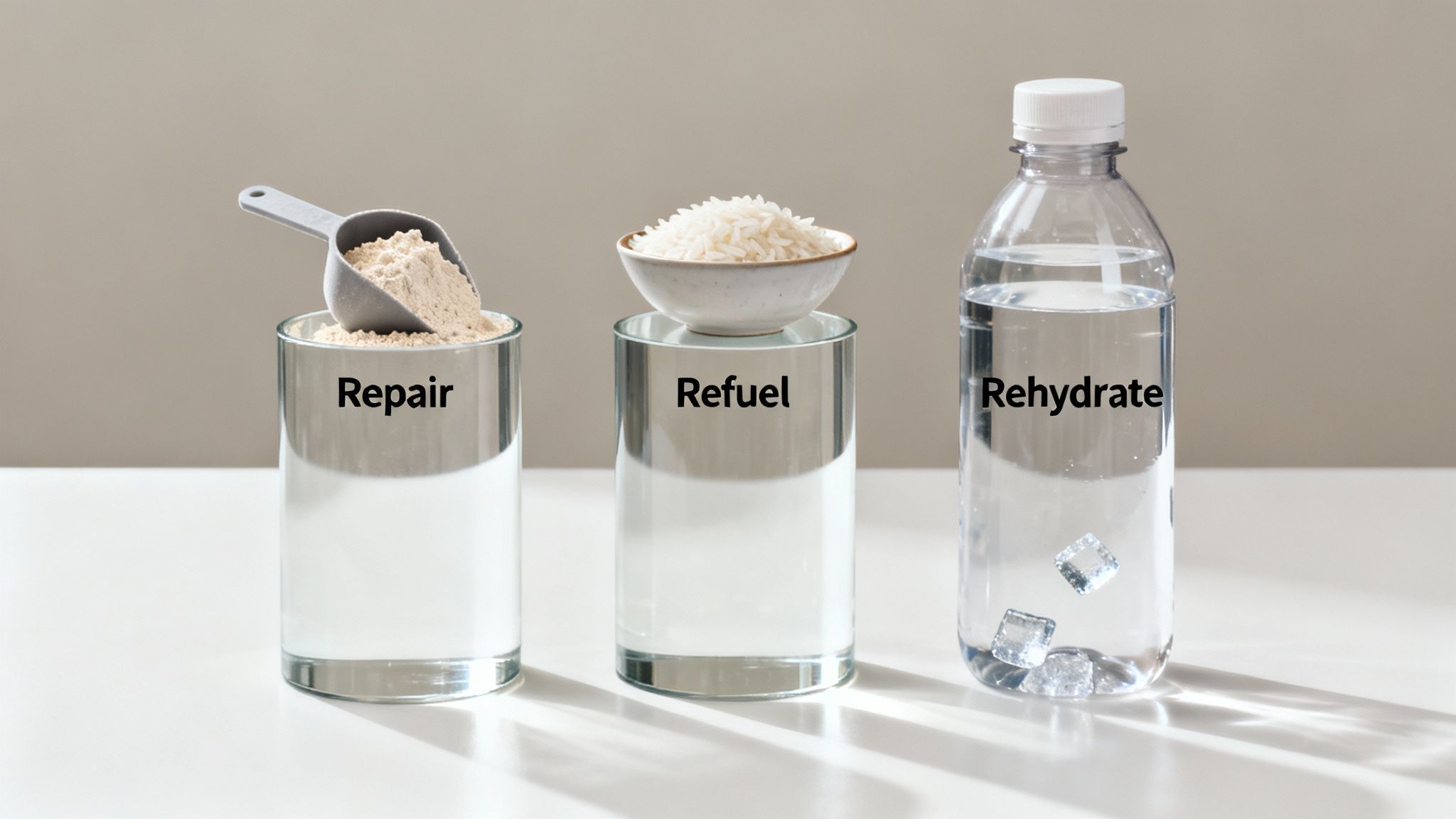
Think of your body like a high-performance race car. After a tough race, it doesn’t just get parked in the garage. A pit crew immediately swarms it, performing specialized maintenance to get it ready for the next run. Your body needs that exact same urgency after a workout, especially within the critical 30-60 minute "anabolic window" when your muscles are practically begging to absorb nutrients.
This isn’t just some fringe idea for pro athletes anymore. The global sports supplements market is on track to hit around USD 97.44 billion in 2025 and is expected to almost double by 2033. That explosive growth shows just how seriously active people from all walks of life are now taking their recovery nutrition.
The Three Pillars of Recovery
To build a recovery plan that actually works, you have to focus on three fundamental pillars. Each one addresses a specific physiological demand created by hard training. Get these right, and you're well on your way.
- Repair: Intense training creates tiny micro-tears in your muscle fibers. The process of repairing them, called muscle protein synthesis, is literally what makes you stronger.
- Refuel: Your workouts drain your muscles of glycogen, which is their primary fuel source. If you don't top off those stores, your performance in the next session will suffer. It's that simple.
- Rehydrate: When you sweat, you lose a lot more than just water. You're also losing critical electrolytes that control everything from muscle contractions to fluid balance.
Your training only stimulates growth; real progress happens during recovery. Neglecting this phase is like planting a seed and forgetting to water it—you'll never see the results of your hard work.
Building Your Foundational Strategy
A solid recovery plan doesn't need to be overly complicated. It all starts with supporting those three pillars with a smart mix of whole foods and well-chosen supplements. Of course, this strategy works best when paired with a solid training program. For example, a practical guide to building muscle can give you a great framework to build from, which your recovery plan will then amplify.
The following table provides a quick snapshot of these three pillars and the key tools you can use to support them.
The Three Pillars of Faster Recovery at a Glance
| Recovery Pillar | Primary Goal | Key Supplements | REVSCI Solution Example |
|---|---|---|---|
| Repair | Rebuild damaged muscle fibers and promote growth | Whey Protein, Casein Protein, BCAAs, Creatine | Protein Reload (Post-Workout Formula) |
| Refuel | Replenish depleted muscle glycogen (energy) stores | Carbohydrates (Dextrose, Maltodextrin) | Carb-Loading Complex (Intra-Workout) |
| Rehydrate | Restore fluid balance and lost electrolytes | Sodium, Potassium, Magnesium, Calcium | Hydro-Electrolyte Matrix |
By prioritizing these foundational elements, you can dramatically speed up your body's natural healing processes. This not only means less soreness but also paves the way for consistent, long-term gains. In fact, we wrote a whole guide on how this synergy works in our article about how to improve athletic performance.
Now, let's dive into the specific supplements that support each of these pillars, turning this theory into a plan you can use today.
The Foundational Supplements for Muscle Repair
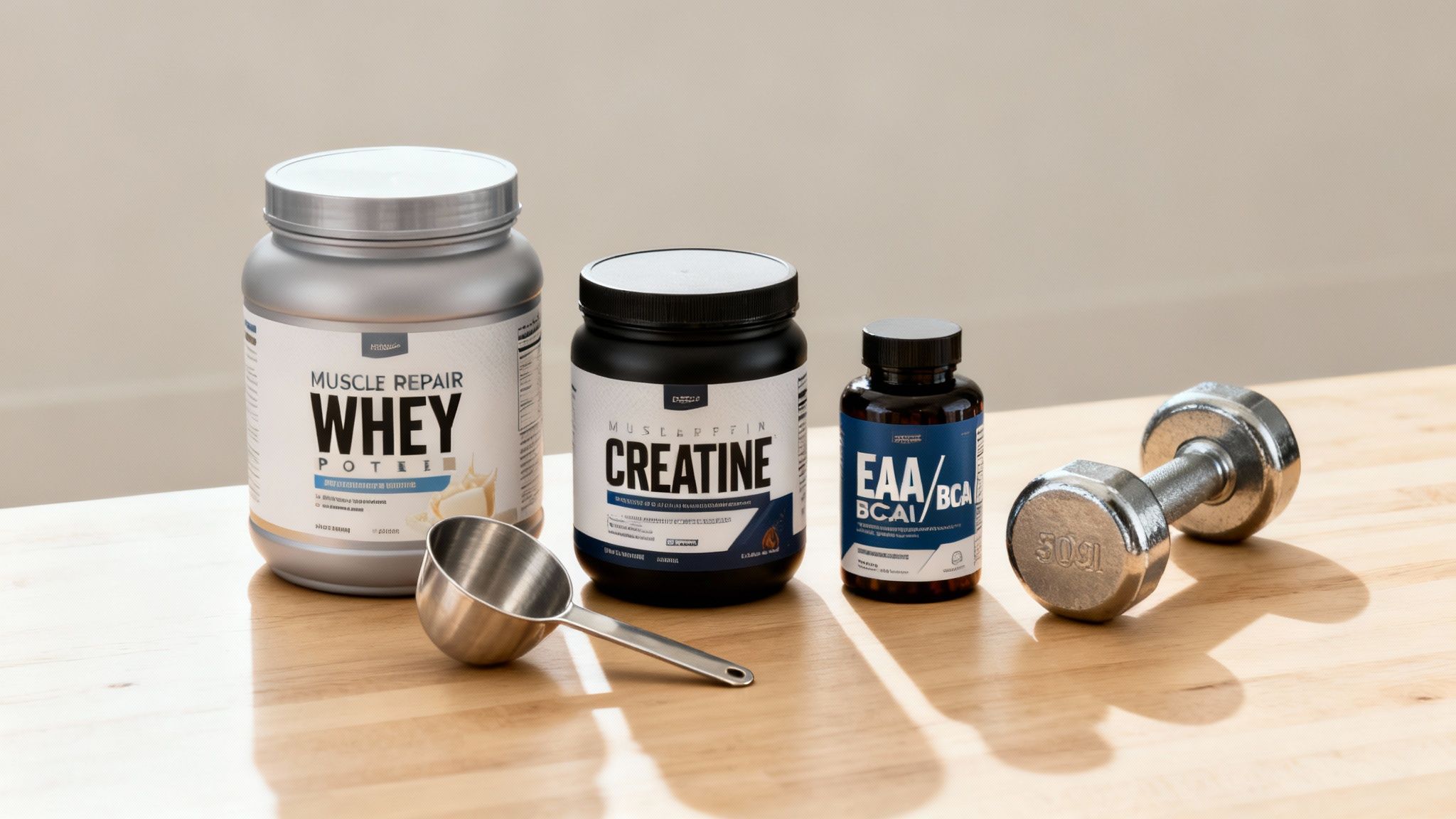
The real magic of athletic progress happens in the hours after your workout ends. This is when your body kicks into gear, starting the critical process of muscle protein synthesis (MPS)—the biological engine that rebuilds damaged muscle fibers, making them bigger and stronger than before. But to fuel that engine, you have to give it the right raw materials at the right time.
Think of MPS like a major construction project. A grueling workout is the demolition phase, clearing out the old to make way for something better. But you can't build a new skyscraper without steel and concrete. The supplements that follow are those essential building materials, giving your body what it needs to not just repair the damage, but to build back stronger. They are the bedrock of faster recovery because they directly feed the molecular repair process.
Protein: The Master Building Block
When it comes to muscle repair, protein is the undisputed king. It provides the amino acids—the literal bricks and mortar—your body needs for MPS. But not all protein is the same, especially when you factor in timing and how quickly your body can use it.
- Whey Protein: This is your rapid-response crew. Whey digests incredibly fast, flooding your muscles with amino acids right when they’re screaming for them post-workout. It’s perfect for kickstarting recovery inside that critical anabolic window.
- Casein Protein: Think of casein as the overnight construction team. It’s a slow-digesting protein that releases amino acids steadily over several hours. This makes it ideal for a shake before bed, helping prevent muscle breakdown and fueling repair while you sleep.
- Plant-Based Proteins: Options like pea, rice, and soy are fantastic alternatives. Modern blends are carefully formulated to provide a complete amino acid profile, ensuring you have all the necessary components for effective muscle repair.
The world knows how effective protein is, and the market reflects it. The global protein supplements market is on track to explode from USD 3,150.90 million in 2025 to nearly USD 5,986.05 million by 2032. That’s a 9.60% annual growth rate, fueled by a deep understanding of protein’s vital role in getting athletes back in the game.
Creatine: The Cellular Energy Recharger
For years, we’ve known creatine as a power and strength booster. And it’s brilliant at that. But its role in recovery is just as impressive. Creatine essentially acts like a portable battery recharger for your muscle cells.
During intense exercise, your muscles burn through a high-energy molecule called adenosine triphosphate (ATP). Creatine steps in to rapidly regenerate ATP, letting you push harder, for longer. This same process has a huge payoff for recovery.
By keeping cellular energy levels topped off, creatine directly reduces muscle cell damage and the inflammation that follows a tough workout. The result? Less soreness and a faster return to your peak.
Study after study shows that athletes taking creatine not only see bigger strength gains but also show fewer markers of muscle damage after training. It's a foundational supplement that accelerates the entire repair cycle from the inside out.
BCAAs and EAAs: The Ignition Switch for MPS
While a good protein powder gives you a full spectrum of amino acids, Branched-Chain Amino Acids (BCAAs) and Essential Amino Acids (EAAs) have very specific, crucial jobs. The three BCAAs—leucine, isoleucine, and valine—are the VIPs, with leucine acting as the direct "ignition switch" for muscle protein synthesis.
Imagine your muscle cell is a factory. Leucine is the foreman who walks in and flips the main power switch, telling the assembly line to start building new protein. The other EAAs are the specialized workers and raw materials needed to keep that line running efficiently. Taking them during or after a workout sends a powerful "start" signal and ensures the factory is fully staffed and supplied.
For a deeper dive into how these building blocks work, check out our guide on the essential roles of amino acids for athletes. And remember, supplements are just one piece of the puzzle. It's always a good idea to incorporate other science-backed tips on muscle recovery covering everything from nutrition to sleep.
Taming Exercise-Induced Inflammation
Every tough workout triggers a wave of inflammation and oxidative stress. That might sound bad, but it’s actually a normal—and necessary—signal for your muscles to repair, adapt, and grow stronger. The problem isn’t the inflammation itself; it's letting it get out of hand. Unchecked, it leads to excessive soreness, lingering stiffness, and a much slower return to form. The goal isn't to kill this process, but to manage it so you can bounce back faster and stronger.
Think of it like a controlled burn in a forest. It’s a productive fire that clears out old debris so new, healthy growth can push through. But if you just let it rip, you risk burning down the whole forest. The right supplements for faster recovery are like a skilled fire crew. They contain the blaze, letting it do its job without causing unnecessary damage, so the rebuilding can start right away.
Soothe Soreness with Tart Cherry Extract
One of the heavy hitters for managing that post-workout ache is tart cherry extract. These specific cherries are loaded with powerful antioxidants called anthocyanins—they’re what give the fruit that deep, rich red color. Research has shown time and again that these compounds are incredibly good at dialing back muscle pain and strength loss after a hard session.
They work by getting rid of the free radicals your body produces during intense effort, which helps calm down the inflammatory response. For an athlete, that means real-world results. In one standout study, runners who drank tart cherry juice for seven days before a race reported way less muscle pain afterward.
To get a real effect, most studies use a dose that works out to 480-500 mg of tart cherry extract or about 8-12 ounces of juice concentrate, taken once or twice a day. This effectively pre-loads your system with anthocyanins, getting it ready to handle the stress you’re about to put it through.
Resolve Inflammation with Omega-3 Fatty Acids
If tart cherry is the first responder putting out the initial flames, think of Omega-3s as the project managers overseeing the entire cleanup and repair operation. Specifically, we’re talking about EPA (eicosapentaenoic acid) and DHA (docosahexaenoic acid). These essential fats, which you get from things like fish oil, are critical for creating special molecules called pro-resolving mediators (SPMs). These are basically the body's natural "all-clear" signal for inflammation.
Instead of just blocking inflammation, SPMs actively help resolve it. They guide your body back to balance, which is a much smarter way to handle recovery.
- EPA is mainly known for its direct anti-inflammatory work, helping manage that initial flare-up.
- DHA is more involved with brain health but also plays a huge part in producing these crucial resolving agents.
For athletes looking to cut down on muscle soreness, a combined daily dose of 1-2 grams of EPA and DHA is the sweet spot. Taking it consistently helps create a less inflammatory internal environment, which is absolutely key for making long-term progress.
The Power of Curcumin from Turmeric
Curcumin is the bright yellow compound in turmeric, and it's one of the most potent natural anti-inflammatories ever discovered. It gets the job done by blocking multiple inflammatory pathways at once, making it a fantastic tool for managing both muscle soreness and nagging joint pain. But there’s a catch: on its own, your body has a really hard time absorbing it.
That's where piperine, the active ingredient in black pepper, comes in. When you pair curcumin with piperine, you can boost its bioavailability by a staggering 2000%. This one-two punch ensures your body can actually use the curcumin you’re taking, making it far more effective. For anyone active, that means less muscle damage and a much smoother recovery. Look for a daily dose between 500-1,000 mg of curcumin extract (standardized to 95% curcuminoids), and make sure it’s paired with piperine.
Restoring Energy and Hydration
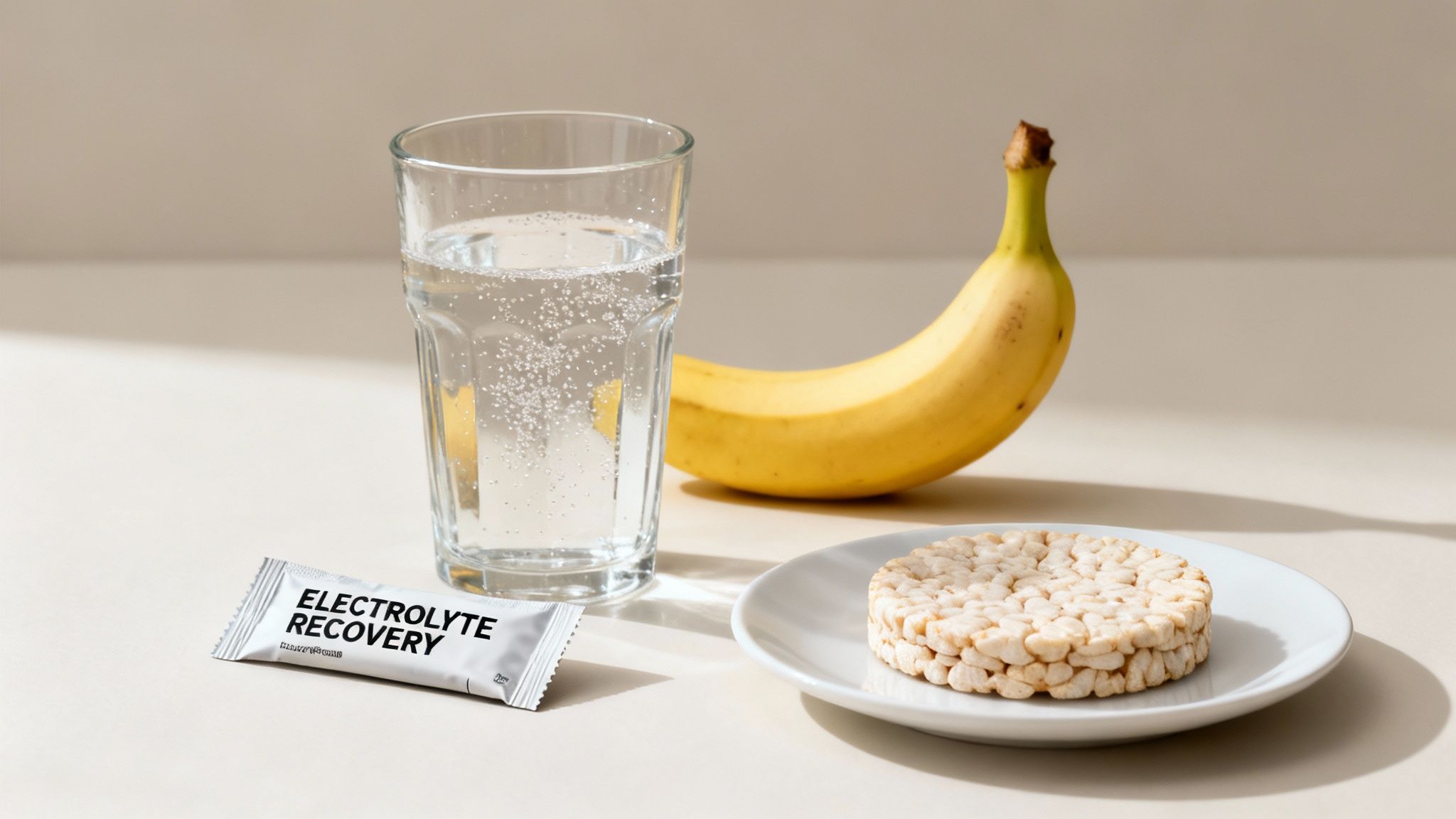
True recovery is about so much more than just patching up muscle fibers. It's about a total system restore, making sure your body's engine has the fuel and fluid it needs to fire on all cylinders for the next session. This comes down to aggressively replenishing your energy stores and getting your fluid balance back on track.
After a tough workout, your body is running on empty. Thinking you can bounce back with just water is like trying to charge a dead car battery without plugging it in—it’s just not going to work. To really recover, you need to zero in on two critical elements: electrolytes and carbohydrates. These are the foundational supplements for faster recovery that tackle your body's most urgent post-exercise needs.
Electrolytes: The Body’s Electrical Wiring
Think of electrolytes as the current running through your body’s wiring, allowing nerve signals to fire and muscles to contract. When you sweat, you’re losing critical minerals like sodium, potassium, and magnesium, and even a small dip can seriously throw off your performance.
Water alone can't fix this deficit. In fact, chugging plain water after heavy sweating can actually dilute the electrolytes you have left, leading to a dangerous condition called hyponatremia. For any serious athlete, putting these minerals back is non-negotiable.
- Sodium: This is the most important electrolyte lost in sweat. It's absolutely vital for maintaining fluid balance and keeping cramps at bay.
- Potassium: Works hand-in-hand with sodium to manage fluid levels and is essential for proper muscle contractions and nerve signals.
- Magnesium: This mineral is a workhorse, involved in over 300 different biochemical reactions, including energy production and muscle relaxation. A shortage often shows up as cramps and nagging fatigue.
Simply put, without the right electrolyte balance, your muscles can't work properly, your brain can't send clear signals, and your body can't even hold onto the water you're drinking. This is exactly why a dedicated electrolyte supplement is a cornerstone of smart recovery.
Clean Hydration Without The Junk
A lot of popular sports drinks are just sugar bombs loaded with artificial junk that can actually slow down your recovery. For athletes who demand clean, effective hydration, a product like REVSCI's Reviver Electrolytes offers a precise fix. It gives you the key electrolytes your body is screaming for without any unnecessary fillers, speeding up rehydration so you can get back to training faster. For a full breakdown, check out our electrolyte powder comparison guide.
Athlete-Specific Electrolyte Dosing Guide
Getting electrolyte intake right isn't a one-size-fits-all game. Your needs change dramatically based on how long you train, how hard you go, and the environment you're in. This guide gives you a practical starting point for personalizing your strategy.
| Training Condition | Duration (Hours) | Recommended Sodium (mg/hr) | REVSCI Reviver Scoops (Approx.) |
|---|---|---|---|
| Low Intensity / Cool Weather | 1-2 | 300-500 | 1 scoop every 1.5-2 hrs |
| Moderate Intensity / Warm Weather | 1-3 | 500-700 | 1 scoop per hour |
| High Intensity / Hot & Humid | 2-4+ | 700-1000+ | 1.5-2 scoops per hour |
| Ultra Endurance / Extreme Heat | 4+ | 1000+ | 2+ scoops per hour |
Remember, this is a baseline. The best approach is to pay attention to your own body's signals—things like thirst, cramping, and energy levels—and adjust your intake accordingly.
Carbohydrates: Refueling Your Glycogen Tanks
Carbohydrates are the high-octane fuel for your muscles, stored in the form of glycogen. An intense training session can nearly empty these fuel tanks, which is why you feel so drained and sluggish afterward. The period right after your workout is the "golden hour" when your muscles are primed to soak up carbs and restock that energy.
The kind of carb you choose makes a big difference.
- Simple Carbs (High-GI): Things like dextrose or maltodextrin are absorbed incredibly fast. They trigger a quick insulin spike that acts like a key, unlocking your muscle cells to shuttle in glucose and amino acids. This makes them perfect for that immediate post-workout window.
- Complex Carbs (Low-GI): Foods like oats and sweet potatoes are the slow-burn option. They digest more gradually, providing sustained energy, and are a better choice for meals a few hours after you’re done training.
This systematic approach to refueling has become a core part of modern sports nutrition. The global market for post-workout recovery supplements hit a massive USD 18 billion in 2024. Here in the U.S., liquid formats like ready-to-drink recovery shakes account for more than half of that, which just shows how baked into the routine this has become for dedicated athletes. When you combine fast-acting carbs with electrolytes, you create a powerful recovery synergy that sets you up for consistent performance, day in and day out.
How to Build Your Personalized Recovery Stack
Let's be clear: there's no such thing as a one-size-fits-all recovery plan. The needs of an elite marathoner after a long run are a world away from what a powerlifter requires after a brutal squat session. Building a smart strategy with supplements for faster recovery is all about tailoring the approach to the specific hell you put your body through.
Think of yourself as a mechanic for a high-performance race team. You wouldn't use the same tools to fix a Formula 1 car that you'd use on an off-road trophy truck, right? Each machine demands a specialized approach. This section is where we move from theory to action, laying out clear protocols for different types of athletes so you can build a stack that actually works for you.
We'll break it down for three common profiles: the endurance athlete, the strength athlete, and the hybrid athlete. Each has a unique set of physiological challenges, and understanding those is the first step to recovering smarter, not just harder.
The Endurance Athlete Stack
Endurance athletes—the runners, cyclists, and triathletes among us—are absolute masters of sustained effort. The biggest hurdles they face in recovery are gnarly glycogen depletion, major dehydration, and the relentless oxidative stress that comes from hours of work. For them, the stack has to be all about rapid refueling and rehydration.
Sure, muscle repair is still part of the equation, but the immediate crisis is an empty fuel tank and out-of-whack fluid levels. The mission is to get the body ready to handle high volume again, day after day.
Here's what a foundational stack looks like for the endurance crowd:
- Immediate Post-Workout (Within 30-60 minutes): Get a shake down that combines 30-40g of fast-digesting carbohydrates (like maltodextrin) with 20-25g of whey protein. That classic 2:1 or 3:1 carb-to-protein ratio is king here, kickstarting glycogen replenishment and muscle repair at the same time.
- Hydration Focus: While you train and after you're done, be sipping on an electrolyte drink like REVSCI's Reviver. This is non-negotiable for replacing the critical sodium, potassium, and magnesium you sweat out. It’s your best defense against cramping and performance drops.
- Daily Support: Add in Tart Cherry Extract (480-500 mg) to fight back against the high levels of inflammation and oxidative stress from all that long-duration training. This will go a long way in reducing muscle soreness and helping you feel better for your next session.
The Strength Athlete Stack
For powerlifters, bodybuilders, and Olympic lifters, the name of the game is maximum force. Their training is designed to create significant muscle fiber damage. So, their recovery stack needs to be laser-focused on one thing: cranking up muscle protein synthesis (MPS) to repair that damage and build bigger, stronger tissue.
Glycogen still matters, but the absolute top priority is feeding the muscles a steady stream of amino acids to fuel the rebuilding process. This is where protein and creatine steal the show.
For the strength athlete, recovery isn't just about feeling better. It's the biological engine that drives adaptation and builds strength. Skimping on repair-focused supplements is like trying to build a brick wall without enough mortar.
This is a core stack for a strength athlete:
- Immediate Post-Workout (Within 30-60 minutes): A shake with 25-40g of whey protein isolate. Tossing 5g of Creatine Monohydrate into this shake is a pro move; it helps restore cellular energy and is proven to improve strength recovery between workouts.
- Before Bed: A slow-digesting Casein Protein shake (20-30g) provides a sustained drip-feed of amino acids all night long. This creates an anti-catabolic shield that protects your hard-earned muscle while you sleep.
- Daily Essential: A consistent daily dose of Creatine Monohydrate (3-5g) is key. This keeps your muscle phosphocreatine stores topped off, which not only fuels performance but also helps reduce the markers of muscle damage.
The Hybrid Athlete Stack
Hybrid athletes, think CrossFitters or MMA fighters, live in a world of unique pain. They need the strength of a lifter and the engine of a runner, often in the very same workout. Their training creates a perfect storm of muscle damage, depleted glycogen, and deep systemic fatigue. Their recovery stack has to be a masterfully balanced blend of both worlds.
The strategy here is to attack both muscle repair and energy replenishment with equal aggression. You can't afford to favor one over the other.
A versatile stack for the hybrid athlete should include:
- Post-Workout Synergy: Go for a shake with a 1:1 ratio of carbs to protein. A mix of 30g of fast-digesting carbs and 30g of whey protein gives your body the resources to tackle both glycogen restocking and muscle repair head-on.
- Performance and Repair: Daily Creatine Monohydrate (3-5g) is a non-negotiable. It's critical for boosting performance during those high-intensity intervals and dramatically speeds up recovery between those soul-crushing sessions.
- Inflammation Management: With all the high-impact and high-volume work, hybrid athletes get huge benefits from daily Omega-3s (1-2g EPA/DHA combined). This helps keep chronic inflammation in check and supports long-term joint health.
When you tailor your supplement strategy to your specific training demands, you stop guessing and start recovering with purpose. This personalized approach ensures you’re giving your body exactly what it needs to come back stronger, faster, and more resilient than ever.
Choosing Supplements You Can Trust
Let's be honest: the supplement industry can feel like the Wild West. With so many brands shouting about their "miracle" formulas, how do you cut through the noise and find something that actually works?
Choosing the right supplements for faster recovery isn't just about the ingredients. It’s about being absolutely certain that what's on the label is what's in the bottle—nothing more, nothing less. This is where third-party testing becomes a non-negotiable for any serious athlete.
Certifications from independent labs like NSF Certified for Sport or Informed-Sport are your seal of approval. They confirm two critical things: the product is free from banned substances, and it contains the exact ingredients at the dosages claimed on the label, with no hidden contaminants.
Reading Labels Like a Pro
Beyond the certifications, the label itself tells you a story about the company's integrity. The biggest red flag you'll ever see? The infamous "proprietary blend."
This is a loophole that lets companies hide the exact amount of each ingredient under a fancy-sounding name. You have no idea if you’re getting an effective, clinical dose of anything or just a sprinkle of expensive dust. It’s a total gamble.
A brand that's confident in its product, on the other hand, puts everything out in the open. Look for full transparency—a label that lists every single active ingredient and its precise dosage. You should also scan for unnecessary junk like artificial fillers, sweeteners, or colors that do nothing for your performance.
A transparent label is a sign of respect for the consumer. It says, "We've done the research, we stand by our formula, and we trust you to see the value in what we've created."
This decision tree can help you visualize how to build a recovery stack that aligns with your specific training goals.
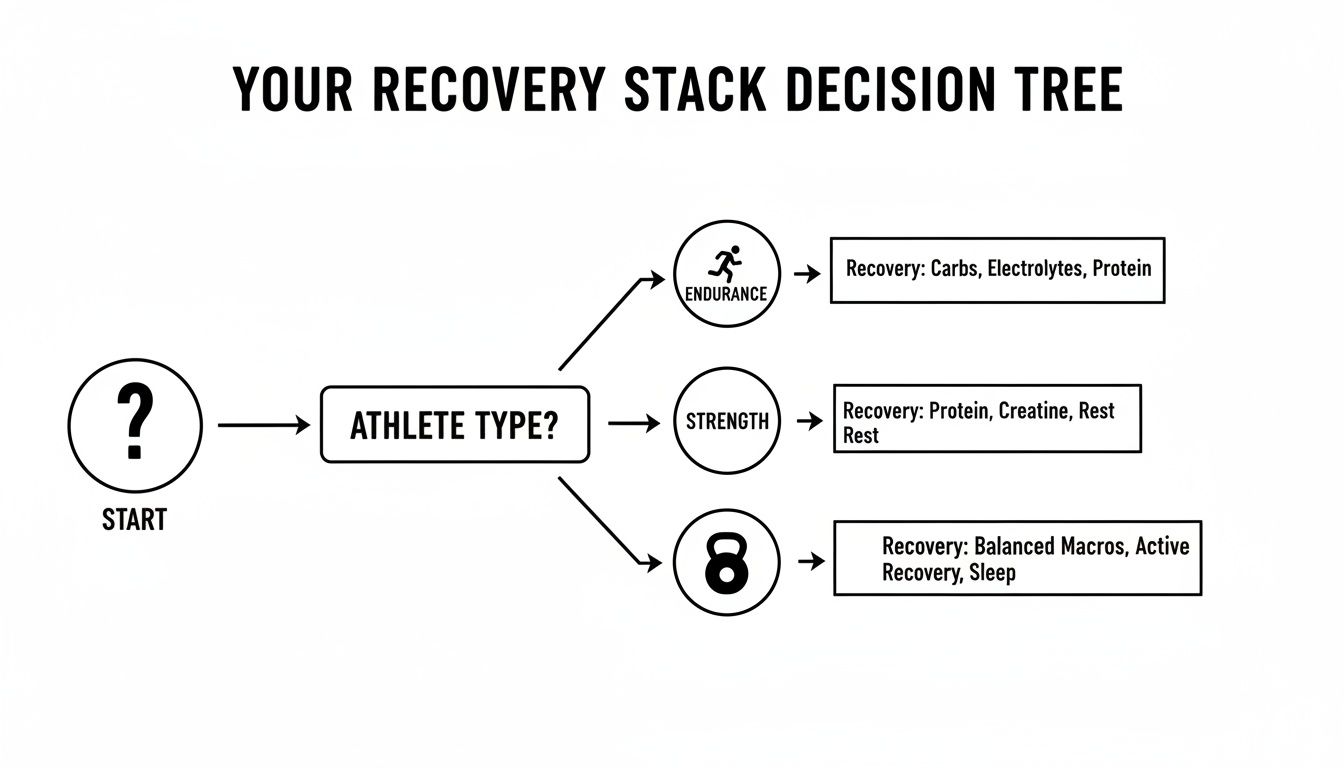
As you can see, foundational supplements form the core of any smart plan. From there, you can layer on specific additions tailored to the unique demands of endurance, strength, or hybrid training.
Demand More From Your Brand
Your recovery is far too important to leave to chance. By insisting on third-party testing and completely transparent labels, you’re not just protecting your health—you're making sure your hard-earned money is actually delivering results.
For a deeper dive, you can learn more about the importance of third-party tested supplements in our detailed guide. Remember, supplements are powerful tools, but they only work when they enhance a solid foundation of training, nutrition, and sleep. Choosing a brand you can trust is the first, most crucial step.
Common Questions About Recovery Supplements
Let's be real, navigating the world of supplements can feel like a minefield. You've got questions, and you need straight answers from someone who's been there. Here’s a breakdown of the most common things athletes ask when they start dialing in their recovery strategy.
Can’t I Just Get All This From Food?
This is the big one. And the answer is yes... and no. Look, a solid, nutrient-rich diet is non-negotiable. It’s the foundation everything else is built on. But after you’ve just wrecked yourself in a workout, whole foods can take a long time to digest and get to your muscles.
Supplements are the express lane. They deliver a targeted, fast-acting shot of exactly what your muscles are screaming for, right in that critical post-workout window when your body is primed for repair.
How Long Until I Actually Feel a Difference?
You want to know when the magic happens. Some things, like electrolytes, can make an immediate impact—think less cramping and better hydration right away. But the real game-changers work more systemically over time.
When you're consistent with foundational players like creatine and protein, most athletes start to notice they’re less sore and bouncing back faster between sessions within about 2-4 weeks. The benefits compound. The longer you stick to a smart plan, the more you'll feel the difference.
The goal isn't just one killer workout. It's about stacking one great training day on top of the next. Consistent, targeted supplementation is what makes that possible by hitting fast-forward on the recovery cycle.
Are These Supplements Safe to Take Long-Term?
Safety is everything. When you’re using high-quality, third-party tested products, the core supplements we’ve covered here—protein, creatine, electrolytes, and key antioxidants—are generally very safe for daily, long-term use. The key is to always stick to the recommended doses and partner with brands that are transparent about what's in the bottle.
And yes, you can absolutely combine different supplements into a "stack." In fact, it's often more effective. A great place to start is a post-workout shake with protein, creatine, and electrolytes. This combo tackles muscle repair, cellular energy, and hydration all at once, giving your recovery a powerful, synergistic kickstart.
Ready to build a recovery stack that actually works? The clean, research-backed formulas from Revolution Science give you the essential tools to repair, refuel, and rehydrate without any of the junk. See the difference for yourself at https://rvsci.com.