
Your Cart is Empty


Hgh Hormone Supplement: Evidence, Benefits, and Safe Alternatives
An "HGH hormone supplement" is simply an over-the-counter product, usually packed with amino acids and other nutrients, that claims to encourage your body to produce more of its own human growth hormone. It’s crucial to know that these supplements do not contain actual HGH. That would be a prescription drug. Instead, the idea is to feed your pituitary gland the raw materials it might need to do its job a little better.
Understanding The HGH Hormone Supplement Promise
Athletes, biohackers, and anyone chasing peak performance is always looking for an edge. It’s no surprise that the promise of boosting human growth hormone (HGH) is so tempting. The marketing paints a compelling picture: faster muscle growth, effortless fat loss, superhuman recovery, and maybe even turning back the clock on aging. It's a powerful story that's easy to buy into.
The entire promise hangs on one critical difference: are you injecting a synthetic hormone, or are you supporting your body's natural process?
-
Synthetic HGH Injections: This is the real deal—a bioidentical hormone available only by prescription to treat legitimate growth hormone deficiencies. When athletes use it off-label, it’s illegal in most sports and comes with serious health risks. It directly jacks up HGH levels in your blood.
-
HGH Supplements (Secretagogues): These are what you find on supplement store shelves. They are legal dietary products that contain zero HGH. The goal is to provide nutrients that act as building blocks or signals, theoretically nudging your pituitary gland to release more of its own growth hormone.
Think of it like this: synthetic HGH is like hiring a massive, outside construction crew to throw up a skyscraper overnight. An HGH hormone supplement, on the other hand, is like delivering premium steel, concrete, and better tools to your own skilled crew, hoping they’ll work a bit faster and more efficiently.
Separating Marketing From Reality
This is where it gets tricky. While the concept of boosting HGH sounds great, whether a supplement actually works depends entirely on what’s in it and if there’s any real science to back it up. A lot of these products are built on theories, not proven results in healthy, training individuals.
Let's be crystal clear: no legal, over-the-counter supplement can come close to the effects of pharmaceutical HGH injections. The way they work is fundamentally different, and so are the results and the risks.
This guide is here to cut through the hype. We're going to dig into what these supplements can—and can't—realistically do. First, we’ll break down how your body's hormone system actually works. Once you get that, you'll be able to look at any HGH supplement and judge its claims for yourself.
How Your Body's Natural Growth Hormone System Works
Before we can even talk about an HGH hormone supplement, we have to get a handle on the incredible system your body already has running in the background. Think of it like a perfectly coordinated factory, complete with a head office, a production line, and a feedback loop that prevents things from getting out of control. This internal process, called the growth hormone axis, is the engine behind everything from repairing muscle to keeping your metabolism humming.
It all starts in your brain with the hypothalamus, which acts as the head office. When it decides your body needs a shot of growth hormone—maybe after you’ve crushed a workout or while you're in a deep sleep—it sends out a work order. This order is a signaling molecule called Growth Hormone-Releasing Hormone (GHRH).
GHRH then makes a short trip to the pituitary gland, a tiny but mighty gland located at the base of your brain. This is the production line. As soon as the pituitary gets the signal from GHRH, it kicks into gear, producing and releasing Human Growth Hormone (HGH) directly into your bloodstream.
The Accelerator And The Brakes
But this system isn't just about hitting the gas; it’s also smart enough to know when to hit the brakes. To do this, the hypothalamus also produces another critical hormone called somatostatin. If GHRH is the accelerator, somatostatin is the brake pedal.
When your HGH levels are sufficient, or other signals tell the body to cool it, the hypothalamus releases somatostatin. This tells the pituitary gland to stop production, keeping your HGH levels from soaring too high. This constant dance between GHRH and somatostatin creates the natural, pulsed release of HGH that your body thrives on. It doesn't come in a steady trickle; it comes in short, powerful bursts, mostly at night.
This pulsatile release is a signature of a healthy endocrine system. Unlike a steady drip, these powerful bursts are what trigger the most significant biological responses, from tissue repair to fat metabolism.
This natural rhythm is absolutely essential for recovery and growth. For example, the biggest HGH pulse of the day usually happens about an hour after you fall asleep, right when you're in the deepest, most restorative stages of sleep. This is exactly why quality sleep is non-negotiable for anyone serious about their performance. Getting a clear picture of this system is easier with tools like comprehensive metabolic testing, which can show how your body is actually using energy.
The image below breaks down the different ways you can influence HGH, from going the pharmaceutical route to supporting your body's own system naturally.
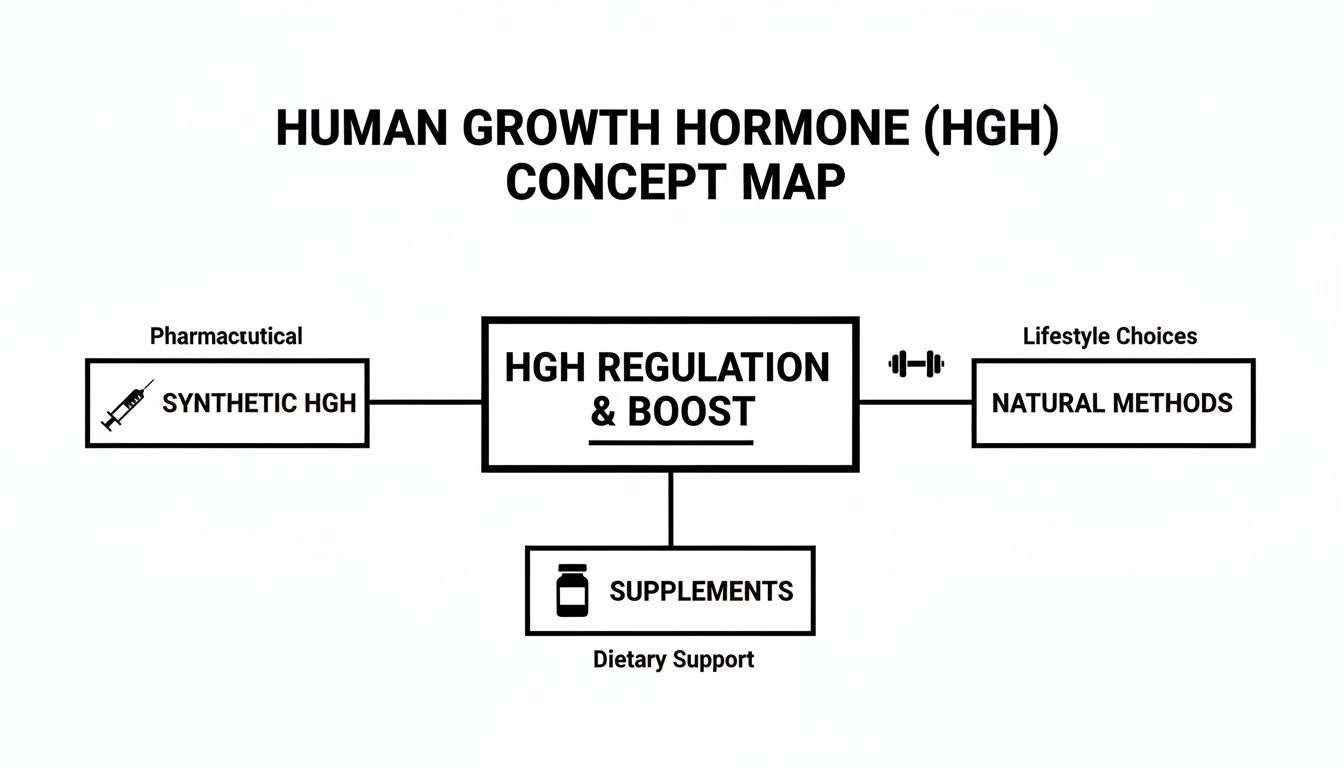
As you can see, supplements and lifestyle tweaks are all about working with your body's existing machinery. Synthetic HGH, on the other hand, bypasses that system entirely.
The Final Step In The Chain: IGF-1
Once HGH is out and circulating, it doesn't do all the heavy lifting itself. Its main job is to travel to the liver and other tissues, where it signals for the production of another potent anabolic hormone: Insulin-like Growth Factor 1 (IGF-1).
You can think of HGH as the project manager who gives the orders, and IGF-1 as the skilled crew that actually gets the work done. IGF-1 is what’s responsible for many of the classic "growth" effects we associate with HGH, such as:
- Promoting muscle protein synthesis: Helping your muscle fibers repair and grow stronger after you train.
- Supporting bone density: Contributing to a strong, healthy skeleton.
- Aiding in cellular repair: Helping regenerate tissues all over your body.
This entire cascade—from a thought in the brain to the action of IGF-1 in your muscles—is the foundation of your body's natural anabolic engine. For any so-called HGH supplement to actually work, it has to find a way to positively influence this incredibly complex and finely tuned pathway.
A Scientific Review Of Common HGH Supplement Ingredients
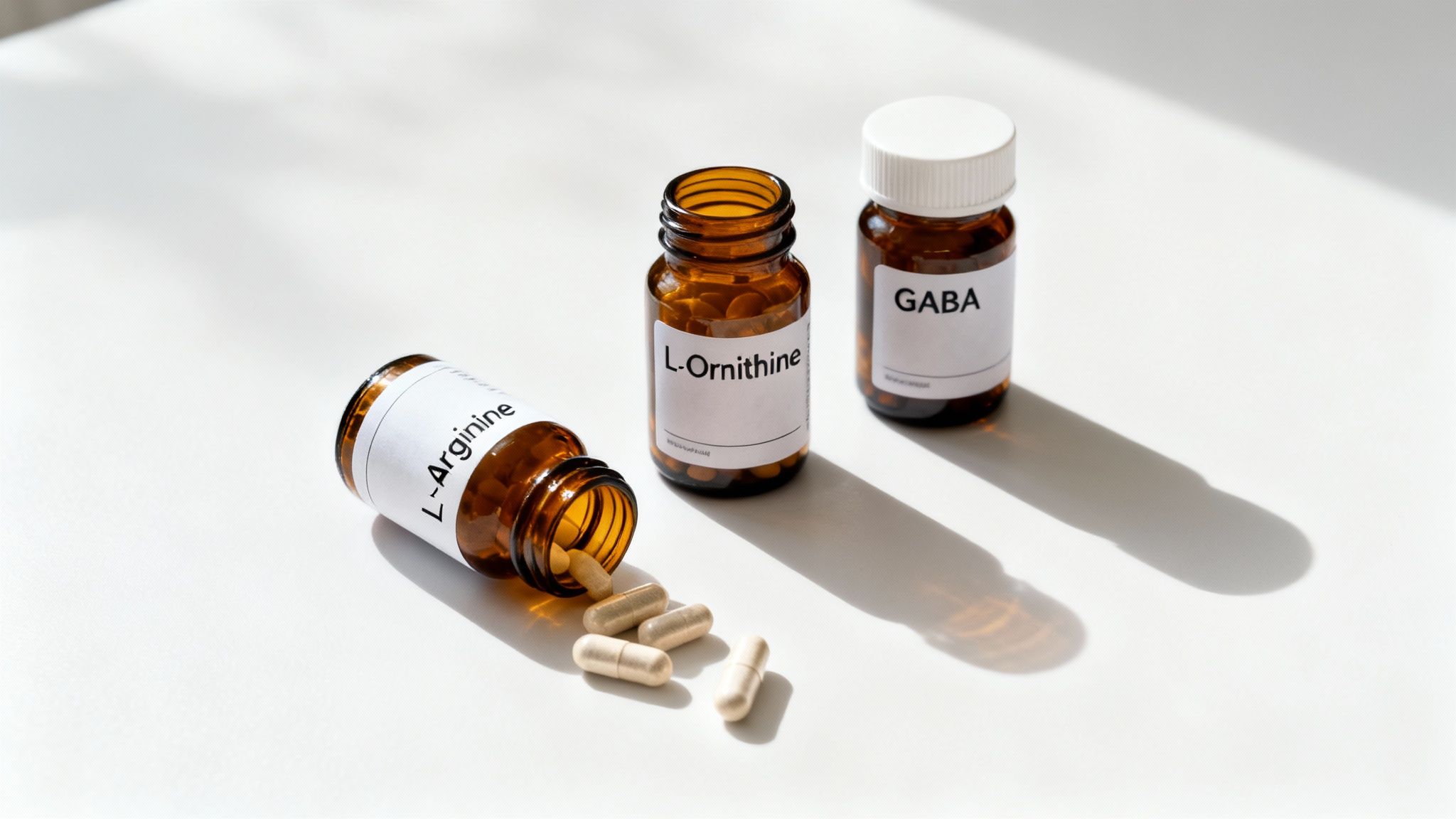
When you grab a bottle of a so-called "HGH hormone supplement," you're not actually holding human growth hormone. What you've got is a cocktail of ingredients, mostly amino acids, that are supposed to nudge your pituitary gland into making more of its own GH.
But here’s the million-dollar question: which of these ingredients actually work, and which are just good marketing? Let’s put the most common compounds under the microscope to see what the science really says. It's also a good reminder that none of this matters without proper supplement ingredient testing to verify what's actually in the bottle.
L-Arginine The Most Studied Amino Acid
L-Arginine is the undisputed king of HGH booster ingredients. It’s an amino acid famous for its role in producing nitric oxide (hello, muscle pumps), but its claim to fame here is its supposed effect on growth hormone.
The theory goes like this: Arginine supposedly puts the brakes on somatostatin, a hormone that tells your pituitary to stop releasing GH. By inhibiting this "stop" signal, your body’s "go" signal (GHRH) can work more effectively, leading to a bigger pulse of growth hormone.
Early studies looked promising, but there was a catch—they often used huge doses of arginine delivered straight into the bloodstream via IV. Getting those same results from a simple pill has proven to be a whole different ballgame.
The big problem with oral L-Arginine comes down to dosage and timing. Clinical studies often use massive doses of 10-30 grams, which is way more than you'll find in a typical supplement and a recipe for some serious stomach upset.
Even more, some research suggests that taking L-Arginine before you train can actually blunt the natural GH spike you get from a tough workout. That’s the exact opposite of what you want. For this reason, if you're going to take it, it’s best saved for rest days or hours away from the gym.
L-Glutamine And L-Ornithine
Next up in the HGH formula lineup are two other amino acids you'll almost always see alongside arginine: L-Glutamine and L-Ornithine.
L-Glutamine: This is the most common amino acid in your body, crucial for things like immune health and digestion. Its reputation as a GH booster hangs on a single, older study where a 2-gram dose caused a temporary HGH blip. The finding was never really replicated, leaving a big question mark over whether that tiny, short-lived bump does anything meaningful for muscle or recovery.
L-Ornithine: Often sold as L-Arginine's partner, ornithine is thought to work the same way by suppressing somatostatin. Some studies hint that it can trigger a GH response in very high doses, especially in trained athletes. But the evidence is shaky at best, and just like arginine, the doses needed are often too high to be practical.
So, where does that leave us? A lot of hype, with pretty thin results.
GABA Gamma-Aminobutyric Acid
GABA is a different beast entirely. It’s not your typical muscle-building amino acid; it’s an inhibitory neurotransmitter. In plain English, it helps calm your brain down.
So why is it in an HGH supplement? Two reasons.
First, and most plausibly, GABA is known to promote relaxation and deeper sleep. Since your body releases its biggest natural pulse of GH during deep sleep, anything that improves your sleep quality is a win. This is probably GABA's most legitimate benefit in this context.
Second, some studies suggest GABA can directly poke the pituitary gland. A couple of trials have shown that a 3-gram dose can cause a pretty significant, though temporary, spike in HGH levels, both at rest and after a workout.
While that sounds great on paper, we still need long-term studies to see if these short-term flickers actually lead to any real-world changes in body composition or performance. For now, GABA's real value likely comes from helping you get the restorative sleep that is foundational to recovery and growth.
Common HGH Supplement Ingredient Evidence Scorecard
To cut through the noise, let's look at the hard evidence. This table breaks down what the science actually says about the most popular ingredients marketed to boost your natural growth hormone levels.
| Ingredient | Claimed Mechanism | Clinical Evidence Summary | Effective Dose (If Any) |
|---|---|---|---|
| L-Arginine | Inhibits somatostatin, the "brake" on GH release. | Mixed. Can cause a spike with very high IV or oral doses (10g+), but may blunt the GH response to exercise. Evidence for oral use in healthy adults is weak. | 5-9 grams orally, but effectiveness and GI tolerance vary widely. |
| L-Glutamine | Direct stimulation of the pituitary gland. | Very weak. Based on a single, unreplicated study from 1995 showing a temporary increase with a 2g dose. Not considered a reliable GH booster. | 2 grams (based on a single study). |
| L-Ornithine | Similar to L-Arginine; somatostatin inhibition. | Inconsistent. Some studies show a minor effect at very high doses, especially when combined with Arginine, but results are not robust. | Doses upwards of 10-15 grams have been studied, making it impractical. |
| GABA | Direct pituitary stimulation and indirect support via improved sleep quality. | Moderately promising. Doses of ~3 grams have been shown to cause significant, temporary GH spikes. Sleep quality benefits are well-established. | 3 grams for direct GH stimulation; lower doses for sleep. |
The key takeaway here is that while some ingredients can create a temporary "blip" on the hormonal radar, this rarely translates into the kind of sustained GH elevation needed for tangible results. The real heavy hitters for natural GH optimization remain consistent, hard training, and deep, restorative sleep.
For a different perspective on hormonal support, it's worth checking out another popular supplement for HGH that operates on entirely different biological pathways.
Prescription HGH Vs. OTC Supplements: What Athletes Should Know
For any athlete, navigating the world of hormonal support can feel like walking through a minefield. On one side, you have pharmaceutical-grade human growth hormone (HGH), a powerful and highly regulated substance. On the other, there are legal, over-the-counter (OTC) supplements.
The gap between these two is massive, and understanding it is critical for your health, your career, and your integrity. They are fundamentally different in every way that matters: how they work, their legal status, and the risks they carry.
The Power and Peril of Pharmaceutical HGH
Pharmaceutical HGH is a synthetic, bioidentical version of the hormone your pituitary gland makes naturally. It's a controlled substance, and for good reason. You can only get it with a valid prescription for specific medical conditions, like clinical growth hormone deficiency or certain muscle-wasting diseases.
When it's used medically, it directly introduces a high dose of external HGH into your body, completely bypassing your own production system. This is why it can produce such rapid and dramatic changes in body composition and recovery.
But for an athlete using it without a legitimate medical need, it's a completely different story. That’s off-label use, and it's straight-up performance enhancement.
- Banned in Sports: Synthetic HGH is on the prohibited list for pretty much every major sports organization you can think of, including the World Anti-Doping Agency (WADA) and the U.S. Anti-Doping Agency (USADA).
- Serious Health Risks: Abusing HGH can lead to a host of dangerous side effects. We're talking joint pain, carpal tunnel syndrome, an increased risk of diabetes, and even the abnormal growth of internal organs.
- Legal Consequences: Getting caught with HGH without a prescription is illegal and can bring serious penalties.
This distinction is crucial: Prescription HGH is a replacement therapy that forces hormone levels up. It's a sledgehammer approach that might be necessary for specific medical conditions, but it's incredibly risky and illegal when used for performance enhancement.
How Legal OTC Supplements Work Differently
An HGH hormone supplement you’d find on the shelf works on a completely different principle. These products contain zero actual HGH. Instead, they are formulated with amino acids, vitamins, and nutrients intended to support your body’s own endocrine system.
Think of it this way: a legal supplement is designed to give your pituitary gland the nutritional building blocks it needs to optimize its own natural, pulsatile release of growth hormone. It’s about supporting the factory, not bypassing it.
This approach is inherently safer because it works with your body's built-in feedback loops. That makes it virtually impossible to hit the dangerously high hormonal levels you see with HGH injections. A great example is found in products designed for natural human growth hormone support, which focus on providing these key nutrients.
The Market Boom and the Need for Smart Choices
The demand for hormonal support is undeniable. The global human growth hormone market hit an estimated $6.81 billion in 2024 and is projected to skyrocket to $18.75 billion by 2033.
While synthetic injections still make up a big piece of that pie, the fastest growth is in more accessible options that work with the body's natural systems. This trend shows that people are actively looking for safer alternatives.
This rapid growth is exactly why choosing a reputable brand is so important. Clean, research-backed supplements that safely support HGH pathways are designed to provide real recovery benefits without the risks that come with pharmaceuticals.
The line between legal support and illegal performance enhancement is bright and clear. For any competitive athlete, the choice is simple. Optimizing your body's natural systems through smart training, nutrition, sleep, and targeted supplementation is the only sustainable and ethical path to long-term performance.
Proven Strategies To Naturally Optimize Performance And Recovery

While the market is flooded with products promising a shortcut, the most powerful and reliable ways to optimize your body's hormonal environment don't come in a bottle. They're built through consistent, intelligent lifestyle habits.
Forget chasing a temporary spike from some unproven HGH hormone supplement. Instead, you can build a powerful and sustainable foundation for peak performance by mastering the three pillars of natural hormone production: sleep, training, and nutrition.
These strategies work with your body's own systems to enhance growth, accelerate recovery, and build resilience from the ground up.
Master Your Sleep For Maximum HGH Release
Sleep isn't just downtime; it's the most anabolic part of your day. This is when your body gets down to the critical business of repair, and a huge driver of that process is growth hormone.
The biggest, most important pulse of HGH release happens during the first few hours of sleep, specifically during Stage 3 slow-wave sleep. This is the deep, restorative phase where your brain gives the pituitary gland the green light to ramp up production.
A single night of bad sleep can seriously blunt this crucial HGH surge, which directly sabotages your ability to recover from training. Prioritizing deep sleep is the single most effective natural strategy for maximizing your daily GH output.
To get the most out of this process, dial in your sleep hygiene. That means creating a cool, dark, and quiet bedroom, ditching screens an hour before bed, and sticking to a consistent sleep-wake schedule—even on weekends.
Train Smart With High-Intensity Stimuli
Your training style sends a powerful signal to your endocrine system. While all exercise is good, certain types of intensity pull the trigger for HGH secretion like nothing else. Two methods in particular have a profound impact.
-
Heavy Resistance Training: Lifting heavy with big, compound movements like squats, deadlifts, and presses creates massive metabolic stress. This stress is a primary signal telling your body it needs to release HGH to repair and build stronger muscle tissue. Aim for sessions that truly challenge you.
-
High-Intensity Interval Training (HIIT): Short, all-out bursts of effort—think sprints or intense cycling intervals—that push you past your lactate threshold are another potent stimulus. Research shows that a workout protocol using just 30-second sprints can cause a significant, sharp rise in growth hormone levels right after exercise.
These training methods signal an urgent need for repair and adaptation, and your body responds by releasing the very hormones required for the job. To really lock in your progress, check out our complete guide on how to recover faster after a workout, which details strategies that perfectly complement these hormonal benefits.
Fuel Your Body With Intelligent Nutrition
What you eat—and when you eat it—directly affects your hormonal balance, especially the relationship between insulin and growth hormone. The simple fact is that high levels of insulin are known to suppress HGH release.
This makes managing your blood sugar absolutely key. Avoid hammering a large meal full of refined carbs right before bed. The insulin spike that follows can directly interfere with your biggest nighttime GH pulse.
Here are a few nutritional strategies to keep in mind:
- Time Your Protein: A protein-rich meal a few hours before sleep can supply the amino acids needed for repair without causing a huge insulin surge.
- Consider Intermittent Fasting: Going for periods without eating can lower your baseline insulin levels and has been shown to naturally increase HGH production.
- Manage Post-Workout Nutrition: Carbs are critical for replenishing glycogen after training, but pairing them with protein helps moderate the insulin response.
By aligning your sleep, training, and nutrition, you create a powerful synergy that supports your body’s natural hormonal rhythms. This builds a rock-solid foundation for performance and recovery that no supplement can ever hope to replicate.
Frequently Asked Questions About HGH Supplements
Jumping into the world of performance and recovery supplements always kicks up a lot of questions. And when you’re talking about something as specific as HGH supplements, you need clear, no-nonsense answers. Let's cut through the hype and tackle the most common questions head-on.
Are Over-The-Counter HGH Supplements Safe?
For most healthy adults, legitimate OTC supplements made with standard ingredients like amino acids, vitamins, and minerals are generally safe when you stick to the label. The big advantage here is that they aren't flooding your system with synthetic hormones, which is what illegal HGH injections do. Instead, they’re designed to support your body's natural processes, not hijack them.
That said, a supplement is only as safe as its quality. It’s absolutely crucial to pick brands that are transparent about their formulas and use third-party testing. This ensures you're not getting a product tainted with contaminants or unlisted junk. Before starting anything new, it's always smart to have a quick chat with your doctor, especially if you have existing health conditions or are on other medications.
Can An HGH Hormone Supplement Help With Anti-Aging?
The link between HGH and aging gets a lot of attention, mostly because our natural growth hormone production takes a nosedive as we get older. This drop is tied to some of the classic signs of aging, like losing muscle mass (sarcopenia) and bone density.
The whole idea behind using an HGH supplement for "anti-aging" is that by nudging your body’s natural GH levels, you might be able to pump the brakes on some of these age-related declines. While the ingredients in these supplements can definitely support overall health, the hard evidence that they can actually reverse or stop the aging process is pretty thin.
A much more reliable anti-aging playbook? Consistent resistance training, a protein-focused diet, and making quality sleep a non-negotiable. These are all powerful, natural ways to keep your hormone levels in a healthier place as you age.
How Long Does It Take For An HGH Supplement To Work?
This is where you have to set realistic expectations. If you're comparing these to injectable, pharmaceutical HGH, it's not even the same sport. Injections can produce rapid, dramatic effects, but they come with a laundry list of serious health risks and legal problems. Legal, over-the-counter supplements play a completely different game and won't deliver drug-like results.
Because these products are built to support your body’s own systems, any benefits—like slightly better recovery, deeper sleep, or a little more gas in the tank during workouts—are going to be subtle and build over time. You’re likely looking at several weeks, maybe even a couple of months, of consistent use before you'd notice a real difference.
Think of an HGH supplement not as a magic bullet, but as a supporting player in a much bigger picture. Its potential benefits are unlocked only when combined with a dedicated training program, intelligent nutrition, and a solid sleep schedule.
These supplements are meant to complement a high-performance lifestyle, not replace the hard work. For a deeper dive into making them work for you, check out our optimal usage guide for HGH supplements for men, which breaks down how to weave them into your routine effectively. They are one tool in a big toolbox for hitting your peak.
At Revolution Science, we formulate clean, research-backed supplements to help you push your limits safely and effectively. Explore our solutions and join the REVSCI Tribe. https://rvsci.com