
Your Cart is Empty


Your Guide to the supplement for hgh and Natural Hormone Support
Let’s get one thing straight from the start: a direct, over-the-counter supplement for HGH doesn’t exist. Instead, the smart approach is to use specific nutritional compounds that support your body's own natural production of this crucial hormone.
The key is to give your pituitary gland—the command center for HGH—exactly what it needs to ramp up its own release. We're not talking about adding an external, synthetic hormone, but rather encouraging your body to make more of its own.
Understanding HGH and Your Performance Potential
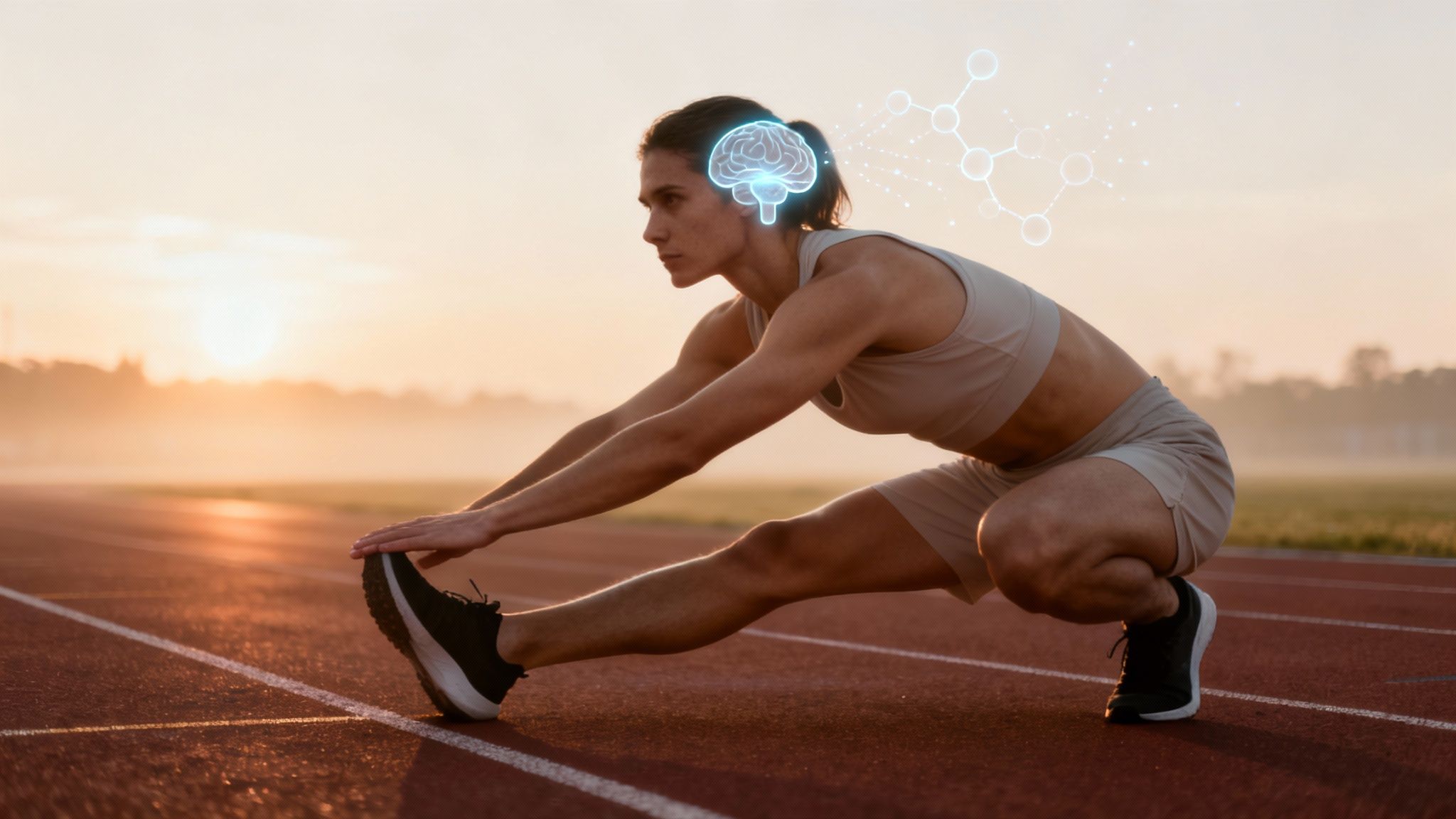
Think of Human Growth Hormone (HGH) as your body’s master foreman for repair and regeneration. It’s pumped out by the tiny, pea-sized pituitary gland and is famous for its role in childhood growth. But its job is far from over in adulthood; for anyone serious about performance, recovery, and body composition, HGH is a major player.
When you push your body to its limits during a tough training session, you’re creating microscopic tears in your muscle fibers. HGH is the signal caller that gets the repair crew on-site, helping to rebuild that tissue stronger and more resilient than before. It also has a massive say in how your body uses fuel, encouraging it to burn fat for energy while holding onto your hard-earned muscle.
Distinguishing Support from Replacement
It’s absolutely vital to understand the line between nutritional support and pharmaceutical drugs. A supplement for hgh support works by providing the raw materials and signals your body needs to run its production cycles at full steam. This is a world away from synthetic HGH injections, which are powerful, regulated medical treatments.
Our entire focus is on the first approach: an evidence-based strategy for enhancing what your body already does naturally. This comes down to three core pillars:
- Smart Nutrition: Supplying the right amino acids and key nutrients.
- Targeted Supplementation: Using specific compounds at precise times to trigger a release.
- Powerful Lifestyle Habits: Leveraging sleep and exercise as natural HGH boosters.
The goal isn’t to hijack your body’s systems. It’s to create the perfect environment for them to function at their peak. You're working with your natural hormonal rhythms, not fighting against them.
The Science and the Market
This interest in optimizing growth hormone isn't just gym talk; it’s a massive and rapidly expanding field. The global market for therapies related to HGH is projected to explode from around $7.68 billion in 2025 to a staggering $22.45 billion by 2035.
This huge growth highlights the demand for effective recovery and vitality solutions—a space where transparent, science-backed supplements are perfectly positioned to make a difference.
To really grasp the bigger picture, it's helpful to understand the hormonal cascade that HGH kicks off. This includes learning about IGF-1 peptides and their crucial role in growth and repair. And for a deeper dive into foundational support, our guide on the best muscle growth supplement strategies provides a practical roadmap to safely unlocking your body's true potential.
How Your Body Produces HGH Naturally
Before we even touch on supplements, it’s crucial to understand the brilliant system your body already has in place. Think of your pituitary gland, a tiny structure at the base of your brain, as a highly intelligent command center. It doesn't just release Human Growth Hormone (HGH) at random; it pulses it out in response to specific signals, almost like it's running on a sophisticated internal clock.
This natural production is rhythmic, following a distinct daily cycle. The biggest and most important pulse of HGH happens shortly after you fall asleep, specifically during your deepest, slow-wave sleep. This is your body’s prime time for repair and regeneration, with HGH acting as the lead architect for this nightly reconstruction project.
But sleep isn’t the only trigger. Your body also pushes out HGH in response to certain kinds of stress. This is a powerful, built-in mechanism designed for adaptation and growth, helping you bounce back stronger from tough physical challenges.
The Primary Triggers for HGH Release
Your daily habits are the main controls for this entire system. Once you understand what turns the dial up, you can naturally create an environment that encourages your body to secrete more HGH. Two lifestyle factors, in particular, stand out as the most powerful activators.
First up is high-intensity exercise. Short, explosive bursts of effort—the kind you get from heavy lifting or sprint intervals—create a very specific metabolic state. The burn you feel from lactic acid and the intense demand for quick energy send a clear signal to your pituitary gland that significant repairs are going to be needed, and soon.
Your body essentially says, "That was intense! We need to release the repair crew to rebuild and prepare for the next challenge." This post-exercise HGH surge is a fundamental part of building muscle and recovering properly.
The second major trigger is deep, restorative sleep. A staggering 75% of your daily HGH is secreted during those slow-wave sleep stages. This is why just one night of bad sleep can seriously blunt your natural production, leaving you feeling less recovered and mentally foggy. Making consistent, high-quality sleep a priority is one of the single most effective things you can do.
Common Roadblocks That Inhibit HGH
Just as there are triggers that boost HGH, there are also powerful inhibitors that can shut the system down. The biggest roadblock by far is elevated insulin. When you eat high-sugar foods or simple carbs, your blood sugar spikes, and your pancreas releases insulin to get it under control.
Insulin and HGH have an inverse relationship; when insulin is high, HGH production gets suppressed. It's your body's way of managing energy. Insulin’s job is storage, while HGH’s job is mobilization and repair. The two signals are fundamentally at odds, so your body always prioritizes managing blood sugar first.
This means that a sugary snack before bed is one of the worst things you can do for your nightly HGH pulse. It spikes insulin at the exact moment your body is gearing up for its most significant release, effectively canceling the signal.
This foundational knowledge is key. The most effective supplement for HGH support will always work by enhancing these natural cycles, not by trying to force a release when the conditions are all wrong. By managing these triggers and roadblocks, you create the ideal internal landscape for your hormones to thrive. You're setting the stage for supplements to provide targeted support to a system that is already primed for success.
Clinically Studied Ingredients For HGH Support
If you're digging into supplements for HGH, you need a clear, evidence-based game plan. The goal isn't to chase a miracle in a bottle. Instead, we're looking for specific compounds that help your body’s own natural production pathways fire on all cylinders. Think of these ingredients as providing the raw materials or sending the right signals to your pituitary gland, helping it optimize output during those key windows—like right after a brutal workout or deep in sleep.
Let’s set the right expectations from the jump. The over-the-counter supplement world, with ingredients like amino acids and melatonin, operates in a completely different universe than medically prescribed HGH. Clinical data is clear: while prescription HGH creates major, lasting physiological changes, these nutritional supplements are all about creating smaller, more temporary spikes in your body’s own growth hormone secretion.
With that crucial distinction made, let's get into the compounds that actually have some solid science behind them for supporting your body's natural hormonal environment.
This map gives you a quick visual of how your pituitary gland responds to different triggers—what turns it on and what shuts it down.

As you can see, things like intense training give HGH production the green light, while factors like high blood sugar basically hit the brakes.
Key Amino Acids For HGH Release
Amino acids are the building blocks of protein, but a few of them pull double duty as powerful signaling molecules. They can directly nudge the pituitary gland to release HGH, especially when your insulin levels are low and out of the way.
L-Arginine is probably the most famous player in this game. The theory is that it works by putting the brakes on somatostatin, a hormone that’s job is to inhibit HGH release. By toning down that inhibitory signal, arginine opens the door for a potentially bigger HGH pulse.
But timing is everything. Oddly enough, studies show that taking arginine before a workout can actually blunt the HGH spike you’d normally get from training. It seems to work best when taken at rest, like right before bed on an empty stomach.
L-Ornithine is often found alongside arginine in formulas. While the evidence isn't quite as strong, some research suggests it can also support HGH release, particularly for athletes pushing through grueling training cycles. It likely works through a similar mechanism, helping to create a more favorable hormonal environment for growth and repair.
Key Takeaway: The timing of your amino acid intake is critical. Taking them away from meals, especially carb-heavy ones, keeps insulin from interfering with their ability to signal the pituitary gland.
L-Glutamine is the most plentiful amino acid in your body, well-known for its role in gut health and immune support. A few smaller studies have shown that taking glutamine orally can trigger a temporary bump in HGH levels. More research is definitely needed, but its powerful role in overall recovery makes it a no-brainer for any serious athlete's stack. You can learn more about how different amino acids fuel performance in our detailed guide on amino acids supplement strategies.
Supporting HGH Through Better Sleep
Your body's biggest and most important HGH pulse happens while you’re in deep, slow-wave sleep. It’s simple, then: anything that improves your sleep quality can indirectly support HGH production. This is a more holistic approach that focuses on creating the perfect physiological state for your body to do its thing naturally.
Two compounds really shine here:
- GABA (Gamma-Aminobutyric Acid): This is your brain's main "off-switch"—an inhibitory neurotransmitter that promotes calm and relaxation. By helping quiet a racing mind, GABA can make it easier to fall into those deep, restorative sleep stages. Some evidence even points to it having a direct stimulating effect on the pituitary.
- Melatonin: We all know it as the "sleep hormone." Melatonin is the master regulator of your body's internal clock, signaling that it's time to power down. Supplementing with it can help you fall asleep faster and improve sleep quality, maximizing your time in those crucial deep sleep phases where HGH release peaks.
The synergy between these two can be a game-changer. Combining GABA and melatonin doesn't just help you get to sleep; it helps you stay in the most productive sleep stages for hormonal balance and physical recovery.
Evidence-Based Supplements For Natural HGH Support
To make the best choice for your goals, it helps to see how these ingredients stack up against each other. This table breaks down their primary function, the quality of the scientific evidence, and where they fit best in an athlete's protocol.
| Supplement | Primary Mechanism | Strength of Evidence | Best Use Case for Athletes |
|---|---|---|---|
| L-Arginine | Inhibits somatostatin (the "brake" on HGH) | Moderate | At rest, on an empty stomach, before bed to support the natural nighttime pulse. |
| L-Ornithine | Similar to arginine; may reduce fatigue | Limited to Moderate | Paired with arginine before bed or during recovery periods from intense training blocks. |
| L-Glutamine | Potential direct stimulation; supports recovery | Limited | Post-workout to aid muscle repair and immune function, with a secondary HGH benefit. |
| GABA | Promotes relaxation and deeper sleep stages | Moderate | Before bed to enhance sleep quality and support the associated HGH release. |
| Melatonin | Regulates circadian rhythm for better sleep | Strong (for sleep) | 30-60 minutes before bedtime to improve sleep onset and quality. |
At the end of the day, choosing the right supplement for hgh support is all about working with your body’s natural rhythms, not against them. Beyond these nutritional approaches, more advanced methods like Peptide Therapy are also gaining traction for their ability to more directly stimulate natural HGH. By stacking targeted supplementation on a solid foundation of smart training, clean nutrition, and quality sleep, you create a powerful, holistic strategy for optimizing your performance and recovery.
Timing and Stacking for Maximum Effect
Knowing which ingredients can nudge your body’s HGH production is only half the battle. If you want to see real results from any HGH-support supplement, you absolutely need a game plan for when and how you take them.
Your body’s hormonal landscape is in constant flux. Timing your intake to sync up with its natural rhythms is the critical difference between seeing a real impact and just wasting your money.
The single biggest rule to follow? Work around insulin. As we've covered, insulin is HGH's biggest antagonist, effectively shutting down its release. Taking amino acid supplements like L-Arginine or L-Glutamine with a carb-heavy meal is like hitting the brakes and the gas at the same time—it's completely counterproductive. The insulin spike from the carbs will silence the very signal you’re trying to amplify.
The golden rule here is to create separation. Think of it as needing a clear radio frequency to send a message. When you take these supplements on an empty stomach, you ensure the line is clear for them to communicate with your brain, free from any interference.
Creating Your Daily Protocol
Your body has two prime-time windows for releasing HGH: during deep sleep and right after a tough workout. A smart protocol is built around these two massive opportunities. This doesn’t need to be complicated, but it does demand consistency.
Here are the key principles to build your schedule around:
- The Pre-Bed Window: This one is non-negotiable. Your body unleashes its largest natural HGH pulse during the slow-wave stages of sleep. Taking your amino acids or sleep-support compounds 30-60 minutes before bed on an empty stomach gives your body the raw materials it needs right when it’s getting ready for the main event.
- The Pre-Workout Window: For anyone hitting the weights, taking certain amino acids about 30 minutes before a workout can prime the pump for the HGH spike that follows intense training. This works especially well if you’re training in a fasted or low-carb state when insulin levels are already at a minimum.
By aligning your supplement intake with these two key physiological events—sleep and exercise—you are strategically amplifying your body's existing HGH-producing machinery.
This targeted approach ensures every dose is delivered when your body is most receptive, creating a powerful synergy between your lifestyle and your supplementation.
Strategic Stacking for Synergistic Results
Stacking isn't about just randomly throwing a bunch of ingredients together and hoping for the best. It’s about intelligently combining compounds that work on different pathways to create a bigger, combined effect. It’s like a guitarist and a drummer playing in sync—the result is far more powerful than either one playing alone.
A classic, highly effective stack is one that enhances the pre-bed HGH pulse by dramatically improving sleep quality.
The Ultimate Sleep Stack:
- GABA: This is your brain's "calm down" neurotransmitter. It helps quiet mental chatter, making it easier to fall into the deep, restorative stages of sleep where HGH thrives.
- Melatonin: This is your body's "go to sleep" signal. It governs your circadian rhythm, telling your system that it's time to shut down for the night.
Taken together before bed, GABA and Melatonin are a potent one-two punch. Melatonin gets you to sleep, and GABA helps you stay in those deep, slow-wave stages where HGH secretion peaks. This stack doesn't just support HGH; it fundamentally improves recovery, one of the most critical pillars of athletic performance.
For anyone serious about bouncing back faster, our guide on supplements for muscle recovery dives into other strategies that pair perfectly with this approach.
Protocols Tailored to Your Goals
While the pre-bed protocol is a universal win, your workout timing can be tweaked based on your specific athletic goals.
- For the Strength Athlete: The name of the game is maximizing the anabolic response from training. The ideal protocol is a pre-workout dose of amino acids to capitalize on the exercise-induced HGH spike, followed by the pre-bed stack to supercharge overnight repair and muscle growth.
- For the Endurance Athlete: Here, recovery is everything. While a pre-workout dose might be less of a priority, the pre-bed stack is absolutely essential for repairing damaged tissue and restoring hormonal balance after long, grueling sessions.
The huge interest in hormonal health has turned North America into a major hub for these strategies, capturing over 40% of the global market value for HGH-related therapies. This high demand means that consumers, especially in the U.S., rightly expect solid evidence for any claims a supplement makes. You can find more on these market dynamics and biotech advances. By focusing on proven timing and intelligent stacking, you can build a protocol that truly delivers.
Lifestyle Habits: The Ultimate HGH Boosters
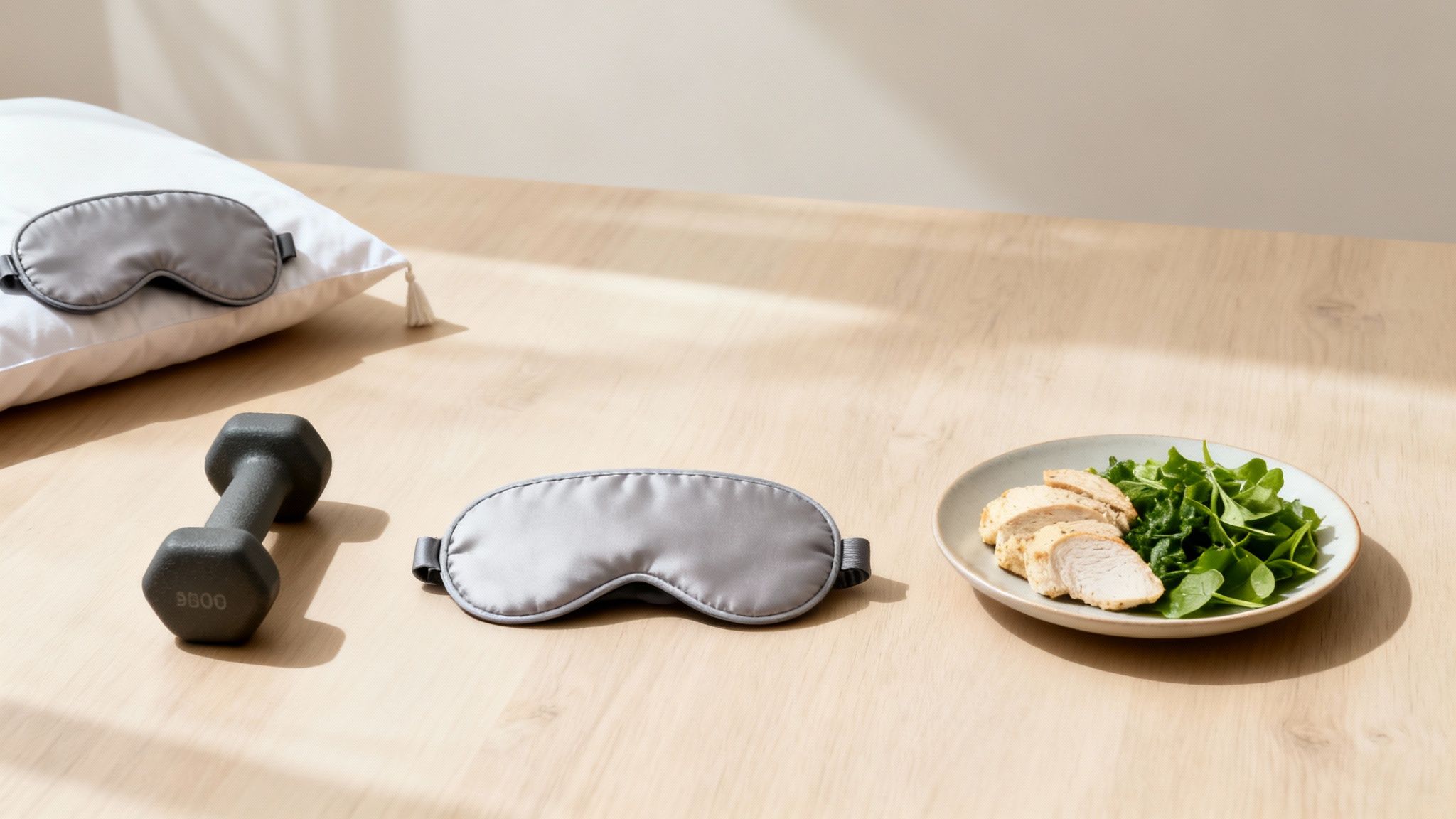
While a targeted supplement for hgh can give you a serious edge, let’s be clear: no pill or powder can ever replace the raw power of your daily habits. Think of supplements as amplifiers. They can turn up the volume, but they need a strong signal to work with in the first place. Your lifestyle choices create that signal, forming the absolute foundation of your hormonal health.
When you master a few key areas, you create an internal environment where your body is primed to maximize its own HGH output. These habits are the ultimate force multipliers for any nutritional strategy you put in place.
Let's break down the three pillars you have complete control over: intense training, deep sleep, and strategic nutrition.
Train with Intensity to Trigger Release
Not all exercise sends the same hormonal message. A casual walk is great for your health, but it doesn't create the urgent demand for repair that triggers a big HGH release. For that, you need to bring the intensity.
High-intensity interval training (HIIT) and heavy resistance workouts create a very specific kind of metabolic stress. That burn you feel from lactic acid buildup and the sheer energy demand? Those are powerful signals straight to your pituitary gland.
Your body interprets this stress as a major challenge that requires an all-hands-on-deck repair response. In turn, it unleashes a pulse of HGH to kickstart recovery and rebuilding.
To get the most out of your training:
- Focus on Compound Lifts: Big movements like squats, deadlifts, and overhead presses recruit huge amounts of muscle. This creates a much greater metabolic demand and a stronger hormonal signal.
- Keep Rest Periods Short: On certain training days, minimizing rest between sets drives up lactate accumulation, a key trigger for HGH secretion.
- Embrace the Intensity: You have to push yourself to a point of real challenge. The goal is to create an effort that your body must adapt to.
Master Your Sleep for Nightly Regeneration
Your biggest, most productive HGH pulse happens while you’re in deep, slow-wave sleep. An incredible 75% of your daily HGH is secreted during this critical window. This makes quality sleep the single most effective natural HGH booster there is. Period.
But improving sleep isn't just about logging more hours in bed; it’s about the quality of that time.
Think of deep sleep as your body's nightly maintenance cycle. HGH is the lead foreman on the job. If you cut the shift short or create a noisy work environment, the repairs just won't get done right.
Here's an actionable checklist to dial in your sleep hygiene:
- Control Light Exposure: Get sunlight first thing in the morning to set your internal clock. At night, block out blue light from screens for at least an hour before bed.
- Maintain a Cool, Dark Room: A lower room temperature and total darkness are powerful signals for your body to produce melatonin and drop into deep sleep.
- Stick to a Schedule: Going to bed and waking up around the same time every day—even on weekends—is the key to stabilizing your circadian rhythm.
Use Nutrition to Clear the Way
Your diet has a massive impact on your hormonal balance, mostly through its effect on insulin. As we've covered, insulin and HGH have an inverse relationship: when insulin is high, HGH production gets shut down. This makes managing your carbohydrate intake a crucial piece of the puzzle.
This doesn't mean you need to go full keto, but timing becomes everything. A big, carb-heavy meal right before bed will spike your insulin at the exact moment your body is gearing up for its biggest HGH release of the night, effectively slamming the brakes on the whole process.
Strategic fasting can also be a powerful tool. Intermittent fasting creates long periods of low insulin, which provides a clear runway for HGH to be secreted. By simply controlling your eating window, you naturally create more opportunities for your body to release growth hormone without interference.
Mastering these three pillars—training, sleep, and nutrition—is how you build the unshakeable foundation for peak performance.
How to Choose a High-Quality Supplement
Walking down the supplement aisle can feel like navigating a minefield of bold claims and flashy labels. When you're looking for a supplement to support HGH, the key is to ignore the marketing noise and focus on what really matters: objective quality and transparency.
A trustworthy product isn’t defined by its promises, but by what’s actually in the bottle and the integrity of the company behind it.
You wouldn't put low-grade parts in a high-performance engine, right? The same logic applies here. Your first, non-negotiable checkpoint should be third-party testing. This is where an independent lab steps in to verify that the ingredients on the label are truly in the product at the right amounts—and that the formula is clean of any unwanted contaminants.
Without that outside validation, you’re just taking the company’s word for it. That's not good enough when your health and performance are on the line.
Decoding the Supplement Label
Beyond testing, the ingredient list itself tells a crucial story. A top-tier supplement is built with precision and purpose, not by throwing a little bit of everything against the wall to see what sticks.
Here’s what to look for:
- Clinically Effective Dosages: The formula needs to provide ingredients at levels that have actually been shown to work in scientific studies. A tiny sprinkle of L-Arginine won’t cut it; you need a dose proven to create a real physiological effect.
- Clean Formulations: Steer clear of products packed with unnecessary fillers, artificial colors, or "proprietary blends" that hide exactly how much of each ingredient you’re getting. Transparency is the hallmark of a brand that respects its customers.
- Bioavailable Ingredient Forms: Not all forms of a nutrient are created equal. Reputable brands invest in specific forms that your body can easily absorb and put to use, making sure you get the full benefit from every single dose.
A great supplement label is clear, concise, and honest. It tells you exactly what you’re getting and why it’s in there, empowering you to make an informed decision rather than a hopeful guess.
This principle of choosing clean, effective formulas isn't just for HGH support. As you build out your performance stack, applying the same level of scrutiny is vital. For instance, our guide on selecting a quality testosterone booster breaks down similar quality markers. By investing in transparent, research-backed brands, you find a reliable partner for your long-term goals.
Got Questions About HGH Supplements? We've Got Answers.
Stepping into the world of HGH support can bring up some very practical questions. Let's cut through the noise and get you some clear, straightforward answers to help you make the right calls for your own health and performance journey.
Are These Supplements Safe For Competitive Athletes?
For any athlete competing under anti-doping rules, this is the first and most important question. The short answer is yes, if you choose wisely. The key is to source your supplement for hgh from brands that are serious about third-party testing to prove their formulas are clean.
The main ingredients we've covered in this guide—think Arginine, Glutamine, GABA, and Melatonin—are not on any banned substance lists from agencies like WADA, provided they're sourced cleanly. The real risk always comes down to what else might be in the bottle, either from cross-contamination at the factory or from sketchy, undisclosed ingredients.
Your non-negotiable here should be looking for products with certifications like NSF Certified for Sport or Informed-Sport. These seals are your guarantee of purity and give you the peace of mind you need to compete without worry.
How Long Until I Actually See Results?
It’s really important to set the right expectations here. These aren't pharmaceutical drugs, so you won’t feel some massive, overnight transformation. These supplements work by supporting your body's own machinery.
When you use them consistently—and pair that with smart training, deep sleep, and clean nutrition—you'll start to see gradual improvements. Most people first notice better sleep quality and just feeling more rested within 2-4 weeks. The more tangible benefits, like better recovery and shifts in body composition, tend to become noticeable after 2-3 months as your body's systems really get in sync with the added support.
Can I Take An HGH Supplement While Intermittent Fasting?
Absolutely. In fact, this can be a seriously effective combo. Intermittent fasting is already a natural trigger for HGH release because it keeps your insulin levels nice and low.
Taking amino acid-based HGH support supplements during your fast, especially right before a workout or before you go to sleep, can really amplify this effect. Since they have minimal to zero calories, they're highly unlikely to knock you out of a fasted state. It’s a smart way to stack the hormonal benefits of both your supplement plan and your fasting schedule.
At Revolution Science, our entire philosophy is built on empowering your body’s natural potential. We do it with clean, effective, and transparently formulated supplements designed to support your goals without the fillers or the pseudoscience.
Discover the Revolution Science approach to performance nutrition.