
Your Cart is Empty


How Long Does It Take to Get Rehydrated An Athlete's Guide
How long does it take to get rehydrated? That’s the million-dollar question, and the honest answer is: it depends entirely on how deep in the hole you are.
For mild dehydration after a solid hour in the gym, you might start feeling back to normal within 45 minutes to a couple of hours. But if you’ve just crossed the finish line of a marathon or are battling a nasty stomach bug, getting your body’s fluid and electrolyte balance back on track could easily take 24 hours or more.
Your Rehydration Timeline: What to Expect
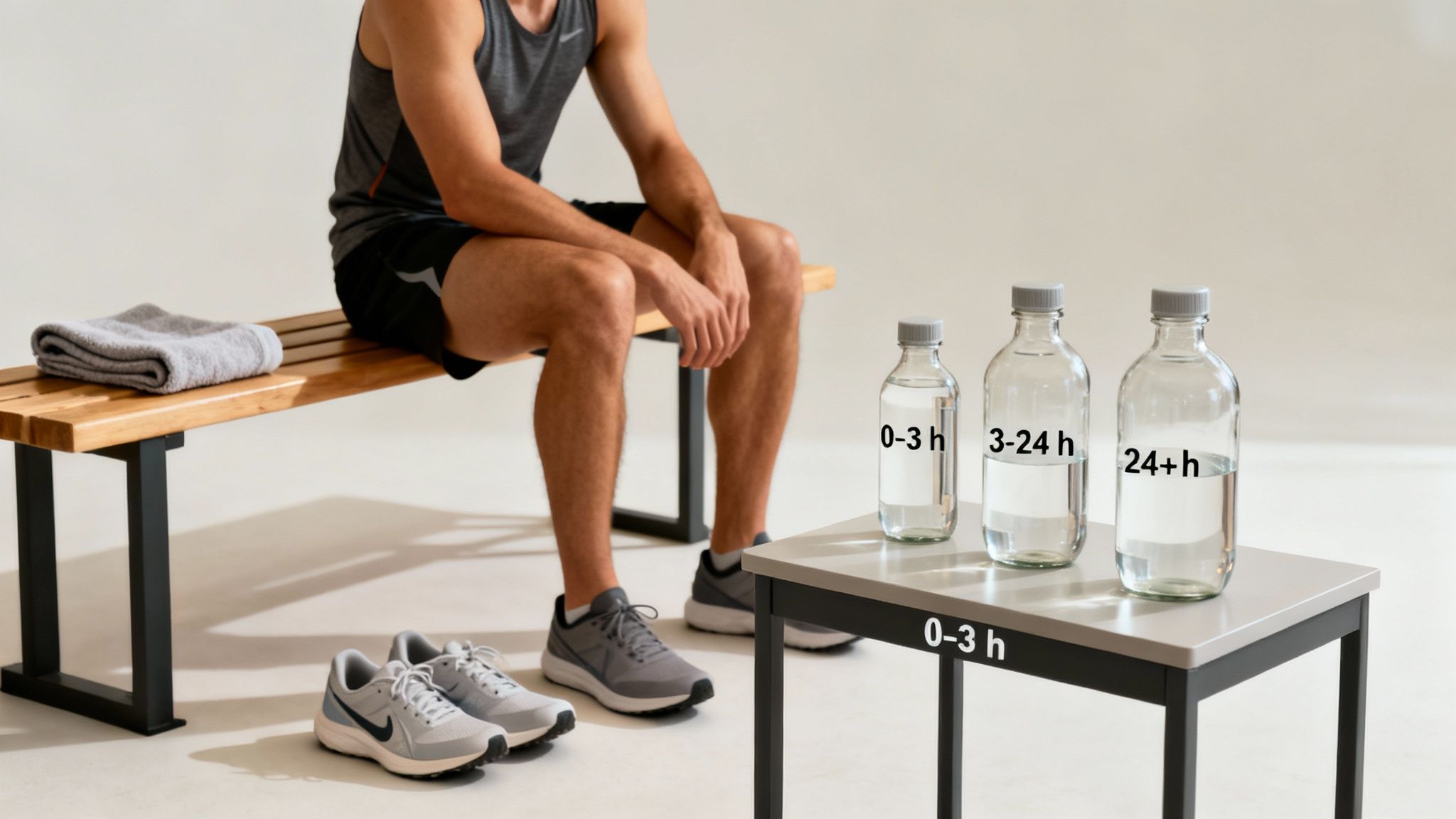
Think of your body's hydration level like a car's gas tank. A short drive to the store barely moves the needle, and a quick top-off is all you need. A cross-country road trip, however, will drain the tank completely, demanding a much more significant and time-consuming refuel. The principle is exactly the same for rehydration—the bigger the deficit, the longer the recovery.
So many athletes make the classic mistake of chugging a huge bottle of water right after their workout, thinking the job is done. While that’s a decent first step, true rehydration is way more nuanced. It’s not just about replacing water; it's about restoring the crucial electrolytes, like sodium and potassium, that you sweated out along the way.
Benchmarks for Athletic Recovery
To give you a clearer picture, let's break down a few common scenarios. Each level of fluid loss calls for a different game plan and a different timeline.
- Mild Dehydration (Post 60-Minute Workout): You've likely lost 1-2% of your body weight in sweat. Recovery here is pretty quick. With some consistent sipping over the next few hours, you’ll be good to go.
- Moderate Dehydration (Post 2-3 Hour Endurance Session): Now we're talking a fluid loss of 3-5% of your body weight. Getting fully rehydrated from this level is a longer process, often taking up to 12-24 hours.
- Severe Dehydration (Post-Marathon or Ultra-Endurance Event): Losing over 5% of your body weight is a massive physiological stressor. You can expect the recovery to take well over 24 hours to fully restore fluid and electrolyte balance.
The goal isn't just to dump water back into your system. It's to replace what you've lost at a rate your body can actually absorb and use. Guzzling too much plain water too fast can backfire by flushing out the very electrolytes you need, slowing your recovery down.
Getting a handle on these timelines is a game-changer for any serious athlete. It helps you shift from a mindset of "quick fixes" to building a smart, strategic recovery plan. As we'll get into next, what you drink is every bit as important as how much.
Why Plain Water Is Not Always the Answer
When you’re seriously dehydrated, grabbing a glass of plain water feels like the most intuitive move. And while it’s never a bad choice, it’s often not the most effective one, either.
Think of your body less like an empty tank waiting to be filled and more like a complex system that needs the right keys to unlock fluid absorption.
Chugging tons of plain water, especially after you've been sweating hard, can actually work against you. Without the electrolytes you lost in that sweat—especially sodium—your body simply can’t hold onto the water you're drinking. A lot of it just passes right through your system, leading to more trips to the bathroom and a surprisingly inefficient rehydration process.
It’s like trying to fill a leaky bucket. You can keep pouring water in, but it’s not staying where you need it most. This is a massive factor in how long it takes to get rehydrated properly.
The Role of Electrolytes in Fluid Absorption
This is where the science of hydration gets really interesting. Your body has an amazing built-in mechanism for absorbing water, and it's called the sodium-glucose cotransport system.
Picture the wall of your small intestine lined with thousands of locked doors. Water is on one side, wanting to get through to your bloodstream, but it can't open those doors by itself.
Sodium and glucose are the keys. When they show up in your gut together, they unlock those cellular doors, creating a powerful channel that pulls water rapidly from your intestine and into your circulation. This is the exact principle that makes oral rehydration solutions (ORS) and properly formulated electrolyte drinks so effective. They give your body the precise ingredients it needs to open the floodgates.
Without electrolytes like sodium, water absorption is a slow, passive process. With them, it becomes an active, efficient system designed to restore balance quickly.
Why Smart Fluids Work Faster
This isn't just theory—it's proven science. Study after study shows that drinks rich in electrolytes significantly outperform plain water when it comes to restoring hydration.
In fact, one study found it takes just one hour for fluids like an oral rehydration solution or even full-fat milk to create a positive fluid balance in the body. Plain water just can’t keep up. The electrolytes and other nutrients slow down how quickly the fluid leaves your stomach, giving your body more time to absorb it. Even after four hours, these smarter options proved to be better at hydrating.
That’s because these fluids work with your body’s natural systems instead of against them. By providing those essential minerals, they make sure the water you drink is actually retained and delivered to the cells that are crying out for it. Understanding what electrolytes are good for is the key to speeding up your recovery and getting back to 100%.
Factors That Control Your Rehydration Speed
Figuring out how long it takes to rehydrate isn't about some universal clock—it's about solving your own personal equation. Your rehydration speed is controlled by a handful of critical variables unique to you, your effort, and your environment.
Think of it like following a recipe. The final dish depends on the quality of your ingredients, the heat of your stove, and how closely you watch it. In the same way, your body’s rehydration timeline is influenced by several personal factors that can speed up or slow down the whole process.
Your Unique Physiological Blueprint
Your own body is the biggest variable dictating how quickly you can absorb and hold onto fluids. No two athletes are the same, and what works for your training partner might not be the best strategy for you.
Key personal factors include:
- Body Weight and Composition: A larger athlete naturally has more total body water and will likely need more fluid to rehydrate than a smaller person, even if they lose the same percentage of body weight.
- Individual Sweat Rate: This one is huge. Some of us are heavy sweaters, pouring out significant fluid and electrolytes even during moderate exercise. Others barely break a sweat.
- Sodium Loss in Sweat: Are you a "salty sweater"? If you regularly see white, chalky lines on your workout clothes, you're probably losing a lot more sodium than the average person. This means you have to be extra careful about replacing sodium to help your body actually retain the water you drink.
Knowing your personal sweat rate is one of the most powerful tools for building a hydration plan that actually works. It helps you move from guessing to knowing exactly what your body needs to recover.
You can dial this in by checking out our guide on how to calculate sweat rate and start tailoring your fluid intake to your specific needs.
The Impact of Your Environment and Effort
Beyond your own biology, the specific conditions of your training session play a massive role in your fluid needs, which directly impacts how long it takes to get back to baseline.
Just picture these two completely different scenarios:
- The Marathon Runner in a Humid Climate: This athlete is fighting high heat and humidity, which sends their sweat rate through the roof. Over several hours, they lose a huge volume of both water and electrolytes, creating a major deficit that will take a long time to fix.
- The Weightlifter in a Cool Gym: This person is still working hard, but they're in a climate-controlled room. Their sweat loss is much lower, coming in shorter bursts of intense effort. Their rehydration needs are way less extreme, and their recovery timeline will be much shorter.
The intensity and duration of your activity are just as important. A long, slow run has a totally different impact than a high-intensity interval session. Understanding these external factors lets you adjust your rehydration strategy on the fly, making sure you give your body what it needs to recover faster.
A Practical Framework for Effective Rehydration
Knowing the theory is one thing, but putting it into practice is what really counts. The goal is to build a reliable, repeatable rehydration plan that gets you back to 100% as quickly as possible. Luckily, the science gives us a clear and effective strategy.
The gold standard for rehydration after a tough session is to replace 125% to 150% of the fluid you lost. Why the extra amount? Because your body doesn't just stop working when you do. You'll continue to lose fluid through sweat and urine even as you're drinking, so this buffer ensures you truly top off your tanks.
The Weigh-In, Weigh-Out Method
The most accurate way to figure out your fluid loss is surprisingly simple: use a scale.
Hop on the scale right before your workout, and then again right after (making sure you're dry). That difference in weight is almost entirely water you’ve sweated out.
From there, the math is easy.
- For every pound of body weight you lose, drink 20-24 ounces of an electrolyte-rich fluid.
- For every kilogram (or 2.2 lbs) lost, aim for 1-1.2 liters.
This simple method takes all the guesswork out of the equation. Thirst is a notoriously bad indicator of hydration status, so instead of just drinking until you feel better, you have a precise target to hit. This is the cornerstone of how pros manage their recovery. It's also critical to remember that dehydration isn't just a summer problem; you need a plan to stay hydrated during winter runs, too.
This flowchart breaks down the key factors that go into building your personal rehydration plan.
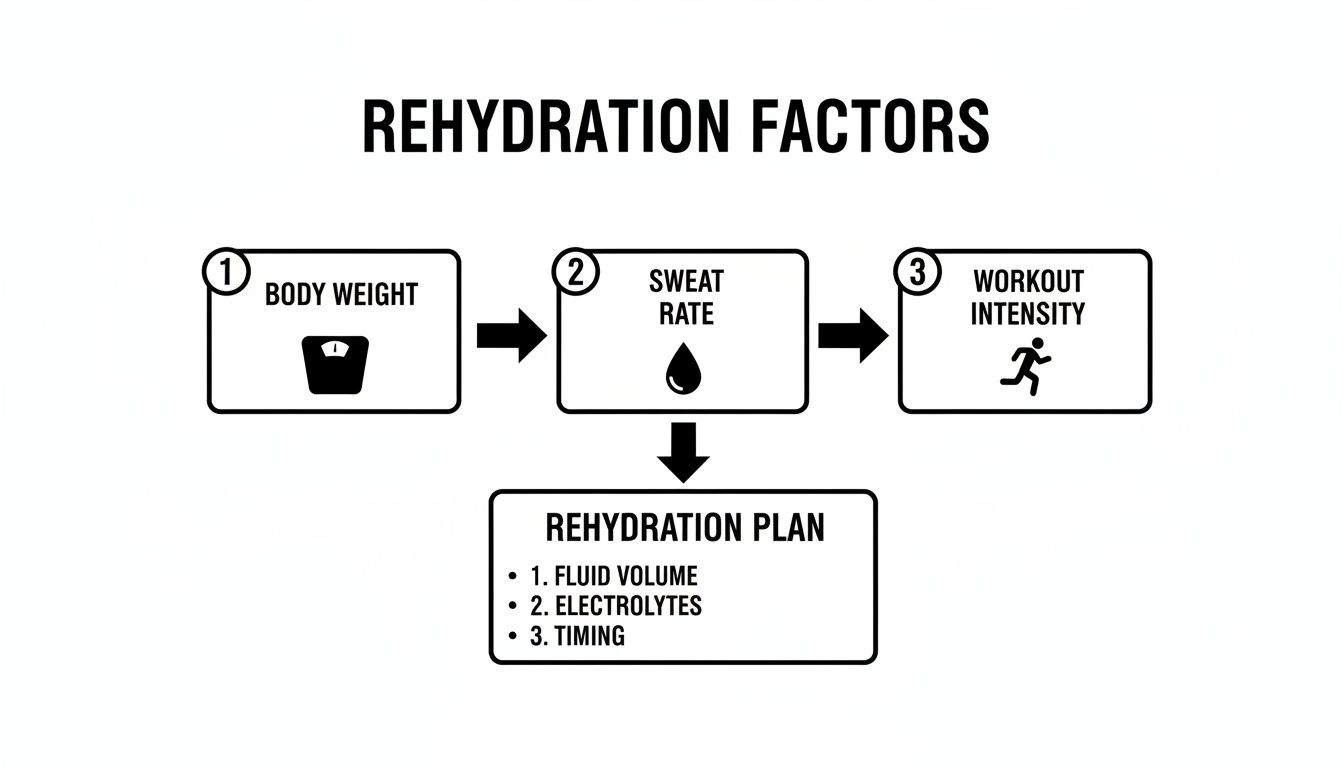
As you can see, everything from your starting body weight to your sweat rate and workout intensity feeds directly into calculating exactly what you need to drink.
Let’s walk through a real-world example.
Here's a sample protocol showing how an athlete could apply the weigh-in, weigh-out method to create a precise rehydration plan after a grueling workout.
Sample Rehydration Protocol for a 180 lb Athlete
| Step | Action | Details and Rationale |
|---|---|---|
| 1: Pre-Workout Weigh-In | Weigh yourself with minimal clothing. | Result: 180.0 lbs. This is the baseline for calculating fluid loss. |
| 2: Post-Workout Weigh-In | After the workout, towel off completely and weigh yourself again. | Result: 177.0 lbs. The goal is to measure sweat loss, not sweat sitting on your skin. |
| 3: Calculate Fluid Loss | Subtract the post-workout weight from the pre-workout weight. | Calculation: 180.0 lbs - 177.0 lbs = 3 lbs of fluid lost. |
| 4: Determine Rehydration Target | Multiply the weight lost (in lbs) by 20-24 oz to get the total fluid volume needed. | Calculation: 3 lbs x 24 oz/lb = 72 oz. This volume aims for the 150% replacement target. |
| 5: Plan the Pacing | Sip the 72 oz of electrolyte fluid steadily over the next 4-6 hours. | Example: Drink about 12-18 oz per hour. This slow intake prevents overwhelming the kidneys and maximizes absorption. |
This systematic approach removes the guesswork and ensures a full, effective recovery, setting the athlete up for their next training session.
Sip, Don't Chug
Once you have your target volume, the final piece of the puzzle is pacing. It's tempting to chug that entire bottle at once, but that's a classic rookie mistake that can completely backfire.
When you drink a huge amount of fluid all at once, you send your kidneys into overdrive. They get a signal to flush out the excess, which means you end up peeing out the very water and electrolytes you're trying so hard to absorb.
The solution is to sip steadily over the 4-6 hours after you finish. This slower, more consistent pace lets your gut absorb fluid and electrolytes efficiently. It promotes better retention, cuts down on bathroom breaks, and helps your body find its balance much more effectively. For a deeper dive, check out this guide comparing different types of electrolyte powders to see which one best fits your needs.
How to Recognize the Warning Signs of Dehydration
Waiting until you feel thirsty to drink is like waiting for your car’s engine to smoke before you check the oil. By the time thirst hits, your body is already playing catch-up, and your performance has likely taken a nosedive.
Spotting the early signs of dehydration is the key to knowing how long it will take to get back to 100% and stopping a minor issue from turning into a major one. Your body sends out clear, if subtle, signals long before thirst ever shows up. Paying attention to these cues lets you act fast, turning a potentially long recovery into a quick fix.
From Subtle Clues to Serious Alarms
Dehydration isn’t just an on/off switch; it’s a spectrum. The earliest signs are easy to brush off as just being tired or sore from a tough workout, but they’re your body's first call for help.
Early warning signs often include:
- Dark-Colored Urine: This is one of the most reliable visual cues you have. Healthy, hydrated urine should be a pale, straw-like color. Anything darker means you need to start drinking.
- A Nagging Headache: Even a slight fluid deficit can cause blood vessels in the brain to constrict, leading to that persistent, dull headache that just won't go away.
- Unexplained Fatigue: Feeling sluggish or tired when you shouldn't be is a classic symptom. A fluid loss of just 2% of your body weight is enough to tank your energy levels and mess with your cognitive function.
If you ignore these early signals, the symptoms can escalate quickly. More advanced signs of dehydration demand immediate attention because they signal a more serious fluid and electrolyte imbalance. These more severe symptoms include dizziness, a rapid heartbeat, and confusion.
When Dehydration Gets Dangerous
The difference between feeling a little off your game and being in real trouble is often just a matter of a few percentage points of fluid loss. For instance, once you hit a 5% fluid loss, severe fatigue and a major drop in performance are almost guaranteed.
Picture a CrossFitter grinding through a brutal workout in 90°F heat. They’ve lost 4% of their body weight in sweat, and now dizziness is starting to set in. This athlete is approaching a critical point where their recovery timeline stretches out significantly. While a mild case might be fixed in a few hours, moderate dehydration like this often requires a full 24-48 hours of disciplined oral rehydration to fully correct—a timeline most dedicated athletes can't afford. You can dig into more dehydration benchmarks on Market.us.
Knowing where you are on this spectrum is critical. It helps you decide whether you just need to back off and sip an electrolyte drink or if it's time to get medical help. Don't wait for thirst—learn to speak your body's language.
Why Proper Rehydration Is Your Performance Edge
When it comes down to it, understanding how long rehydration takes is about so much more than just killing a thirst. It’s about seeing smart hydration as a non-negotiable part of your athletic performance and recovery. Think of it as the secret weapon that powers muscle repair, flushes out metabolic junk, and gets your body ready for whatever you throw at it next.
After you’ve emptied the tank in a tough session, your body isn’t just running low on water—it's in a state of serious imbalance. Getting that equilibrium back is what separates the good athletes from the great ones. It’s the difference between showing up to your next workout feeling primed and powerful, or just dragging yourself through it feeling totally flat.
Unlocking Your True Potential
The biggest thing to remember is that your personal rehydration timeline isn't set in stone. It’s a moving target, shifting based on how much you sweat, what you’re drinking, and your own unique body chemistry. A strategic approach means you’re not just winging it; you're actively managing your recovery process.
Stop treating hydration like an afterthought and start seeing it as a core pillar of your training. A science-backed plan is what unlocks your body's true potential to perform and recover at the highest level.
This simple shift in mindset gives you back control. You can dive deeper into building a complete strategy with our comprehensive guide on hydration for athletes. By putting a calculated plan into action, you guarantee that every ounce of fluid you drink is actually working for you, helping you bounce back faster and stronger than ever. This is your performance edge.
Common Questions About Rehydration
Even with the best plan, you're bound to have questions when you're in the thick of it. Getting clear answers helps you make smart adjustments on the fly and stay ahead of dehydration.
Here are a few of the most common questions we hear from athletes and what the science actually says.
Can You Really Rehydrate in 30 Minutes?
You can definitely start feeling better in 30 minutes, but full rehydration is a much longer game. In that first half-hour, your body is just kicking off the process of absorbing the fluid you've taken in.
Think of it as the first wave of relief, not the end of the mission. Restoring your body's total water and electrolyte balance, especially after you've been sweating buckets, is a process that stretches out over several hours. That first drink is just the start—not the finish line.
A study on people who were just mildly dehydrated found they could get back to normal within 45 minutes by drinking about 20 ounces (600 mL) of water or an electrolyte solution. This just shows how fast the process can start, but remember, full recovery from more serious fluid loss takes more time.
Is an Electrolyte Drink Always Better Than Water?
Not always. It really depends on what you've been doing. For just sipping throughout the day at your desk or on a rest day, plain water is perfectly fine. It gets the job done.
But an electrolyte drink becomes the clear winner after intense exercise, a long day in the heat, or any time you've lost a lot of sweat. It gives you back the essential minerals like sodium and potassium that water just doesn't have. Those electrolytes are the key to helping your body actually absorb and—more importantly—hold onto the fluid you’re drinking.
What Are the Best Foods for Rehydration?
Don't sleep on food as a part of your rehydration strategy. Plenty of foods are packed with water and also give you the electrolytes and carbs your body needs to recover properly.
Some of the best choices include:
- Water-Rich Fruits: Watermelon is the obvious champion at 92% water, but cucumbers, strawberries, and oranges are fantastic options, too.
- Broth-Based Soups: A salty chicken noodle or vegetable soup is a brilliant move. It delivers fluids and the sodium your body is craving after a tough session.
- Yogurt and Smoothies: These give you fluids along with carbs and protein, making them a great tool for all-around recovery.
When you combine hydrating foods with your fluid intake, you create a much more powerful and effective approach to getting your hydration and energy levels back where they need to be.
At Revolution Science, we're all about clean, research-backed supplements that help you recover faster and perform at your peak. Our Reviver Electrolytes are formulated without fillers or pseudoscience to give your body exactly what it needs. Take the guesswork out of your recovery and explore our solutions.