
Your Cart is Empty


Natural testosterone booster: Unlock Peak Performance
Think of a natural testosterone booster as a way to support your body's hormone production using specific vitamins, minerals, and herbs—not introducing synthetic hormones from the outside. The idea is to tune up your body’s engine for optimal performance, not replace it entirely. For athletes, this approach is crucial for enhancing muscle growth, sharpening mental focus, and speeding up recovery.
What Are Natural Testosterone Boosters and Why Do They Matter?
Imagine your body as a high-performance engine. Testosterone is the high-octane fuel that drives its power, speed, and endurance. But over time, things like age, intense training, and chronic stress can make that engine run a little less efficiently.
A natural testosterone booster acts like a master mechanic, giving your system the precise tools and premium fluids it needs to get back to peak function.
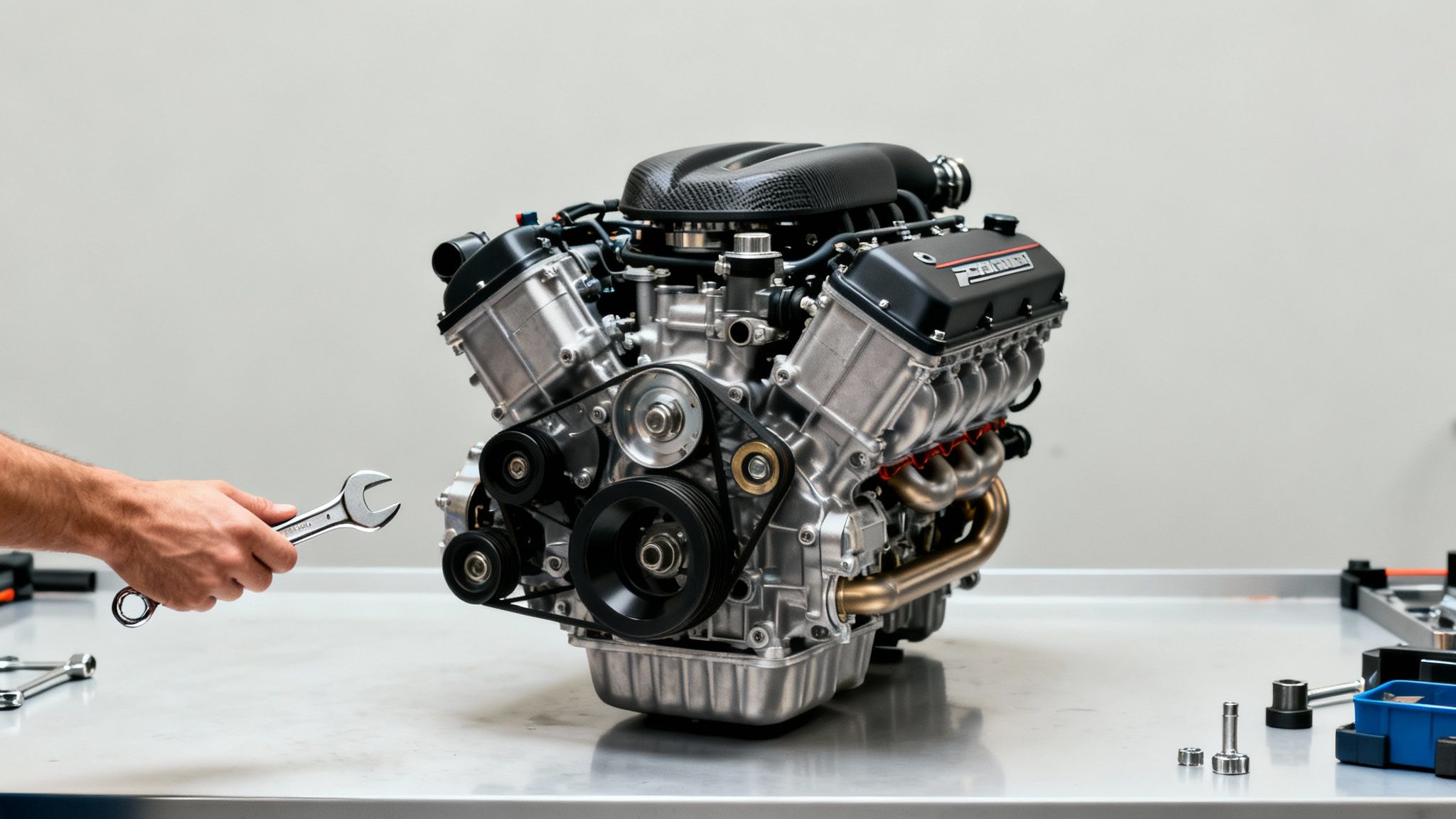
Instead of forcing foreign hormones into your body, these supplements work with its intricate systems. They supply the essential raw materials—like specific vitamins and minerals—that are direct precursors to hormone synthesis. This strategic support helps your body maintain its natural rhythm and production capabilities.
The Goal is Optimization, Not Replacement
The entire principle behind a natural testosterone booster is creating the ideal internal environment for your body to do what it does best. It's a multi-faceted approach that focuses on:
- Providing Building Blocks: Supplying key micronutrients like zinc and vitamin D that are fundamental for testosterone production.
- Managing Stress Hormones: Using adaptogenic herbs like Ashwagandha to help lower cortisol, a stress hormone that can directly interfere with testosterone.
- Unlocking Existing Hormones: Utilizing compounds that can help reduce the activity of proteins that bind to testosterone, making more of it "free" and available for your muscles and brain to use.
A common misconception is that these boosters are a shortcut to synthetic hormone levels. The reality is far more sophisticated: they are designed to help you reach your own natural, healthy peak potential by removing nutritional and environmental roadblocks.
This is exactly why they’ve become so popular. The global market reflects a massive demand from athletes and health-conscious people who want a sustainable edge. In fact, the testosterone booster market is projected to grow from USD 1,050.0 million in 2025 to USD 1,980.0 million by 2035, a trend driven by performers who want to sustain their edge. Read more on this market growth trend.
Why This Matters for Athletes
For any serious athlete, optimized testosterone levels are directly linked to real-world performance. This isn't just about building bigger muscles; it's about the entire performance ecosystem.
Proper hormonal balance influences everything from how quickly you recover after a grueling workout to your competitive drive and mental clarity on game day. By supporting your body’s foundational systems, you're investing in long-term performance and vitality.
This is just one piece of a comprehensive athletic strategy, which should always include smart nutrition and recovery protocols. You can see how this fits into the bigger picture in our guide on the best supplements for athletes. Ultimately, a natural approach ensures you are enhancing your body’s capabilities, not overriding them.
Here is the rewritten section, crafted to sound completely human-written and natural, following the provided style and requirements.
Your Body’s Performance Blueprint
Before we can even talk about how a "natural testosterone booster" works, we have to get under the hood and look at your body’s own internal production line. This isn't some simple on/off switch. It’s a sophisticated communication network, a chain of command where every level has to be in perfect sync for you to perform at your peak.
This whole system operates on a constant feedback loop. Your brain is always monitoring hormone levels, adjusting its signals up or down to keep things balanced. When that system is firing on all cylinders, your body has what it needs to build muscle, recover from brutal training sessions, and maintain that competitive edge we’re all chasing.
The Hormone Production Chain of Command
Think of your endocrine system as a highly efficient corporation with one goal: producing testosterone.
-
The CEO (The Hypothalamus): Tucked away in your brain, the hypothalamus is the shot-caller. It constantly assesses what the company (your body) needs and sends out the top-level order by releasing a hormone called GnRH (Gonadotropin-Releasing Hormone). This is the initial "go" signal that kicks everything off.
-
The Manager (The Pituitary Gland): This small gland at the base of your brain gets the memo from the CEO. Like any good middle manager, it translates that high-level directive into a specific work order by releasing Luteinizing Hormone (LH) into your bloodstream.
-
The Production Floor (The Testes): LH then travels down to the factory floor—the testes. Here, specialized workers called Leydig cells receive the LH signal as their direct assignment and get to work manufacturing testosterone.
It's an elegant system that ensures production is tightly controlled, ramping up or down based on your body's real-time demands. A natural testosterone booster isn't about hijacking this system; it's about making sure each department in this chain of command has the raw materials and support it needs to do its job right.
Total vs. Free Testosterone: A Critical Difference
Here’s where a lot of athletes get tripped up. Once testosterone is made, not all of it is immediately ready for action. Your blood work will show two key numbers: total testosterone and free testosterone. Knowing the difference is a game-changer for performance.
Total testosterone is just what it sounds like—every last bit of the hormone floating around in your blood. But here's the catch: a huge chunk of it, often 60% or more, is locked up by a protein called Sex Hormone-Binding Globulin, or SHBG.
Think of SHBG like a transport truck. When testosterone is bound to it, it’s being moved around, but it’s completely unavailable to do its job. It can't get into your muscle cells to trigger growth or hit receptors in your brain to sharpen your focus.
Free testosterone, on the other hand, is the unbound, biologically active stuff. This is the "boots on the ground" hormone that can actually get to work. While it's only a tiny fraction of your total T—usually just 1-2%—it’s the amount that truly dictates the results you feel and see. For any serious athlete, optimizing this free, usable amount is the real goal.
The Role of Testosterone in Athletic Performance
For competitors, testosterone is a master regulator that drives progress where it counts. Its influence goes way beyond just slapping on muscle mass; it impacts the very systems that define you as an athlete.
Here’s how it directly fuels what you do:
- Muscle Synthesis and Repair: Testosterone is the key that unlocks protein synthesis in your muscle cells. This is the fundamental process of repairing the micro-damage from training and building new, stronger muscle tissue. It's the reason it's so central to strength gains and recovery.
- Red Blood Cell Production: It also supports the creation of red blood cells. For endurance athletes, this is huge. A higher red blood cell count means more oxygen can be shuttled to your working muscles, which directly improves your stamina and aerobic capacity.
- Cognitive Function and Drive: This hormone has a massive impact on your central nervous system, too. It plays a role in dopamine levels, which influences your motivation, assertiveness, and that raw competitive drive you need to grind through the toughest workouts and perform when the pressure is on.
A Look at the Key Ingredients in Natural Boosters
Now that we have a handle on the body’s hormonal chain of command, let’s get practical. It's time to look at the raw materials that actually fuel this intricate system. A top-tier natural testosterone booster is built on a foundation of very specific vitamins and minerals, each one playing a crucial role in the production process.
By learning to spot these key players on a supplement label, you can cut through the marketing noise and focus on what really moves the needle for your performance. Let’s break down the science behind the most effective, research-backed micronutrients.
Vitamin D: The Sunshine Hormone
Often called the "sunshine vitamin," Vitamin D acts more like a steroid hormone precursor in the body. Its presence is directly tied to healthy testosterone synthesis, making it a non-negotiable for athletes—especially if you train indoors or live in a place that doesn't get a ton of sun.
When sunlight hits your skin, your body gets to work producing Vitamin D. But factors like the season, where you live, and even your skin tone can put a serious dent in this natural process. Study after study has shown a powerful link between Vitamin D deficiency and lower testosterone levels.
For any serious athlete, keeping your Vitamin D levels topped up is crucial. It’s not just about hormonal health; it's also vital for bone density and immune function, two systems that are constantly under stress from intense training.
Zinc: The Essential Mineral for Production
If testosterone production were a factory, zinc would be one of the most critical workers on the assembly line. This essential mineral is directly involved in the enzyme reactions that turn cholesterol into testosterone inside the Leydig cells of the testes.
Even a slight zinc deficiency can slam the brakes on this entire operation. Your body can’t make or store zinc on its own, which means a consistent daily supply from your diet or a supplement is absolutely essential to keep the production line running smoothly.
Athletes are particularly at risk for zinc depletion. Intense exercise causes you to lose a significant amount of zinc through sweat. The harder you train, the more you need to pay attention to your intake to support optimal hormone function.
The diagram below shows how signals travel from the brain down to the testes to kickstart this whole process.
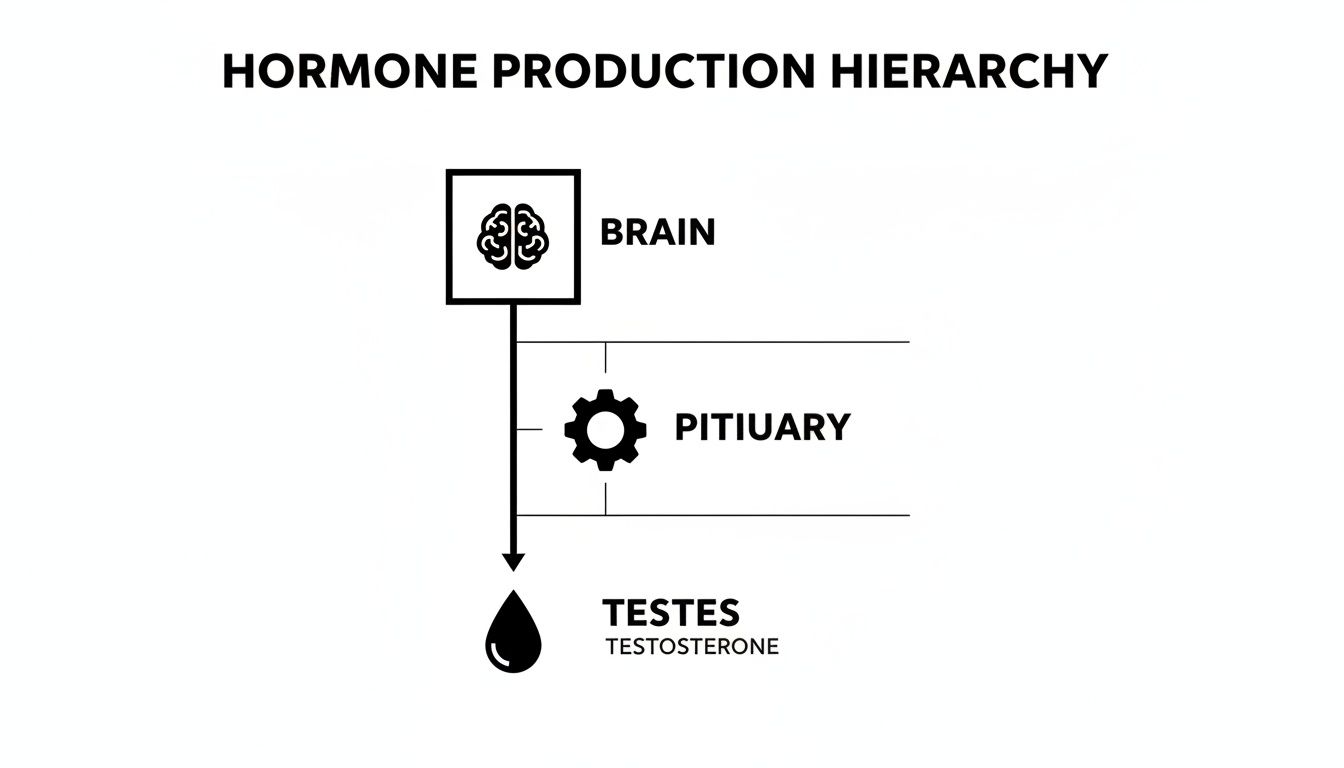
This visual drives home the point that testosterone production is a top-down process. A deficiency in a key mineral like zinc can disrupt the final, most critical stage of the whole operation.
Magnesium: The Master Regulator
Magnesium is another powerhouse mineral that wears many hats in an athlete’s body, and its impact on testosterone is huge. It’s involved in over 300 enzymatic reactions, including those that govern muscle function, energy production, and sleep quality.
Research shows that magnesium supports healthy testosterone levels in two main ways:
- Fighting Inflammation: Hard training creates inflammation. Magnesium’s anti-inflammatory properties help create a better internal environment for hormone production to thrive.
- Boosting Free Testosterone: Studies suggest magnesium can help limit the activity of Sex Hormone-Binding Globulin (SHBG). By binding to SHBG itself, it may leave more testosterone "free" and bioavailable for your muscles to use.
Like zinc, magnesium is lost through sweat, so athletes need more of it. A shortfall can mess with your hormonal balance and seriously compromise your recovery, as it’s essential for muscle relaxation and preventing cramps.
Why DHEA Is Not a Natural Alternative
You’ll probably see DHEA (dehydroepiandrosterone) marketed alongside these natural ingredients, but it’s critical to understand the difference. DHEA is a prohormone—a substance the body can convert into other hormones, including both testosterone and estrogen.
While it's true that DHEA levels decline with age, supplementing with it is not the same as supporting your body’s own production. Taking synthetic DHEA introduces an external hormonal substance, which can cause unpredictable conversions and potential side effects.
- Unpredictable Conversion: Your body might convert the DHEA into estrogen instead of testosterone, throwing your hormones out of whack.
- Potential Side Effects: High doses have been linked to issues like acne, mood swings, and a negative impact on cholesterol levels.
- Safety Concerns: It is not recommended for anyone with hormone-sensitive conditions.
This is exactly why a true natural testosterone booster sticks to foundational nutrients like Vitamin D, zinc, and magnesium. This approach empowers your body's own systems to function at their peak, rather than introducing external hormonal agents that come with risks. By focusing on these core components, you support your body’s natural blueprint for performance—safely and effectively.
Exploring Herbal Powerhouses for Hormone Support
Beyond essential vitamins and minerals, the world of botany offers some seriously powerful allies for hormone optimization. We're not talking about random plants from the garden; these are specific herbs, many with centuries of use in traditional medicine, that modern research is now starting to validate. These are the kinds of compounds that form the backbone of many advanced natural testosterone booster formulas.

There's a reason the market for these plant-based solutions is booming. Herbal-based testosterone boosters snagged a massive 48.0% revenue share in 2024, which shows a clear preference among athletes for ingredients backed by both tradition and science. This trend is a major driver of the overall market, which is expected to climb from USD 3,735.4 million in 2023 to USD 6,750.4 million by 2030. You can discover more insights about these market trends if you're curious.
So, let's get into the "why" behind some of the most effective herbal powerhouses out there.
Ashwagandha: The Stress Reducer
Think of chronic stress as a constant, low-level alarm blaring inside your body. That alarm triggers the release of cortisol, a catabolic hormone that actively works against your performance goals when it's too high for too long. Ashwagandha (Withania somnifera) is an adaptogenic herb famous for its ability to help your body better manage this stress response.
Picture cortisol and testosterone on opposite ends of a seesaw. When cortisol is chronically high, it pushes testosterone down. By helping to lower cortisol levels, Ashwagandha essentially takes weight off one side, allowing your natural testosterone production to rise to a healthier, more balanced level.
This helps create a more anabolic environment—one that's primed for muscle repair, growth, and optimal hormone function. For any athlete grinding through tough training blocks, getting cortisol in check isn't a luxury; it's a strategic necessity for recovery and progress.
Tongkat Ali: The Liberator
While some ingredients focus on production, Tongkat Ali (Eurycoma longifolia) plays a different, but equally crucial, role: unlocking the testosterone you already have. Remember how much of your total testosterone is bound up by SHBG, making it inactive? Tongkat Ali seems to help reduce the activity of this protein.
It's like having a fleet of delivery trucks (your total testosterone) where most of the drivers (SHBG) are on a permanent break. Tongkat Ali acts like a great manager, getting more of those drivers back on the road.
By helping to increase the amount of "free" testosterone, Tongkat Ali ensures that more of this critical hormone is available to bind with receptors in your muscle cells, brain, and bones, where it can actually get to work.
This mechanism makes it a powerful partner to ingredients that support initial production, creating a truly comprehensive strategy for hormonal optimization.
Fenugreek: The Multi-Faceted Player
Fenugreek (Trigonella foenum-graecum) is another herb with a long history of use that has caught the eye of modern science. It contains compounds called furostanolic saponins, which are believed to be the key players behind its positive effects on male hormonal health.
Research suggests Fenugreek may support testosterone levels through a couple of interesting pathways:
- Inhibiting Aromatase: It might help limit the activity of the aromatase enzyme, which is the one responsible for converting testosterone into estrogen.
- Supporting LH Production: Some evidence also points to its ability to support the release of Luteinizing Hormone (LH) from the pituitary gland—the direct signal for the testes to produce more testosterone.
This dual-action potential makes Fenugreek a staple in many high-quality natural testosterone booster formulations.
Other Notable Herbal Allies
While the herbs above are some of the most heavily researched, other botanicals also play a supportive role in a holistic approach to hormone health. For instance, substances like Shilajit are prized in Ayurvedic tradition for their rich mineral content and potential to support energy and vitality. For those interested in innovative delivery methods, you can learn more about Shilajit gummies in our detailed article. These herbs often work together, creating a synergistic effect that supports your body's entire performance system.
Lifestyle Habits That Amplify Your Results
While a well-formulated natural testosterone booster gives your body the key raw materials it needs, it’s not the whole picture. Think of a supplement as the pit crew for a race car. They can refuel it and change the tires, but they can't get behind the wheel and drive. Your daily lifestyle is the driver.
The habits you build every day are the foundation that makes any supplement effective. Without that solid base, you’re just pouring premium fuel into an engine that’s already misfiring. True optimization happens when you pair smart supplementation with the non-negotiable lifestyle practices that create the perfect environment for hormonal health.
This synergy is becoming more important than ever. After age 30, a man's testosterone can decline by 1-2% annually. It's no surprise that the market for natural boosters is projected to grow from USD 5.78 billion in 2025 to USD 7.35 billion by 2029, largely driven by athletes and men over 35 looking to preserve their energy and strength.
Master Resistance Training
Consistent, intense resistance training is one of the most powerful signals you can send your body to ramp up anabolic hormone production. Lifting heavy, especially with big compound movements, triggers an immediate hormonal response that supports higher testosterone levels over the long haul.
The key is progressive overload—constantly pushing your muscles to adapt and get stronger. This process doesn't just build muscle mass; it's a direct message to your endocrine system that your body needs the hormonal horsepower to handle the demand.
Actionable Training Tips:
- Focus on Compound Lifts: Prioritize the big ones like squats, deadlifts, bench presses, and overhead presses. These recruit multiple large muscle groups at once for the biggest hormonal impact.
- Train with Intensity: Push yourself close to muscular failure, staying in the 6-12 rep range to maximize both strength and muscle growth.
- Ensure Adequate Rest: Overtraining is a testosterone killer. It jacks up cortisol and grinds your progress to a halt. Give each muscle group at least 48 hours to recover.
Prioritize Deep Restorative Sleep
Sleep isn't just downtime; it's when your body’s repair and production crews go to work. The vast majority of your daily testosterone release happens during deep sleep. Consistently cutting sleep short is like shutting down the assembly line right in the middle of a production run.
Studies have shown that even a single week of restricted sleep can crater testosterone levels in healthy young men. Making 7-9 hours of quality, uninterrupted sleep a non-negotiable priority is one of the most effective things you can do.
Think of sleep as the ultimate anabolic state. It's when your body rebuilds damaged tissue, consolidates memories, and, most importantly, synthesizes the hormones that drive your performance and recovery.
Furthermore, maintaining healthy lifestyle habits can significantly impact overall male vitality, including efforts to improve sperm health.
Fine-Tune Your Nutrition
Your diet provides the fundamental building blocks for everything your body does, and that absolutely includes making hormones. Testosterone is actually synthesized from cholesterol, which makes healthy fats an essential part of your game plan. You also need a full spectrum of micronutrients to keep the hormonal machinery running smoothly.
Our detailed guide offers more insights on how you can naturally boost for testosterone through these kinds of strategic choices.
For now, focus on a diet loaded with whole, unprocessed foods. This approach ensures you’re not only getting the fuel for energy and muscle growth but also the critical vitamins and minerals that act as co-factors in countless biological processes.
Nutritional Pillars for Hormone Health:
- Incorporate Healthy Fats: Get plenty of monounsaturated and saturated fats from sources like avocados, olive oil, nuts, seeds, and quality animal proteins.
- Eat Enough Calories: Being in a chronic calorie deficit signals a state of famine to your body. It responds by shutting down non-essential functions, and hormone production is one of the first to go.
- Consume Micronutrient-Dense Foods: Load up on foods rich in zinc (oysters, red meat), magnesium (leafy greens, pumpkin seeds), and Vitamin D (fatty fish, fortified foods).
How to Choose a Safe and Effective Supplement
Walking down the supplement aisle can feel like a high-stakes guessing game. With so many options screaming for your attention, how do you cut through the marketing hype and find something that actually works? Choosing the right natural testosterone booster really comes down to a few key principles that put you in control.
Your first move should be to become a label detective. A brand worth its salt will have a fully transparent label, showing you the exact dose of every single ingredient. Be wary of products hiding behind a "proprietary blend," which is often just a smokescreen for underdosing the compounds that matter most.
Prioritize Quality and Purity
In a largely unregulated market, quality assurance isn’t just a nice-to-have—it’s everything. The best way to know if a supplement is pure and safe is to look for independent, third-party verification.
-
Third-Party Testing: Keep an eye out for seals from organizations like NSF Certified for Sport or Informed-Sport. These certifications are your proof that what’s on the label is what’s in the bottle, and that the product is free from banned substances—a non-negotiable for any competitive athlete.
-
Manufacturing Standards: Check that the supplement is made in a cGMP (Current Good Manufacturing Practice) certified facility. This tells you the product was produced under strict, federally-regulated quality control standards.
These independent checks provide a critical layer of trust, protecting you from potential contaminants and formulas that just don't work.
Focus on Clinically Effective Dosages
Even the best ingredient is useless if you don't get enough of it. Real-world results are all about the dosage. When you’re looking at a natural testosterone booster, take a minute to compare the ingredient amounts on the label to the dosages used in actual scientific studies. A brand that invests in clinically effective doses is showing you they’re serious about results.
For example, most successful studies on Ashwagandha use daily doses between 300-600 mg. If you see a product with just a tiny fraction of that amount, it’s not likely to deliver the powerful, stress-reducing benefits you’re after.
Choosing a supplement is an investment in your body's performance architecture. Demand transparency, verify purity through third-party testing, and ensure the formula is built on clinically proven dosages.
Know When to Consult a Professional
At the end of the day, supplements should complement a solid lifestyle, not replace professional medical advice. If you're dealing with persistent symptoms of low testosterone—like chronic fatigue, low mood, or a noticeable drop in performance—it's time to talk to a doctor.
A healthcare professional can run blood work to give you a clear, accurate picture of your hormonal health and rule out any underlying issues. As you navigate your options, our guide to effective testosterone pills can offer more insights for making smart, informed choices. This ensures you’re always taking a responsible, health-first approach to optimizing your body.
Common Questions About Natural Testosterone Boosters
When you're digging into the world of performance supplements, a few key questions always come up. Let's tackle the most common ones to give you clear, straightforward answers you can actually use.
How Long Until I Notice Results?
This is probably the biggest question on everyone's mind. Unlike a synthetic hormone, a natural testosterone booster works with your body, not for it. That means the results aren't going to hit you overnight.
Most guys start to feel a real difference—more drive in the gym, better recovery, and sharper focus—within 4 to 8 weeks of consistent daily use. This timeframe gives the ingredients enough runway to build up in your system and start supporting your body's own hormone production machinery. Think of it less like a switch and more like a long-term investment in your body's performance.
Are Natural Boosters the Same as Steroids?
Absolutely not. This is a crucial distinction. Anabolic steroids are synthetic, external hormones that you introduce into your body. When you do that, you're essentially telling your own natural production line to shut down.
A natural testosterone booster, on the other hand, is all about giving your body the raw materials and herbal support it needs to make its own testosterone more efficiently. It's the difference between dropping a foreign engine into your car versus giving your own engine a high-performance tune-up with premium fuel and parts.
Should Young Athletes Take Them?
For most younger athletes—we're talking teens and early twenties—the answer is generally no. At that age, your testosterone levels are already firing on all cylinders, at or near your natural peak. A booster is usually just overkill.
The real focus for this group should be on mastering the fundamentals: consistent, heavy resistance training, locking in 7-9 hours of quality sleep, and fueling your body with a nutrient-packed diet. These supplements really shine for athletes over 30 or those who've identified specific nutrient gaps that are holding their hormone production back. Always build the foundation first; that's where the real gains are made.