
Your Cart is Empty


How to Maintain Muscle While Cutting: how to maintain muscle while cutting
So you want to get shredded. Not just "lose weight," but peel back the layers to reveal the dense, hard muscle you’ve spent months or years building. This is the real art of physique transformation.
The mission is simple: create a calorie deficit to burn fat. The problem? Your body, in its infinite wisdom for survival, doesn't always differentiate between your love handles and your biceps when it's low on fuel. This is where most people crash and burn, ending up as a smaller, weaker version of themselves.
When you drastically cut calories or hammer endless cardio, you send a panic signal to your body. It thinks famine is coming. To conserve energy, it starts ditching the most metabolically expensive tissue it has—your muscle. Not only does this sabotage the very look you’re after, but it also tanks your metabolism, making it even harder to lose fat down the line.
The Four Pillars of a Successful Cut
To do this right, you need a plan. Think of it like a four-legged stool. If you kick one leg out, the whole thing comes crashing down. Forget one of these, and your hard-earned muscle is the first thing to go.
Here's the blueprint we're going to break down:
- Precision Nutrition: We’re talking a moderate calorie deficit and high protein intake. These are the non-negotiables that tell your body to burn fat for fuel, not your gains.
- Intelligent Training: Your goal in the gym shifts from building new muscle to protecting what you have. This means keeping the intensity high and fighting to maintain strength, not just chasing a pump with light weights.
- Strategic Recovery: Being in a deficit is a massive stressor. Sleep and recovery aren't optional luxuries anymore—they become critical components for holding onto muscle.
- Smart Supplementation: No magic pills here. But a few key supplements can give you a real edge in preserving performance and filling the nutritional gaps that open up when calories get low.
A slow, controlled cut will always beat a rushed, panicked one. The goal is to reveal the physique you've built, not dismantle it. Protect your strength at all costs.
This isn't about generic, cookie-cutter advice. We're diving into the actionable strategies that seasoned lifters and physique athletes use to get peeled to the bone without sacrificing their gains. Let's get to work.
Your Nutrition Blueprint for Muscle Retention
This is where the rubber meets the road. If you get your nutrition wrong during a cut, you can kiss your hard-earned muscle goodbye. The goal isn't just to lose weight; it's to lose fat while holding onto as much lean mass as possible.
The first move is setting a sensible calorie deficit. We're not talking about starvation diets here. A modest deficit of 300-500 calories below your daily maintenance level is the sweet spot. This gentle nudge encourages your body to tap into fat stores for energy without panicking and breaking down precious muscle tissue for fuel.
Going too aggressive with your calorie deficit is the number one mistake people make. It’s a surefire way to lose strength, tank your energy, and watch your muscle mass disappear.

Prioritize Protein Above All Else
If there's one non-negotiable rule for protecting muscle during a diet, it's this: eat enough protein. It's the absolute cornerstone of your entire strategy.
When you're in a calorie deficit, your body is actively looking for energy sources. Without a steady supply of dietary protein, it will happily start catabolizing your own muscle tissue to get the amino acids it needs. Providing a high protein intake is the most powerful signal you can send to your body to leave your muscles alone.
The gold standard, backed by a mountain of research, is to aim for 1.6-2.2 grams of protein per kilogram of body weight (that's about 0.7-1.0 grams per pound). Studies have shown that when dieters don't eat enough protein, as much as 20-30% of the weight they lose can come from lean mass. A high-protein diet drastically cuts down on that muscle loss.
Distributing your protein intake across 4-5 meals a day is a pro-level tactic. This keeps a constant stream of amino acids available for your muscles, which helps maximize muscle protein synthesis and keeps you feeling fuller for longer.
Strategically Fueling With Carbs And Fats
Protein may be the star of the show, but carbs and fats are the essential supporting cast. They are not the enemy. You just need to use them intelligently.
Carbohydrates are your primary fuel for intense training. Cut them too low, and your performance in the gym will plummet. Since heavy lifting is a key signal for muscle retention, a drop in performance is the last thing you want.
Fats are just as critical, especially for maintaining healthy hormone levels. Hormones like testosterone play a direct role in your ability to preserve muscle mass. A good rule of thumb is to set your fat intake at 20-30% of your total daily calories.
Once your protein and fat targets are set, the rest of your calories can come from carbs. A smart way to structure this is to eat the bulk of your carbs around your workouts.
- Pre-Workout: Some easily digestible carbs will top off your energy stores for a killer session.
- Post-Workout: Pairing carbs with protein helps replenish glycogen and kickstart the recovery process. You can learn more about the role of amino acids in supplements for optimizing this window.
Putting It All Together
Okay, so we've got the numbers down. But what does this actually look like on a plate? The key is to focus on nutrient-dense, whole foods that keep you full and provide the vitamins and minerals your body needs.
Getting all that protein in can sometimes be a challenge, which is where a high-quality protein powder can be a lifesaver. Check out this ultimate guide to protein powder in cooking for some creative ideas to hit your daily targets without getting bored.
To make this crystal clear, here’s a look at how a 180 lb individual could structure their macros.
Sample Daily Macronutrient Targets for a 180 lb (82 kg) Individual
This table illustrates sample macro splits for a 180 lb individual aiming for muscle preservation during a cut, based on the recommended protein intake of 1.6-2.2g/kg.
| Protein Target | Daily Protein (grams) | Calories from Protein | Example Meal Distribution (4 meals) |
|---|---|---|---|
| Moderate (0.8g/lb) | 144g | 576 kcal | ~36g per meal |
| High (1.0g/lb) | 180g | 720 kcal | ~45g per meal |
| Very High (1.2g/lb) | 216g | 864 kcal | ~54g per meal |
As you can see, hitting a target like 180g of protein is completely manageable when you break it down meal by meal. This kind of structure transforms abstract numbers into a real, actionable plan that fuels your workouts, crushes hunger, and, most importantly, protects your hard-earned muscle.
How to Train Smarter During a Cut
Let's get one of the biggest gym myths out of the way right now: cutting isn't the time to switch to high-rep, light-weight "toning" workouts. If you want to keep the muscle you’ve worked so hard for, your training needs to send a loud, clear signal to your body: "We still need this muscle!"
And how do you send that signal? By lifting heavy.
When you’re in a calorie deficit, the goal of your training shifts. You're no longer trying to build a ton of new muscle; you're fighting to preserve what you have. Your body is smart—if you stop giving it a good reason to hold onto metabolically expensive muscle tissue, it'll start burning it for energy. Heavy lifting is that reason.

Prioritize Intensity Over Volume
The single biggest mistake I see people make when they start a cut is dropping the weight and chasing a pump with endless sets. This is backward. Your focus needs to stay on maintaining strength in the 5-8 rep range on your big compound lifts. Squats, deadlifts, bench presses, and overhead presses are still your bread and butter.
Think of it this way: the weight on the bar is the stimulus for muscle retention. The volume (total sets and reps) is what drains your recovery resources. Since a deficit already puts your recovery at a disadvantage, the only logical move is to cut back on volume, not intensity.
For example, if you were benching 225 lbs for 3 sets of 8 during a bulk, your goal now is to fight like hell to keep lifting that 225 for 3 sets of 5-8. You might not hit every rep, and that's okay. The effort is what tells your body to keep the muscle.
The weight you lift tells your body why it should keep muscle. The calories you eat determine if it has the resources to do so. Keep the "why" strong, even when resources are limited.
Finding Your Minimum Effective Dose
This brings us to the idea of the "Minimum Effective Dose" (MED). It's the least amount of training you can do to get the result you want—in this case, muscle preservation. When your recovery is already compromised, more is definitely not better.
The main dial you should be turning is your total weekly sets. I've found that a strategic reduction of 20-30% from your bulking volume is the sweet spot for most people. This lets you keep the intensity high on your main lifts without burying yourself in fatigue that your body just can't handle in a deficit.
Research backs this up, too. One key review showed no real difference in muscle or strength preservation between lifters doing 6-10 hard sets per muscle group weekly versus those doing way more while cutting. The takeaway is clear: once you've provided that initial heavy stimulus, piling on extra sets just eats into your already-strained recovery system. You can dig deeper into these findings on training volume when cutting.
A Smarter Approach to Cardio
Cardio is a tool to help you create a calorie deficit. It's not a punishment. Your number one priority is still hitting the weights, so cardio should always complement your lifting, not compete with it.
Here’s how to set it up for success:
- Make LISS Your Go-To: Low-Impact Steady-State (LISS) cardio is your best friend during a cut. Think incline walking, cycling, or hitting the elliptical for 30-45 minutes. These options burn calories without trashing your recovery, so you’ll still be fresh for your next lifting session.
- Use HIIT Sparingly: High-Intensity Interval Training (HIIT) is great for burning a lot of calories quickly, but it’s also incredibly taxing on your system. Keep HIIT to 1-2 short sessions per week, and try to do them on days you aren't lifting heavy.
- Keep Them Separate: If your schedule allows, do your cardio on non-lifting days or at least several hours apart from your weight training. Doing a long cardio session right before you squat is a surefire way to kill your strength and performance.
This balanced approach helps you burn more fat without sabotaging the very workouts that are protecting your muscle. Remember, your ability to recover is a finite resource when you're cutting. By pulling back on volume and being smart with cardio, you'll learn how to recover faster after your workout and keep seeing results. It's a practical way to stay strong while the fat melts away.
The Overlooked Keys: Sleep and Supplementation
We forge our progress under the barbell and reveal our physiques through disciplined eating. But here's the part too many people forget: the gains you fight so hard to protect are actually solidified while you rest.
Being in a sustained calorie deficit is a massive stressor on your body. This elevates recovery from a simple "best practice" to your absolute number one priority if you want to hold onto your hard-earned muscle.
Why Sleep Is Your Most Anabolic Tool
When calories are scarce, your body's ability to repair itself is seriously handicapped. This is where sleep becomes your most powerful ally in the battle to preserve muscle while you're cutting. Skimping on sleep is like trying to drive a car with no oil in the engine—sooner or later, everything just seizes up.
Chronic sleep deprivation creates a hormonal dumpster fire that actively encourages muscle breakdown and fat storage. For starters, it sends your cortisol levels through the roof. Cortisol is a catabolic hormone, which means it literally breaks down muscle tissue for energy. It's the exact opposite of what you're working for.
At the same time, poor sleep tanks the release of growth hormone, a critical player in muscle repair. Even worse, one study found that after just one week of sleeping only five hours a night, healthy young men saw their testosterone levels plummet by a staggering 10-15%. That's a hormonal nosedive that makes holding onto muscle next to impossible.
Getting 7-9 hours of quality sleep every single night is non-negotiable during a cut. Think of it as the most effective, free performance enhancer you can possibly use.
Actionable Steps for Better Sleep Hygiene
Knowing you need sleep is one thing. Actually getting it is another. Here are some simple, practical things you can start doing tonight to immediately improve your sleep quality.
- Make Your Room a Cave: Use blackout curtains, a sleep mask, whatever it takes. Cover up any glowing electronic lights. Even a tiny bit of light can mess with your body's natural melatonin production.
- Lock in Your Schedule: Go to bed and wake up at the same time every day. Yes, even on weekends. This helps regulate your body’s internal clock, making it much easier to fall asleep and wake up feeling ready to go.
- Kill the Screens: The blue light from your phone, tablet, and TV is a major sleep disruptor. Put all screens away at least 60-90 minutes before you plan to go to sleep. Let your brain wind down.
- Keep It Cool: Your body temperature naturally drops to initiate sleep. A cool room, ideally somewhere between 60-67°F (15-19°C), can make a huge difference in how well you sleep.
Supplementing Smartly to Fill the Gaps
While whole foods and solid sleep are your foundation, a few key supplements can give you a significant edge. They help fill the nutritional and performance gaps that inevitably open up during a tough diet. This isn't about magic pills; it's about providing strategic support.
First on the list is creatine monohydrate. It’s one of the most researched supplements on the planet for good reason. Taking 3-5 grams daily helps your body regenerate ATP, which is the primary fuel for explosive movements in the gym. This directly supports your ability to maintain strength and intensity, sending that crucial "keep the muscle" signal to your body even when energy is low.
A high-quality protein powder is another must-have. Let's be real—hitting a high protein target on fewer calories can be a real challenge. A whey or casein shake is an incredibly efficient and low-calorie way to make sure your muscles are getting the amino acids they need to fight off breakdown.
Finally, don't sleep on electrolytes. When you're in a deficit, you're often drinking more water, which can flush out essential minerals like sodium, potassium, and magnesium. This depletion often leads to performance-killing cramps, fatigue, and poor hydration. A clean electrolyte formula ensures your muscles are firing on all cylinders.
If you want to go deeper, you can explore the science behind specific supplements for muscle recovery and see exactly how they fit into a well-structured plan.
How to Track Progress and Make Smart Adjustments
A cutting plan isn’t something you can just “set and forget.” Your body is a dynamic system, constantly adapting to what you throw at it. To stay ahead, your strategy needs to be just as adaptable. The only way to know if your plan is actually working—and how to make intelligent, muscle-sparing adjustments—is to track your progress consistently.
Let's get one thing straight: the scale is just one tool in your toolbox, and it's probably the least reliable one. Daily weight can swing wildly thanks to water retention, what you ate the night before, and glycogen levels. Relying on it alone is a recipe for panic, often leading to drastic decisions that can kill your hard-earned muscle.
To get a real, honest picture of what's happening, you need to look at more than just that number on the floor. A multi-faceted approach gives you the complete dataset you need to make informed choices instead of emotional ones.
Building Your Progress Toolkit
Your goal is simple: track metrics that show changes in body composition—fat going down, muscle staying put—not just overall weight loss. Here’s what you should be monitoring every single week to make sure you're on the right track.
- Weekly Average Body Weight: Hop on the scale every morning, right after you use the restroom and before you eat or drink anything. At the end of the week, average those numbers out. This simple step smooths out the daily noise and reveals the true trend.
- Body Measurements: Grab a flexible tape measure and track key spots like your waist, hips, chest, and arms. A shrinking waist while your arm and chest measurements hold steady is a golden sign you’re torching fat, not muscle.
- Progress Photos: Once a week, snap a few photos from the front, side, and back. Use the same lighting and stand in the same spot. The mirror can play tricks on you day-to-day, but photos provide cold, hard evidence of your transformation over time.
- Gym Performance: This is arguably your most important metric. Are you still strong on your main lifts? If your bench, squat, and deadlift numbers are holding steady or just dipping slightly, you're doing an incredible job of preserving muscle.
And of course, knowing your numbers in the kitchen is just as important. Choosing the best app to track food is a critical step for accurately monitoring your intake. Consistent tracking removes all the guesswork.
When and How to Make Adjustments
Patience is a virtue here. Your body doesn't lose fat in a perfect, straight line. It's totally normal to hit a week where things seem to stall out. Don't even think about making a change unless progress has completely flatlined for at least two consecutive weeks.
When it is finally time to adjust, think small. Think methodical.
A classic mistake is making a huge calorie cut or adding hours of cardio at the first sign of a plateau. That's just a fast track to muscle loss. Instead, you want to make the smallest possible change that gets the needle moving again.
If your weight loss has stalled for two weeks, just pick one of these options:
- Drop your daily calories by 100-150, pulling mostly from carbs or fats.
- Add one 20-30 minute low-impact cardio session to your weekly routine.
Make that one change, then give it another two weeks to see what happens. This controlled approach ensures you keep losing fat without putting your muscle at risk. And speaking of what to prioritize, recovery is king.
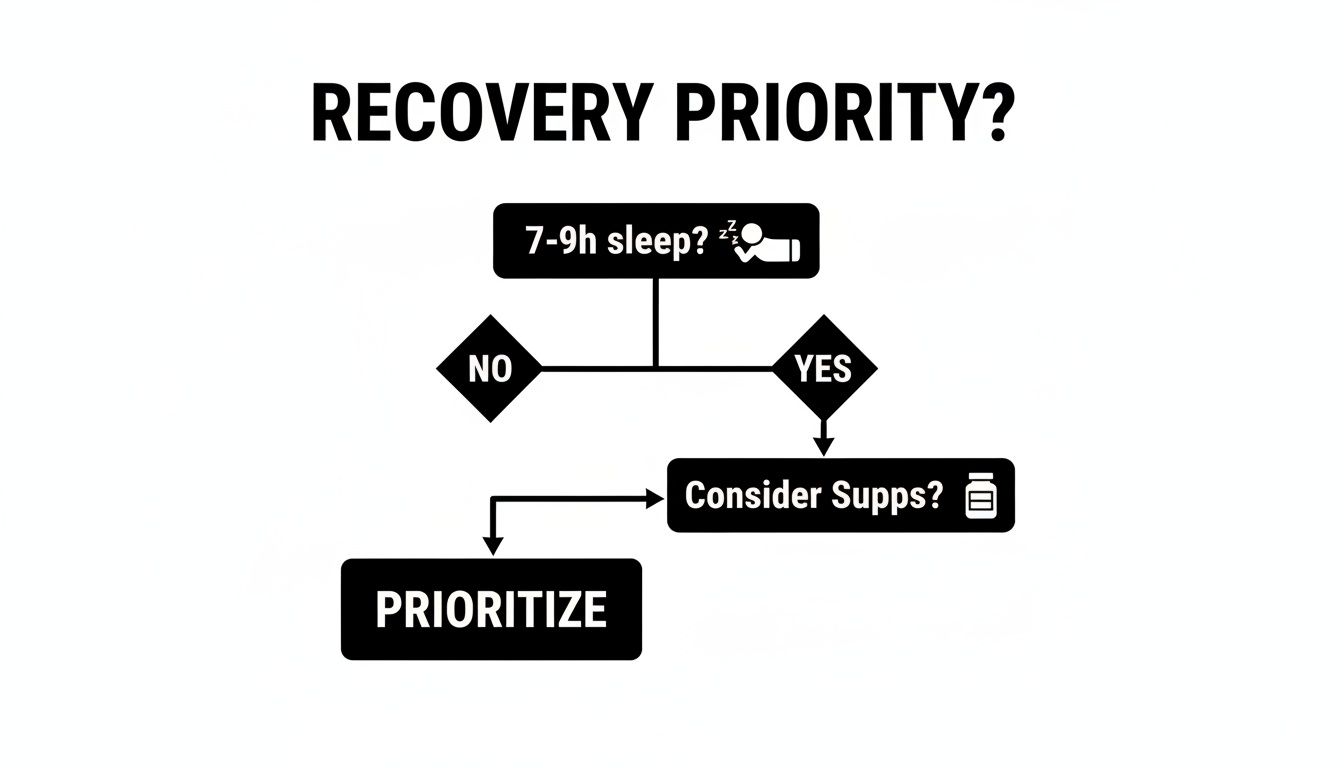
As you can see, before you even think about supplements to aid recovery, you have to get your sleep dialed in. It’s the single most powerful tool you have.
The Power of Diet Breaks and Refeeds
Let’s be real: long-term dieting is a grind, both mentally and physically. This is where more advanced strategies like planned diet breaks and refeeds can be a lifesaver, helping you bust through stubborn plateaus.
A refeed is a short, planned increase in carbs, usually for just one or two days. It’s a great way to top off muscle glycogen, give your metabolism a temporary little kick, and provide a massive psychological boost.
A diet break is a longer pause, typically for 1-2 weeks, where you bring your calories back up to maintenance. This gives your body and mind a complete break from the stress of dieting. It helps normalize hormones and can make fat loss feel much easier when you get back to it.
Your Blueprint for a Successful Cut
Theory is one thing, but execution is everything. Let's put all these principles into practice and look at what a smart, effective week actually looks like when you're trying to shed fat without sacrificing hard-earned muscle.
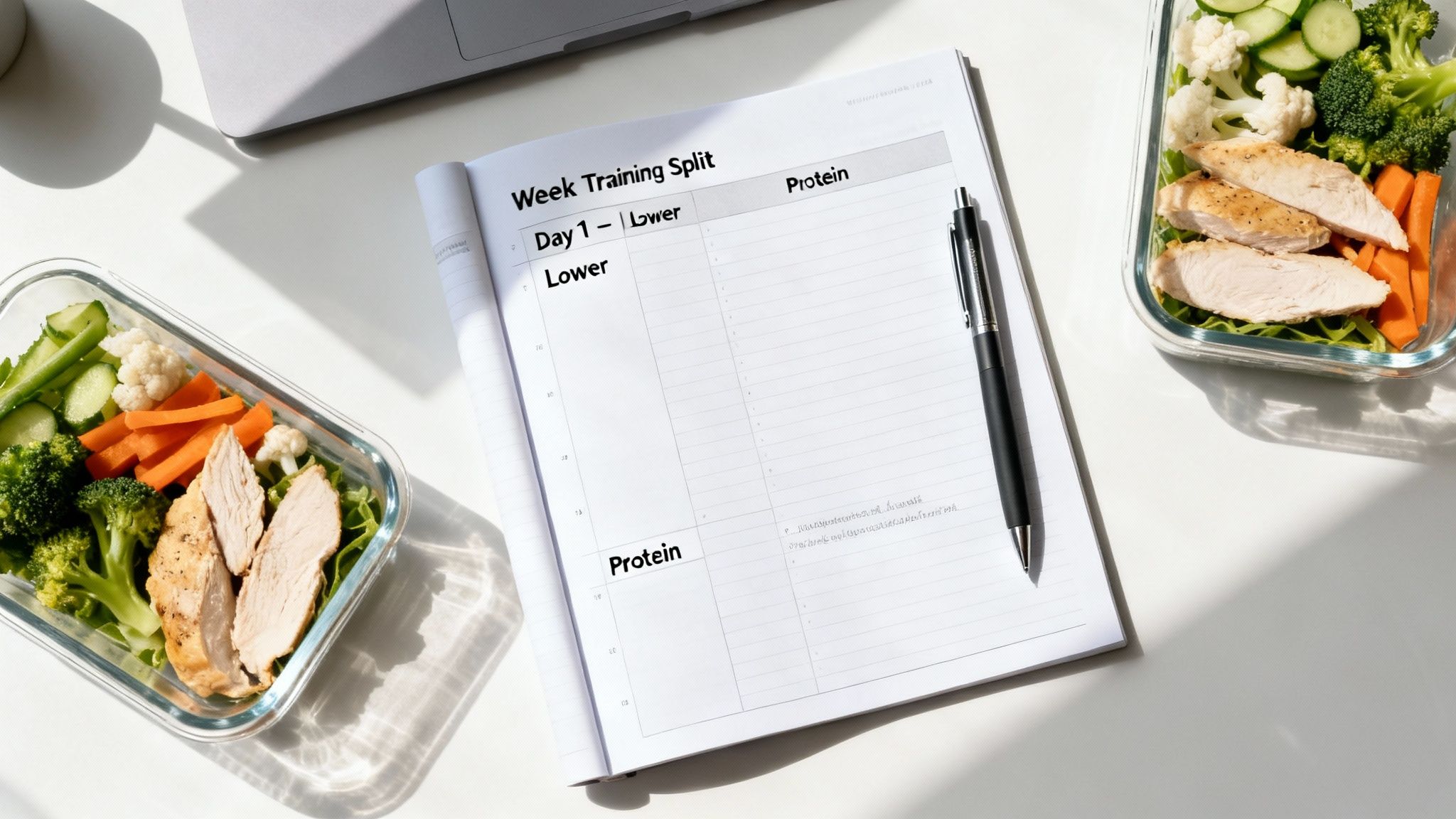
Think of this less as a strict prescription and more as a flexible template. You can—and should—tweak it to fit your schedule, food preferences, and specific macro targets. The real goal here is to make the whole process feel manageable and totally achievable.
A Sample Day of Eating
Here’s a look at a day designed for someone targeting around 2,200 calories with roughly 180g of protein. The entire focus is on high-protein, nutrient-packed foods that will protect your muscle tissue and keep hunger at bay.
- Meal 1 (8 AM): 4 whole eggs scrambled with a handful of spinach and 1/2 an avocado.
- Meal 2 (12 PM): 6 oz grilled chicken breast on top of a big mixed green salad with a light vinaigrette.
- Meal 3 (4 PM - Pre-Workout): 1 scoop of whey protein shaken with water, plus a medium banana.
- Meal 4 (7 PM - Post-Workout): 6 oz lean ground turkey with 1 cup of white rice and a side of steamed broccoli.
- Meal 5 (9 PM): 1 cup of plain Greek yogurt with a handful of berries mixed in.
This setup ensures a steady stream of protein all day long. Notice how the carbs are placed right around the workout? That’s intentional—it helps fuel your training and kickstart recovery. If you're looking for more ways to easily hit your protein goals, our guide on choosing a muscle growth supplement offers some great insights.
A Sample 4-Day Training Split
This training schedule is built around heavy, compound lifts to give your body the strongest possible signal to hold onto muscle. We're managing the overall volume to preserve strength without tanking your recovery, which is already taxed by the calorie deficit.
The powerful link between a high-protein diet and solid resistance training is backed by science. The CALERIE trial found that combining exercise with a calorie deficit cuts muscle loss in half compared to just dieting alone. This protects your body's metabolic engine and keeps you strong.
Here’s what the week looks like:
- Day 1: Upper Body (Push Focus) - Bench Press, Overhead Press, Dips
- Day 2: Lower Body (Squat Focus) - Barbell Squats, Lunges, Leg Press
- Day 3: Rest or Active Recovery (think low-intensity cardio)
- Day 4: Upper Body (Pull Focus) - Weighted Pull-ups, Barbell Rows, Face Pulls
- Day 5: Lower Body (Hinge Focus) - Deadlifts, Romanian Deadlifts, Hamstring Curls
- Days 6 & 7: Rest or Active Recovery
Got Questions About Cutting? Let's Get Them Answered.
Even when you've got a solid plan mapped out, hitting a few bumps in the road is just part of the process. Questions will pop up. Knowing how to troubleshoot the common stuff is what separates a successful cut from a frustrating one. Let’s clear the air on a few of the most frequent questions I get.
The biggest fear for most lifters? Losing strength. Look, it's normal to feel a bit less like a powerhouse when you're in a deficit, but you shouldn't be seeing a nosedive on your lifts. If your numbers are consistently dropping week after week, that’s a major red flag. It's your body telling you the deficit is too steep or your protein is way too low.
A small dip in your 1-rep max is one thing, but a complete crash across all your lifts means your body is eating into muscle for fuel. You need to pull back immediately. Try adding 100-150 calories back into your daily intake, primarily from carbs or protein, and see how your body responds.
So, Can You Actually Build Muscle While Cutting?
For anyone who's been lifting seriously for a while, the honest answer is almost always no. The goal here is muscle preservation, not muscle growth. Slapping on new muscle tissue demands a calorie surplus, which is the exact opposite of what you’re doing during a cut.
That said, there are a couple of specific scenarios where it can happen:
- True Beginners: If you're new to the gym, you're in a special phase. Your body is so primed for growth that you can often build a little muscle even in a slight deficit. These are the famous "newbie gains."
- Returning Lifters: Coming back after a long layoff? Your body has "muscle memory." You can often regain previously lost muscle and drop fat at the same time.
But for the rest of us, trying to chase muscle growth during a serious cut is a one-way ticket to burnout and frustration. You just spin your wheels. Stay focused on the real goal: revealing all that hard-earned muscle you’ve already built.
Heavy Weight or High Reps?
This one’s not even a debate: prioritize lifting heavy. Nothing sends a stronger "keep this muscle" signal to your body than the intensity of heavy, compound movements in that classic 5-8 rep range.
High-rep, pump-chasing workouts might feel good, but they don't provide the same powerful muscle-retaining stimulus. Plus, they can chew up the limited recovery resources you have while in a deficit. Stick with the big, heavy basics.
At Revolution Science, we know that keeping your performance high during a cut takes more than just willpower. Our clean, science-backed supplements are made to help you stay strong, recover smarter, and absolutely crush every single session. Fuel your cut the right way.