
Your Cart is Empty


A Guide to Recovery Supplements for Athletes
Recovery supplements are all about getting you back in the game—faster. These aren't magic pills, but specialized nutritional products designed to accelerate muscle repair, restock your energy tanks, and calm inflammation after you’ve pushed your body to its limits. Think of them as concentrated doses of protein, carbs, and amino acids that help you bounce back quicker than you could with whole foods alone.
Why Smart Recovery Is Your Competitive Edge
Picture your body as a high-performance machine. Training is pushing that machine to its redline. But the real gains, the things that make you better, stronger, and faster, don't happen on the track—they happen in the pit stop. Recovery is your pit stop. And recovery supplements are the high-tech tools your crew uses to refuel, repair, and get you back out there, ready to win.
Every tough workout leaves its mark. You're creating tiny tears in your muscle fibers, draining your fuel reserves (glycogen), and sweating out critical fluids and electrolytes. This is exactly what you want; it’s the signal that tells your body to adapt and get stronger. But the adaptation only happens if you give your body the right raw materials to rebuild.
The Science of Rebuilding Stronger
This rebuilding phase is where the real work gets done. If you don't supply the right materials, your body's repair crew is working with scraps. The result? Slow, incomplete repairs that lead to lingering soreness, fatigue, and hitting a plateau. This is why just kicking your feet up isn’t enough for a serious athlete. Smart recovery is an active game.
Recovery isn't about avoiding the hard work; it's about making that hard work count. It’s about actively supercharging your body's natural repair systems. Give it the right nutrients at the right time, and you turn downtime into a serious growth phase.
This guide is your playbook for mastering that process. We're cutting through the noise and focusing on the evidence-backed supplements that deliver a real, tangible edge. You'll learn exactly how to:
- Kickstart muscle protein synthesis for faster, more complete repair.
- Rapidly refuel glycogen stores so you're ready for your next session.
- Fight inflammation and muscle soreness to train harder, more often.
- Dial in your hydration for peak cellular function and performance.
By the time we're done, you won't see recovery as just "time off." You'll see it for what it is: a core pillar of your training. Nailing your recovery is the difference between just grinding and actually getting better. It’s how you unlock consistent gains and stay ahead of the competition.
If you want to master athletic performance, you first have to master recovery. It’s not just about waiting around for your body to feel better; it’s an active, deliberate process built on three core pillars.
Think of your body after a tough workout as a construction site. You've done the demolition, now you need a specialized crew to come in and rebuild everything stronger than before. Each pillar of recovery is a critical part of that project.
This structured approach is what separates the pros from the amateurs, and it’s why the demand for effective recovery supplements for athletes has exploded. The global sports nutrition market hit a staggering USD 52.32 billion in 2023 and is on track to smash USD 107.95 billion by 2035.
Why the boom? Because athletes who use targeted supplements can slash their recovery time by up to 30% and knock down muscle soreness by 25%. It's not just a feeling; it’s a measurable advantage. In fact, a full 68% of triathletes and marathoners say electrolyte recovery drinks are the reason they can finish their races stronger.
The simple hierarchy below shows the fundamental cycle of athletic progress. You train, which creates damage, and that damage requires dedicated recovery to produce positive adaptation.
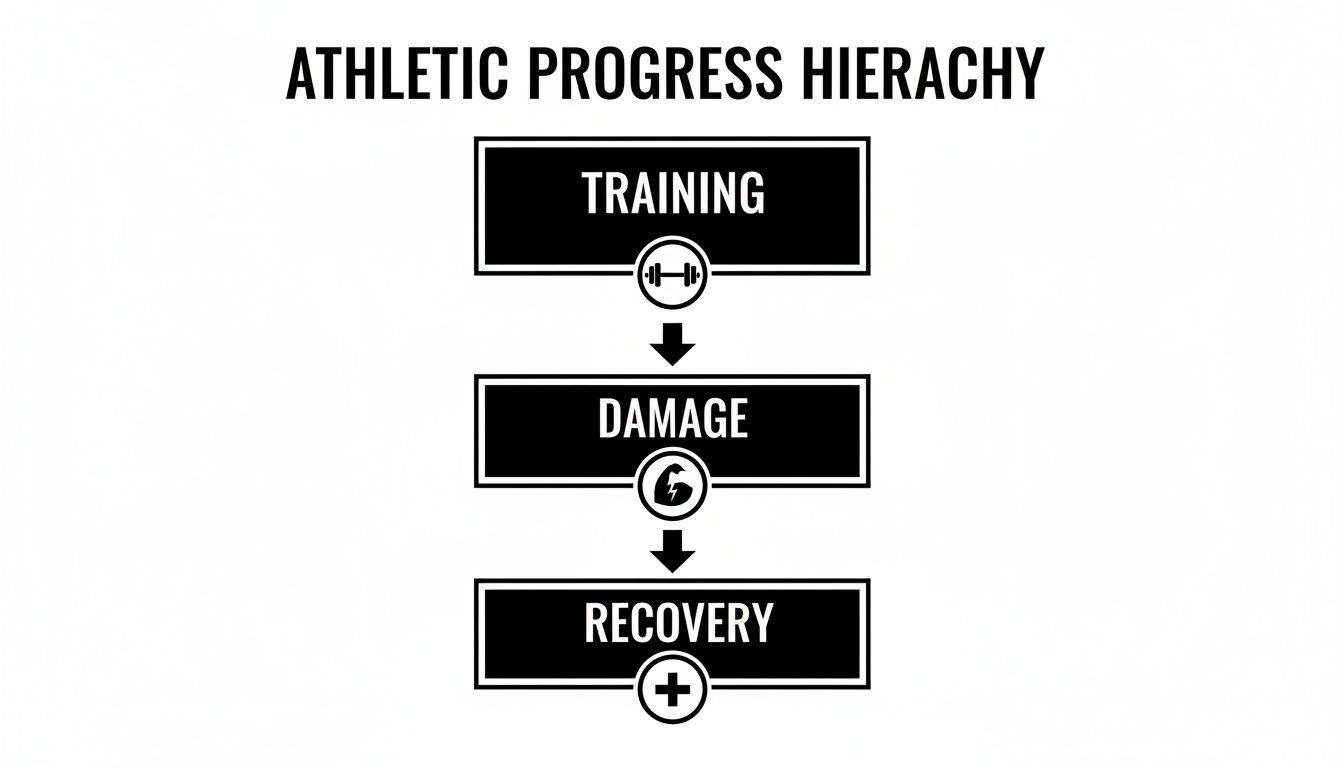
This visual drives home a crucial point: recovery isn’t an afterthought. It’s a non-negotiable part of the growth cycle.
The First Pillar: Repair
First up is Repair. Every time you push yourself in a workout, you create tiny, microscopic tears in your muscle fibers. Don’t panic—this is a good thing! It’s the very stimulus that tells your body to get stronger.
In response, your body sends in a "repair crew" to patch up these tears, and it rebuilds the muscle to be bigger and more resilient. This whole process, known as muscle protein synthesis, needs raw materials—specifically, amino acids. This is where high-quality protein supplements come in, delivering those essential building blocks straight to your muscles to kickstart the repair job immediately.
The Second Pillar: Replenish
Next, we have Replenish. During exercise, your muscles burn through their primary fuel source: glycogen. It helps to think of your muscles as having their own high-octane fuel tanks. A tough session leaves those tanks running on fumes, which is why you feel so drained and depleted afterward.
The goal here is simple: refill those glycogen tanks as fast as you can. Taking in fast-digesting carbohydrates signals your body to start shuttling glucose back into the muscles, getting them primed for the next session. If you skip this step, you’ll be starting your next workout with a half-empty tank, which is a surefire way to limit your performance.
The Third Pillar: Rehydrate
The final, crucial pillar is Rehydrate. When you sweat, you lose a lot more than just water. You’re also losing critical minerals called electrolytes—things like sodium, potassium, magnesium, and calcium.
These electrolytes are basically the electrical wiring for your nervous system. They’re absolutely vital for everything from muscle contractions and nerve signals to maintaining the right fluid balance inside your cells. Drop the ball on rehydration, and you’re setting yourself up for cramps, fatigue, and a serious drop in performance.
To really get this right, check out our guide on the https://rvsci.com/blogs/blog/best-electrolytes-for-athletes.
To put it all together, we can think of these as "The Three R's." Mastering them provides the complete framework for athletic recovery. Each pillar addresses a distinct physiological need, and you have to support all three to ensure you’re bouncing back stronger and faster every time.
The Three R's of Athlete Recovery
| Recovery Pillar | Physiological Goal | Key Supplement Categories |
|---|---|---|
| Repair | Stimulate muscle protein synthesis to rebuild damaged tissue stronger. | Protein powders (whey, casein, plant-based), amino acids (BCAAs, EAAs), HMB. |
| Replenish | Refill depleted muscle glycogen stores to restore energy for the next session. | Carbohydrate powders (dextrose, maltodextrin), whole-food-based carb supplements. |
| Rehydrate | Restore fluid balance and replace essential minerals lost through sweat. | Electrolyte powders and drinks, hydration multipliers. |
By addressing each of these pillars with the right tools, you create a powerful, synergistic effect that accelerates your progress.
Of course, beyond these nutritional strategies, managing the physical aches and pains is also key. Learning how to effectively improve pain relief and recovery can make a huge difference in your ability to train consistently and hit your peak performance.
Your Guide to Essential Recovery Supplements
Think of your body after a tough workout. It's like a construction site that just went through a controlled demolition. To build back bigger and stronger, you need an immediate delivery of high-quality raw materials. This is where the right recovery supplements for athletes step in, acting as the express delivery service that rushes crucial nutrients to your muscles exactly when they're needed most.
These aren't exotic or complicated formulas. They are the proven, science-backed cornerstones of any serious recovery plan, addressing the core pillars of muscle repair and energy replenishment. Let's break down the absolute must-haves for your post-workout stack.
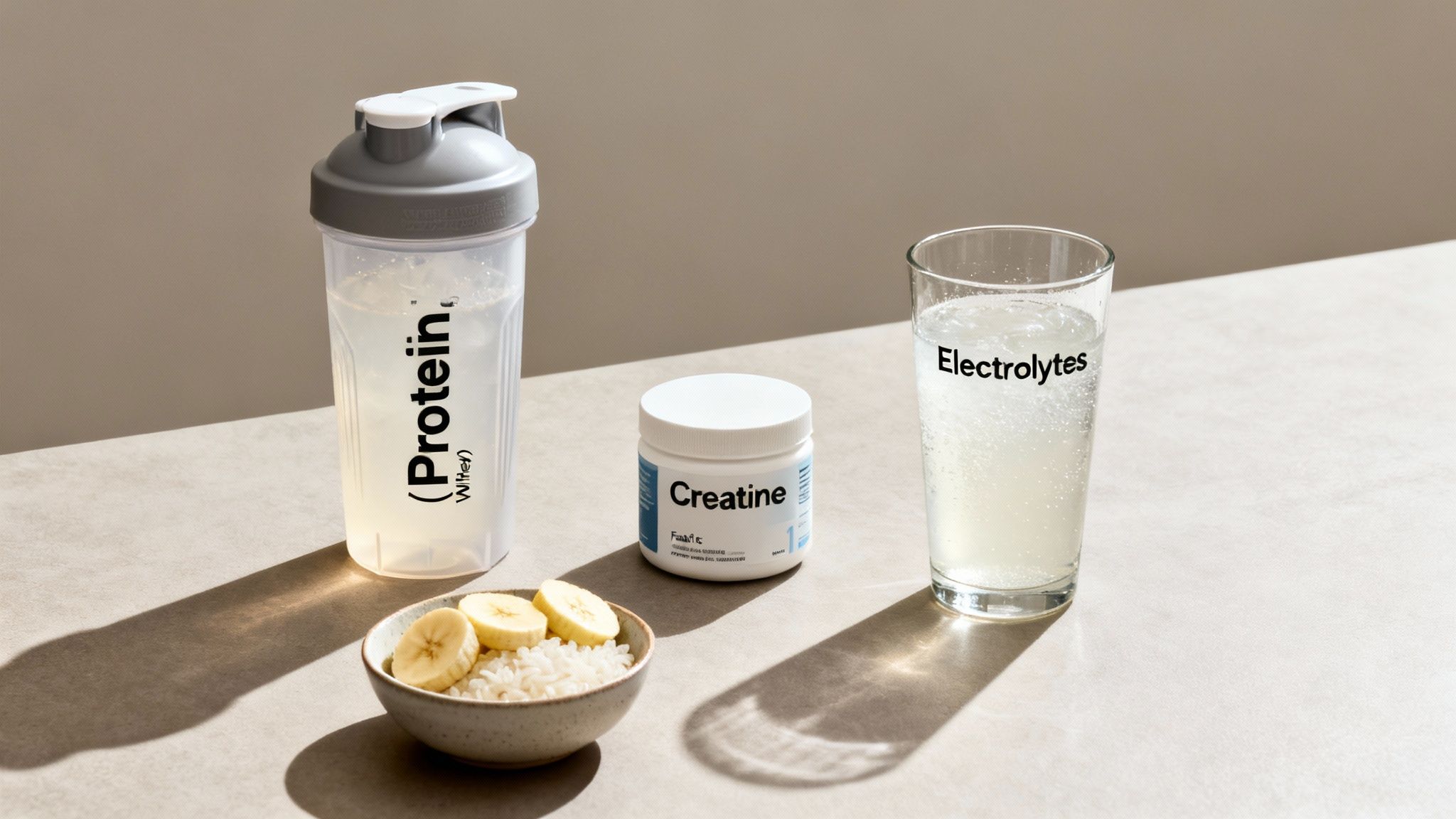
Protein: The Master Builder
When it comes to muscle repair, protein is the undisputed king. Picture your muscle fibers as brick walls that get slightly damaged during training. Protein provides the amino acids—the individual bricks—needed to not only patch things up but to add new layers, making the wall stronger than it was before. Without a quick supply of these bricks, the rebuilding process grinds to a halt.
This is why protein supplements are the backbone of recovery, with the sports nutrition market expected to hit a massive USD 138.48 billion by 2033. For example, one study with 1,200 powerlifters found that a 25g protein dose within 30 minutes of training boosted muscle protein synthesis by 35%. It also slashed their delayed onset muscle soreness (DOMS) from a 7/10 to a 3/10 on pain scales. For aging athletes, these supplements can even help keep testosterone levels 15% higher compared to those who don't use them. You can check out more on these sports nutrition trends at Grand View Research.
You've got several fantastic, high-quality protein sources to choose from:
- Whey Protein: This is the fast-acting sprinter. It's derived from milk and digests rapidly, flooding your muscles with amino acids to kickstart the repair process almost immediately. It’s the go-to choice for that post-workout shake.
- Casein Protein: If whey is the sprinter, casein is the marathon runner. It also comes from milk but forms a gel in the stomach, leading to a slow, sustained release of amino acids over hours. This makes it perfect for taking before bed to fuel recovery overnight.
- Plant-Based Proteins: Options like pea, soy, and rice protein are excellent for vegan athletes or anyone with dairy sensitivities. Modern blends are carefully formulated to provide a complete amino acid profile, rivaling their dairy-based counterparts in effectiveness.
For a deeper look at how different proteins work, check out our complete guide on supplements for muscle recovery.
Carbohydrates: The Fuel Crew
While protein handles the repairs, carbohydrates are in charge of refueling. Intense exercise empties your muscle glycogen, which is the high-octane fuel stored directly in your muscles. Trying to hit your next workout on low glycogen is like entering a race with a near-empty gas tank—you just won't get far.
Taking in fast-digesting carbs right after your session triggers an insulin response. This hormone acts like a gatekeeper, opening up your muscle cells to rapidly absorb glucose and start restocking those depleted glycogen stores.
Think of insulin as the master key that opens the doors to your muscle cells. After a workout, those doors are wide open, and fast-acting carbs ensure a rush of fuel gets inside to restock your energy reserves for the next challenge.
To get that glycogen back in a hurry, athletes often use specific carb supplements:
- Maltodextrin: A complex carb that acts like a simple sugar. It digests quickly to provide a rapid energy spike without being overly sweet.
- Dextrose: This is basically pure glucose, one of the fastest-absorbing carbs you can get. It’s a powerful tool for immediate glycogen restoration.
Mixing these with your post-workout protein shake creates a potent recovery cocktail that tackles both muscle repair and energy replenishment at the same time.
Electrolytes: The Electrical Grid
Hydration isn't just about drinking water; it's about maintaining your body's delicate electrical balance. When you sweat, you lose crucial minerals called electrolytes—mainly sodium and potassium. These minerals are the wiring for your entire system, responsible for everything from nerve impulses to muscle contractions.
If that balance gets thrown off, you're looking at performance drops, painful cramps, and mental fog. Replenishing electrolytes is a non-negotiable part of recovery, ensuring your internal communication network stays online and functions correctly. A quality electrolyte supplement does this far more effectively than water alone.
Creatine: The Power Recycler
Creatine is one of the most heavily researched and proven supplements out there, especially for strength and power athletes. Its main job in recovery is to rapidly regenerate adenosine triphosphate (ATP), your body’s primary energy currency for short, explosive movements.
Think of ATP as the battery that powers a muscle contraction. A heavy lift drains that battery almost instantly. Creatine is like a rapid-recharging station, helping to quickly convert used energy (ADP) back into fresh ATP. This helps you recover faster between sets and produce more power in your next workout.
By consistently supplementing with creatine (3-5 grams daily), you keep your muscle cells saturated with this powerful energy recycler. This doesn't just boost performance during your workout—it also supports strength recovery afterward, so you can come back to your next session ready to hit it hard.
Unlocking Advanced Recovery Nutrients
Once you've got the foundations of protein, carbs, and electrolytes dialed in, it's time to look at the specialized nutrients that can give you that extra edge. Think of these as the fine-tuning tools in your recovery arsenal.
They don't replace the essentials, but they can amplify their effects. They help you get a handle on inflammation, protect your hard-earned muscle, and bounce back just a little bit faster from those gut-wrenching sessions.
These ingredients work on more specific, subtle pathways. While protein is busy rebuilding muscle fibers, these compounds are often focused on reducing the cellular stress and damage that can get in the way of that process. This is where you can really start to feel a difference in soreness and your readiness for the next workout.
Tart Cherry Extract: The Inflammation Manager
Let's be clear: the inflammatory response from intense exercise is a good thing—it’s a critical signal for your body to adapt and get stronger. But when that inflammation sticks around too long, it leads to excessive muscle soreness and puts the brakes on your recovery.
This is where Tart Cherry Extract shines. It acts as a natural inflammation manager.
Packed with powerful antioxidants called anthocyanins, tart cherry helps dial back the body's inflammatory response just enough. Studies show athletes who supplement with it report a noticeable drop in delayed onset muscle soreness (DOMS). It's like having a precision tool to ease off the soreness so you can get back to training without feeling like you've been hit by a truck.
Omega-3 Fatty Acids: Cellular Repair Specialists
Omega-3s are essential fats that play a massive role in just about every system in your body, especially when it comes to controlling inflammation and maintaining cellular health. For athletes, this benefit gets down to the microscopic level of the recovery process.
Think of your muscle cell membranes as tiny gatekeepers, controlling what gets in and out. Omega-3s help keep these membranes healthy and fluid, which is crucial for getting nutrients in and waste products out efficiently. This cellular-level support helps cut down on muscle damage and soreness, leading to a smoother, faster recovery cycle. It's an effect that builds over time, making your cells more resilient.
HMB: The Muscle Protector
Beta-Hydroxy Beta-Methylbutyrate, or HMB, is a fascinating compound that acts as a bodyguard for your muscle. It's a metabolite of leucine, one of the most critical amino acids for muscle growth. If you want to dive deeper into how aminos work, you can check out our in-depth article on the role of an amino acids supplement.
HMB’s main job is to put the brakes on muscle protein breakdown, a process called catabolism. It’s incredibly valuable during punishing training blocks, when you’re in a calorie deficit, or for master athletes who naturally have a tougher time hanging onto muscle mass.
By minimizing muscle breakdown, HMB lets your body dedicate more of its resources to actually building new muscle tissue. It's less about adding fuel and more about patching the leaks in the system to keep your net muscle protein balance positive.
This makes it a killer addition for any athlete pushing their absolute limits. It helps you protect the gains you've already made, letting you train harder without taking two steps back.
For those looking beyond traditional supplements, some athletes explore options like advanced peptide therapies, which can offer significant benefits for muscle repair by optimizing the body's own regenerative processes. When you combine rock-solid nutrition with these specialized tools, you can build a truly bulletproof recovery system.
How to Customize Your Recovery Plan
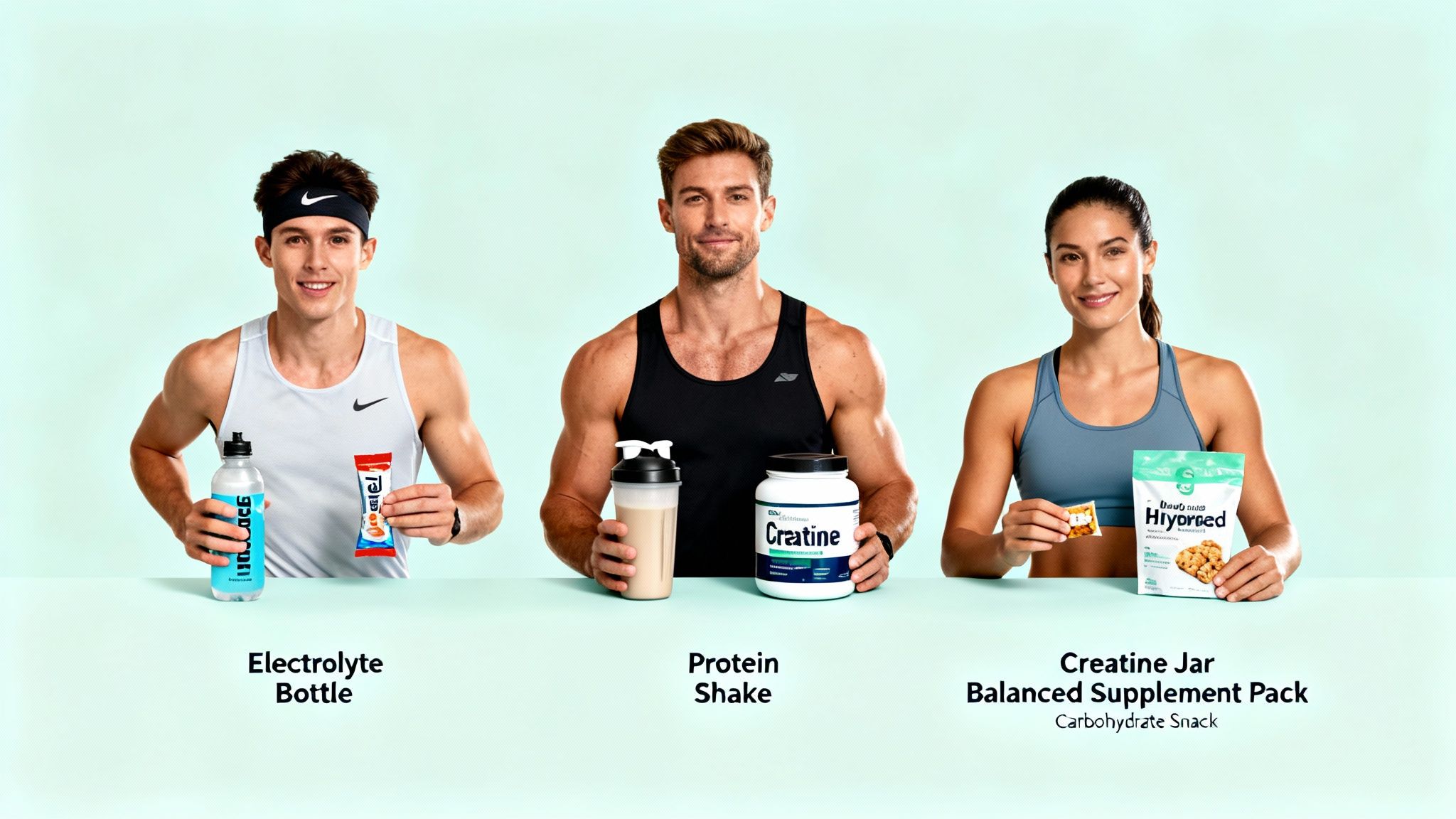
A one-size-fits-all approach to recovery is a recipe for stalled progress. It just doesn't work. The demands on a marathoner's body are a world away from a powerlifter's, and your supplement strategy has to reflect that reality. Building a smart plan isn’t about chasing a single "best" product—it's about matching the right tools to your specific goals.
Think of it like this: a Formula 1 car and a heavy-duty dump truck both need fuel and maintenance. But the specific type of fuel, oil, and parts they require couldn't be more different. Your body is the same high-performance engine. Customizing your recovery ensures you’re giving it exactly what it needs to rebuild and come back stronger.
This isn’t about guesswork. It’s about strategically targeting the primary stress your training creates. Once you understand your athletic profile, you can cut through the noise and build a recovery protocol that directly fuels your progress.
The Endurance Athlete Protocol
For the marathon runner, triathlete, or long-distance cyclist, the name of the game is replenishment. Plain and simple. Your biggest challenges are the massive drain on glycogen stores and the huge loss of fluids and electrolytes from hours of sustained effort. Your recovery has to tackle this head-on.
The goal here is to rapidly restock those empty energy tanks and restore mineral balance to keep cramping and fatigue at bay.
- Primary Goal: Rapid glycogen and electrolyte replenishment.
- Key Supplements: Fast-digesting carbohydrates are non-negotiable. Pair them with a complete electrolyte blend to replace everything you sweated out. A moderate amount of protein helps kickstart muscle repair without getting in the way of carb absorption.
- Timing is Critical: The clock is ticking. You need to get these nutrients in within 30-60 minutes after you finish. This is when your body is primed for nutrient uptake, and you don't want to miss that window.
A shake that combines maltodextrin, a fast-acting protein like whey isolate, and a full-spectrum electrolyte powder like REVSCI Reviver is the ideal solution. This trio is designed for speed, delivering everything you need to get the recovery process going immediately.
The Strength Athlete Protocol
If you’re a powerlifter, bodybuilder, or anyone chasing maximal strength and muscle growth, your recovery priorities pivot. Glycogen is still a piece of the puzzle, but your absolute focus is on maximizing muscle protein synthesis. You’ve created a ton of mechanical damage in your muscle fibers, and now it's your job to supply the raw materials for a serious rebuilding phase.
For the strength athlete, protein isn't just a part of the recovery equation—it is the equation. Your ability to repair and build new muscle tissue is directly tied to a timely and adequate supply of high-quality amino acids.
Your entire plan should be built around stimulating and sustaining muscle repair.
- Primary Goal: Maximize muscle protein synthesis and repair.
- Key Supplements: High-quality protein is your cornerstone. A daily dose of creatine (3-5g) is essential for restoring ATP levels and backing up your strength gains. Fast-acting carbs are still useful here to create an insulin spike, which helps drive amino acids straight into your muscle cells.
- Strategic Timing: A post-workout shake with 25-40g of protein is a must. Many strength athletes also get great results from a slow-digesting casein protein shake before bed, which provides a steady drip of amino acids for overnight repair.
The Hybrid Athlete Protocol
Hybrid athletes—think CrossFitters or combat sports competitors—face a unique challenge. You need the explosive power of a strength athlete and the relentless stamina of an endurance athlete. Your training sessions often empty your glycogen stores and cause significant muscle damage, so your recovery plan has to address both needs equally.
This calls for a balanced approach that refuses to sacrifice one priority for the other.
- Primary Goal: Simultaneously replenish glycogen and stimulate muscle repair.
- Key Supplements: Your post-workout shake needs a balanced ratio of carbohydrates and protein, often something close to 2:1. Electrolytes are crucial for managing high sweat rates, and creatine is key for supporting the repeated, high-intensity efforts that define your sport.
- Application: The most efficient solution is a comprehensive post-workout formula. One that contains whey protein, maltodextrin, creatine, and electrolytes covers all your bases in a single, convenient shake.
Recovery Supplement Protocols by Athlete Type
To make this even clearer, let's break down how these different approaches look side-by-side. Use this table to quickly pinpoint the strategy that aligns with your training demands.
| Athlete Type | Primary Recovery Goal | Key Supplements & Timing | Example Solution |
|---|---|---|---|
| Endurance | Rapid glycogen and electrolyte replenishment. | Fast-acting carbs, electrolytes, and moderate protein within 30-60 mins post-exercise. | REVSCI Reviver mixed with water. |
| Strength | Maximize muscle protein synthesis and repair. | 25-40g protein post-workout; 3-5g creatine daily; slow-digesting protein before bed. | Whey protein shake post-workout; casein protein before bed. |
| Hybrid | Simultaneously replenish glycogen and stimulate repair. | Balanced 2:1 ratio of carbs to protein, plus electrolytes and creatine, immediately post-workout. | A comprehensive post-workout formula combining all key ingredients. |
| Aging | Combat sarcopenia and support joint health. | Higher protein intake (30-40g per meal); HMB, collagen, and omega-3s taken daily. | High-protein meals supplemented with HMB and collagen powders. |
Ultimately, the best recovery plan is the one that's built specifically for you. By understanding these core principles, you can move beyond generic advice and start using supplements strategically to accelerate your results.
Choosing Safe and Effective Supplements
In a crowded market, knowing what’s actually in your recovery supplements is everything. You’re looking for products that work and are safe, but trying to navigate supplement labels can feel like deciphering a secret code.
This is where learning to spot the indicators of quality becomes your greatest tool. It all starts with prioritizing products that have clean, transparent labels. That means no unnecessary fillers, no artificial sweeteners, and absolutely no confusing proprietary blends. These blends are a huge red flag because they hide the exact amount of each ingredient, making it impossible to know if you're getting an effective dose or just a sprinkle of the good stuff.
Look for Third-Party Certification
For any serious athlete, the single most important thing is verifying that a supplement is free from banned substances. This is where third-party testing becomes non-negotiable. These independent organizations act as a crucial safety check, verifying a product's purity and potency.
Think of third-party certification as a background check for your supplements. It’s an unbiased confirmation that what's on the label is actually what's in the bottle—and nothing else.
You should always look for seals from reputable certifiers on the product label. They are the gold standard for safety and quality assurance in the industry.
- NSF Certified for Sport: This certification is a big deal. It confirms the product contains exactly what the label says, has been tested for contaminants, and is certified free of over 270 substances banned by major athletic organizations.
- Informed-Sport: This program takes it a step further by testing every single batch of a product for prohibited substances before it's released to the market. This gives competitive athletes an extremely high level of confidence.
When you choose certified products, you're investing in your health and performance with peace of mind. To really get a handle on this, you can learn more about the importance of third-party tested supplements in our detailed guide. This knowledge is what empowers you to pick high-quality recovery supplements for athletes that are pure, potent, and safe.
Got Questions About Recovery? We've Got Answers.
Stepping into the world of recovery supplements for athletes can feel like a lot. Let's cut through the noise and tackle the most common questions with straightforward, science-backed answers so you can dial in your strategy.
Is a Good Diet Enough, or Do I Really Need Supplements?
Think of it this way: a healthy diet is the foundation of your house. It's non-negotiable. But supplements are the high-performance tools you use to build that house faster and stronger.
They deliver specific, targeted nutrients—like fast-absorbing protein and crucial electrolytes—at the exact moment your body is screaming for them, especially right after a hard workout. Whole foods are amazing, but they just can't be digested and delivered that quickly. Supplements are about optimization, helping you bounce back faster and more completely than you could with food alone.
The proof is in the numbers. The sports nutrition market is projected to hit an incredible USD 48.13 billion by 2032, with a huge part of that growth coming from proven hydration and electrolyte products. It's not just hype; 62% of marathoners who hit a personal best credited their electrolyte strategy. We also know that for every degree your core temperature rises, dehydration can tank your performance by 11%. You can dive deeper into the market and performance data here.
Is the "Post-Workout Window" Real or Just a Myth?
You've probably heard of the "anabolic window," that magic 30-minute period after a workout. While the strict 30-minute deadline might be a little overblown, the core principle is absolutely solid.
Right after training, your body is primed for nutrient uptake like a dry sponge ready to soak up water. Getting a solid dose of protein and carbs in soon after you finish is a proven way to kick-start muscle repair and restock your energy stores (glycogen). So, don't stress about hitting a specific minute on the clock, but definitely make post-workout nutrition a top priority.
Can I Overdo It on Recovery Supplements?
You absolutely can. When it comes to supplements, more is definitely not better. It's so important to stick to the recommended dosages, which are usually based on things like your body weight, how hard you're training, and your specific goals.
Piling on too much can lead to an upset stomach, put unnecessary stress on your system, or just be a flat-out waste of money. Start with the essentials—protein, carbs, electrolytes—and only consider adding more specialized supplements if your training intensity truly calls for it.
Ready to stop guessing and start recovering smarter? The REVSCI lineup is built with clean, research-backed ingredients designed to help you repair, replenish, and rehydrate without any of the junk. Check out our transparent formulas and find the right fit for your goals today!