
Your Cart is Empty


What to Eat Before a Triathlon A Performance Fueling Guide
When it comes to race day, what you eat in the final few hours is deceptively simple: your main goal is to top off your energy stores with easily digestible carbohydrates. Think of it as a two-part strategy: a substantial, carb-focused meal 3–4 hours before the race, followed by a smaller, quick-energy snack about 30–60 minutes before the gun goes off.
Your Pre-Race Fueling Blueprint
Those final hours before a race are your last, best chance to load the tank for maximum performance. Get this wrong, and you’re setting yourself up for cramps, bonking, and exhaustion. But get it right? You’re laying the groundwork for a personal best.
The secret is understanding that timing dictates your food choices. A bowl of oatmeal and a banana eaten 3 hours out serves a very different purpose than a quick gel you down right before the swim start.
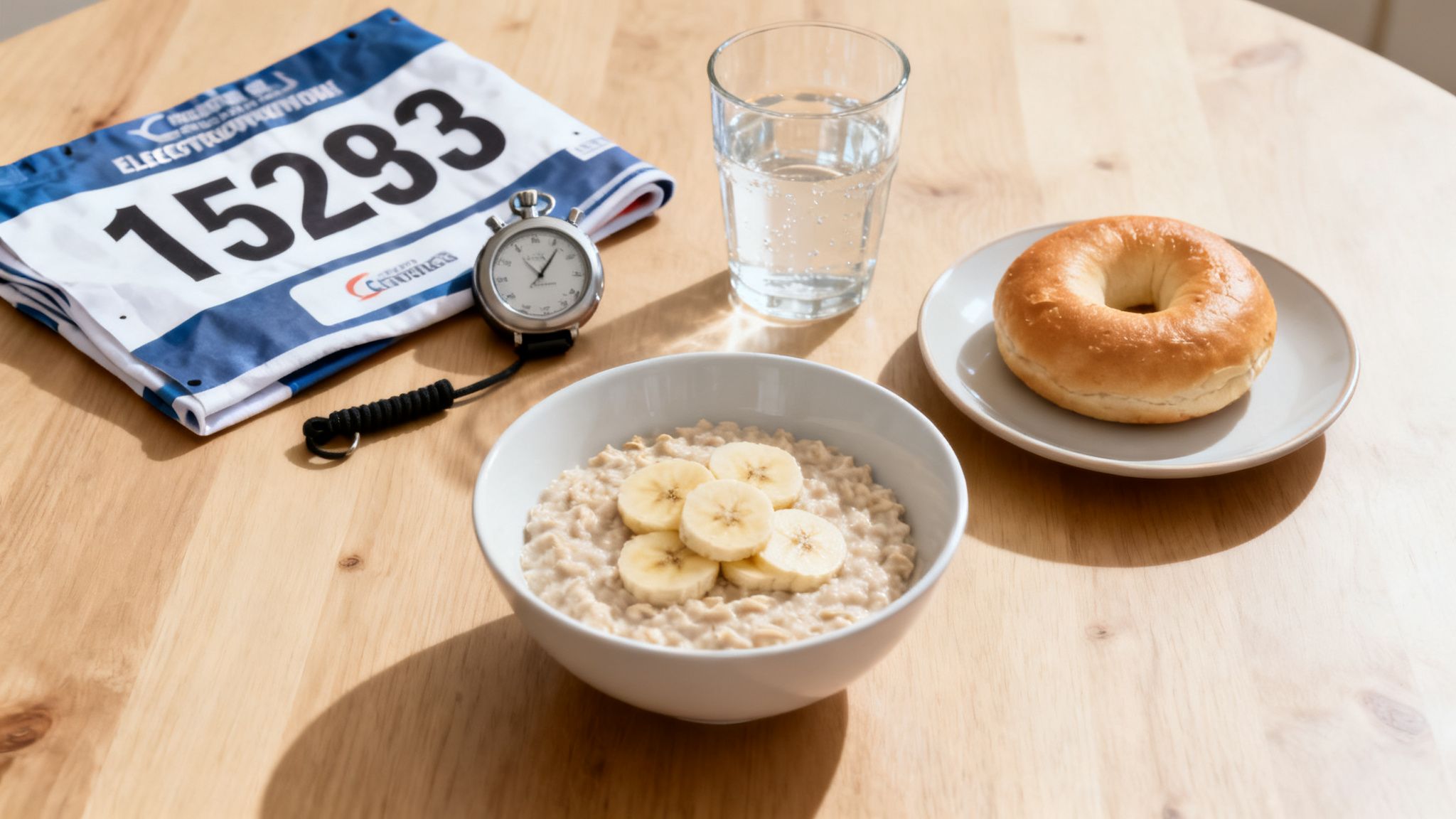
This carefully timed approach ensures your muscles are fully loaded with glycogen—your body's high-octane fuel—without causing any last-minute digestive distress.
While your complete nutrition for triathlon training plan covers the entire journey from day one, mastering this pre-race window is absolutely critical. After all, you can’t out-race a bad fueling plan.
And remember, fueling is just one piece of the puzzle. To really bring it all together, especially for that final leg, it’s worth digging into specific strategies for how to improve running endurance. This framework isn't just about turning complex science into a plan; it's about building a practical, winning strategy for your big day.
To make this even easier to visualize, here’s a quick summary of what your final hours of fueling should look like.
Pre-Race Fueling Timeline At a Glance
| Time Before Race | Primary Goal | Carbohydrate Target (g/kg) | Example Foods |
|---|---|---|---|
| 3–4 Hours | Top-off muscle glycogen stores | 1–4 g | Oatmeal with banana, white rice with a little honey, plain bagels with jam |
| 1–2 Hours | Maintain blood glucose levels | ~1 g | Sports drink, energy bar, piece of fruit (banana, dates) |
| < 60 Minutes | Quick energy boost | ~25–30 g | Energy gel, chews, small amount of sports drink |
This table serves as a great starting point. The most important thing is to practice this routine during your key training sessions so there are no surprises on race day.
The Science of Carb Loading for Peak Endurance
Ever wonder how pro triathletes sustain their energy for hours on end? A big part of their secret weapon is carb loading, and it's much more than just a big pasta dinner the night before a race.
Think of your muscles and liver as fuel tanks for your body. Carb loading is the strategic process of filling those tanks to the absolute brim with glycogen—your body's premium, readily-available energy source.
The goal here is simple: max out your glycogen stores so you don't "hit the wall" and run out of gas halfway through the bike or run. The most effective way to do this is a proven two-day protocol. You’ll want to taper your training way down while seriously ramping up your carbohydrate intake for 48 hours before the starting gun.
When done correctly, this strategy can nearly double your energy reserves. In fact, studies show that aiming for 10–12 grams of carbs per kilogram of body weight over those two days can give you a massive performance boost, especially in long-course events. You can dive deeper into the science and common myths of triathlon fueling in this detailed review.
This means your plate should be heavy on foods like rice, potatoes, and oats while your feet are up. For more ideas on how to build your plate, check out our guide on sports nutrition for endurance athletes.
Mastering Your Race Day Meal Timing
When it comes to race day, when you eat is just as important as what you eat. It's a delicate balancing act—you need to keep your energy stores topped off without sending your digestive system into a panic. The whole game is about strategic timing.
Your biggest pre-race meal should land about 3–4 hours before the gun goes off. This is your last real chance to top off those crucial glycogen stores. Think simple, easily digestible carbs here—a bowl of oatmeal or a plain bagel is perfect.
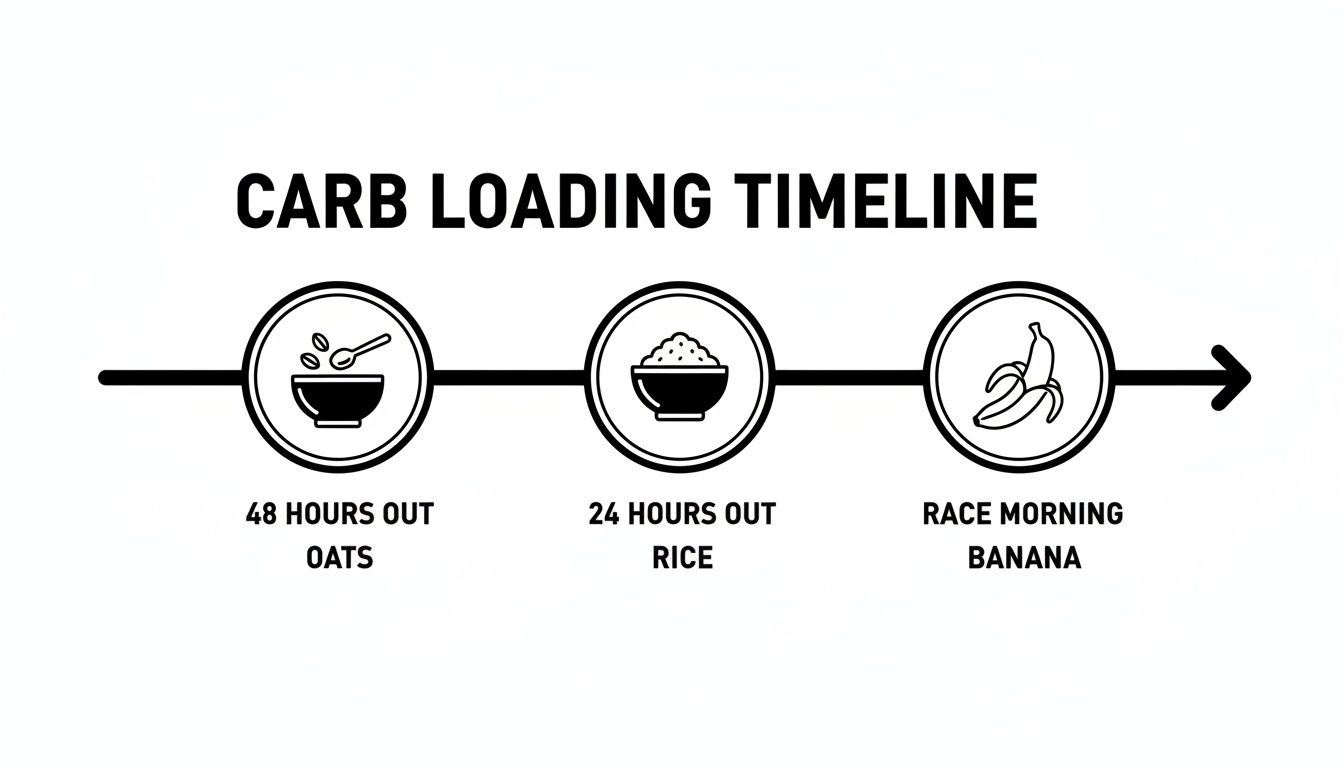
As you inch closer to the start, the food choices need to get simpler and smaller. About 1–2 hours out, a small, carb-focused snack like a banana or an energy bar works wonders to keep your blood sugar stable without weighing you down.
In that final 30–60 minutes before you hit the water, it's all about quick, liquid energy. A gel or a few sips of your sports drink is all you need to be primed and ready. For many of us, a little caffeine is part of the ritual, too; it's worth understanding the relationship between coffee and running performance to make it work for you.
If this all sounds a bit familiar, it's because the core principles are very similar to what we cover in our guide on fueling for a marathon, just tweaked to handle the unique demands of a swim, bike, and run.
Hydration: Your Secret Weapon Against Cramps
Fueling for a triathlon isn't just about what you chew; it's also about what you drink. Getting dehydrated is one of the fastest ways to completely derail your race, bringing on crippling muscle cramps and a level of fatigue you just can't push through.
The good news? This is an entirely preventable disaster if you go in with a smart hydration plan.
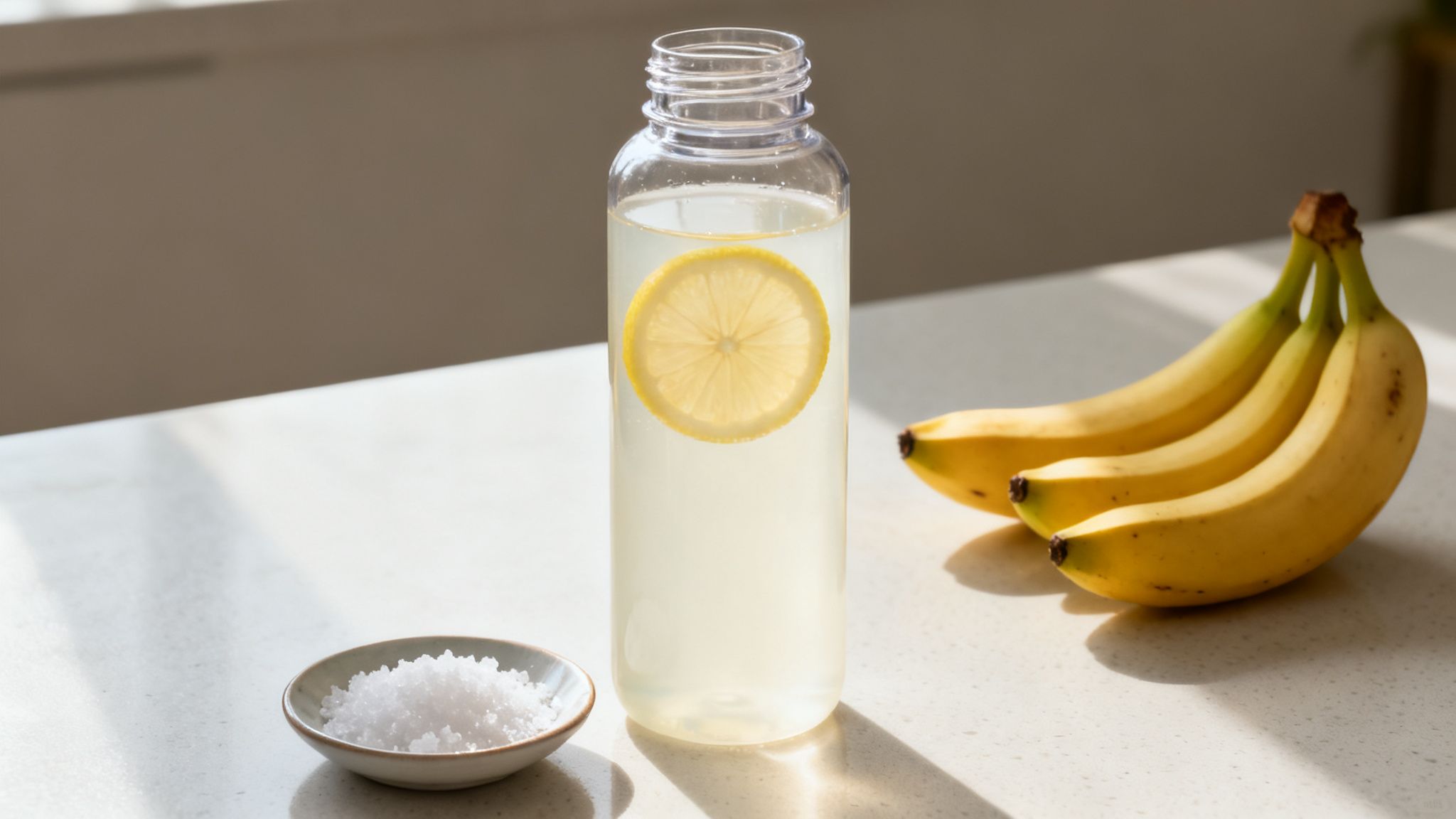
Think of electrolytes like sodium and potassium as the spark plugs for your muscles. Water on its own isn't enough to get the job done; your body absolutely needs these essential minerals to keep your muscles firing correctly and maintain proper fluid balance. Start thinking about this the night before, and keep sipping an electrolyte-rich drink on race morning.
Don't make the rookie mistake of chugging a ton of water right before the start. Instead, focus on consistent sipping in the hours leading up. This “pre-loading” strategy ensures your cells are actually hydrated and ready to absorb the fuel you're taking in, turning your hydration into a genuine competitive edge.
For a much deeper dive into the science and more advanced strategies, check out our full guide on hydration for athletes.
Don’t Let These Pre-Race Nutrition Mistakes Derail Your Day
You’ve put in the miles, the sweat, and the early mornings. All that hard work can be completely undone by a few simple fueling errors on race morning.
If there’s one golden rule, it’s this: nothing new on race day. Seriously. That new gel you saw at the expo or the breakfast someone recommended? Save it for a training day. Stick to exactly what you’ve practiced and what you know works for your body.
Another classic pitfall is eating too much fat or fiber right before the start. A greasy breakfast burrito or a high-fiber energy bar might sound good, but they can sit like a rock in your stomach and lead to some serious GI distress during the swim. The goal is simple, easily digestible energy—not a science experiment.
It's also surprisingly easy to mess up the carb-load and arrive at the start line with a half-empty tank. One analysis found that a staggering 75% of triathletes didn't hit their carbohydrate targets, sabotaging their glycogen stores before the gun even went off. You can dive deeper into this common fueling gap in the full study.
Common Pre-Triathlon Fueling Questions, Answered
Let's tackle some of the most common questions that pop up when you're dialing in your race-day nutrition. I've heard these from countless athletes, so let's clear up the confusion.
What’s The Best Thing To Eat 30 Minutes Before A Triathlon?
With the clock ticking down to the swim start, you want something that’s all about fast, simple energy. We're talking about a sports gel or a handful of energy chews.
This is absolutely not the time for solid food, fiber, or fat. Those will just sit in your stomach and can cause all sorts of gut issues once the gun goes off.
Should I Drink Coffee Before A Triathlon?
If a morning cup of coffee is already part of your daily ritual, then yes, having one 60-90 minutes before the race can actually give you a nice performance boost.
However, race day is never the day to experiment. If you're not a regular coffee drinker, trying it for the first time before a race is a recipe for jitters or an emergency trip to the port-a-potty. Stick to what you know.