
Your Cart is Empty


When to Take Electrolytes: Timely Hydration for Workouts and Daily Wellness
When to take electrolytes isn't a simple question with a single answer. The best timing really hinges on what you're doing, the environment you're in, and your own body's needs.
For really intense or long workouts, the key is to be proactive. That means you need to start supplementing before you start feeling drained. For general wellness or post-workout recovery, sipping on them after your session or just as you need them throughout the day works perfectly.
Rethinking Hydration: When to Take Electrolytes
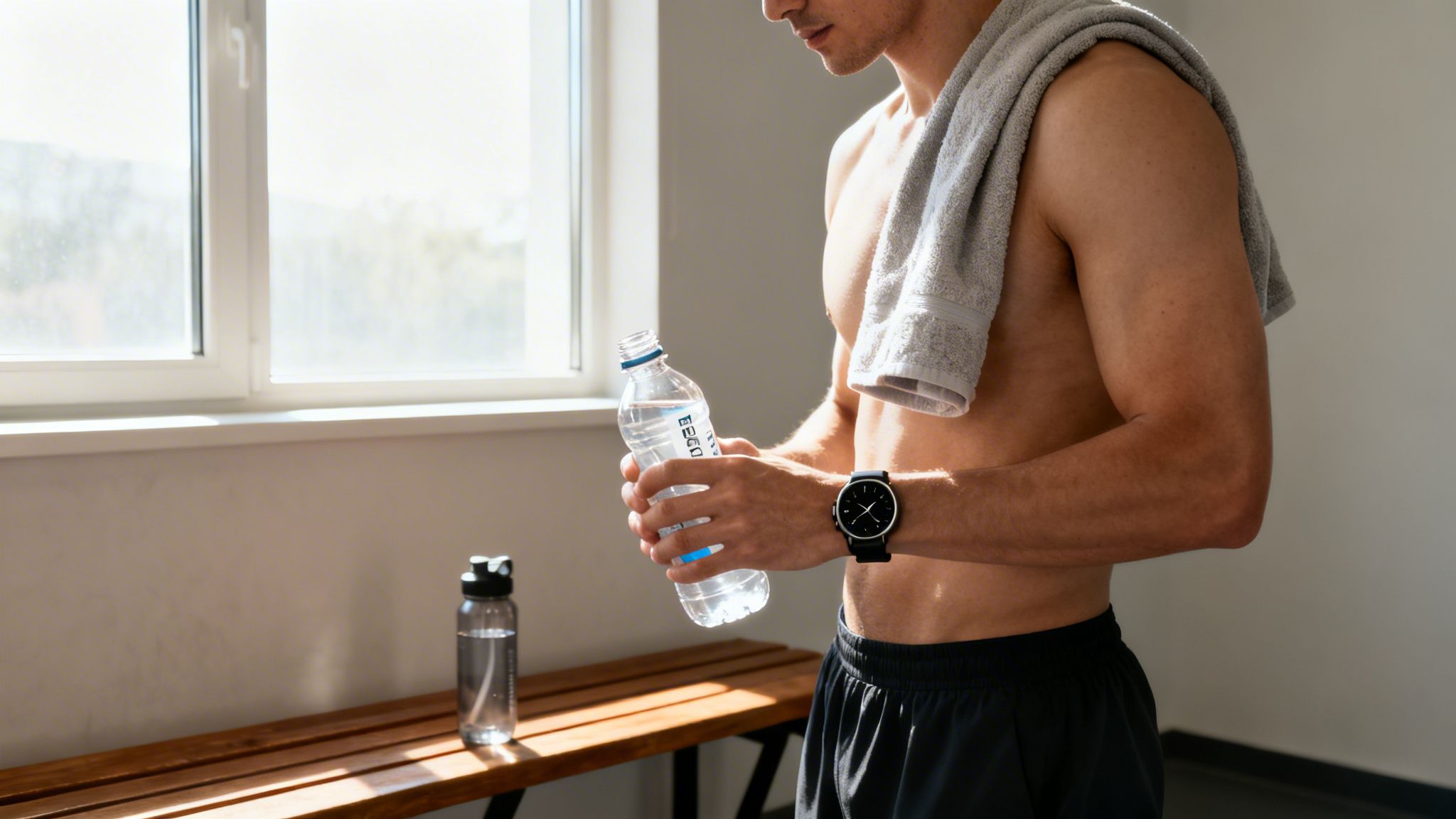
That old piece of advice to "just drink when you're thirsty"? It's long past its expiration date, especially for athletes. Thirst is actually one of the first warning signs that you're already behind the hydration curve. By the time you feel it, your performance can already be taking a nosedive.
Smart electrolyte timing is about more than just dodging dehydration; it's about keeping your physical and mental game at its peak.
This means shifting your mindset from being reactive to proactive. Instead of waiting for a muscle cramp to strike or a wave of fatigue to wash over you, the goal is to get ahead of it. You have to anticipate what your body is going to need based on the stress you're about to put it under.
The Foundation of Smart Timing
The whole principle here is about maintaining balance. Your body is in a constant, tireless state of keeping your fluid and mineral levels within a very narrow, happy range.
Things like a brutal workout, sweltering heat, or even a low-carb diet can throw that delicate balance out of whack. When you supplement strategically, you're helping your body manage these stressors without sacrificing performance. If you want a deeper dive into what these minerals are actually doing in your body, check out our guide on what electrolytes are good for.
A few key things will always influence your timing:
- Activity Duration and Intensity: A 30-minute walk requires something completely different from a three-hour bike ride.
- Environmental Conditions: High heat and humidity crank up your sweat rate, meaning you're losing way more sodium.
- Individual Sweat Rate: Some of us are just "salty sweaters" and naturally lose more electrolytes than others. It’s a real thing.
- Dietary Choices: If you're on a low-carb or keto diet, your body tends to flush out electrolytes more quickly, so you'll need a more consistent daily intake.
By thinking ahead, you position electrolytes as an essential tool for performance, not just a remedy for problems. This proactive approach is the difference between simply finishing a workout and truly dominating it.
This guide is going to break down the specific timing protocols you need for different situations. Whether you're a long-distance runner, a dedicated lifter, or just focused on your daily wellness, you'll learn exactly when to take electrolytes to kill cramps, sustain your energy, and speed up recovery. Let's get past the generic advice and into the actionable steps you can use today.
Quick Reference for When to Take Electrolytes
For a quick overview, this table breaks down the optimal timing for electrolyte intake across several common scenarios. Use it as a starting point to dial in your personal strategy.
| Scenario | Optimal Timing Window | Key Electrolytes |
|---|---|---|
| High-Intensity Training (< 60 mins) | 30-60 minutes before | Sodium, Potassium |
| Endurance Events (> 60 mins) | Before, during (every 45-60 mins), and after | Sodium, Potassium, Magnesium |
| Strength Training | Post-workout within 60 minutes | Sodium, Potassium, Magnesium |
| Hot & Humid Conditions | Before, during, and after activity | Sodium, Chloride |
| Fasting or Keto Diet | Throughout the day, especially in the morning | Sodium, Potassium, Magnesium |
| Travel & Airplanes | Before, during, and after your flight | Sodium, Potassium |
| Overnight Recovery | 30-60 minutes before bed | Magnesium, Potassium |
Remember, this is a guide. The best thing you can do is listen to your body and adjust these recommendations based on how you feel and perform.
Timing Electrolytes for Endurance Athletes

If you're a marathoner, triathlete, or long-distance cyclist, you know that success isn't just about training—it's about fueling and hydration. The difference between a personal best and hitting the dreaded "wall" often boils down to one thing: electrolyte timing. Waiting until you feel thirsty or cramped is a losing game.
For any endurance sport, the strategy is to stay ahead of your body's needs. This means you have to replace fluids and essential minerals before your body sends out distress signals. Once you’re going for over an hour, proactive electrolyte replacement becomes absolutely essential for sustaining performance.
The goal is to keep a steady state of hydration and mineral balance, preventing the dips that tank your energy and cause muscle failure. It's a continuous process, not a one-and-done deal.
Pre-Hydration: The Hour Before Your Event
Your electrolyte strategy kicks off well before the starting gun fires. Topping off your stores ensures your body is primed for the work ahead, especially in hot or humid weather where you know sweat loss will be a major factor.
About 60-90 minutes before your long run, ride, or race, aim to drink 12-16 ounces of an electrolyte drink. This gives your body enough time to absorb everything without you feeling sloshed at the start line. This pre-load is especially focused on sodium, which is key to helping your body actually hold onto the fluid you're drinking.
Think of it like filling your car's gas tank before a long road trip. You wouldn't start a cross-country drive with the tank half-empty, and you shouldn't start a marathon without ensuring your electrolyte levels are topped off.
Drip-Feeding Electrolytes During Your Workout
Once you're moving, the game shifts from pre-loading to maintenance. The key here is simple: consistency. Your body loses electrolytes—mostly sodium and potassium—with every drop of sweat. The goal is to replace them in small, regular intervals to stop a major deficit from building up.
This isn't about chugging a full bottle at every aid station. Instead, a "drip-feed" approach is far more effective.
- Frequency is Key: Take a few sips of your electrolyte drink every 15-20 minutes. This small, steady intake is much easier for your gut to process than trying to down large volumes all at once.
- Know Your Numbers: Most endurance athletes lose somewhere between 500-1000 mg of sodium per hour, but if you're a heavy, salty sweater, that number can be way higher. Check your electrolyte supplement's label to see how much you're getting per serving and adjust your plan from there.
This consistent dosing prevents the energy peaks and valleys that can absolutely wreck your performance. A steady supply keeps your muscles firing correctly and your mind sharp. For truly long events, understanding your personal needs is crucial. You can learn more about crafting a specific plan in our in-depth guide to hydration for marathon runners.
The Science of Consistent Dosing
So, why is this 15-20 minute window so effective? It’s all about matching your intake rate to your sweat loss rate as closely as possible. Ignoring this can have serious consequences.
A landmark 2019 study highlighted that 70% of marathon runners face significant electrolyte imbalances mid-race, which directly contributes to cramping and fatigue. For those who sweat heavily, sodium losses can average an astonishing 1,500-3,000 mg per hour. Research also shows that taking electrolytes preemptively—every 15-20 minutes during sessions over 60 minutes—can slash cramp risk by 40% and improve performance by up to 12% in humid conditions.
This data proves that consistent, small doses aren't just a suggestion; they are a scientifically-backed strategy to prevent your performance from nose-diving.
Post-Workout: The Critical Recovery Window
Your job isn't over when you cross the finish line. The 60-90 minutes immediately after a long endurance effort are vital for recovery. During this window, your body is like a sponge, ready to replenish everything it has lost.
Grabbing an electrolyte drink as soon as you finish helps to:
- Restore Fluid Balance: It kickstarts the rehydration process much more effectively than plain water can.
- Reduce Muscle Soreness: Topping up minerals like magnesium and potassium can help calm over-excited nerve signals and reduce those painful post-exercise cramps.
- Accelerate Recovery: Proper rehydration helps transport nutrients to your tired muscles, allowing them to repair and rebuild faster.
Aim for another 16-24 ounces of your electrolyte solution within the first hour after you stop. For the best results, pair this with a snack or meal that has some protein and carbs to fully restock your energy stores. This completes the cycle and gets you ready to train hard again, sooner.
Electrolyte Strategy for Strength and Power

Strength training isn't an endurance sport, but don't let that fool you—hydration is still absolutely critical. A marathoner might battle a steady, slow loss of sweat over hours, but a powerlifter or bodybuilder is waging war in short, brutal bursts. This unique demand calls for a different electrolyte game plan.
Lifting heavy isn't just about moving a barbell; it's an intensely neurological event. Every single rep, from the first explosive drive to the final lockout, hinges on a sharp, powerful signal firing from your brain to your muscles. That signal travels along your nerves, a process that is entirely dependent on minerals like sodium and potassium.
When your electrolyte levels start to drop, so does the quality of that signal. This can show up as a tiny delay in muscle activation, a feeling of weakness on a rep you know you should own, or that frustrating inability to grind through a sticking point.
Intra-Workout Fuel for High-Volume Sessions
For shorter strength sessions—anything under an hour or so—you can probably get by just fine with plain water, as long as you came in well-hydrated. But when your training pushes into the 90+ minute range, especially for high-volume bodybuilding splits or grueling CrossFit WODs, intra-workout electrolytes become an incredibly powerful tool.
During these long, demanding sessions, you aren't just losing minerals through sweat. Your muscles are also burning through potassium to fuel contractions. This double-whammy can tank your performance fast, making your last few sets feel way heavier than they should.
Strategic intra-workout hydration isn't just about staving off dehydration. It's about maintaining neurological drive and muscular force production so your tenth set is just as strong as your first.
Sipping on an electrolyte drink during your rest periods gives your body a steady drip of the minerals it needs to maintain peak power output. This is where you'll feel a real difference in your ability to push through those final, growth-stimulating reps. For those aiming to optimize every aspect of gym performance, it's worth seeing how this fits with your other supplements. You can dive deeper in our detailed guide on optimizing your pre-workout strategy.
The Science of Sustaining Strength
The impact of even small electrolyte dips on strength athletes is huge. Research from a 2022 study in the Journal of the International Society of Sports Nutrition showed that 55% of lifters saw their strength drop by 10-15% from electrolyte imbalances alone. Under heavy loads, potassium losses can hit 300-500 mg per hour.
More findings show that taking in around 500 mg of sodium and 200 mg of potassium every 45 minutes helps lifters maintain 95% of their max output, a massive improvement over the 78% for those who drank only water. The data is clear: keeping your mineral balance in check is directly tied to how much weight you can move, and for how many reps.
The Post-Workout Recovery Window
Once you rack that final rep, the recovery clock starts ticking. That first hour after your workout is a crucial window for replenishing your electrolyte stores, especially sodium, potassium, and magnesium.
Taking electrolytes immediately after your session does a few key things:
- Kickstarts Muscle Repair: It helps drive water and nutrients back into your muscle cells, creating the perfect environment for recovery and growth.
- Reduces Cramping and Soreness: Topping up on magnesium and potassium helps calm the nervous system and can seriously cut down on post-workout cramps and soreness.
- Prepares You for the Next Session: Smart recovery today is what fuels peak performance tomorrow. Restoring your mineral balance means you walk into your next workout fully recharged and ready to go.
For the ultimate recovery cocktail, combine your post-workout electrolytes with your usual protein and carbohydrate source to cover all your body's immediate needs.
Sample Timing for Different Lifting Styles
Your exact timing will depend on how your workout is structured. Let's look at two common scenarios.
Scenario 1: Bodybuilding Split (e.g., Leg Day)
- Duration: 90-120 minutes
- Strategy: Start sipping an electrolyte mix about 30 minutes into your workout. Keep drinking it consistently during rest periods between your big compound lifts like squats and deadlifts. Finish whatever is left in your bottle right after your last set.
Scenario 2: High-Intensity Functional Fitness (e.g., CrossFit)
- Duration: 60 minutes, but maximum intensity
- Strategy: Because of the insane intensity and high sweat rate, start sipping your electrolytes 15-20 minutes before the WOD kicks off. If it's a longer workout, grab quick sips during any brief transition periods. The most important dose is the one you chug immediately after to jumpstart the recovery process.
Electrolytes for Keto and Fasting Success
Jumping into a ketogenic diet or a fasting routine is a massive win for your metabolism, but it completely rewrites the rules on hydration. Without carbs in the picture, your body just doesn't hang onto sodium and water like it used to. This is the exact reason so many people feel completely wiped out, foggy, and just plain irritable when they first start.
That dreaded "keto flu" everyone talks about? It's almost entirely an electrolyte problem. As your insulin levels drop, your kidneys start flushing out sodium—and water goes right along with it. Nailing your electrolyte timing is the secret to making a smooth, high-energy transition instead of a miserable one.
The trick isn't to just slam a huge electrolyte drink once or twice a day. The real pro move is to sip a well-formulated electrolyte solution consistently all day long. This steady, low-and-slow approach keeps your levels stable, heading off the headaches and fatigue before they even start.
The First 72 Hours: Your Most Critical Window
The first two to three days of any new keto or fasting plan are when your body goes through the most dramatic fluid shifts. If you want to avoid feeling like you've been hit by a truck, proactive supplementation during this window is non-negotiable.
Your body is essentially having a fire sale on stored water, and all your essential minerals are getting flushed out with it. This intense diuretic effect is the one and only cause of the infamous keto flu—it’s not a "flu" at all, just a direct result of dehydration and mineral depletion.
The 'keto flu' is a real, measurable phenomenon. A 2021 meta-analysis in the journal Nutrients found it strikes 60-70% of starters, mainly because of a 20-30% spike in sodium being kicked out through urine. That mineral loss is what’s directly causing the classic fatigue and headaches.
This initial phase demands a focused, consistent game plan to stay ahead of the losses. By feeding your body a steady drip of sodium, potassium, and magnesium, you’re actively fighting back against that diuretic effect and giving yourself the raw materials needed for energy and focus.
Your Daily Sipping Strategy for Ketosis and Fasting
Stop thinking of electrolytes as a rescue remedy for when you feel bad. Start treating them like a daily essential—your hydration multivitamin. The goal is to keep things balanced and steady from the moment you wake up until you go to bed.
Here’s a simple way to approach it:
- Morning Kickstart: The first thing you should do is have 8-12 ounces of an electrolyte drink. This is especially crucial if you’re doing intermittent fasting, as it replaces what you lost overnight without breaking your fast.
- Sip, Don't Chug: Get a good water bottle, mix in your electrolytes, and sip on it throughout the day. This is way better for absorption and keeps you from overwhelming your gut with a sudden mineral bomb, which can lead to... well, you know.
- Listen to Your Body: Pay close attention to the small stuff—a little headache creeping in, a sudden energy dip, a tiny muscle twitch. Those are often the first whispers from your body that it needs more electrolytes.
We've seen how well this works. Data from events like the Low-Carb USA Conference shows that a daily intake of 500 mg sodium, 300 mg magnesium, and 1,000 mg potassium slashes keto flu symptoms by an incredible 85% within the first week.
Adjusting for Different Fasting Windows
Of course, your timing needs to adapt to your fasting schedule. A longer fast means a bigger window for mineral loss, so you have to be even more on top of your game.
For 16:8 Intermittent Fasting: You'll want to get most of your electrolytes in during your fasting window. One serving in the morning and another in the early afternoon is a great way to crush hunger pangs and keep your energy levels from cratering before it's time to eat.
For Extended Fasts (24+ hours): When you go longer, you need a more structured plan. Aim for two or three servings of your electrolyte mix, spaced out evenly through the day. This steady supply is absolutely critical for maintaining muscle function and preventing the severe fatigue and dizziness that can completely derail a longer fast. A zero-calorie, unflavored electrolyte supplement is your best friend here. For a deeper dive, check out our guide on choosing the right electrolyte supplement for fasting.
Beyond the Gym: Everyday Scenarios That Drain Your Electrolytes
When you think about electrolytes, your mind probably jumps straight to marathon runners or bodybuilders dripping sweat. But the truth is, you don’t need to be a pro athlete to feel the effects of an electrolyte imbalance. Plenty of common, everyday situations can throw your body’s delicate fluid balance out of whack, leaving you with that all-too-familiar fatigue, nagging headache, or brain fog.
Learning to spot these scenarios is the key to using electrolytes to feel and perform your best, no matter what your day looks like. Smart hydration isn't just for race day—it's a game-changer for daily life.
Surviving Travel Days and Long Flights
Ever step off a long flight feeling completely wrecked, groggy, and parched? You’re not imagining it. The air inside an airplane cabin is brutally dry, with humidity levels often plummeting below 20%. That’s drier than the Sahara Desert.
This desert-like air literally pulls moisture from your body with every breath you take. Add in a diuretic like coffee or soda from the drink cart, and you've got a perfect storm for dehydration and an electrolyte crash before you even touch down.
To sidestep this, your hydration plan needs to start long before you get to the airport.
- Pre-Flight: Down 12-16 ounces of an electrolyte drink a few hours before your flight. Think of it as building up a hydration reserve.
- In-Flight: Pack an empty water bottle and an electrolyte mix to get through security. Once you're on board, sip it consistently—aim for at least 8 ounces for every hour you're in the air.
- Post-Flight: As soon as you land, mix up another serving. This will help your body rebalance quickly and kick travel fatigue to the curb.
Beating the Heat on Sweltering Days
When the mercury climbs, your body’s built-in cooling system—sweat—kicks into high gear. While this is essential for keeping you from overheating, it also means you’re dumping fluids and, crucially, a ton of sodium.
Even if you’re not doing a formal workout, just being outside on a hot, humid day—gardening, walking the dog, hitting a music festival—can deplete your electrolytes fast. Plain water might feel good at the moment, but it does nothing to replace those lost minerals, which is why you end up with a pounding headache and zero energy.
A critical mistake on a hot day is waiting until you feel thirsty. Thirst is a lagging indicator; by the time it hits, you're already behind on hydration. The only way to stay ahead is with proactive electrolyte intake.
A good rule of thumb is to start sipping an electrolyte drink before you head outside and keep it going as long as you’re in the heat. This is especially vital for people whose jobs demand they be out in it, like first responders or construction workers.
Recovering from Illness and Hangovers
Your need for electrolytes goes through the roof when you're sick. Things like a fever, vomiting, or diarrhea cause a massive loss of fluids and minerals, leaving you feeling incredibly weak and drained. Electrolytes are absolutely essential for a faster recovery.
- Running a Fever: A fever cranks up your metabolic rate and fluid loss through sweat. Sipping an electrolyte solution keeps you hydrated and gives your immune system the support it needs.
- Stomach Bugs: When you can't keep anything down, your body is losing electrolytes at an alarming rate. Taking small, frequent sips of an electrolyte drink is often the best way to rehydrate without upsetting your stomach further.
It's a similar story after a night of drinking. Alcohol is a diuretic, which means it makes you pee more, flushing out water and key minerals like potassium and sodium. This massive depletion is a huge reason you feel so terrible with a hangover—the headache, the fatigue, the nausea.
One of the best moves you can make is to rehydrate with an electrolyte-rich drink before you go to bed and again first thing in the morning. It helps restore what you lost way more effectively than plain water, helping you feel human again much faster.
Creating Your Personal Electrolyte Plan
Alright, we've covered the theory. Now it's time to get practical and build a plan that actually works for you.
Crafting a personal electrolyte strategy isn't about memorizing rules from a textbook. It's about becoming a student of your own body and learning to adapt to whatever the day throws at you. This is where you connect the dots between your unique physiology, the demands of your training, and your environment.
A truly effective plan has to be flexible. What you need for a scorching summer trail run is worlds away from what you need for a lifting session in a climate-controlled gym. The goal is to establish a solid baseline and then learn how to fine-tune it based on the real-time feedback your body gives you.
Start by Assessing Your Sweat Rate
The single biggest variable in your electrolyte plan is how much you sweat—and just how salty that sweat is. Some of us are heavy, salty sweaters who finish a workout looking like a frosted pretzel. Others barely glisten. Figuring out where you fall on that spectrum is surprisingly simple.
You can run a quick at-home test to get a ballpark number:
- Weigh yourself nude right before a one-hour workout.
- Keep track of exactly how much fluid you drink during that hour (e.g., 16 ounces).
- After the workout, towel off completely and weigh yourself nude again.
- Now, do the math: (Pre-workout weight - Post-workout weight) + Fluid consumed = Your total fluid loss.
So, if you lost 1 lb (which is 16 oz) and also drank 16 oz of water, your total sweat loss for that hour was 32 oz. This gives you a concrete number to work with when you're planning hydration for similar sessions.
Learn to Recognize Subtle Cues
Long before a full-blown cramp seizes your calf or a headache derails your focus, your body is sending up warning flares. Learning to recognize these early signals is a skill that lets you make crucial adjustments on the fly.
Start paying close attention to the small stuff:
- Minor, fluttering muscle twitches, maybe in your calves or even your eyelids.
- A slight feeling of brain fog or finding it hard to concentrate.
- That feeling of being tired that seems way out of proportion to your actual effort.
- A sudden, intense craving for salty foods after a workout.
These aren't just random annoyances. They are direct messages from your nervous system telling you that a mineral imbalance is on the horizon. Answering that signal by sipping an electrolyte drink can stop a much bigger problem before it ever starts.
This decision tree gives you a good idea of how to think through electrolyte needs for common, non-exercise situations that can still leave you feeling completely off.
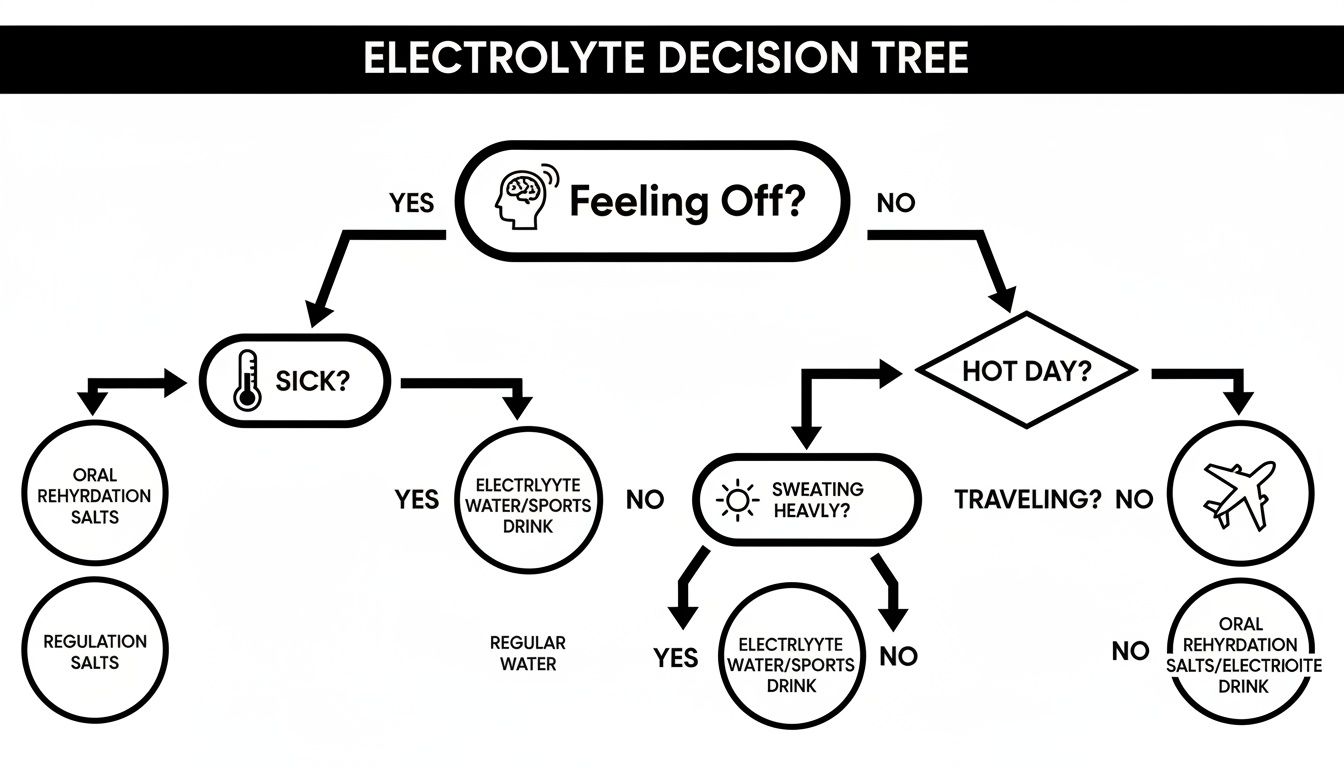
As the infographic shows, things like travel, heat, or even being sick can trigger that same brain fog and fatigue. Why? Because all these stressors can quietly deplete your electrolyte stores.
Adopt a Flexible Mindset
At the end of the day, the best approach is to start low and go slow. Don't feel like you need to chug electrolytes like a pro triathlete if you're just getting started. Begin with a standard serving before or during your next tough workout and just see how you feel.
Did you finish feeling strong and mentally sharp? You're on the right track. Still feeling drained or getting hints of cramps? You might need to bump up the amount or take it more frequently next time.
Your perfect plan is a moving target. Stay curious, listen to your body, and don't be afraid to adjust. That's how you build a hydration strategy that evolves with you and delivers consistent results.
Answering Your Top Questions on Electrolyte Timing
Even when you think you have your hydration dialed in, questions always seem to pop up. Let's run through a few of the most common ones I hear from athletes to help you really nail down your personal strategy.
Can I Take Electrolytes on an Empty Stomach?
For most people, absolutely. Taking a quality electrolyte supplement on an empty stomach is usually no problem at all, especially right before or during a workout when a full stomach is the last thing you want.
Clean formulas that skip the sugar and weird fillers are typically very easy on the gut. This is a huge plus for anyone doing intermittent fasting. If you know you have a sensitive stomach, just play it safe: start with a half dose and see how your body responds before going all-in.
Do I Really Need Electrolytes for Workouts Under 60 Minutes?
This is a classic "it depends" scenario. Generally, you don't need to be sipping on electrolytes during a workout that's less than an hour. If you're well-hydrated going in and you’re not in a sauna, your body’s natural reserves can handle it.
But there are definitely exceptions. If you’re smashing a high-intensity interval session, training in brutal heat, or you're just one of those people who sweats buckets, getting some electrolytes in beforehand is a smart play. It can be the difference between finishing strong and hitting a wall.
Your body loses electrolytes through sweat no matter how long you train. The real question is whether you're losing them fast enough to hurt your performance. For short, intense, and sweaty sessions, the answer is often a resounding yes.
How Do I Know If I'm Taking Too Many Electrolytes?
While not as common as being deficient, going overboard is possible. The first red flags are usually digestive—think stomach cramps or a sudden run for the bathroom as your body tries to flush out the excess.
In more serious cases of too much sodium (hypernatremia), you might notice some puffiness or feel your hands and feet start to swell. The best advice is simple: follow the dosing instructions on your supplement and then listen to your body. Adjust based on how much you're sweating and how hard you're working. If you notice any of these signs, it's time to scale back.
Ready to dial in your hydration with a clean, no-nonsense formula? Revolution Science provides research-backed electrolytes to help you perform at your peak without fillers or sugar. Build your perfect hydration strategy at https://rvsci.com.